Does a Honing Rod Sharpen a Knife? The Real Answer
Honing rods do not sharpen knives; they realign the microscopic edge to maintain performance, but you need abrasive stones to restore a truly dull blade.
By the Niche Picks editorsUpdated November 9, 20269 min readDrawn from our 33 research-based knife sharpening reviews
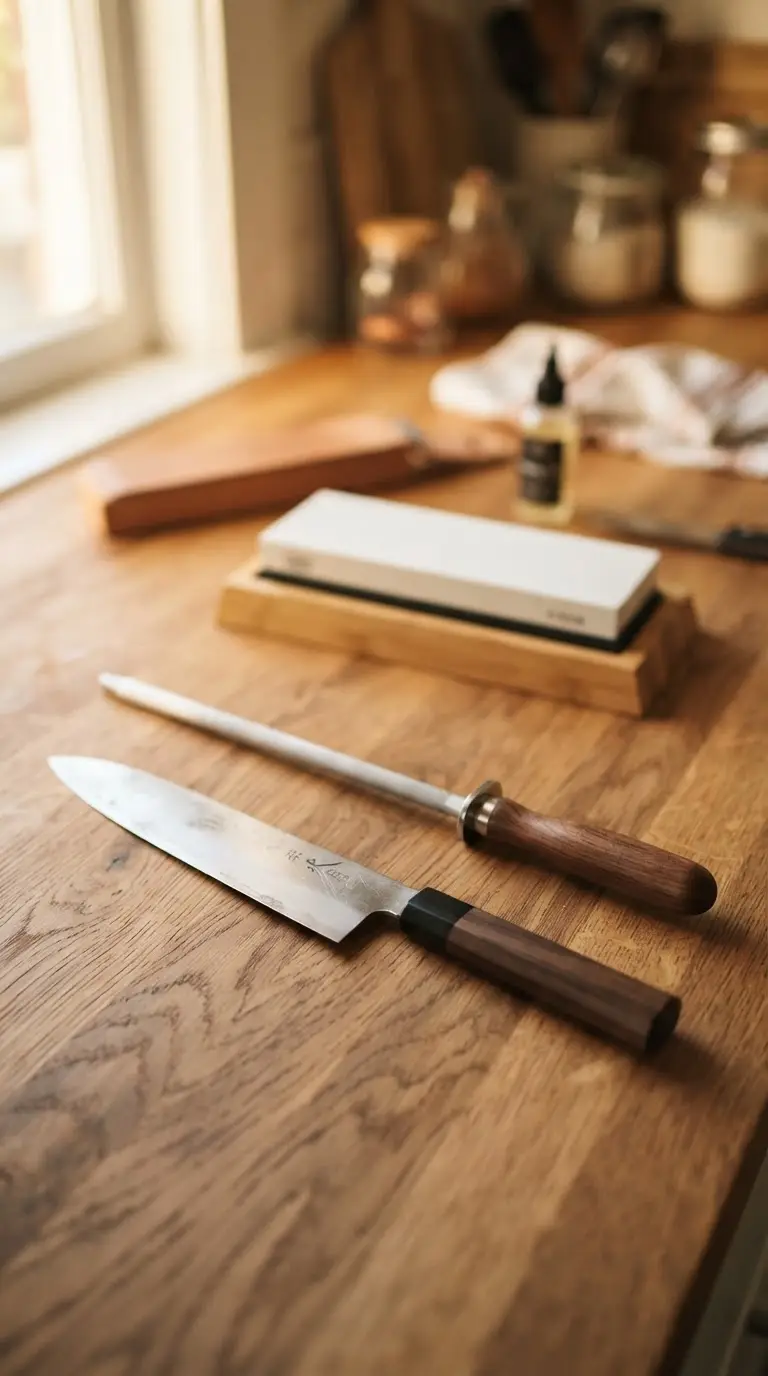
AI-generated editorial illustration; not a product or test photograph.
Short answer
No, a honing rod does not sharpen a knife. Instead, it serves as a maintenance tool that gently realigns a rolled or deformed edge, keeping your blade effective between uses. True sharpening requires removing metal through abrasive processes, such as using a 1000/6000 combination waterstone or a guided system to reset the edge bevel.
6
Product listings discussed; not hands-on tests
6/6
Discussed listings with a recorded price
$7.99–$39.99
Recorded listing price range; not a complete setup cost
Key takeaways
Honing rods are designed to straighten microscopic teeth on a blade edge, not to grind away metal.
Sharpening requires an abrasive material, like a stone or diamond plate, to create a new, sharp apex.
Regular honing extends the time between required abrasive sharpening sessions.
Using a honing rod on a dull or chipped blade will produce no measurable improvement in cutting performance.
Choose a rod that fits your blade length and steel hardness for the best maintenance results.
Products discussed in this article
Editorial scores and recorded prices are reference points, not measurements of suitability for every use. Read each review's specifications and limitations.
It is a common misconception in kitchen maintenance that a honing steel performs the same function as a sharpening stone. In reality, these tools serve completely different purposes. When you use a knife against a cutting board, the microscopic metal edge can roll or fold slightly over time, even if the knife remains sharp. This deviation causes the knife to feel dull as it no longer contacts the food cleanly.
A honing rod corrects this rolling by realigning the metal apex back to the center.
A sharpening stone removes actual blade material to establish a fresh, keen edge.
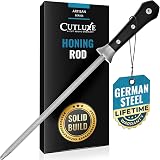
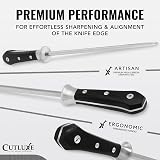
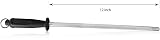
Using a Cutluxe Honing Rod or the FANERFUN 13-inch rod frequently helps keep your edge straight, but it cannot fix a knife that has lost its bite due to worn-out geometry. If you have neglected your blades and they can no longer slice a tomato without resistance, no amount of honing will bring them back to life. For that, you need to consult our guide to knife sharpening or browse our full knife sharpening category to find the right abrasive medium. Understanding this distinction is the single most important habit for long-term culinary tool maintenance. If you force a dull knife against a rod repeatedly, you are simply maintaining a dull edge rather than restoring it to peak functionality. Professionals distinguish these tasks clearly: honing is routine housekeeping, while sharpening is structural repair. When we look at the ALLWIN-HOUSEWARE W 12-Inch Rod, it acts as a fine carbon steel tool meant purely for this realignment, relying on a magnetic core to catch metal filings during the process, ensuring no microscopic debris damages your food or subsequent slices. Always remember that the honing rod does not create a new bevel.
The best time to reach for your WÜSTHOF 9-Inch Honing Steel is during your regular kitchen prep routine, either before or after cooking. Regular honing helps maintain the edge alignment that makes daily slicing feel smooth. Because honing removes negligible metal, it is a low-risk way to ensure your knife maintains its factory performance for as long as possible. Many professional chefs incorporate a few light passes into their workflow every time they prepare to work with high-quality carbon or stainless steel cutlery.
Do not over-hone; a few passes per side are usually sufficient.
Keep your rod clean, as metal dust from the blade can accumulate on the surface.
Always maintain a consistent angle while passing the blade against the rod.
If you find your knife is still struggling to cut after several passes, it is a sign that the blade has moved beyond the point of alignment. At this stage, your knife has transitioned from 'needs alignment' to 'needs sharpening.' This is a classic mistake to avoid during routine care—believing the steel will replace the grindstone. Instead of endlessly stropping, look into our best whetstone picks to restore the bevel properly. Once you have used a stone to re-establish the edge, you can resume your regular honing cycle to keep it performing at that optimal level. Remember, the rod is for upkeep; the stone is for restoration. Using a King KW65 Combination Whetstone allows you to properly restore that geometry when the rod fails to improve cutting performance. Honing is simply the bridge between your deeper sharpening sessions. If your rod surface is becoming clogged with dark metallic dust, wipe it clean, or it will stop engaging the blade edge effectively.
Honing should be a gentle process. Excessive pressure can bend your knife's edge rather than straightening it, potentially doing more harm than good.
Choosing the Right Rod for Your Cutlery
Not all honing rods are created equal, and your choice should depend on the knives in your collection. Most standard Western-style chef knives are tempered to a moderate hardness, which responds well to the fine-textured steel of the WÜSTHOF 9-Inch Honing Steel. However, if you own very hard Japanese steel, you must ensure the rod's hardness is sufficient to manipulate the blade edge without damaging it. In many cases, a ceramic or diamond rod may be necessary for harder alloys.
Ensure the rod is at least as long as your longest chef knife for a full, single-stroke motion.
Check for ergonomic features like a protective bolster to keep your fingers safe.
Consider if you need magnetic properties to capture loose steel particles.
For those who are just starting their collection, we recommend browsing our buying tips to see which tools offer the best longevity. While it is tempting to pick the cheapest steel available, investing in one that feels balanced in your hand will improve your consistency. If you struggle to hold the blade at a steady angle, you might find more value in a fixed-angle sharpening system rather than a handheld steel. Whatever path you choose, keep in mind that the primary goal is consistent edge maintenance. If your knife is truly dull, check which whetstone grit you need to start the repair process. The Cutluxe Honing Rod provides an excellent balance for mid-hardness steel. When evaluating options, remember that a 10-inch rod is often a sweet spot for 8-inch chef knives, as it offers just enough room for a fluid, controlled motion that won't feel cramped. Always prioritize the quality of the rod's surface finish over its appearance, as smooth, fine grooves are the most effective for delicate edge realignment.
While honing is vital for maintenance, abrasive stones like the Sharp Pebble 1000/6000 kit are the true workhorses of edge restoration. A dual-grit stone allows you to transition from coarse material removal—necessary when an edge is blunt or chipped—to fine polishing, which provides the razor-sharp edge required for precise cooking tasks. The 1000 grit side acts as the threshold for sharpness, removing enough metal to form a fresh apex. The 6000 grit side then refines that apex, stripping away the microscopic burr left by the coarser stone.
Soaking your stone before use is essential for waterstones.
Establish your bevel angle early in the process and hold it firmly.
Use the full surface of the stone to prevent uneven wear or 'dishing'.
If you find your knives are dulling frequently, you might be using a stone that is too soft for your steel, or you may need a more aggressive grit initially. Many beginners prefer a guided system to manage the angle for them. We recommend reading How to Sharpen Kitchen Knives to gain a deeper understanding of these techniques. Once you have your edge back, the honing rod takes over. The combination of a stone-sharpened edge and a disciplined honing schedule is the gold standard for home kitchen longevity. A 1000/6000 combination waterstone remains the most recommended tool for enthusiasts because it covers 90% of kitchen needs. Without the sharpening stone, the honing rod eventually becomes useless, as you are simply maintaining an edge that has lost its geometry. Invest in your sharpening stone as your primary hardware, and use the rod only as a secondary support tool.
Aim for a consistent 15 to 20-degree angle between your blade and the rod. If your hand wobbles, the honing will be uneven and ineffective.
Essential Maintenance Habits for Cooks
Maintaining a professional-grade edge requires a multi-faceted approach rather than reliance on a single tool. Start by establishing a solid sharpening foundation with a 1000/6000 grit stone, which provides both the cutting power to remove damage and the refinement to create a polished edge. Once the knife is sharp, you can use your honing steel to maintain that edge between big sessions. If you are uncertain about your current sharpening skills, our guide on how to sharpen kitchen knives breaks down the process into manageable steps that anyone can follow at home.
Always finish your sharpening process by removing the burr.
Use a strop for final refinement if you want mirror-like performance.
Store your knives properly to prevent contact with other hard materials.
Consistency is the key to successful blade care. By alternating between regular honing to straighten the edge and periodic abrasive sharpening to maintain the geometry, you ensure your tools remain reliable for years. If you want to dive deeper into the science of edge maintenance, visit our FAQ on knife sharpening to see how common techniques compare. If you are still feeling unsure, remember that many beginners start with a fixed-angle kit to bypass the steep learning curve of freehand sharpening. With practice, you will find that a well-maintained knife is not only safer but much more enjoyable to use during daily meal preparation. Always clean your sharpening area after you finish; stray metal grit from stones or steel rods can scratch your knife finishes if left on the surface for the next session. This simple attention to detail separates a casual home cook from an organized enthusiast who treats their tools with the respect they deserve for long-lasting functionality.
Common Questions About Rod Maintenance
We frequently receive questions about whether the material of the rod matters as much as the skill of the user. While technique is paramount, the rod's surface does have implications for specific steel types. Carbon steel rods, like the ALLWIN-HOUSEWARE W, are very forgiving for German steels. However, for extremely hard Japanese alloys, some users prefer ceramic rods because they can provide a subtle abrasive effect that is gentler than the coarse grinding of diamond rods. Knowing your own knives is a key part of our knife sharpening buying tips.
Check if your blade edge is rolled (feels snaggy) or dull (glides over food).
If it's rolled, the honing rod will bring it back immediately.
If it's dull, get your stone ready.
Avoid cheap pull-through sharpeners often found in big-box stores, as they strip away too much metal and often ruin your factory edge geometry. We prefer traditional steels and stones precisely because they give you control. Whether you choose a Cutluxe rod or a WÜSTHOF steel, ensure it matches the size of your blades. A 13-inch rod like the FANERFUN is overkill for small paring knives but perfect for a 10-inch brisket slicer. We encourage readers to explore the full spectrum of available maintenance tools in our knife sharpening category. Ultimately, your sharpening kit should grow with your skills. Start with a solid combination stone, master the 20-degree angle, and keep a honing rod nearby for your daily prep. These habits ensure your knives are always ready for the next recipe without requiring frequent, expensive professional service or premature blade replacement.
Diamond-coated rods act as sharpeners, not just hones. If you use one daily, you are removing metal and will shorten the lifespan of your knife significantly.
Step by step
1Hold the honing rod firmly by the handle, keeping the tip pointed downward on a stable surface.
2Place the heel of your knife at the top of the rod at a 15 to 20-degree angle.
3Draw the blade down and across the rod, maintaining light and even pressure throughout the stroke.
4Repeat this motion on the other side of the blade to ensure both sides are aligned.
5Continue alternating sides for 5 to 10 passes total.
6Wipe the knife edge with a clean cloth to remove any fine metal filings.
7Test the blade by slicing a piece of paper or produce to check for improved cutting ease.
Quick checklist
Assess the dullness of your knife blade before choosing a tool.
Check your blade material to ensure compatibility with your honing steel.
Use a 1000/6000 grit stone if the edge requires actual material removal.
Practice your stroke consistently at a 15–20 degree angle.
Wipe your honing rod clean after each use to prevent metal buildup.
Invest in an angle guide if you are a beginner.
Consider a leather strop for the final polish after stone sharpening.
Frequently asked questions
How often should I use a honing rod?
For most home cooks, using a honing rod every few times you use your knife is sufficient. If you use your knives heavily, incorporating a few light passes before every prep session will keep the edge aligned and efficient for longer.
Can a honing rod make a dull knife sharp again?
No. A honing rod is not an abrasive tool and does not remove enough material to reset a blunt edge. If your knife cannot easily slice through a tomato, it needs to be sharpened on a stone first.
What is the difference between a honing steel and a sharpening steel?
The terms are often used interchangeably in marketing, but a true honing steel is smooth or finely grooved to realign an edge. A sharpening steel often has a rougher, diamond-coated surface that actually grinds away metal.
Do I need oil or water for a honing rod?
Generally, no. Honing rods are typically used dry. Some ceramic or diamond rods might be wiped clean, but they do not require lubricants like the water or oil used on traditional sharpening stones.
How do I know what angle to use for honing?
Most kitchen knives are sharpened at an angle between 15 and 20 degrees. If you are unsure, try to match the angle that feels most natural and produces the smoothest glide against the rod without feeling like you are digging into the metal.
Amazon links are affiliate links; we may earn a commission at no cost to you.
Shortlists in this category
Ranked lists from our knife sharpening reviews, limited to listings whose titles confirm the product type, with budget cuts where enough recorded prices sit on both sides of the line.
This page summarizes our research reviews of Amazon listings, listed specifications and captured buyer ratings. It is not a hands-on test. Scores are editorial assessments, not measured performance; prices are recorded snapshots and may change. A category can include both main products and accessories, so its overall price range is not the cost of a complete setup.
Most recent product record update: October 28, 2026. Individual records may be older; this is not a verification date for every claim. Prices on this page were read from the listings Nov 8, 2026 – Nov 11, 2026.
Choose the product type first. These groups require a match in the listing title; an import search term alone is not enough. Scores rank our recorded research assessments within each group, not independently measured performance.
Values are shown as recorded, without unit conversions or inferred compatibility. Not recorded means unknown, not absent. Prices are snapshots, not current offers. Editorial scores are research judgments, not lab results. Amazon links are affiliate links.
Before treating a comparison as complete
Which details are still unknown?
A specification appearing in a listing is not independent verification. These counts show which shortlisted records contain the same field; a blank record does not mean the product lacks the feature.
Included Components
Recorded for 2 of 2 shortlisted models
Present in every shortlisted record. Check units, exact variants and the current manufacturer documentation before relying on it.
Item Dimensions L x W x H
Recorded for 2 of 2 shortlisted models
Present in every shortlisted record. Check units, exact variants and the current manufacturer documentation before relying on it.
Item Weight
Recorded for 2 of 2 shortlisted models
Present in every shortlisted record. Check units, exact variants and the current manufacturer documentation before relying on it.
Material Type
Recorded for 2 of 2 shortlisted models
Present in every shortlisted record. Check units, exact variants and the current manufacturer documentation before relying on it.
Color
Recorded for 2 of 2 shortlisted models
Present in every shortlisted record. Check units, exact variants and the current manufacturer documentation before relying on it.
Grit Type
Recorded for 2 of 2 shortlisted models
Present in every shortlisted record. Check units, exact variants and the current manufacturer documentation before relying on it.
Values are shown as recorded, without unit conversions or inferred compatibility. Not recorded means unknown, not absent. Prices are snapshots, not current offers. Editorial scores are research judgments, not lab results. Amazon links are affiliate links.
A 1000/6000 combination stone covers almost every kitchen need.
Guided systems trade speed for repeatable angles — worth it early on.
Honing and sharpening serve different purposes; follow guidance for your blade steel and edge rather than assuming every knife needs a honing rod.
If a specification, certification or compatibility detail is absent, mark it as unknown and ask the seller or manufacturer. Do not substitute a star rating, an editorial score or a different model's specification.