Can You Froth Almond Milk? Guide for Plant-Based Lattes
You can absolutely froth almond milk for café-quality drinks at home, provided you use the right ingredients and master a few simple techniques.
By the Niche Picks editorsUpdated November 9, 202610 min readDrawn from our 31 research-based coffee gear reviews
AI-generated editorial illustration; not a product or test photograph.
Short answer
Yes, you can froth almond milk, though it behaves differently than dairy due to its lower protein and fat content. For the best results, choose 'barista-edition' plant milks formulated with stabilizers, and use either a dedicated steam wand or a high-speed handheld whisk to create a stable, creamy foam.
6
Product listings discussed; not hands-on tests
6/6
Discussed listings with a recorded price
$6.49–$149.95
Recorded listing price range; not a complete setup cost
Key takeaways
Barista-edition almond milks include added stabilizers and proteins to improve foam stability.
Standard almond milk often creates airy, unstable macro-foam rather than silky micro-foam.
Handheld whisking tools require pre-heated milk to function correctly as they lack heating elements.
Precision espresso extraction is vital because the flavor base must complement the nutty profile of the milk.
Tapping and swirling the pitcher after frothing helps polish the foam for a consistent, pourable texture.
Products discussed in this article
Editorial scores and recorded prices are reference points, not measurements of suitability for every use. Read each review's specifications and limitations.
The primary challenge in frothing almond milk lies in its fundamental chemical composition. Unlike cow's milk, which contains a high concentration of proteins and milk fats that naturally trap air in a stable matrix, almond milk is essentially a suspension of pulverized nuts and water. When you introduce air into standard almond milk using a Zulay Kitchen Milk Frother, the bubbles tend to be large, fragile, and prone to rapid collapse, resulting in what is commonly referred to as 'soap lather' rather than a cohesive, velvety microfoam.
To compensate for this structural deficit, manufacturers created 'barista edition' plant milks. These products are engineered with specific thickeners, gums, and protein supplements that mimic the behavior of dairy proteins under heat and mechanical shear. If you find your foam separating into watery liquid and stiff, dry bubbles, switching to a barista-formulated product is the single most effective change you can make. For beginners looking to learn more about these variables, our Coffee gear buyer's guide provides extensive information on how different components of your setup interact to produce a better cup.
Beyond the milk itself, the mechanics of your equipment matter. An entry-level espresso machine, such as the CASABREWS CM5418, uses a steam wand to force air and heat into the liquid. This process is superior to handheld whisking because the steam provides both thermal energy and pressure, which emulsifies the fats and stabilizes the foam. Without that controlled pressure, you are limited to mechanical agitation, which can only approximate the final look. Always ensure you are using a clean, well-maintained machine to prevent residual buildup from compromising the delicate flavor profiles of your plant-based milk.
When comparing tools, you are essentially choosing between pressure-based texturing and manual aeration. A dedicated steam wand is the industry standard because it allows you to 'stretch' the milk—incorporating air—before creating a vortex that breaks down the bubbles into a dense, pourable microfoam. If you are using the steam wand on a machine like the De'Longhi Stilosa, the key is to position the tip just below the surface until the milk begins to expand, then submerge it further to spin the liquid. This requires practice and a steady hand to ensure the almond milk doesn't overheat, as its proteins break down at lower temperatures than dairy.
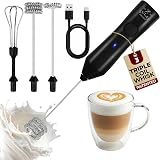
If you prefer a portable, low-cost solution, handheld whisks like the Zulay Kitchen Rechargeable Frother or the YUSWKO Handheld Milk Frother are popular choices. Because these tools lack heating elements, the responsibility for temperature control falls entirely on you. You must pre-heat your almond milk to approximately 140°F (60°C) before introducing the whisk. Attempting to froth cold almond milk will result in poor aeration and a final beverage that is lukewarm and unappealing. Use a thermometer to ensure accuracy, as overheating can cause the nutty notes to turn bitter or acrid.
With handheld frothers, the rotational speed of the motor is constant, which can make it difficult to control the size of the bubbles. Always start with the whisk submerged in the deeper part of the milk, then slowly lift it toward the surface to incorporate air. If you see large bubbles appearing, you have lifted too high. Practice this movement in a narrow, tall vessel rather than a wide cup, as the vertical depth helps manage the vortex and promotes a smoother texture. Visit our guide on How to Froth Milk for a Latte to learn more about these specific movements.
Always choose 'Barista Edition' almond milk. It contains gums and stabilizers specifically designed to mimic the foam structure of dairy.
Budgeting for a Consistent Home Setup
A common mistake among home brewers is focusing on the frother while neglecting the coffee base. If you use the best-frothed almond milk on top of a weak, poorly extracted shot of espresso, the drink will invariably taste disappointing. Our core philosophy emphasizes that your grinder should be as significant an investment as your espresso machine. Consistent particle size is crucial for balanced flavor; a low-quality blade grinder, which produces a mix of fine dust and coarse boulders, will result in an uneven extraction that clashes with the creamy sweetness of almond milk.
If you are building a new setup, avoid the trap of purchasing 'all-in-one' units that force you to use a lower-tier, built-in grinder that cannot be upgraded. Instead, allocate your funds through our Budget planner to find a setup that includes a robust, burr-based grinding component and a machine with proven thermal stability. This approach allows you to scale your system over time without having to replace the entire setup when your technique improves. You can also explore our Coffee Grinder and Espresso overview for deep insights into why this hardware balance is the single most impactful factor in your home cafe success.
Moreover, maintenance plays a silent but vital role in drink quality. If you use an espresso machine for your daily lattes, the steam wand will eventually accumulate mineral deposits or dried milk residues that restrict airflow and cause uneven heating. Regular cleaning is mandatory. Learn the correct procedure for your equipment in our How to Descale an Espresso Machine guide, which ensures that every shot—and every cup of frothed almond milk—retains its intended profile. Investing time in these foundational habits will pay dividends in the long run as you refine your home-brewing skills and expand your repertoire of milk-based drinks.
Achieving professional-grade froth requires avoiding a few persistent errors. The most common is the 'dry foam' trap, where the top layer of the milk becomes stiff and airy, refusing to mix with the coffee underneath. To fix this, always 'polish' your milk after frothing. Once the milk is aerated, tap the pitcher firmly against the counter to burst large bubbles, and then swirl the pitcher in a circular motion to create a glossy, uniform liquid. This process integrates the foam into the milk, transforming it from an airy cap into a pourable emulsion suitable for lattes or cappuccinos.
Temperature mismanagement is another frequent failure point. Almond milk is significantly more sensitive to heat than dairy; if you push the temperature beyond 150°F (65°C), you risk inducing a chemical separation that destroys your foam and introduces unpleasant burnt flavors. Always err on the side of caution by stopping the heating process early, especially if you are using a handheld device like the Bonsenkitchen Milk Frother. The residual heat will continue to raise the temperature of the milk after you remove the heat source, so pulling the milk off the stove or microwave just before it feels 'too hot' is a reliable rule of thumb.
Lastly, consider the physical space of your workspace. Beginners often try to froth in containers that are too wide or have improper depth. Using a narrow, tall pitcher allows the whisk or steam wand to do its work without sucking in too much ambient air. It also makes the vortex effect much easier to manage, keeping the milk contained and ensuring you don't end up with a messy counter. For additional tips on what to watch out for, check out our article on mistakes to avoid to ensure you are not sabotaging your own progress before you even start your first extraction.
Almond milk burns faster than dairy. Stop heating at 140-150°F to prevent the nutty flavor from becoming bitter and the foam from separating.
Cleaning and Maintenance of Your Tools
The lifespan and performance of your frothing tools rely heavily on daily maintenance. Because plant milks often contain sugars, gums, and thickeners, they leave behind a sticky residue that can harden quickly, especially on the thin metal stems of handheld frothers. If you allow this residue to dry, it will attract bacteria and affect the spin consistency of the motor, eventually leading to wobbling or complete mechanical failure. After every single use, rinse your frother head under warm water and run it briefly to shake off excess liquid; this simple habit prevents long-term accumulation.
If you use an espresso machine steam wand, the cleaning protocol is even more critical. Dried milk inside the wand's tip can become a health hazard and a major performance bottleneck. Always purge your wand by releasing steam into a damp cloth immediately after you finish frothing. This clears out any milk that may have been drawn up into the wand due to a pressure drop when you stopped the steam. If your wand has a removable tip, soak it in hot water and a mild detergent or a dedicated cleaning solution once a week to ensure that your steam velocity remains consistent.
For those who use battery-powered handheld models, remember that battery chemistry matters. As AA batteries drain, their voltage drops, which causes the motor speed to decrease significantly. A slower motor will struggle to generate enough shear force to foam plant-based milks properly. If you notice your frother struggling or sounding 'sluggish,' it is usually time for a fresh set of batteries. Alternatively, upgrading to a rechargeable lithium-ion unit like the Zulay Kitchen Rechargeable Milk Frother provides a more consistent RPM throughout the charge, ensuring that your frothing experience remains reliable every morning. Consistent power delivery is one of the hidden factors that distinguish casual users from those who consistently achieve good foam.
Selecting the Right Coffee for Your Almond Milk Drink
The final component of a perfect almond milk beverage is the coffee itself. Because almond milk is naturally sweet and nutty, it pairs best with espresso or coffee that has a medium-to-dark roast profile with chocolatey or caramel undertones. Lighter roasts, while excellent for black coffee, can sometimes taste excessively acidic or sharp when combined with the lower-protein structure of plant-based milk. When searching for whole beans, look for blends like the Lavazza Super Crema, which is designed to provide a thick, stable crema that holds up well against the dilution of milk.
Your grinding method also significantly impacts the final cup. If you are preparing espresso, ensure that your grinder is calibrated to produce a fine, consistent powder that allows for a steady flow of water through the puck. If your grind is too coarse, the water will rush through too quickly, resulting in a watery shot that lacks the body to support the texture of frothed almond milk. Conversely, an overly fine grind will cause the machine to choke, leading to a bitter, over-extracted flavor. You need to dial in your grinder until you achieve a shot that is balanced, sweet, and viscous.
When choosing coffee, avoid buying massive bags if your consumption is low, as coffee beans are volatile and begin to degrade the moment they are roasted. Keeping a 2.2-pound bag of coffee for too long will cause it to lose the aromatics and oils that give your latte its character. If you find a blend you like, store it in an airtight container away from light and heat. By prioritizing high-quality coffee and a consistent grinding routine—as highlighted in our article on the Best Espresso Grinder—you ensure that the effort you put into frothing your almond milk is rewarded with a balanced, professional-quality drink every time.
1Pour cold, barista-edition almond milk into a tall, narrow pitcher.
2If using a handheld device, warm the milk to 140°F using a stove or microwave.
3Submerge the steam wand or whisk just below the surface of the milk.
4Activate the tool to introduce air until the volume increases by about 30-50%.
5Lower the wand or whisk deeper into the milk to create a vortex and incorporate the bubbles.
6Turn off the frother before removing it from the milk to avoid splashes.
7Tap the pitcher on the counter and swirl to remove large bubbles and polish the surface.
8Pour your glossy foam into your espresso shot.
Quick checklist
Use barista-edition almond milk for best texture.
Pre-heat milk to 140°F if using a handheld frother.
Use a tall, narrow pitcher for better vortex control.
Purge your steam wand before and after every use.
Tap and swirl the pitcher to polish the foam.
Dial in your espresso grind size for a balanced base.
Clean your frother immediately after every use.
Frequently asked questions
Why does my almond milk foam disappear so quickly?
Almond milk lacks the proteins that stabilize air bubbles in cow's milk. Using a barista-edition almond milk, which includes added stabilizers like gellan gum, will help your foam hold its structure for much longer, allowing for a better drinking experience.
Do I need a steam wand to froth almond milk?
No, you can achieve great results with a handheld frother. While a steam wand is better for creating dense microfoam, a handheld unit is perfectly sufficient for daily lattes if you pre-heat your milk and practice proper whisking technique to create a consistent texture.
What is the ideal temperature for frothing almond milk?
You should aim for 140°F (60°C). Heating beyond 150°F can lead to the proteins in the almond milk breaking down, which often results in a bitter, burnt flavor and poor foam consistency. Always use a thermometer to check your progress if you are unsure.
Can I perform latte art with almond milk?
It is challenging but possible. You need a barista-edition almond milk to achieve a dense enough microfoam to support a pattern. Even then, the texture will be slightly different from dairy, requiring more precise pouring speed and a well-textured 'polished' foam surface.
How should I clean my milk frother?
Always rinse the whisk or wand under warm water immediately after use. Dried plant milk residue can become sticky and difficult to remove, leading to clogs or bacterial growth. Handheld frothers should be run in a glass of clean warm water to ensure the interior of the whisk head is flushed.
Amazon links are affiliate links; we may earn a commission at no cost to you.
Shortlists in this category
Ranked lists from our coffee gear reviews, limited to listings whose titles confirm the product type, with budget cuts where enough recorded prices sit on both sides of the line.
This page summarizes our research reviews of Amazon listings, listed specifications and captured buyer ratings. It is not a hands-on test. Scores are editorial assessments, not measured performance; prices are recorded snapshots and may change. A category can include both main products and accessories, so its overall price range is not the cost of a complete setup.
Most recent product record update: November 8, 2026. Individual records may be older; this is not a verification date for every claim. Prices on this page were read from the listings Nov 8, 2026 – Nov 12, 2026.
Choose the product type first. These groups require a match in the listing title; an import search term alone is not enough. Scores rank our recorded research assessments within each group, not independently measured performance.
Values are shown as recorded, without unit conversions or inferred compatibility. Not recorded means unknown, not absent. Prices are snapshots, not current offers. Editorial scores are research judgments, not lab results. Amazon links are affiliate links.
Before treating a comparison as complete
Which details are still unknown?
A specification appearing in a listing is not independent verification. These counts show which shortlisted records contain the same field; a blank record does not mean the product lacks the feature.
Capacity
Recorded for 2 of 2 shortlisted models
Present in every shortlisted record. Check units, exact variants and the current manufacturer documentation before relying on it.
Item Dimensions D x W x H
Recorded for 2 of 2 shortlisted models
Present in every shortlisted record. Check units, exact variants and the current manufacturer documentation before relying on it.
Item Weight
Recorded for 2 of 2 shortlisted models
Present in every shortlisted record. Check units, exact variants and the current manufacturer documentation before relying on it.
Power Source
Recorded for 2 of 2 shortlisted models
Present in every shortlisted record. Check units, exact variants and the current manufacturer documentation before relying on it.
Voltage
Recorded for 2 of 2 shortlisted models
Present in every shortlisted record. Check units, exact variants and the current manufacturer documentation before relying on it.
Wattage
Recorded for 2 of 2 shortlisted models
Present in every shortlisted record. Check units, exact variants and the current manufacturer documentation before relying on it.
Values are shown as recorded, without unit conversions or inferred compatibility. Not recorded means unknown, not absent. Prices are snapshots, not current offers. Editorial scores are research judgments, not lab results. Amazon links are affiliate links.
For espresso machines, check temperature-control documentation and brewing workflow. A pump-pressure figure alone does not establish temperature stability or cup quality.
For grinders, confirm the stated brewing range, burr type and adjustment steps. Espresso and filter brewing need different settings; motor wattage alone does not establish grind consistency.
Price the machine, a grinder suited to your brewing method and required accessories separately. Check what is included before treating a listing price as a complete coffee setup.
If a specification, certification or compatibility detail is absent, mark it as unknown and ask the seller or manufacturer. Do not substitute a star rating, an editorial score or a different model's specification.