How to Froth Milk for a Latte: Tools and Techniques
Achieving professional-style milk texture at home requires understanding the difference between steam-based microfoam and simple mechanical aeration.
By the Niche Picks editorsUpdated November 8, 202610 min readDrawn from our 31 research-based coffee gear reviews
AI-generated editorial illustration; not a product or test photograph.
Short answer
To froth milk for a latte, use a steam wand on an espresso machine to create velvety microfoam or a handheld whisk to generate airy macrofoam. Steam wands use pressure and heat to emulsify milk, while handheld frothers rely on mechanical agitation, which creates a stiffer foam without adding heat or uniform texture.
6
Product listings discussed; not hands-on tests
6/6
Discussed listings with a recorded price
$6.99–$139.99
Recorded listing price range; not a complete setup cost
Key takeaways
Steam wands are essential for true microfoam, whereas handheld whisks are perfect for simple, airy foam toppings.
Handheld frothers lack heating elements, so you must warm your milk separately to achieve a hot beverage.
Consistent motor speed, ideally between 12,000 and 19,000 RPM, is required for efficient milk aeration.
Always submerge the frother's coil before activation to prevent splashing and uneven bubble formation.
Prioritize your coffee budget on a high-quality burr grinder, as it is the most critical factor for your espresso base.
Products discussed in this article
Editorial scores and recorded prices are reference points, not measurements of suitability for every use. Read each review's specifications and limitations.
YUSWKO Handheld Milk Frother Wand for Coffee$24.99
Gevi 20 Bar Compact Espresso Machine$119.98
Milk Frothing and Coffee Gear Comparison
Product
Type
Power Source
Key Feature
Zulay Kitchen Wand
Handheld
2 AA Batteries
Includes Stand
Bonsenkitchen with Stand
Handheld
2 AA Batteries
Wire Counter Stand
CASABREWS CM5418
Espresso Machine
120V AC
Built-in Steam Wand
SIMPLETASTE Rechargeable
Handheld
USB-C
Dual-Coil Head
YUSWKO Wand
Handheld
USB-C
3-Speed Control
Gevi Espresso Machine
Espresso Machine
120V AC
20 Bar Pump
Understanding Milk Texturing Methods
The way you froth milk determines the quality of your coffee beverage. In professional settings, a steam wand is the standard. It forces high-pressure steam into cold milk, heating the liquid while simultaneously introducing microscopic bubbles that are folded into the proteins and fats. This results in microfoam, a silky, stable substance that allows for intricate latte art. Our reviews of home espresso machines like the CASABREWS CM5418 show that while these units aim to replicate this thermal performance, home-grade boilers often have less volume and pressure than professional equipment.
Conversely, handheld electric whisks operate on mechanical agitation. Tools like the Zulay Kitchen Classic Milk Boss or the Bonsenkitchen with Stand spin a coiled wire whisk at high speeds—typically between 12,000 and 19,000 RPM—to force atmospheric air into the liquid. This produces macrofoam, which consists of larger, looser bubbles that sit atop the espresso. This texture is suitable for a dry cappuccino or a quick topping on a hot chocolate but does not reach the uniform consistency required for high-end latte art. Always remember that handheld frothers do not heat the liquid, so you should use a microwave or stovetop to warm your milk first.
For those seeking to refine their setup, our guide to coffee gear explores how various brewing methods interact with milk frothing accessories. It is essential to manage your expectations; no handheld wand can simulate the thermal stability or pressure profile of a dedicated steam boiler. If you are serious about milk chemistry, understanding these two categories is the first step in building a system that delivers your desired drink quality, while avoiding the common mistakes when choosing coffee gear.
The Role of RPM and Power Source
Rotational velocity and power consistency are primary metrics for handheld milk frothers. Most battery-operated units use two AA cells, which can cause a drop in torque as the battery voltage depletes. A unit like the SIMPLETASTE Rechargeable Frother addresses this by using an internal lithium battery, providing a more consistent RPM throughout the life of the charge. Constant motor speed is vital as it ensures that you can aerate the milk in a predictable 15 to 20-second window. If the RPM drops, the frother may struggle to move through denser dairy or plant-based milks, resulting in uneven texture.
When choosing an electric whisk, consider whether you prefer the convenience of rechargeable models or the lower upfront cost of battery-operated versions. Devices like the YUSWKO Handheld Frother include variable speed settings, which can be helpful for different milk viscosities. Lower-protein plant milks, such as almond or cashew, often require careful aeration to prevent the foam from breaking down too quickly. Our findings suggest that while wattage is often a marketing focal point, the build quality of the whisk head—the coil design—is more important for effective aeration. For more in-depth comparisons, see our best milk frother reviews.
While a high-RPM motor simplifies the task, using it correctly is still an art. Activating the whisk before it is fully submerged often results in milk spray. For those interested in expanding their cold drink capabilities, our article on the best handheld milk frothers for cold foam provides specific insights into which models excel with different temperatures. Always treat these tools as auxiliary components to a well-planned coffee station where a proper grinder remains your most critical, non-negotiable investment.
Temperature Control
Handheld frothers do not heat milk. For a hot latte, heat your milk to 140–150°F on the stove or in the microwave before frothing.
Espresso Machines and Built-in Wands
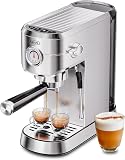
If your primary goal is to master the art of the latte, a dedicated espresso machine is the ultimate long-term investment. Machines like the Gevi 20 Bar Compact Espresso Machine include integrated steam wands that provide a more seamless workflow than handheld gadgets. Because the steam wand is attached directly to the boiler, you can transition from pulling your shot to steaming your milk without needing to move your liquid between different heating vessels or tools. However, home machines have smaller thermal masses than commercial units. This means you must be disciplined with your workflow—perhaps using a blank heating flush to ensure the boiler is at the correct temperature before pulling your shot.
Thermal stability is the most important factor in espresso extraction. A high-wattage heating element, like the 1350-watt system found in several budget machines we reviewed, does not guarantee quality if the boiler lacks the mass to hold that temperature during the entire extraction. If you find yourself frustrated with temperature swings, look for machines that utilize PID electronic controllers. These systems help maintain a more stable brew temperature across back-to-back shots. For a deeper look at what to look for, read our best espresso machine under $500 guide. Remember that the steam wand’s performance is also tied to the boiler’s capacity; if the boiler is small, you may need to wait a moment between pulling your shot and steaming your milk.
Regardless of which machine you choose, the grinder is your most important companion. Even the most capable espresso machine will produce subpar, bitter results if the coffee grounds are inconsistent. Pairing your machine with a capable burr grinder that allows for fine-tuning is mandatory to achieve the resistance needed for a proper shot. Never rely on blade grinders or pre-ground coffee, as these lack the precision geometry needed for the specific particle size espresso requires. Building a balanced setup allows you to focus on developing your milk frothing technique rather than battling equipment limitations.
Selecting the Right Beans for Latte Drinks
The quality of your milk-based drink is heavily influenced by the coffee you start with. Many home baristas prefer medium-dark roasts for lattes because they provide enough body to cut through the creaminess of the milk. Our research into beans suggests that blends containing a small percentage of Robusta, such as the Lavazza Super Crema, can provide a thicker, more stable crema. This is beneficial for beginners, as the crema helps mask minor inconsistencies in your espresso extraction and provides a visually pleasing base for your milk.
When choosing coffee, consider the fresh-roast date and the source. Arabica beans are generally more nuanced and acidic, while Robusta adds depth and body. For those on a budget, buying in larger 2.2-pound bags can significantly reduce your cost-per-cup, but proper storage is vital. Once a bag is opened, oxygen will degrade the aromatics within a few weeks. Storing your beans in an opaque, airtight container in a cool, dark place will preserve their quality. If you are buying in bulk, consider freezing portioned amounts to keep them fresh for longer. It is also helpful to experiment with different grind settings as you dial in your specific equipment. A coffee that tastes too sour might benefit from a finer grind, while one that tastes overly bitter may need a coarser setting.
It is also important to consider the total investment of your coffee hobby. We frequently discuss how coffee grinder and espresso pairings are the foundation of a great setup. Spending $100 on a high-quality hand grinder is often a better investment for your cup quality than spending that same amount on an extra feature for your machine. When you have a solid, consistent espresso base, even a simple milk frother can produce a delicious morning latte. Consistency in your technique—whether it is your distribution of coffee grounds or your frothing temperature—will yield better results over time than frequent upgrades to entry-level appliances.
Avoid Splashing
Always fully submerge the whisking coil before activating the motor to prevent milk from spraying across your kitchen.
Maintenance and Workflow Efficiency
To keep your equipment in top shape, you must prioritize consistent maintenance. For espresso machines, this includes regular cleaning of the group head and the steam wand. If you use a steam wand, you must purge it before and after every use to prevent milk proteins from drying inside the nozzle, which can lead to bacterial buildup and uneven steam flow. If you ever notice your machine’s steam output decreasing or your shots pulling inconsistently, it may be time to perform a descaling cycle. You can learn the details of this process in our guide on how to descale an espresso machine.
For handheld frothers, maintenance is simpler but equally critical. Because the whisk head is in direct contact with organic matter, clean it immediately after use. The easiest method is to immerse the head in hot, soapy water and run the motor for a few seconds. Follow this with a clean water rinse. Never allow milk residue to dry on the whisk, as it can be difficult to remove and may attract unwanted debris. If your frother is battery-operated, check the contacts periodically for any signs of corrosion. If you find yourself using the frother daily, investing in rechargeable NiMH batteries can save money and keep your motor speed consistent.
Finally, consider the ergonomics of your workflow. A cluttered counter can lead to frustration and spills. Many of our recommended handheld frothers include a stand, which keeps the wand vertical and prevents the whisk from bending. If your machine is lightweight—common for models in the sub-$150 price range—remember to brace the machine with one hand while locking the portafilter to avoid tipping. Small steps like organizing your tools and keeping your workspace clean contribute significantly to the enjoyment of your daily coffee routine. By focusing on fundamental habits rather than just fancy features, you can consistently produce cafe-quality lattes in your own home.
Maximizing Your Budget for Better Results
A recurring theme in our reviews is the importance of strategic budgeting. It is easy to be tempted by all-in-one machines that promise convenience, but these units often require compromises in thermal stability or grind precision. Instead, we recommend building your setup piece by piece. Start with a reliable, entry-level brewer and a quality burr grinder. When you have a consistent espresso shot, your milk frothing tool—whether it is a $7 handheld wand or a high-end steam wand—becomes the final touch rather than the primary variable.
When allocating funds, remember that the grinder is the most significant purchase for flavor. Even a basic espresso machine can pull a decent shot with well-ground, fresh beans, but a $1,000 machine will struggle with pre-ground or inconsistently ground coffee. As you progress, you may decide to upgrade your machine for better temperature control or a more robust steam boiler. By then, your high-quality grinder will still be serving you well. You can use a budget planner to track these expenses and decide which piece of equipment offers the best value for your specific brewing style. Whether you prefer the simplicity of a Moka pot or the precision of a semi-automatic espresso machine, the principles of uniform grinding and thermal consistency remain the same.
Finally, don't be afraid to try different techniques as you learn. Making a perfect latte is a skill that develops over time. Practice your milk frothing, keep your machine clean, and enjoy the process of trial and error. By sticking to these core principles and investing in high-quality grinding gear, you will find that even modest home setups can produce results that rival your local coffee shop. For those needing further help choosing the right components, explore our Coffee gear FAQ for answers to the most common questions from home baristas.
Step by step
1Heat your milk to between 140°F and 150°F using a microwave or stove.
2Pour the warm milk into a deep, narrow pitcher to allow volume to build.
3Insert your handheld frother into the milk, ensuring the whisk is fully submerged.
4Turn on the device, holding it deep in the milk for 5 seconds to build a base.
5Slowly raise the whisk near the surface to pull in air and expand the foam volume.
6Continue for another 10 to 15 seconds until the foam reaches your desired consistency.
7Turn off the motor while the whisk is still submerged to prevent bubbles from bursting.
Quick checklist
Choose high-protein milk (dairy or barista-blend plant milk) for the best texture.
Warm your milk container slightly to prevent heat loss during frothing.
Ensure your frother has fresh batteries or a full charge for consistent speed.
Use a narrow, deep pitcher to allow room for foam volume expansion.
Submerge the whisk completely before powering on.
Lift the whisk slightly near the surface to incorporate air for texture.
Clean the whisk immediately under running water after every use.
Frequently asked questions
Can I make latte art with a handheld frother?
Generally, no. Handheld frothers create macrofoam, which is characterized by large, airy bubbles that are difficult to control for latte art. They are excellent for adding a thick, airy topping, but they cannot emulate the creamy, paint-like microfoam that requires steam-pressure emulsification.
Does higher RPM mean better foam?
Within reason, yes. Motors over 12,000 RPM incorporate air quickly and efficiently. However, torque matters more than just speed; if a motor is fast but weak, it will stall when it hits thicker milk, leading to uneven, bubbly foam rather than a smooth, creamy texture.
What is the best milk for frothing at home?
Whole dairy milk is widely considered the best choice because its fat and protein content creates a stable, creamy microfoam. If you prefer plant-based milk, seek out 'barista' editions, which are formulated with added proteins and stabilizers to mimic the frothing properties of dairy.
How do I clean my handheld milk frother?
Cleaning is simple: immediately after use, place the whisk head in a glass of hot, soapy water and run it for five seconds. Then, rinse it under clean, hot water and let it air dry. Never submerge the handle or the battery housing in water, as this will damage the motor.
Is a steam wand really better than a handheld whisk?
For achieving cafe-style latte texture, yes. A steam wand uses heat and high pressure to emulsify milk proteins, resulting in a dense, velvety microfoam that integrates perfectly with espresso. Handheld frothers are convenient and cost-effective for home use, but they cannot replicate this chemical and thermal integration.
Amazon links are affiliate links; we may earn a commission at no cost to you.
Shortlists in this category
Ranked lists from our coffee gear reviews, limited to listings whose titles confirm the product type, with budget cuts where enough recorded prices sit on both sides of the line.
This page summarizes our research reviews of Amazon listings, listed specifications and captured buyer ratings. It is not a hands-on test. Scores are editorial assessments, not measured performance; prices are recorded snapshots and may change. A category can include both main products and accessories, so its overall price range is not the cost of a complete setup.
Most recent product record update: November 8, 2026. Individual records may be older; this is not a verification date for every claim. Prices on this page were read from the listings Nov 8, 2026 – Nov 12, 2026.
Choose the product type first. These groups require a match in the listing title; an import search term alone is not enough. Scores rank our recorded research assessments within each group, not independently measured performance.
Values are shown as recorded, without unit conversions or inferred compatibility. Not recorded means unknown, not absent. Prices are snapshots, not current offers. Editorial scores are research judgments, not lab results. Amazon links are affiliate links.
Before treating a comparison as complete
Which details are still unknown?
A specification appearing in a listing is not independent verification. These counts show which shortlisted records contain the same field; a blank record does not mean the product lacks the feature.
Capacity
Recorded for 2 of 2 shortlisted models
Present in every shortlisted record. Check units, exact variants and the current manufacturer documentation before relying on it.
Item Dimensions D x W x H
Recorded for 2 of 2 shortlisted models
Present in every shortlisted record. Check units, exact variants and the current manufacturer documentation before relying on it.
Item Weight
Recorded for 2 of 2 shortlisted models
Present in every shortlisted record. Check units, exact variants and the current manufacturer documentation before relying on it.
Voltage
Recorded for 2 of 2 shortlisted models
Present in every shortlisted record. Check units, exact variants and the current manufacturer documentation before relying on it.
Wattage
Recorded for 2 of 2 shortlisted models
Present in every shortlisted record. Check units, exact variants and the current manufacturer documentation before relying on it.
Values are shown as recorded, without unit conversions or inferred compatibility. Not recorded means unknown, not absent. Prices are snapshots, not current offers. Editorial scores are research judgments, not lab results. Amazon links are affiliate links.
For espresso machines, check temperature-control documentation and brewing workflow. A pump-pressure figure alone does not establish temperature stability or cup quality.
For grinders, confirm the stated brewing range, burr type and adjustment steps. Espresso and filter brewing need different settings; motor wattage alone does not establish grind consistency.
Price the machine, a grinder suited to your brewing method and required accessories separately. Check what is included before treating a listing price as a complete coffee setup.
If a specification, certification or compatibility detail is absent, mark it as unknown and ask the seller or manufacturer. Do not substitute a star rating, an editorial score or a different model's specification.