How to Make Espresso Without a Machine
Use a stovetop moka pot for rich, concentrated coffee, then control grind, heat, and serving size for the closest machine-free result.
By the Niche Picks editorsUpdated October 4, 20269 min readDrawn from our 30 research-based coffee gear reviews
Short answer
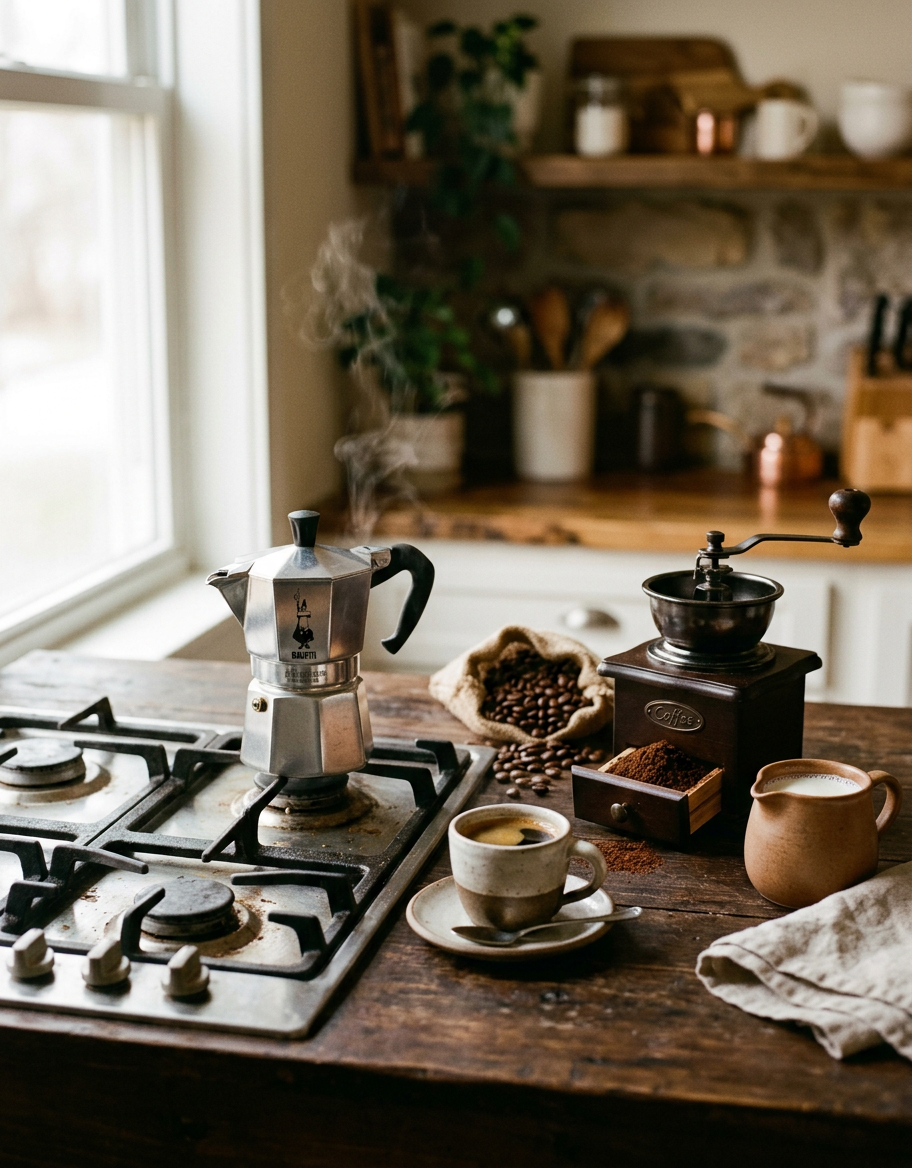
You cannot make true espresso without equipment that delivers stable high pressure, but a stovetop moka pot makes the closest practical alternative: rich, concentrated coffee with a bold body. Use fresh medium-fine coffee, keep the moka pot’s filter basket loosely filled rather than tamped, brew over gentle heat, and stop the brew before it sputters.
- $17.99
- listed price of the reviewed three-cup stovetop moka pot
- 3 cups
- stated capacity of the reviewed moka pot
- 8–10 bar
- proper espresso extraction pressure range cited in our espresso-machine reviews
Key takeaways
- A moka pot makes espresso-style concentrated coffee, not true café espresso, because it does not reach traditional espresso pressure.
- Gentle, closely watched stove heat matters more than chasing a pressure number for a clean-tasting moka pot brew.
- Use a medium-fine grind and never tamp the coffee in a moka pot basket.
- Burr grinding is preferable to blade chopping because a more even particle size makes extraction more predictable.
- A three-cup moka pot is a compact, low-cost route to strong coffee for Americanos, iced drinks, and milk-based drinks.
- Handheld frothers can make airy foam, but they do not replace steam-created microfoam.
Our picks for “how to make espresso without a machine”
- 1
 Coffee Maker Stovetop Espresso Maker with Wood Handle 3 Cup4.3$17.99Our score 6.7/10Best for Traditional strong stovetop brew enthusiasts
 - 2
 Maestri House Burr Coffee Grinder, 80-Level, Rechargeable, Single-Dose4.2$109.99Our score 7.2/10Best for Portable and low-retention home grinding
 - 3
 Lavazza Espresso Whole Bean Coffee, Medium Roast, 100% Arabica, 2.2 lb Bag4.6$22.99Our score 7.7/10Best for Daily classic espresso with balanced acidity
- Coffee Maker Stovetop Espresso Maker with Wood Handle6.7
- Maestri House Burr Coffee Grinder7.2
- Lavazza Espresso Whole Bean Coffee7.7
- Coffee Maker Stovetop Espresso Maker with Wood Handle18
- Maestri House Burr Coffee Grinder110
- Lavazza Espresso Whole Bean Coffee23
| Product | Listed price | Type or format | Relevant specification | Key limitation |
|---|---|---|---|---|
| Coffee Stovetop Espresso Maker, 3 Cup | $17.99 | Manual stovetop moka-style brewer | 3-cup capacity; ground coffee input | Cannot produce true espresso pressure |
| Maestri House Burr Coffee Grinder | $109.99 | Rechargeable single-dose burr grinder | 38 mm conical burr; 80 stepped settings | Stepped adjustment limits precision espresso dial-in |
| Lavazza Espresso Whole Bean Coffee | $22.99 | Whole-bean medium roast | 100% Arabica; 2.2 lb bag | Large bag demands airtight storage |
Can you make real espresso without an espresso machine?
Not exactly. Espresso is a concentrated coffee beverage made by forcing water through a compact bed of finely ground coffee at controlled pressure. Traditional espresso extraction occurs around 8 to 10 bar, while a stovetop moka pot uses steam displacement rather than a pump. That distinction affects texture, crema, and flavor clarity.
Still, a moka pot is the most convincing machine-free method for people who want a short, intense coffee. It produces a stronger, richer brew than standard drip coffee and works particularly well diluted with hot water for an Americano-style drink, poured over ice, or combined with warmed milk. Think of it as moka coffee or espresso-style coffee, rather than promising a café-identical shot.
The practical advantage is simplicity. The reviewed three-cup stovetop brewer has no electronic components, accepts ground coffee, and is listed at $17.99. Its tradeoff is that you become the temperature control system: high burner heat can scorch the coffee or drive bitter flavors into the cup. Learn the fundamentals in our Coffee gear buyer's guide, then compare the brewer’s strengths and limitations in our stovetop moka pot review.
A pod brewer can make a short coffee with little effort, but it is still a machine and locks you into capsules. If the goal is fresh beans, minimal equipment, and hands-on control, a moka pot is the more direct answer.
Read the reviews: Coffee Maker Stovetop Espresso Maker with Wood Handle
What do you need for moka-pot espresso-style coffee?
You need four basics: a moka pot, fresh coffee, water, and a heat source. A cup and spoon are helpful; a scale improves repeatability but is optional. The reviewed stovetop brewer is a three-cup model, so use its own funnel basket and do not try to convert capacity into a fixed coffee dose without checking the actual basket size.
Choose whole beans when possible, then grind immediately before brewing. Whole bean coffee gives you control over particle size, which is critical because moka brewing needs a medium-fine grind: finer than ordinary drip, but usually coarser than a pump-espresso grind. A burr grinder is the better tool because it produces a more consistent particle distribution than a blade grinder. Blade grinders chop beans into mixed sizes, creating both overextracted fines and underextracted larger particles.
The Maestri House grinder is a portable burr option with a 38 mm conical burr and 80 stepped settings. Its stepped adjustment can limit precise espresso dialing, but it is meaningfully better aligned with moka brewing than the blade models in our reviews. Read more about why grinder design outweighs motor wattage in Coffee Grinder and Espresso: What You Need to Buy.
For coffee, the reviewed Lavazza Espresso whole-bean coffee is a medium roast, 100% Arabica option that our reviews find versatile for both espresso and moka pot use. Its 2.2-pound bag is economical for frequent brewing, but store beans airtight and away from heat and light after opening.
Read the reviews: Coffee Maker Stovetop Espresso Maker with Wood Handle, Maestri House Burr Coffee Grinder, Lavazza Espresso Whole Bean Coffee
How do you brew moka coffee without bitterness?
The core technique is straightforward: fill the bottom chamber with water, fill the basket with coffee without compressing it, assemble the brewer, and use moderate heat. The important details are what protect flavor. Moka pots brew quickly once the water approaches boiling, so excessive burner heat can make the final flow violent and harsh.
Start with fresh water in the lower chamber and keep the level below the safety valve. Insert the funnel basket, add medium-fine grounds, and gently level the surface. Do not tamp or pack the coffee. Tamping restricts flow; unlike a pump machine, a moka pot is not designed to push water through a compressed espresso puck.
Place the pot on low-to-medium heat with the handle kept away from the burner. As coffee begins flowing into the top chamber, watch it closely. When the stream turns pale, sputters, or loses its smooth, steady flow, remove the pot from the heat. Cooling the lower chamber carefully with a cool damp towel can help stop extraction, but avoid burns and handle hot metal cautiously.
Pour promptly. Leaving finished coffee in the hot upper chamber can make it taste stale or bitter. For broader technique and setup guidance, see our coffee gear FAQ and our guide to common coffee gear mistakes.
Read the reviews: Coffee Maker Stovetop Espresso Maker with Wood Handle
What grind size should you use without a machine?
For a moka pot, begin at medium-fine: the grounds should feel noticeably finer than common drip coffee but not powdery like flour. The right setting depends on the coffee, basket, heat source, and your taste, so adjust in small increments. Since the Maestri House grinder has 80 stepped settings rather than stepless adjustment, work one setting at a time and keep notes.
If the brew rushes through early and tastes thin, sour, or weak, try a slightly finer grind or lower the heat. If the brew creeps out very slowly, sputters aggressively, or tastes bitter and dry, go slightly coarser and lower the heat. Change only one variable at a time; otherwise you will not know what improved the cup.
Avoid using a spinning blade grinder for this job when flavor matters. The reviewed Hamilton Beach Fresh Grind, Amazon Basics, BLACK+DECKER, Wancle, and KRUPS units are blade grinders. Our reviews find that their uneven particle mix is unsuitable for espresso or precision brewing. Running a blade grinder longer does not create a calibrated finer grind; it merely continues chopping inconsistently and can add frictional heat.
The 80-setting Maestri is not a precision espresso specialist, but its true burr geometry, single-dose workflow, and portable rechargeable design make it the strongest reviewed grinder match for this machine-free approach. See its details in our Maestri House burr grinder review.
Read the reviews: Maestri House Burr Coffee Grinder
How can you make a latte-style drink without a steam wand?
Make the moka coffee first, then warm milk separately and froth it with a handheld whisk if you want a simple latte-style drink. This creates a pleasing milk-and-coffee beverage, but set expectations correctly: a handheld frother whips air into milk, whereas a steam wand both heats and folds air into milk to create fine microfoam.
For better results, warm the milk gently rather than boiling it. Use a narrow, heat-safe container with enough empty space for expansion. Keep the whisk near the surface briefly to introduce air, then lower it slightly to mix the foam through the milk. Pour the milk soon after frothing because large, airy bubbles separate more quickly than steam-textured microfoam.
The SIMPLETASTE rechargeable dual-coil model is listed at $8.99 and eliminates the need for disposable batteries. Its dual-coil head speeds aeration, although our review notes that the foam remains more like lather than espresso-grade microfoam. The Zulay and Bonsenkitchen handheld options follow the same basic limitation: they are useful for casual foam, not latte-art texture.
For a stronger coffee flavor, serve a smaller amount of milk than you would with a full mug of drip coffee. For an iced version, chill the moka coffee briefly before adding milk and ice so the drink is not immediately diluted. Explore more setup choices in our Coffee gear reviews.
Read the reviews: SIMPLETASTE Rechargeable Milk Frother Handheld Dual
What are the biggest moka pot mistakes to avoid?
The most common mistake is treating a moka pot like a pump espresso machine. Do not tamp the basket, do not use an ultra-fine powdery grind as a default, and do not rely on maximum burner heat. Moka pots need a clear path for water and controlled heat, not brute force.
Avoid these problems:
- Filling water above the safety valve, which is an unsafe use of the brewer.
- Leaving old grounds or coffee oils on the gasket, filter plate, and funnel basket.
- Brewing on a burner that is too large, allowing flames or intense heat to reach the handle or sides.
- Walking away during the final stage, when sputtering signals that extraction is nearly finished.
- Storing coffee in the brewer after use instead of pouring it out promptly.
- Using a blade grinder and expecting repeatable results from an uneven particle mix.
Cleaning is simple but important. Let the brewer cool fully, discard the puck, rinse removable parts with warm water, and dry them before reassembly. Periodically inspect the gasket and filter for wear or blockage. Follow the manufacturer’s care instructions for your specific moka pot, particularly regarding detergents and dishwasher use.
If this process makes you realize that repeatable temperature and extraction control matter more than convenience, a dedicated espresso setup may be the better long-term path. Our best home espresso machines guide explains the category, while our budget planner can help frame the machine-and-grinder cost together.
Read the reviews: Coffee Maker Stovetop Espresso Maker with Wood Handle
Is a moka pot or an espresso machine the better buy?
Choose a moka pot if you want concentrated coffee inexpensively, enjoy manual brewing, and do not need true espresso shots or café-style milk texture. At a listed $17.99, the reviewed three-cup model has a dramatically lower entry cost than the reviewed electric espresso machines. It also has no internal electronics and a durable manual metal construction according to our review.
Choose an espresso machine if your priorities are a more authentic espresso profile, repeatable shots, and steaming milk. But do not judge machines by large pressure claims alone. Our buying criteria put temperature stability ahead of pressure numbers printed on the box. For example, the reviewed Gevi advertises 20 bar, while its review notes that proper espresso extracts around 8 to 10 bar and that stable brew temperature is the more consequential issue.
Budget for the grinder as seriously as the brewer. A quality burr grinder supports more even extraction, and stepless adjustment is especially valuable for pump espresso. The reviewed Maestri’s 80 stepped burr settings offer a workable portable route for moka coffee, but its adjustment is still less precise than a stepless espresso grinder.
A sensible starter combination is a moka pot, a burr grinder, and beans you can finish while they remain fresh. That setup costs less, occupies little space, and teaches the fundamentals of grind, heat, and extraction before you commit to an espresso appliance. For machine options later, consult the best espresso machine under $500.
Read the reviews: Coffee Maker Stovetop Espresso Maker with Wood Handle, Maestri House Burr Coffee Grinder
Step by step
- 1Fill the moka pot’s lower chamber with fresh water to just below the safety valve.
- 2Insert the filter basket and fill it loosely with medium-fine coffee; level the surface but do not tamp.
- 3Screw the top and bottom sections together securely, using a towel if the base contains hot water.
- 4Set the moka pot over low-to-medium heat, with the handle positioned away from the heat source.
- 5Watch the upper chamber as coffee begins to flow; lower the heat if it erupts or sputters rapidly.
- 6Remove the pot from heat when the stream becomes pale, gurgly, or sputtery.
- 7Pour the coffee promptly and drink it straight, dilute it with hot water, or add warmed frothed milk.
Quick checklist
- Confirm that the moka pot gasket, filter plate, and safety valve are clean and unobstructed.
- Use fresh coffee and start with a medium-fine grind.
- Fill the lower chamber with water only to below the safety valve.
- Fill the basket loosely and level it without tamping.
- Use low-to-medium heat and keep the handle away from the burner.
- Remove the pot from heat when the flow becomes pale or starts sputtering.
- Pour immediately, then allow the pot to cool before cleaning.
- Store remaining beans in an airtight container away from heat and light.
Frequently asked questions
- Can you make espresso with a moka pot?
- A moka pot makes concentrated, espresso-style coffee, but it does not make true espresso. Traditional espresso depends on controlled high pressure, commonly around 8 to 10 bar, while a moka pot uses steam displacement. Expect a strong, rich cup that works well in small servings or milk drinks, with a different texture and crema profile.
- What coffee grind is best for a moka pot?
- Start with a medium-fine grind: finer than typical drip coffee but usually not as fine as pump-espresso coffee. If the brew is thin and fast, make the grind slightly finer. If it is bitter, slow, or sputters forcefully, go a little coarser. A burr grinder makes these adjustments more repeatable than a blade grinder.
- Can I use pre-ground espresso coffee in a moka pot?
- You can, but check the texture. Many coffees labeled for espresso are ground very fine for pump machines and may restrict flow in a moka pot. If the coffee tastes harsh or the pot sputters excessively, use a coarser moka-appropriate grind next time. Freshly grinding whole beans gives you better control.
- Why is my moka pot coffee bitter?
- Bitterness commonly comes from excessive heat, brewing too long into the sputtering stage, stale coffee, or a grind that is too fine. Use lower heat, remove the pot as soon as the output becomes pale or gurgly, and make one adjustment at a time. Clean old coffee residue from the filter and gasket as well.
- Can I make a latte without an espresso machine?
- Yes, you can make a latte-style drink by combining moka coffee with warmed, frothed milk. A handheld frother can create airy foam, although it will not create the fine, glossy microfoam made by a steam wand. Use a smaller amount of milk than for drip coffee if you want the coffee flavor to stay prominent.
- Is a blade grinder good enough for moka pot coffee?
- It can produce drinkable coffee in a pinch, but it is not the preferred option. Blade grinders create an uneven mix of very fine and large particles, which makes extraction less consistent. A burr grinder is the better investment because it gives a more uniform grind and lets you adjust more deliberately for your moka pot.
Sources
- Niche Picks review: Coffee Maker Stovetop Espresso Maker with Wood Handle 3 Cup
- Amazon listing and buyer reviews: Coffee Maker Stovetop Espresso Maker with Wood Handle 3 Cup
- Niche Picks review: Maestri House Burr Coffee Grinder
- Amazon listing and buyer reviews: Maestri House Burr Coffee Grinder
- Niche Picks review: Lavazza Espresso Whole Bean Coffee
- Amazon listing and buyer reviews: Lavazza Espresso Whole Bean Coffee
- Coffee gear buyer's guide
- How we research and score products
Amazon links are affiliate links; we may earn a commission at no cost to you.
More on Coffee gear
- The best home espresso machines we reviewed
- Breville Barista Express Espresso Machine: Is It Worth It?
- The best espresso machine under $500
- Best Espresso Machine for Home: 5 Picks and Buying Advice
- Coffee Grinder and Espresso: What You Need to Buy
- De'Longhi Stilosa Espresso Machine: What to Know
- How to Descale a Breville Espresso Machine Safely
- How to Clean a Breville Espresso Machine: Daily to Deep Clean
- Coffee gear buyer's guide
- Coffee gear FAQ
- All coffee gear reviews