How to Descale a Breville Espresso Machine Safely
Use the machine’s guided cleaning program and approved descaling solution, then rinse thoroughly to protect flavor and reliable water flow.
By the Niche Picks editorsUpdated October 3, 20268 min readDrawn from our 30 research-based coffee gear reviews
Short answer
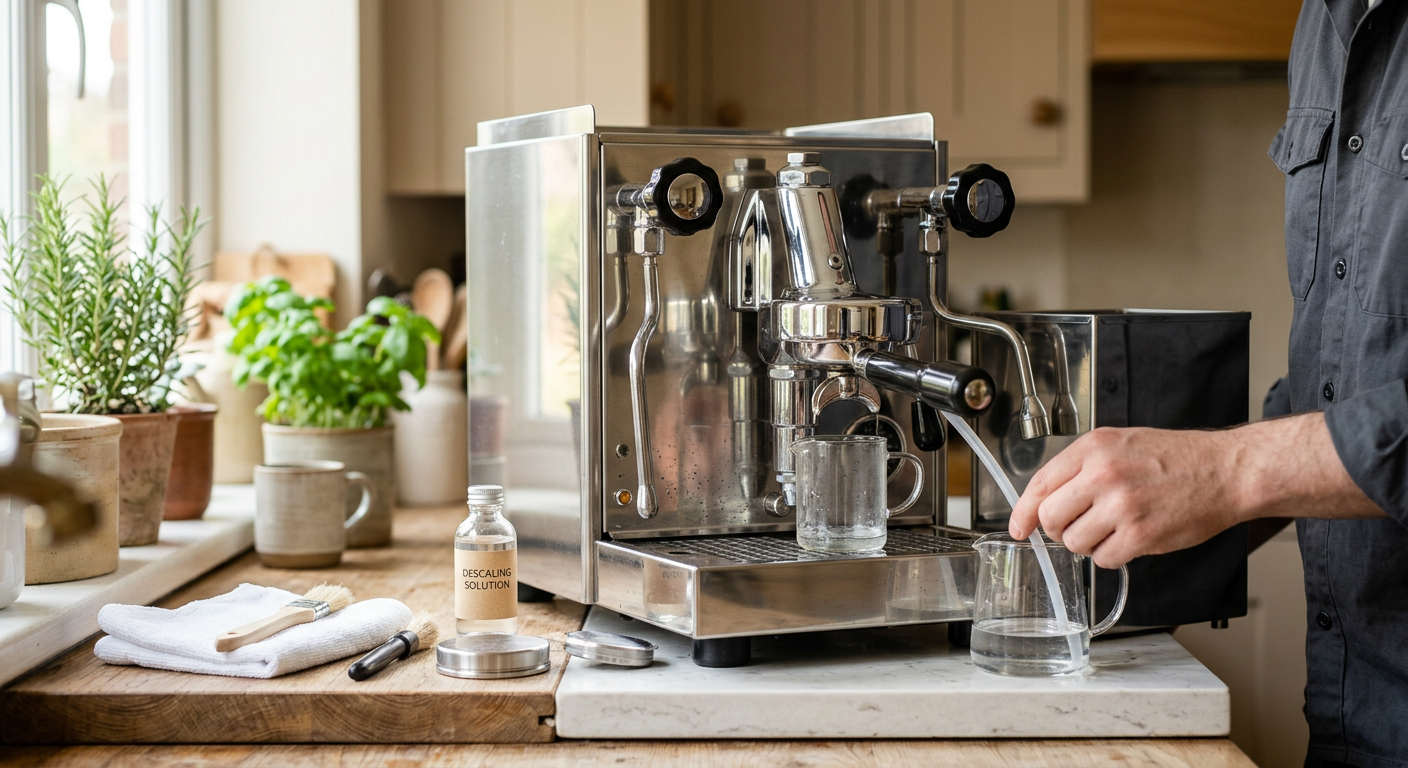
To descale a Breville espresso machine, remove coffee and accessories from the brew path, prepare the manufacturer-approved descaling solution, and run the descaling program specified for your exact model. Collect the discharged liquid, then complete every required fresh-water rinse cycle before making coffee. Avoid substituting vinegar unless your model’s manual explicitly permits it, because procedures and materials vary by machine.
- 1,600 watts
- listed power for the Breville Barista Express versions in our reviews
- 120 volts
- listed electrical specification for the reviewed Barista Express versions
- 3 models
- reviewed Breville Barista Express color variants with the same core all-in-one concept
Key takeaways
- Descaling removes mineral scale from water pathways; it is different from cleaning coffee oils off the portafilter, basket, and group area.
- Follow the instructions for the exact Breville model, since button sequences, solution amounts, and rinse requirements can differ.
- Finish the full fresh-water rinse process or residual descaling solution can affect the taste of the next drinks.
- Water hardness and usage determine timing more reliably than a calendar alone; hard water generally calls for more frequent descaling.
- The Breville Barista Express is a 1,600-watt, 120-volt semi-automatic machine with a thermocoil system, so consistent maintenance supports dependable heat and flow.
Our picks for “how to descale breville espresso machine”
- 1
 Breville BES870XL Barista Express Espresso Machine, Brushed Stainless Steel4.4$689.99Our score 7.3/10Best for Convenient all-in-one home espresso setups
 - 2
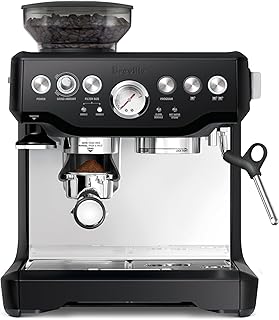 Breville BES870BTR Barista Express Espresso Machine, Black Truffle4.4$699.95Our score 7.6/10Best for Compact, all-in-one domestic espresso setups
 - 3
 Breville BES870BSXL Barista Express Espresso Machine, Black Sesame4.4$695.00Our score 7.2/10Best for Convenient single-appliance home espresso workflows
- Breville BES870XL Barista Express Espresso Machine7.3
- Breville BES870BTR Barista Express Espresso Machine7.6
- Breville BES870BSXL Barista Express Espresso Machine7.2
- Breville BES870XL Barista Express Espresso Machine690
- Breville BES870BTR Barista Express Espresso Machine700
- Breville BES870BSXL Barista Express Espresso Machine695
| Product | Listed price | Operation mode | Wattage | Voltage | Our score |
|---|---|---|---|---|---|
| Breville Barista Express BES870XL | $689.99 | Manual | 1600 watts | 120 | 7.3/10 |
| Breville Barista Express BES870BTR | $699.95 | Semi-Automatic | 1600 watts | 120 volts | 7.6/10 |
| Breville Barista Express BES870BSXL | $695.00 | Semi-Automatic | 1600 watts | Not listed | 7.2/10 |
What is the right way to descale a Breville espresso machine?
The right method is the one in the instruction manual for your exact Breville model: run its designated descaling program with a compatible descaling solution, then perform all specified water-only rinses. Descaling dissolves mineral deposits left behind when heated water evaporates or moves through internal passages. Those deposits are commonly called limescale or scale.
Do not confuse that task with routine coffee cleaning. Coffee oils and grounds accumulate on removable brewing parts, while scale accumulates in water-contact components. Both jobs matter, but they call for different products and procedures. For a broader maintenance overview, see our espresso-machine descaling guide and the practical habits in our coffee gear mistakes guide.
Before beginning, confirm three things in the model-specific manual:
- The descaling solution type and dilution ratio.
- The correct program-start sequence and whether the machine must be cold or warmed up.
- The required rinse volume and any parts that should be removed, emptied, or reinstalled.
Set a large container under the outlets and keep the machine attended while the cycle runs. The discharged liquid is not drinkable. When the procedure is complete, rinse removable parts that contacted solution and run the required fresh-water cycles before pulling a shot or steaming milk. If a cleaning or descaling prompt remains after completing the manual’s process, do not repeat chemical cycles at random; recheck the instructions for that model and verify that every programmed stage was allowed to finish.
Read the reviews: Breville BES870XL Barista Express Espresso Machine
What should you do before starting the descale cycle?
Preparation makes the cycle safer and prevents a simple maintenance task from becoming a mess. Turn the machine off if the manual directs you to begin from an off state, unplug only when you are cleaning exterior or removable components, and let hot surfaces cool before handling them. Never open or disassemble the machine’s internal boiler or water lines.
Empty the drip tray, remove the portafilter, discard coffee grounds, and take any milk container away from the work area. Place a stable, heat-safe vessel beneath the coffee outlet and steam outlet if the model’s instructions use both. The container must be large enough for the full amount of liquid the program may discharge; empty it carefully if the manual permits a pause.
Use fresh water and a descaler intended for espresso machines, mixed exactly as directed by its label and the Breville manual. Guessing at concentration can leave ineffective results or require excessive rinsing. It is also wise to wipe away splashes promptly, particularly around controls and seams.
Avoid using improvised acidic cleaners, including vinegar, unless the instructions for the precise machine explicitly say they are acceptable. An online tip for a different appliance is not a substitute for the manufacturer’s procedure. If you are unsure whether you own a Barista Express or another Breville design, compare the identifying details with our Barista Express review before looking up the correct manual. For more ownership basics, our Coffee Gear FAQ collects common setup and care questions.
Read the reviews: Breville BES870XL Barista Express Espresso Machine, Breville BES870BTR Barista Express Espresso Machine
How do you run the cycle and rinse the machine afterward?
Start the descaling program only after the reservoir has the correctly prepared solution and the collection vessel is in place. Then use the exact control sequence in your model’s manual. Guided programs may alternate flow through different outlets or pause between phases, so let each phase complete rather than treating a stop as a fault.
Watch the process without leaving the machine unattended. If the catch vessel approaches capacity, handle it cautiously: discharged liquid can be hot. Do not brew coffee, make a drink, or use the discharged solution for any purpose during the cycle. Keep children and pets away from the counter while chemicals and hot water are in use.
Rinsing is the essential final half of descaling. Once the solution phase ends, empty and rinse the water tank and drip tray, fill the tank with clean water, and run every water-only rinse cycle specified by the manual. Replace the water with another fresh fill if the instructions require it. The goal is to remove dissolved mineral residue and any remaining descaling solution from the machine’s water path.
After the final rinse, wash the portafilter and basket with warm water, wipe the steam wand exterior if applicable, and empty the drip tray. Pull a small water-only flush before the next espresso if that is part of normal operation for your machine. Good upkeep supports the thermal consistency that matters more in the cup than headline pressure figures; our home espresso machine guide explains why stable brewing conditions deserve priority.
Read the reviews: Breville BES870BSXL Barista Express Espresso Machine
How often should a Breville espresso machine be descaled?
Descale when your machine’s maintenance guidance calls for it, when a model-specific prompt appears, or sooner if hard water and heavy use make scale likely. There is no single universal interval that responsibly fits every Breville machine or household. Water mineral content varies considerably, and a household making several drinks daily puts more water through the machine than an occasional user.
Use observable context rather than waiting for brewing problems. Changes in water flow, unusual pumping behavior, or slower heating can have several causes, including scale, a blocked basket, or an incorrectly assembled part. They are reasons to check the manual and perform normal maintenance, not proof that scale is the only cause.
A sensible record is more useful than guesswork. Note the date of each descale, the kind of water used, and whether the machine displayed a maintenance notice. If you move to a hard-water area or usage rises sharply, review the schedule sooner. Conversely, do not run chemical descaling cycles unnecessarily just because an arbitrary date arrived.
Water treatment can reduce mineral exposure, but it does not eliminate the need to follow the machine’s maintenance instructions. Keep the reservoir clean, avoid leaving standing water for extended periods, and refresh water before brewing. These low-effort habits complement—not replace—descaling. Our Coffee Gear buyer’s guide has more context on maintaining an espresso setup, while our coffee gear buying tips can help readers plan for the ongoing costs of ownership.
Read the reviews: Breville BES870XL Barista Express Espresso Machine
What are the common descaling mistakes to avoid?
The most common mistake is using an instruction set for a similar-looking machine. Breville makes different machine formats, and even closely related products can use different programming sequences. Match the manual to the model number printed on the appliance rather than relying on a color name, a retailer listing, or a video.
Other avoidable mistakes include:
- Starting with coffee in the grinder, portafilter, or basket, which adds unnecessary cleanup and can contaminate drink components.
- Using too small a catch vessel or walking away while hot liquid is dispensing.
- Mixing a stronger solution than directed in hopes of a faster result.
- Skipping or shortening the fresh-water rinse phase.
- Assuming descaling corrects every extraction problem, including stale beans, poor grinding, or temperature management.
That final point matters for Barista Express owners. Our reviews describe the BES870XL as an all-in-one semi-automatic platform with an integrated conical burr grinder and a thermocoil. The stepped grinder can limit fine espresso dial-in, while the thermocoil benefits from deliberate workflow and flushing for thermal recovery. Removing scale is worthwhile maintenance, but it cannot turn a stepped adjustment into a stepless grinder or change the machine’s basic heating design.
For better results after maintenance, use fresh beans, clean the basket and portafilter, and make only one controlled change at a time when dialing in. Read our primer on grinders and espresso: burr geometry and adjustment range affect extraction far more than a grinder’s motor-wattage claim.
Read the reviews: Breville BES870XL Barista Express Espresso Machine, Breville BES870BTR Barista Express Espresso Machine, Breville BES870BSXL Barista Express Espresso Machine
Does descaling improve espresso flavor and machine performance?
It can help restore normal water flow and heating behavior when mineral buildup is part of the problem, but descaling is maintenance rather than a universal flavor fix. Espresso quality depends on several linked variables: fresh coffee, an appropriate and consistent grind, dose, distribution, water, brew temperature, and machine cleanliness. Diagnose these separately instead of expecting one treatment to solve them all.
The reviewed Breville Barista Express variants pair a thermocoil espresso system with an integrated conical burr grinder. They are convenient all-in-one machines, but our reviews note their stepped grinder adjustments can limit micro-tuning for espresso. Once the machine is clean and rinsed, adjust the grind and recipe deliberately if shots remain fast, slow, harsh, thin, or uneven.
Use the same beans and a repeatable dose while troubleshooting. Change a single setting, pull another shot, and evaluate the result. This makes it easier to distinguish a maintenance issue from an extraction issue. A grinder that produces more consistent particles is often a more meaningful upgrade path than chasing pressure numbers on a machine’s box. That is why our buying advice recommends allocating a meaningful share of an espresso budget to the grinder.
For readers evaluating whether to maintain, replace, or upgrade a machine, see our best espresso machine for home guide and use the product comparison tool to organize the features that matter to your routine. Descale first, rinse fully, then assess the coffee with a consistent workflow.
Read the reviews: Breville BES870XL Barista Express Espresso Machine, Breville BES870BTR Barista Express Espresso Machine
Step by step
- 1Identify your exact Breville model and read its official descaling instructions before pressing any buttons.
- 2Let hot components cool as needed, empty the drip tray, remove coffee and the portafilter, and place a large container beneath the specified outlets.
- 3Prepare the approved descaling solution in the water reservoir using the directed amount and dilution.
- 4Start the model-specific descaling program and allow each dispensing or pause stage to run as instructed.
- 5Discard the discharged solution safely, then rinse the reservoir and drip tray thoroughly.
- 6Fill the reservoir with fresh water and complete every required water-only rinse cycle.
- 7Reassemble clean accessories, check that the machine is ready for normal operation, and make coffee only after rinsing is complete.
Quick checklist
- Find the manual for the exact model number on your Breville machine.
- Use a descaling solution and dilution ratio approved by that model’s instructions.
- Remove coffee, the portafilter, and other drink-making accessories from the brew area.
- Empty the drip tray and position a sufficiently large heat-safe container under required outlets.
- Stay nearby while the machine dispenses hot descaling liquid.
- Rinse and refill the water tank before completing every required water-only cycle.
- Clean the drip tray and removable brewing parts, then confirm normal water flow before making espresso.
Frequently asked questions
- Can I use vinegar to descale a Breville espresso machine?
- Use vinegar only if the manual for your exact Breville model explicitly approves it. Descaling instructions and compatible materials vary by machine, so a manufacturer-approved espresso-machine descaler is the safer default. Vinegar tips found online may apply to a different appliance and may not include the rinse procedure your machine requires.
- What is the difference between cleaning and descaling a Breville?
- Cleaning addresses coffee oils, grounds, and milk residue on brewing and milk-contact surfaces. Descaling targets mineral deposits in the water pathway. A clean portafilter does not mean the internal water system is free of scale, and a descale cycle does not replace everyday cleanup of baskets, drip trays, and steam equipment.
- How do I know whether my Breville needs descaling?
- Follow the maintenance prompt or schedule in your model’s manual, adjusted for water hardness and how often you use the machine. Reduced flow or changed behavior can justify checking the instructions, but they do not diagnose scale by themselves. A blocked basket, coffee residue, assembly issue, or other fault can produce similar symptoms.
- Do I need to remove beans before descaling a Barista Express?
- You do not need coffee in the brewing workflow during descaling. Remove the portafilter and clear grounds from the brew area so descaling solution cannot contact drink components. Consult the exact model manual for any instructions involving the hopper or grinder; descaling concerns the water path, not coffee bean grinding.
- Why does my espresso still taste bad after descaling?
- Scale may not have been the cause of the flavor problem. Check bean freshness, grind setting, dose, basket cleanliness, and recipe consistency. Our reviewed Barista Express models use integrated conical burr grinders with stepped adjustments, which can make fine espresso dial-in less precise. Change one variable at a time after the machine has been fully rinsed.
- Can descaling fix weak steam or slow water flow?
- It may help if mineral buildup is restricting the water pathway, but it is not a guaranteed fix. Complete the model-specific cycle and rinse process, then check normal operation. If the issue continues, inspect removable, user-serviceable parts as directed by the manual and seek manufacturer support rather than opening the machine.
Sources
- Niche Picks review: Breville BES870XL Barista Express Espresso Machine
- Amazon listing and buyer reviews: Breville BES870XL Barista Express Espresso Machine
- Niche Picks review: Breville BES870BTR Barista Express Espresso Machine
- Amazon listing and buyer reviews: Breville BES870BTR Barista Express Espresso Machine
- Niche Picks review: Breville BES870BSXL Barista Express Espresso Machine
- Amazon listing and buyer reviews: Breville BES870BSXL Barista Express Espresso Machine
- Coffee gear buyer's guide
- How we research and score products
Amazon links are affiliate links; we may earn a commission at no cost to you.
More on Coffee gear
- The best espresso machine under $500
- Coffee Grinder and Espresso: What You Need to Buy
- Breville Barista Express Espresso Machine: Is It Worth It?
- How to descale an espresso machine (and how often)
- How to Clean a Breville Espresso Machine: Daily to Deep Clean
- The best home espresso machines we reviewed
- De'Longhi Stilosa Espresso Machine: What to Know
- Best Espresso Machine for Home: 5 Picks and Buying Advice
- Coffee gear buyer's guide
- Coffee gear FAQ
- All coffee gear reviews