Design and build architecture
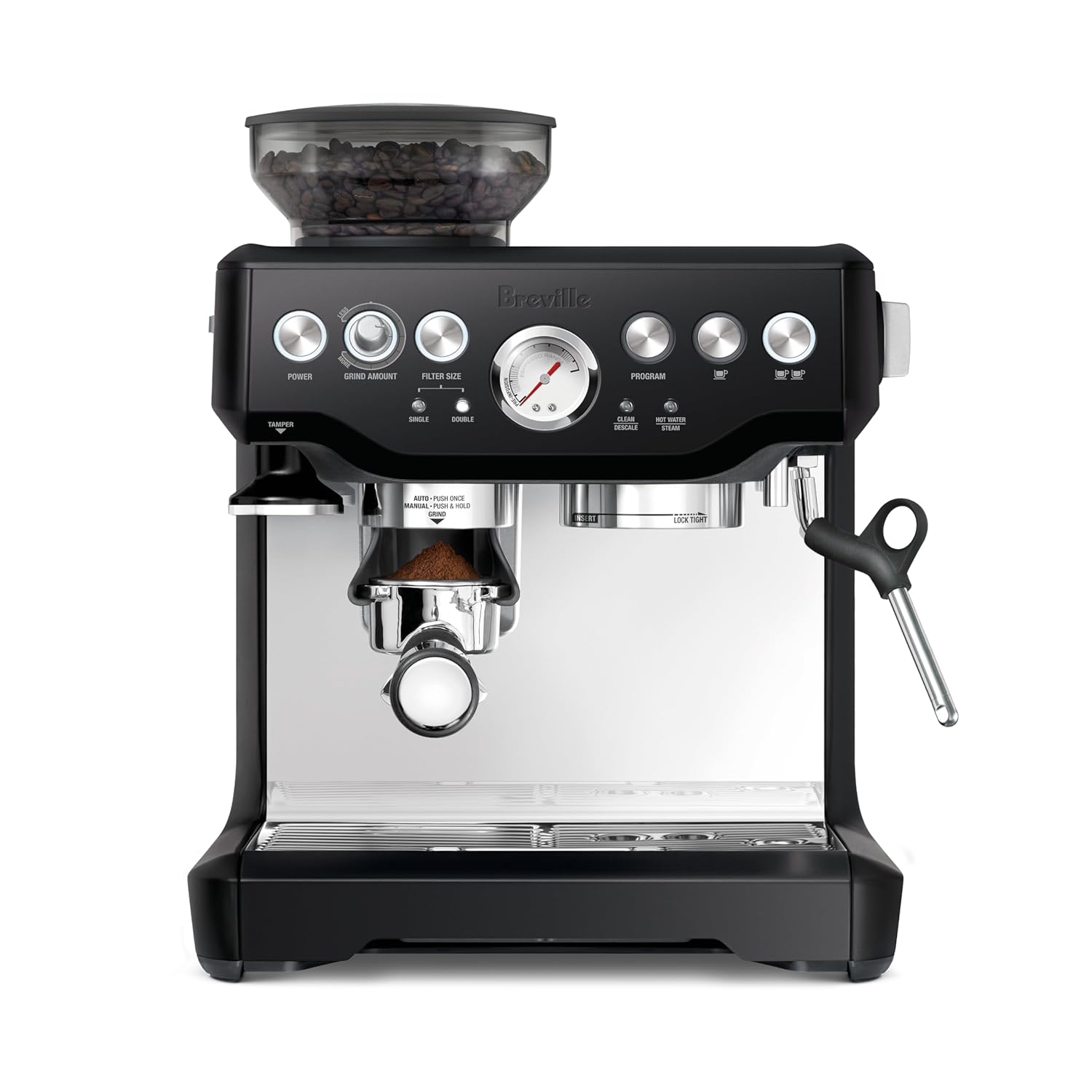
The Barista Express occupies a bench footprint of 13.8 by 12.5 inches with a height of 15.9 inches, weighing 22.1 pounds in its Black Truffle finish. Breville centers the layout around a 54mm stainless steel portafilter rather than the commercial 58mm standard, slightly reducing the surface area of the coffee puck. The top deck accommodates an eight-ounce bean hopper feeding straight down into an internal conical burr assembly. A 67-ounce removable water reservoir docks at the rear, fitted with an integrated filtration cartridge. The front panel incorporates an analog extraction pressure gauge, dedicated single and double shot dosing buttons, and a manual steam control dial on the right flank. Auxiliary appointments include a magnetic storage slot for the included tamper and an integrated hot water dispenser. Overall structural rigidity is respectable for domestic equipment, though the plastic internal gearing and sub-assemblies require deliberate maintenance to avoid premature wear over extended ownership.
Thermal control and extraction dynamics
Adhering to sound coffee principles, Breville prioritizes digital temperature regulation via a PID system rather than relying strictly on unmonitored pump pressure. The heating element operates at 1600 watts on standard 120-volt mains, initiating extraction with a programmed low-pressure pre-infusion stage. This gradual pressure ramp helps saturate the coffee bed evenly before the 15-bar Italian pump ramps toward extraction thresholds, mitigating channel formation in the 54mm basket. While the PID successfully limits thermal fluctuation across sequential shots, users seeking rapid transitions to milk steaming will experience the intrinsic latency of a single-circuit thermocoil system. The manual steam wand produces sufficient velocity to texture milk into microfoam, though it demands patience relative to commercial boilers. The integrated grinder relies on stepped adjustments via an external dial; users should note that stepped increments limit the micro-tuning required to extract finicky light roasts properly compared to dedicated stepless alternatives.
Economic reality and gear allocation
At $699.95, the Barista Express represents a substantial single-purchase outlay that clashes with the standard espresso guideline of budgeting equally between the machine and grinder. The unit packages both components under one roof, bundling accessories such as single and dual-wall filter baskets, the Razor trimming tool, and a stainless milk jug. This comprehensive kit explains its 4.4 out of 5 rating across 27,860 consumer entries, providing immediate operational readiness out of the box. However, the economic compromise lies in upgrade asymmetry. If the internal conical burr grinder reaches its performance ceiling or suffers mechanical failure beyond the one-year limited warranty, the user retains a bulky footprint with redundant hardware. Purchasing a standalone entry-level machine paired with an independent, stepless espresso-focused grinder often yields greater long-term mechanical flexibility, superior particle consistency, and simpler component repair paths for roughly the same cumulative capital investment.
Profiles that should look elsewhere
Advanced home baristas aiming to extract dense, lightly roasted single-origin coffees should bypass this machine. The stepped grind dial does not offer the fractional micro-adjustments necessary to dial in narrow extraction parameters, and the proprietary 54mm basket diameter limits access to third-party precision baskets standard in 58mm formats. High-volume households preparing multiple milk-based drinks back-to-back will find the single thermocoil architecture frustrating, as waiting for temperature transitions between brewing and steaming extends workflow duration. Furthermore, prospective buyers who already own a capable espresso-grade burr grinder should skip the BES870BTR entirely to avoid paying for an integrated grinder that consumes chassis space. Finally, individuals unwilling to perform regular descaling, grinder disassembly, and group head maintenance will encounter reliability hurdles, as compact all-in-one architectures require rigid preventative care to maintain pump and solenoid health over years of domestic operation.