Best Tripods for Long Exposure Photography: 2026 Picks
Achieve razor-sharp long exposures with stable support systems that prevent vibration, ensuring every frame remains steady during extended shutter durations.
By the Niche Picks editorsUpdated November 8, 20267 min readDrawn from our 34 research-based photography & videography reviews
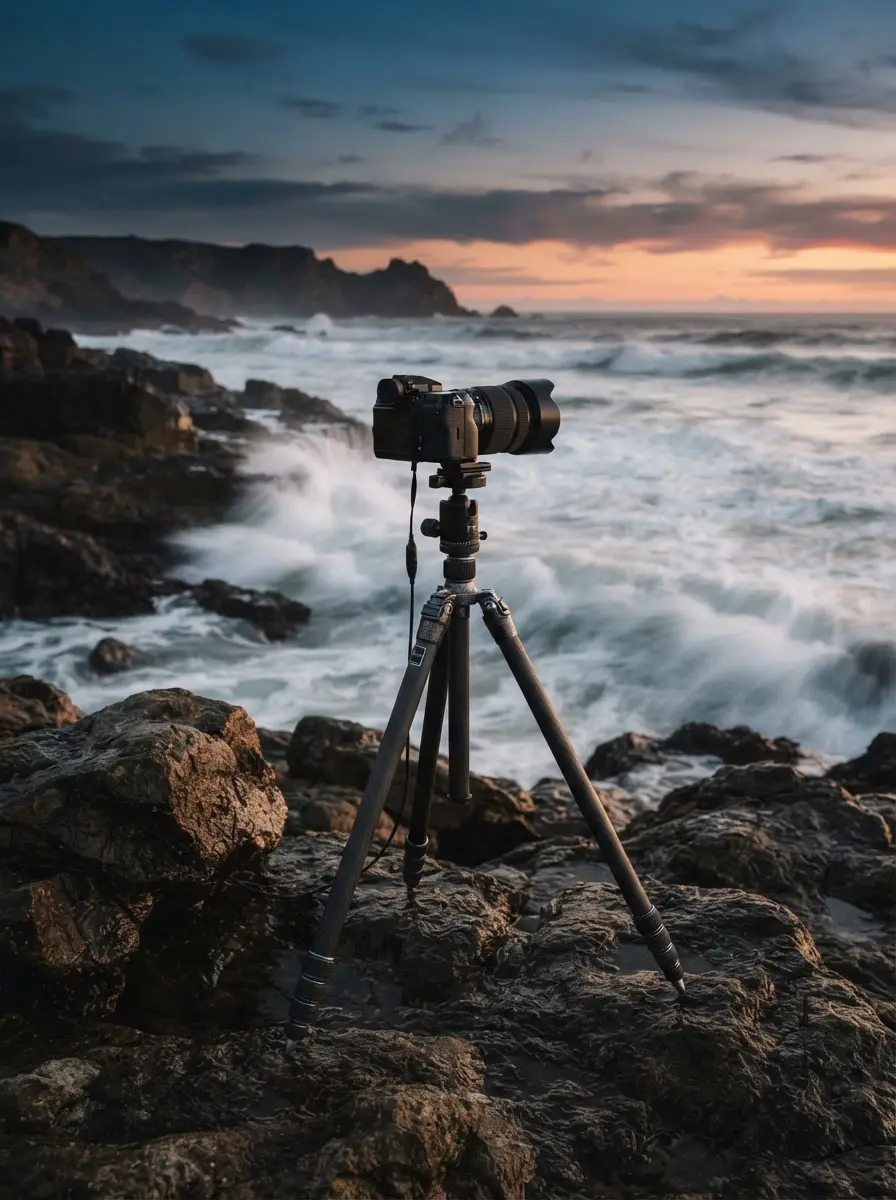
AI-generated editorial illustration; not a product or test photograph.
Short answer
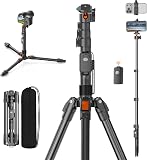
For long exposure photography, stability is the primary requirement to prevent blur during slow shutter speeds. While our reviews focus on entry-level portable tripods suitable for lightweight mirrorless setups, the XXZU 75-inch tripod and K&F Concept 64-inch tripod offer the most robust aluminum construction and height flexibility for balancing budget with essential rigidity.
3
Product listings discussed; not hands-on tests
3/3
Discussed listings with a recorded price
$31.99–$49.99
Recorded listing price range; not a complete setup cost
Key takeaways
Long exposure photography mandates a stable foundation to eliminate vibrations during long shutter cycles.
Aluminum tripods provide an excellent balance of weight and structural rigidity for travel-focused photographers.
Look for tripods that include a ballast hook to add counterweights, significantly improving stability in outdoor wind.
Avoid ultra-lightweight smartphone stands for heavy cameras, as they lack the mass to resist environmental turbulence.
Always prioritize your budget for high-quality lenses, as they retain optical value longer than camera bodies.
Products discussed in this article
Editorial scores and recorded prices are reference points, not measurements of suitability for every use. Read each review's specifications and limitations.
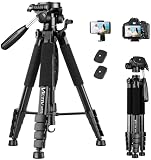
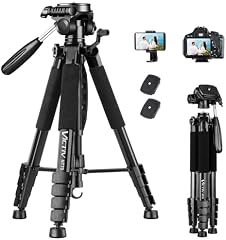
VICTIV 74” Camera Tripod, Tripod for Camera and Phone$31.99
Comparison of Recommended Tripods
Product
Max Height
Weight
Best Feature
XXZU 75" Tripod
75 inches
2.18 lbs
Converts to monopod
K&F Concept 64"
64 inches
2.53 lbs
Travel-oriented fold
VICTIV 74"
74 inches
3.14 lbs
High vantage point
Why Stability Matters for Long Exposures
Long exposure photography involves leaving the camera shutter open for seconds or minutes, a process that makes the sensor exceptionally vulnerable to even the slightest movement. Any vibration—caused by wind, passing traffic, or an unstable tripod—will result in blurred images. When selecting a tripod for long exposure photography, the goal is to choose a platform that minimizes oscillation. Our research indicates that heavier aluminum builds generally outperform flimsy plastic alternatives.
For those just starting out, managing your budget is crucial. Instead of overspending on a top-tier carbon fiber tripod, you can achieve professional results by using a reliable entry-level unit like the XXZU 75-inch tripod. This model offers enough height for eye-level composition and converts to a monopod for tighter spaces. It is important to remember that your tripod is a support tool; you should always invest in your lens collection first, as optics have a longer lifespan than camera bodies or support gear. Check our Photography & videography FAQ for more guidance on gear longevity.
Ensure your tripod has a ballast hook to stabilize it in wind.
Use a remote shutter or your camera's self-timer to avoid vibration when pressing the button.
Choose a tripod that matches your camera weight, not just your height requirements.
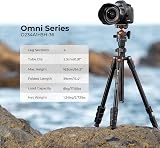
The construction materials of your tripod determine how much vibration it can dampen. Most best budget tripods utilize aluminum for a reason: it is significantly more rigid than the molded polymers found in sub-$20 units. The K&F Concept 64-inch travel tripod is a prime example of this design philosophy, offering a sturdier aluminum frame that is still portable enough for field travel. Unlike cheaper smartphone-focused stands, this tripod is designed specifically with mirrorless camera setups in mind.
When you encounter mistakes to avoid, buying a stand that cannot support your camera's weight is near the top of the list. Even if the manufacturer lists a high maximum load, the stability often degrades as you extend the legs fully. In windy conditions, the thin lower leg sections of any budget tripod will flex. By keeping the center column lowered and the tripod at a moderate height, you can significantly improve the sharpness of your long exposures.
Aluminum legs offer better wind resistance than plastic alternatives.
Check the weight limit against your specific camera and lens combo.
Avoid fully extending the thinnest leg sections whenever possible.
Use rubber feet on slippery surfaces to prevent accidental tripod shifting during long exposures.
Always use your camera's self-timer (at least 2 seconds) when shooting long exposures. This prevents the shake caused by pressing the shutter button from reaching the sensor.
Key Features for Field Performance
When you are out in the field, practical features can make or break your session. The VICTIV 74-inch tripod features a high vantage point that is excellent for portrait-orientation landscape shots, which are common in long exposure work. The inclusion of a ballast hook allows you to hang your camera bag, effectively increasing the tripod's mass and lowering its center of gravity—a vital trick for keeping your setup grounded.
Video creators who also dabble in photography often need versatile gear. If your focus shifts from stills to video, ensure your memory cards are up to the task. Using high-bitrate video requires V30 or V90 cards to prevent dropped frames, as noted in our Photography & videography overview. While these tripods serve photography well, they are often just as effective for static video shots. Remember to compare different head mechanisms before buying; a ball head is generally faster for stills, while a pan-tilt head provides more control for sweeping landscapes.
Ball heads allow for quick, fluid adjustments when framing.
Look for integrated bubble levels to ensure your horizon is perfectly flat.
A quick-release plate saves significant time during setup transitions.
Carrying cases, often included, protect your investment from transit damage.
In the world of photography, your budget should follow a specific hierarchy: glass, body, then support. High-quality full-frame mirrorless cameras or budget mirrorless cameras are excellent tools, but they will never compensate for poor support in long exposure scenarios. Because optics hold their value for years, you should allocate a larger portion of your funds toward the best lenses available.
By choosing a cost-effective yet reliable tripod, you free up cash for premium lenses or high-speed storage. Our reviewed tripods, such as those from VICTIV or K&F Concept, provide the necessary stability for enthusiasts to capture long exposures without sacrificing the funds needed for high-resolution glass. It is this approach to gear acquisition that ensures a well-rounded, future-proof kit. If you are ever unsure about a specific piece of equipment, reference our Photography & videography FAQ to see how it fits into a professional or enthusiast workflow.
Allocate funds to lenses first, then cameras, then support.
Choose tripod brands known for consistent quality control.
Don't neglect the cost of accessories like shutter remotes and filters.
Invest in reputable memory brands to ensure your data is secure during long shoots.
Avoid extending your tripod's center column or thinnest leg sections in windy weather. The more you extend, the more the tripod will vibrate.
Setup Procedures for Steady Shots
Achieving a tack-sharp long exposure is as much about technique as it is about equipment. Once you have your tripod for long exposure photography set up, the next step is to minimize human-induced vibration. Touching your camera to press the shutter button is a common cause of blur in otherwise perfectly framed shots. Using a 2-second or 10-second self-timer mode is a simple, free solution to this problem, allowing the entire system to settle completely before the sensor begins its exposure.
Furthermore, always ensure the tripod legs are spread to their widest base position. If the environment is windy, stay low to the ground to reduce the leverage wind exerts on your camera. If you have any questions about managing your camera settings, such as finding the optimal ISO to reduce digital noise during long exposures, look through our deeper articles. By systematically refining your approach, you turn every tripod into a precision instrument capable of capturing breathtaking, high-resolution images.
Spread legs as wide as your shooting space allows for max stability.
Always remove the camera strap during long exposures to prevent it from acting as a sail in the wind.
Turn off lens stabilization when using a tripod to prevent hunting errors.
Check your focus manually; autofocus can sometimes fail during very long, dark exposures.
A tripod is a mechanical tool that requires occasional care, especially if you shoot in harsh outdoor environments like beaches or dusty trails. Grit and salt can infiltrate the leg locks and ball head mechanisms, leading to stiffness or even corrosion. Periodically wiping down the leg sections with a damp cloth and ensuring the locks are free of debris will keep your budget tripod functioning smoothly for years.
Never apply oil or lubricants to the leg locks, as this can attract more dust and sand, causing more harm than good. If a lock becomes loose, most manufacturers provide a small hex tool to tighten the tension bolts. Proper care ensures that your tripod remains a reliable companion for your photography and videography needs. By respecting the mechanical limitations of your gear, you ensure that your investment pays off in consistent, sharp images for years to come. Check our buying tips for more long-term care strategies.
Wipe legs clean after shooting in sandy or wet environments.
Regularly check and tighten any loose adjustment screws or bolts.
Store your tripod in its provided bag when not in use to prevent dings.
Never force a lock if it feels stuck; clean it first, don't push it.
2Extend the thickest leg sections first to maintain rigidity.
3Attach your camera securely to the quick-release plate.
4Hang a camera bag or weight on the ballast hook if it is windy.
5Level the horizon using the integrated bubble level.
6Switch your camera to manual mode and set your target shutter speed.
7Enable the 2-second self-timer to avoid vibration upon release.
8Trigger the shot and remain still until the exposure is complete.
Quick checklist
Verify the tripod's payload capacity matches your camera and lens combination.
Check for an included hook to add weight for extra stability.
Confirm the tripod includes a quick-release plate for efficient mounting.
Ensure the tripod height meets your eye-level needs without extending the center column.
Look for a ball-head mechanism for fast, precise frame adjustments.
Prepare a remote shutter or use the camera's built-in delay timer.
Frequently asked questions
Do I need a carbon fiber tripod for long exposures?
While carbon fiber is lighter and dampens vibration better than aluminum, it is not strictly necessary for most beginners. A sturdy aluminum tripod used with proper technique—like staying low and using a self-timer—can produce professional long exposure results at a fraction of the price.
How do I keep my tripod stable in the wind?
Stability in the wind is best achieved by lowering your tripod height, keeping the center column fully retracted, and using a ballast hook to add weight. Hanging your camera bag or a dedicated counterweight helps pull the tripod down, resisting wind gusts that cause vibrations.
Is a ball head better than a 3-way head?
It depends on your workflow. A ball head is generally faster to set up and adjust for quick landscape compositions. A 3-way pan-tilt head offers superior precision for fine adjustments in studio settings or complex architectural shots where you need to lock each axis independently.
Can I use a smartphone tripod for my DSLR?
Generally, no. Tripods designed for smartphones are usually too lightweight and lack the structural integrity to support the weight of a DSLR or mirrorless camera. Using one can lead to camera instability or damage, especially if the tripod tips over.
How often should I clean my tripod?
You should wipe down your tripod after every outdoor shoot, especially if you have been near water, sand, or heavy dust. Saltwater is particularly corrosive to metal joints. Never use lubricants; simply use a dry or lightly dampened cloth to remove particulate matter.
Amazon links are affiliate links; we may earn a commission at no cost to you.
Shortlists in this category
Ranked lists from our photography & videography reviews, limited to listings whose titles confirm the product type, with budget cuts where enough recorded prices sit on both sides of the line.
This page summarizes our research reviews of Amazon listings, listed specifications and captured buyer ratings. It is not a hands-on test. Scores are editorial assessments, not measured performance; prices are recorded snapshots and may change. A category can include both main products and accessories, so its overall price range is not the cost of a complete setup.
Most recent product record update: September 14, 2026. Individual records may be older; this is not a verification date for every claim. Prices on this page were read from the listings Nov 8, 2026 – Nov 11, 2026.
Compare the same kind of photography & videography
Choose the product type first. These groups require a match in the listing title; an import search term alone is not enough. Scores rank our recorded research assessments within each group, not independently measured performance.
Values are shown as recorded, without unit conversions or inferred compatibility. Not recorded means unknown, not absent. Prices are snapshots, not current offers. Editorial scores are research judgments, not lab results. Amazon links are affiliate links.
Before treating a comparison as complete
Which details are still unknown?
A specification appearing in a listing is not independent verification. These counts show which shortlisted records contain the same field; a blank record does not mean the product lacks the feature.
Included Components
Recorded for 2 of 2 shortlisted models
Present in every shortlisted record. Check units, exact variants and the current manufacturer documentation before relying on it.
Item Weight
Recorded for 2 of 2 shortlisted models
Present in every shortlisted record. Check units, exact variants and the current manufacturer documentation before relying on it.
Item Length
Recorded for 2 of 2 shortlisted models
Present in every shortlisted record. Check units, exact variants and the current manufacturer documentation before relying on it.
Maximum Height
Recorded for 2 of 2 shortlisted models
Present in every shortlisted record. Check units, exact variants and the current manufacturer documentation before relying on it.
Warranty Description
Recorded for 2 of 2 shortlisted models
Present in every shortlisted record. Check units, exact variants and the current manufacturer documentation before relying on it.
Check sustained record limits and overheating, not headline codecs.
V30/V90 card ratings decide whether high-bitrate video drops frames.
If a specification, certification or compatibility detail is absent, mark it as unknown and ask the seller or manufacturer. Do not substitute a star rating, an editorial score or a different model's specification.