Design and Build
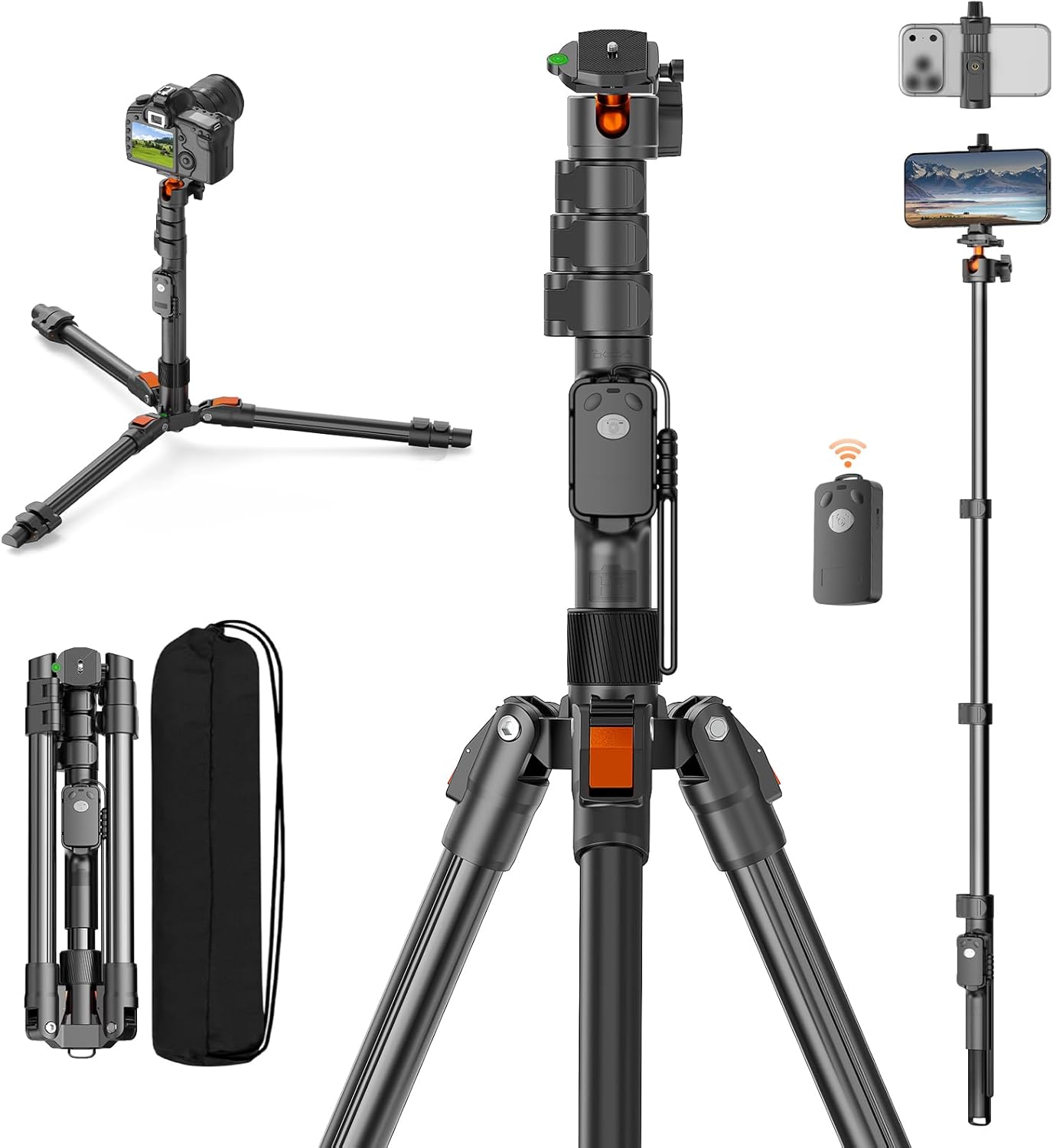
Manufactured by Zhongshan Yunteng Photographic Equipment Co., this XXZU tripod relies on an aluminum alloy chassis designed primarily around low weight rather than heavy structural mass. The complete unit weighs 991 grams (2.18 pounds) and collapses down to 14.37 inches, utilizing a multi-section leg arrangement with standard flip-lock mechanisms. The hardware includes a compact 360-degree ball head with integrated spirit levels on both the head assembly and the center column for horizon calibration. Machining details reflect its entry-level price point, pairing lightweight tubular alloy legs with composite polymer joints and locks. The base includes anti-slip rubber foot pads and an integrated hook at the bottom of the center column to suspend counterweights. Additionally, an auxiliary 1/4-inch screw receiver is integrated into the chassis, allowing users to rig small friction arms, LED video panels, or compact shotgun microphones directly to the leg apex without cluttering the primary camera plate interface.
Real-World Performance
Operational height spans from an impressive 75 inches down to 15.35 inches when spreading the independent three-angle legs outward. The center column reverses entirely for ground-skimming macro perspectives or detaches to serve as a 43.9-inch walking monopod or selfie pole. In practical deployment, stability depends strictly on payload distribution. The manufacturer rates vertical load at 17.64 pounds (8 kg), but explicitly downgrades this capacity to 6.61 pounds (3 kg) at a 45-degree tilt. In field conditions, full extension to 75 inches introduces unavoidable flex in the lower, thinner leg sections, especially during moderate wind gusts. Utilizing the bottom ballast hook with a weighted pack improves stability, but torsional resistance remains limited. The bundled Bluetooth remote offers responsive shutter triggering within line of sight, while the included phone mount accommodates devices up to seven inches, making the system functional for mobile content capture and static studio livestreams.
Value for Money
At $32.99, accompanied by an average 4.6-star rating across more than 11,000 consumer reviews, this kit delivers exceptional utility per dollar for beginner setups. The package includes the tripod structure, a ball head, a dedicated smartphone clamp, a wireless remote control with a USB-C charging cable, and a zippered storage case. Sourcing these components independently would comfortably exceed the retail asking price. Standard photographic wisdom dictates allocating serious capital toward glass and stable platform foundations rather than disposable gadgets. However, for mobile shooters, vloggers, or hobbyists operating featherweight mirrorless bodies with basic kit lenses, the kit provides practical multi-angle capability at an accessible barrier to entry. Backed by a one-year warranty, it fulfills general-purpose duties admirably, provided users respect the physical limitations of its lightweight construction and keep payloads well within its conservative tilt ratings.
Who Should Skip It
Professional photographers and videographers managing standard production equipment should look elsewhere. Anyone mounting a professional full-frame mirrorless or DSLR system equipped with heavy wide-aperture zooms, telephoto lenses, or external battery cages will find the ball head prone to micro-drift and the leg joints vulnerable to settling under load. Long-exposure landscape photographers working in harsh, windy coastal or mountain terrains will not achieve the structural rigidity required for razor-sharp multi-second exposures. Videographers requiring smooth, damped panning moves should also avoid this configuration, as the simple ball head lacks fluid drag adjustment and produces abrupt starts and stops compared to dedicated video heads. Finally, creators utilizing heavy cinema rigs or demanding precision overhead arm setups must invest in dedicated heavy-duty carbon fiber or studio studio-grade aluminum systems with robust leveling bowls.