Discover the factors affecting power station longevity, from battery chemistry to cycle counts and proper storage habits for your equipment.
By the Niche Picks editorsUpdated November 9, 20269 min readDrawn from our 30 research-based portable power stations & solar reviews
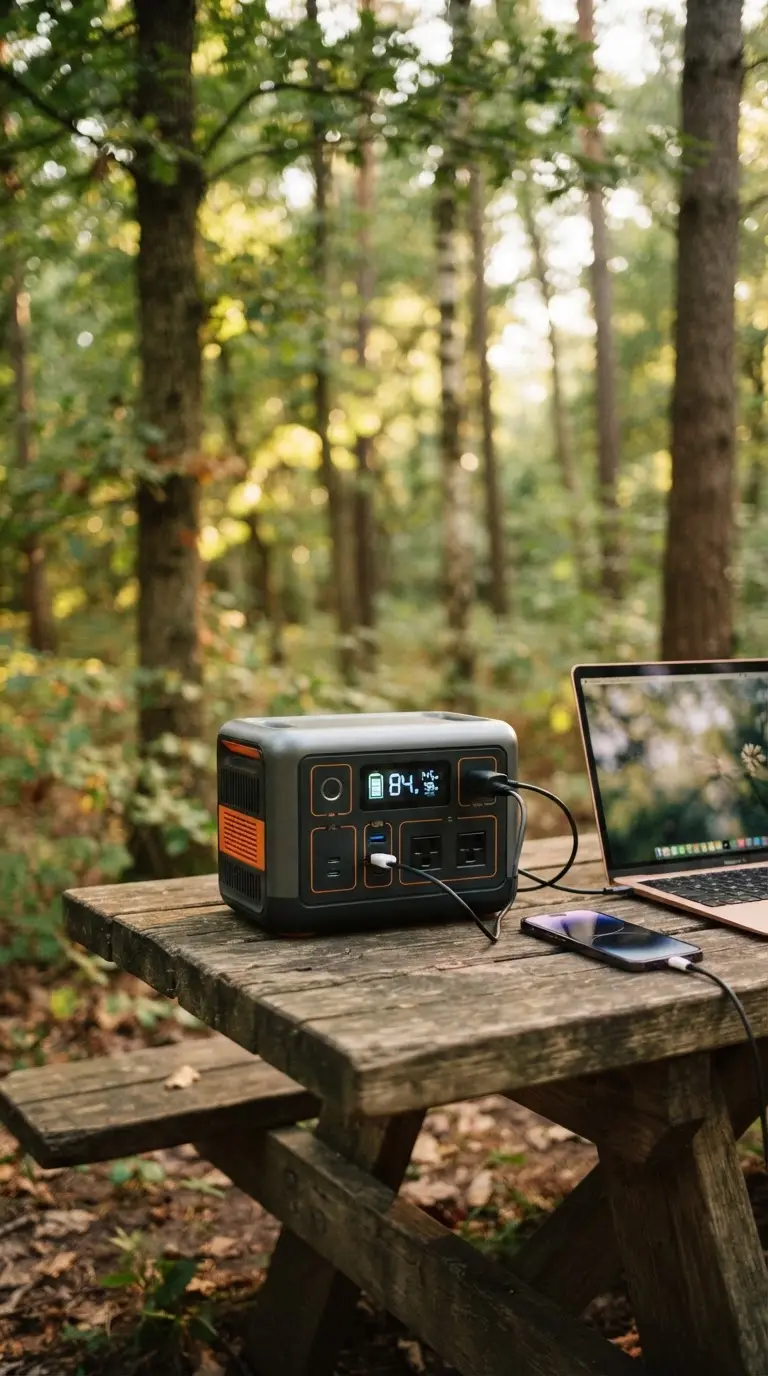
AI-generated editorial illustration; not a product or test photograph.
Short answer
Portable power stations typically last between 5 and 10 years depending on the battery chemistry and usage frequency. Units using LiFePO4 chemistry often provide 3,000 to 4,000 cycles, significantly outlasting older lithium-ion (NMC) models that generally degrade after 500 to 800 cycles. Proper maintenance, including avoiding deep discharges and extreme temperatures, is key to maximizing service life.
6
Product listings discussed; not hands-on tests
6/6
Discussed listings with a recorded price
$179.00–$699.99
Recorded listing price range; not a complete setup cost
Key takeaways
LiFePO4 battery chemistry offers a vastly superior cycle life compared to traditional lithium-ion (NMC) cells.
Cycle life represents the total number of full charge-discharge cycles before a battery drops to 80% of original capacity.
Continuous power output, rather than peak surge, is the most important metric for reducing strain on internal electronics.
Proper storage in cool, dry areas prevents premature chemical degradation of the internal cells.
Charging and discharging the unit regularly—rather than leaving it idle for years—maintains better long-term battery health.
Products discussed in this article
Editorial scores and recorded prices are reference points, not measurements of suitability for every use. Read each review's specifications and limitations.
BLUETTI AC180 Portable Power Station 1152Wh 1800W8.4
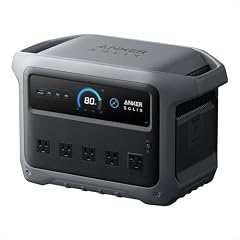
Anker SOLIX C1000 Gen 2 Portable Power Station8.8
Jackery Explorer 1000 v2 Portable Power8.2
Anker SOLIX C300 Portable Power Station, 288Wh Solar7.8
Jackery Explorer 300 Portable Power Station,292Wh8.1
ALLWEI Portable Power Station 300W, 256Wh Solar7.9
Recorded price (USD)
BLUETTI AC180 Portable Power Station 1152Wh 1800W$499.00
Anker SOLIX C1000 Gen 2 Portable Power Station$699.99
Jackery Explorer 1000 v2 Portable Power$559.00
Anker SOLIX C300 Portable Power Station, 288Wh Solar$329.98
Jackery Explorer 300 Portable Power Station,292Wh$289.00
ALLWEI Portable Power Station 300W, 256Wh Solar$179.00
Comparison of Lifespan and Performance Metrics
Product
Capacity
Continuous Output
Cycle Life
Chemistry
BLUETTI AC180
1152Wh
1800W
3000+ Cycles
LiFePO4
Anker SOLIX C1000
1024Wh
1800W
3000 Cycles
LiFePO4
Jackery Explorer 1000 v2
1070Wh
1500W
4000 Cycles
LiFePO4
Anker SOLIX C300
288Wh
300W
3000 Cycles
LiFePO4
Jackery Explorer 300
292Wh
300W
4000 Cycles
LiFePO4
ALLWEI 300W
256Wh
300W
3000 Cycles
LiFePO4
Understanding Battery Chemistry Longevity
The primary factor determining how long your power station will last is the internal battery chemistry. Our reviews confirm that the industry has largely pivoted to Lithium Iron Phosphate (LiFePO4 or LFP) technology. Unlike older Nickel Manganese Cobalt (NMC) configurations, which are prone to significant degradation after 500 to 800 cycles, LFP cells are engineered to maintain high capacity retention for several thousand cycles. For instance, the BLUETTI AC180 leverages this LFP chemistry to provide a durable platform for frequent users. By opting for LFP-based units like the Anker SOLIX C1000, you ensure that your investment retains its performance far longer than units manufactured with legacy chemistries.
When evaluating a unit, always look for the manufacturer's cycle life rating. A unit rated for 3,000 cycles, if cycled once per day, theoretically provides over eight years of service before the battery capacity drops to 80 percent of its original rated capacity. This is why our 2026 guide on portable power stations emphasizes checking the specific battery chemistry before purchase. Avoiding older technologies is a key mistake to avoid that helps ensure you are not buying into a platform destined for rapid capacity loss. While NMC batteries may be lighter or slightly cheaper in specific compact formats, the long-term economic and functional advantages of LFP make it the clear choice for anyone planning to use their station frequently for camping, off-grid living, or emergency backup.
A critical aspect of long-term equipment health is how you manage power draw. Many users confuse 'peak' or 'surge' wattage with 'continuous' output. Our portable solar power generator reviews consistently clarify that continuous output is the true operational limit. Pushing a device toward its 1,500W or 1,800W continuous rating for extended periods generates substantial heat. Because heat is the primary enemy of lithium battery chemistry, sustained high-wattage operation accelerates internal degradation. Units such as the Jackery Explorer 1000 v2 are built with robust 1,500W continuous inverters to handle heavy loads without breaking a sweat, but even these models benefit from intelligent load management.
Before you connect your appliances, it is vital to know what size portable power station you need. If you frequently run high-draw devices like resistive heating elements, you place massive thermal stress on the inverter and the battery bank. By keeping your average continuous load at or below 70 percent of the unit's maximum capacity, you allow the internal cooling fans to operate more efficiently, minimizing the impact of heat on the cell lifecycle. Furthermore, always check the best portable power stations for their surge-to-continuous ratios. A station that can handle transient startup spikes from a motor is helpful, but the sustained load is what dictates the eventual lifespan of your power system.
To significantly extend battery longevity, aim to keep your continuous AC appliance load below 70% of the unit's rating. Lower loads result in less heat and reduced stress on internal components.
Maximizing Lifespan Through Proper Storage
Storage habits are just as important as usage habits. Lithium batteries, whether NMC or LFP, are sensitive to their state of charge (SoC) when left idle for extended periods. A common buying tip is to never store your unit at 100 percent or 0 percent capacity for months at a time. If you are preparing your gear for a seasonal break or putting it into an emergency kit, discharge the unit to between 40 and 80 percent. Storing a battery at full charge for long periods causes chemical stress that reduces its maximum capacity, while leaving it completely dead can lead to deep-discharge protection activation, which may make the unit unchargeable in extreme cases.
Temperature is equally critical. Storing your station in a shed, garage, or vehicle subject to extreme temperature swings is a recipe for premature failure. Heat accelerates chemical reactions inside the battery that result in faster aging, while extreme cold can inhibit the chemical processes required for effective charging. For those with premium compact units like the Anker SOLIX C300, the physical durability is high, but the internal chemistry remains susceptible to climate exposure. We recommend that you check on your stored power station every three to six months and top it off if the charge has drifted significantly. Proper seasonal management is one of the easiest ways to ensure that your investment in a portable power station for camping actually survives the multiple years of service it was designed for, saving you from premature replacement costs.
How you replenish your power station significantly influences its total cycle life. Modern units support various charging inputs, including AC wall power and solar arrays. Our reviews show that high-speed AC charging is convenient but can generate more internal heat than slower charging modes. If you aren't in a rush, using a standard charge mode often helps maintain thermal stability within the battery pack. For solar replenishment, it is essential to use a compatible panel array that respects the input voltage and amperage limits of your station. Using Renogy 200W portable solar panels or other efficient arrays is an excellent way to maintain a green energy cycle, provided you avoid over-charging or pushing the input beyond the integrated MPPT controller's design threshold.
If you are building an off-grid setup, our guide on the best solar generator for home provides deeper insight into matching your charging equipment to your capacity needs. The key is to avoid 'over-taxing' the battery's charge circuit. When connecting multiple panels to increase intake, always verify that the total input does not exceed the station's maximum DC intake. Sustained usage of solar generators should also include periodic deep discharge and recharge cycles—roughly once every three months—to help the internal Battery Management System (BMS) recalibrate its capacity estimation. This ensures that the digital display on your Jackery Explorer 300 or similar unit remains accurate, allowing you to monitor the state of health more effectively as the unit ages. While the chemistry is designed for robustness, the BMS acts as the guardian of the battery, and assisting it with smart charging habits helps the unit reach its full potential lifespan.
High heat is the primary accelerator of battery degradation. Never store your power station in an attic, hot garage, or direct summer sun, as this can permanently compromise the cell capacity.
Economic Value and Amortized Cost
When calculating the long-term value of a portable power station, don't look solely at the sticker price. Instead, consider the amortized cost-per-cycle. An affordable unit with a 500-cycle lifespan may cost less initially but effectively functions at a much higher price per cycle than a premium LFP station rated for 4,000 cycles. Models like the ALLWEI 300W, which incorporates LFP technology into an accessible price point, illustrate how the market is shifting toward longer-lasting hardware. As an editor, I often see buyers focus on total watt-hours alone, ignoring the fact that a unit that survives 3,000 cycles is fundamentally a better asset for residential emergency readiness than one that dies after 500.
This is why we focus heavily on the 'value' metrics in our portable power stations & solar category. When you amortize the cost of a device over its total cycle potential, the higher upfront cost of modern LFP stations often yields a lower cost-per-use than legacy products. For those who need serious backup power, bundles that include expansion batteries offer a way to scale energy without sacrificing the efficiency of the core system. Ultimately, your choice should balance your immediate power needs with your long-term plan for the device. If you plan to use it daily, investing in a unit with proven LFP longevity is arguably the most sensible financial decision. If the station is strictly for occasional camping, you can comfortably select smaller, more budget-conscious models, provided you commit to the proper storage and maintenance routines described in our FAQ on portable power stations. By choosing wisely, you minimize electronic waste and maximize the utility of your portable power equipment.
Even the most durable portable power station will eventually reach the end of its useful life. Recognizing the symptoms of a degrading battery is a key skill for any power station owner. The most common indicator is a noticeable reduction in runtime for your standard appliances. If your laptop usually takes 30 percent of your station's capacity to charge but now routinely consumes 50 percent, the battery chemistry is likely aging. Other warning signs include the unit failing to reach a full 100 percent charge despite extended wall-plug time, or the unit shutting down unexpectedly while still displaying a moderate capacity percentage. These behaviors often suggest that individual cells within the internal pack are becoming unbalanced, leading to voltage drops under load.
While software updates via manufacturer apps can sometimes improve BMS accuracy, there is no 'fix' for a physically degraded battery. Once the capacity hits 80 percent or lower, you will find yourself needing to recharge more frequently, which can be frustrating during an emergency. This is why investing in long-cycle-life units is essential from the outset. If you find your current station nearing this end-of-life stage, it is safer to retire it from high-demand duties and use it for very low-power, non-critical tasks. Never attempt to open the casing to replace the battery cells; most units are not serviceable, and the risk of fire or injury from damaged lithium cells is significant. By understanding these signs, you can plan your next purchase proactively, ensuring you always have reliable power ready before the older unit fully reaches its end-of-life state. For those looking at replacements, checking the latest reviews in our Portable power stations & solar section will help you find the current market leaders in durability and efficiency.
1Assess your daily or emergency load requirements to choose the correct capacity tier.
2Compare prospective power stations based on their LiFePO4 cycle life ratings.
3Calculate your typical charge-depletion cycle to estimate how many years the unit will last.
4Set a quarterly calendar reminder to check the battery level of stored units.
5Store the unit in a stable environment at approximately 50-70% charge level.
6Use solar panels with compatible voltages to replenish the station during field use.
Quick checklist
Verify the battery chemistry uses LiFePO4 (LFP) for maximum cycle life.
Confirm the manufacturer's cycle life rating meets your usage expectations (3,000+ recommended).
Ensure your primary appliances draw well under the station's continuous AC wattage limit.
Commit to a monthly storage check to ensure the charge remains between 40-80%.
Identify a dry, room-temperature storage area before purchase.
Avoid leaving the unit at 0% charge for extended periods to prevent deep-discharge damage.
Register your unit with the manufacturer to maintain access to warranty support.
Frequently asked questions
How many years can I expect a portable power station to last?
With LiFePO4 chemistry and average usage, many portable power stations are designed for 8 to 10 years of life. A unit rated for 3,000 cycles, used daily, would reach its 80% capacity threshold after roughly 8.2 years.
What actually defines a 'battery cycle'?
A cycle is one complete use of 100% of the battery's capacity. It does not have to be performed all at once; using 50% one day and another 50% the next counts as one full charge cycle.
Are the batteries inside these stations user-replaceable?
No, most portable power stations are sealed for safety and efficiency. Replacing internal cells is not user-supported and can void your warranty, so investing in a durable LiFePO4 unit from the start is critical.
Is solar charging safe for long-term battery health?
Yes, solar charging is very safe as long as the solar panel output stays within the station's input specifications. The integrated MPPT controller handles the charging process, ensuring current is delivered efficiently without harming the cells.
Why is LiFePO4 better than older lithium-ion types?
LiFePO4 chemistry provides superior thermal stability and a drastically longer cycle life (3,000+ cycles) compared to older NMC lithium-ion batteries (500-800 cycles). This makes LFP much more reliable for home backup and frequent camping use.
Amazon links are affiliate links; we may earn a commission at no cost to you.
Shortlists in this category
Ranked lists from our portable power stations & solar reviews, limited to listings whose titles confirm the product type, with budget cuts where enough recorded prices sit on both sides of the line.
This page summarizes our research reviews of Amazon listings, listed specifications and captured buyer ratings. It is not a hands-on test. Scores are editorial assessments, not measured performance; prices are recorded snapshots and may change. A category can include both main products and accessories, so its overall price range is not the cost of a complete setup.
Most recent product record update: September 25, 2026. Individual records may be older; this is not a verification date for every claim. Prices on this page were read from the listings Nov 8, 2026.
Compare the same kind of portable power stations & solar
Choose the product type first. These groups require a match in the listing title; an import search term alone is not enough. Scores rank our recorded research assessments within each group, not independently measured performance.
Values are shown as recorded, without unit conversions or inferred compatibility. Not recorded means unknown, not absent. Prices are snapshots, not current offers. Editorial scores are research judgments, not lab results. Amazon links are affiliate links.
Before treating a comparison as complete
Which details are still unknown?
A specification appearing in a listing is not independent verification. These counts show which shortlisted records contain the same field; a blank record does not mean the product lacks the feature.
Item Weight
Recorded for 2 of 2 shortlisted models
Present in every shortlisted record. Check units, exact variants and the current manufacturer documentation before relying on it.
Output Wattage
Recorded for 2 of 2 shortlisted models
Present in every shortlisted record. Check units, exact variants and the current manufacturer documentation before relying on it.
Power Source
Recorded for 2 of 2 shortlisted models
Present in every shortlisted record. Check units, exact variants and the current manufacturer documentation before relying on it.
Voltage
Recorded for 2 of 2 shortlisted models
Present in every shortlisted record. Check units, exact variants and the current manufacturer documentation before relying on it.
Values are shown as recorded, without unit conversions or inferred compatibility. Not recorded means unknown, not absent. Prices are snapshots, not current offers. Editorial scores are research judgments, not lab results. Amazon links are affiliate links.
Compare the stated cycle life, capacity retention and warranty; LiFePO4 often has a cycle-life advantage, but model and operating conditions matter.
Continuous output watts, not surge, decides what you can run.
Check real solar input range — panels rarely hit rated numbers.
If a specification, certification or compatibility detail is absent, mark it as unknown and ask the seller or manufacturer. Do not substitute a star rating, an editorial score or a different model's specification.