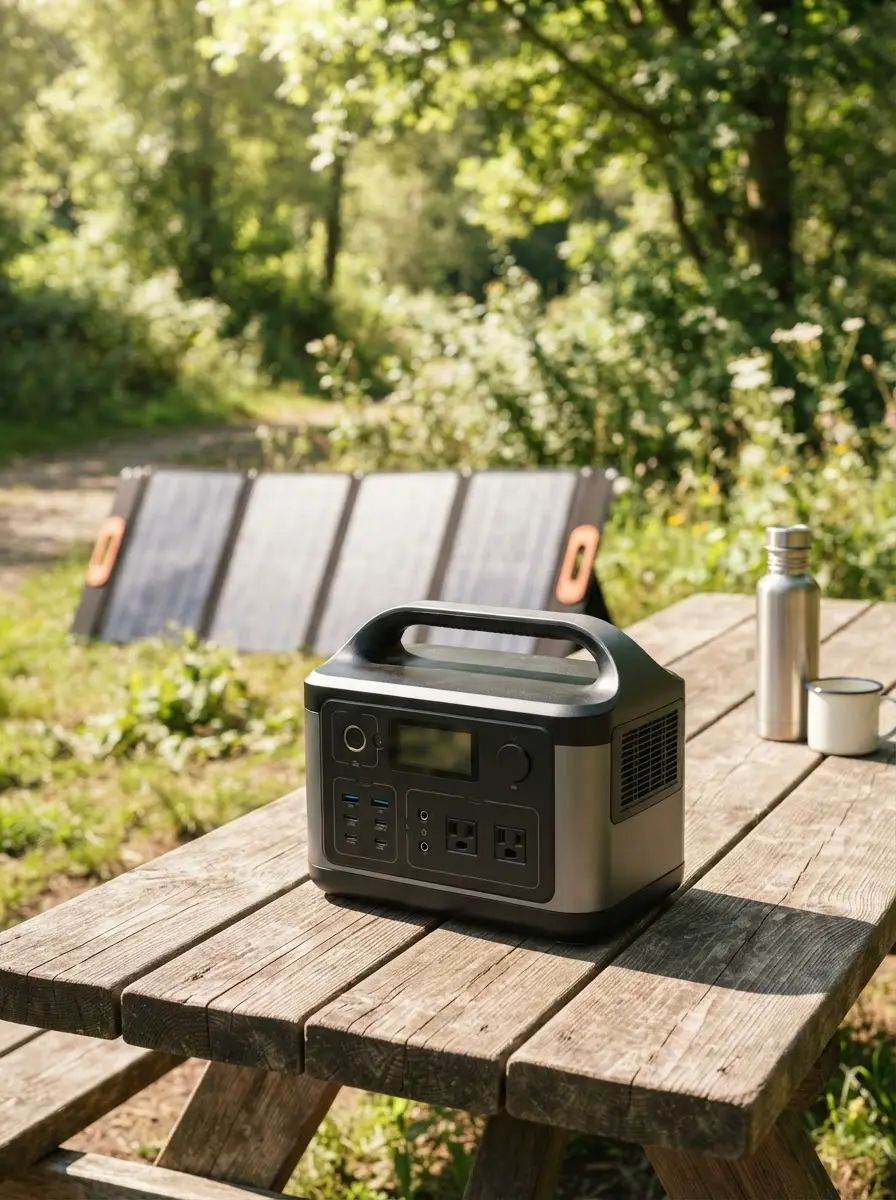
A portable power station is a battery-powered device designed to store energy and convert it into usable AC or DC power for off-grid and emergency use.
By the Niche Picks editorsUpdated November 9, 202610 min readDrawn from our 30 research-based portable power stations & solar reviews
AI-generated editorial illustration; not a product or test photograph.
Short answer
A portable power station is essentially a large, rechargeable battery system equipped with an integrated inverter and various output ports. It stores electricity to provide on-demand power for electronics, appliances, and tools in locations where grid access is unavailable or during emergency power outages. Unlike traditional fuel-based generators, they operate silently and produce no emissions, making them ideal for indoor or recreational use.
6
Product listings discussed; not hands-on tests
6/6
Discussed listings with a recorded price
$169.99–$699.99
Recorded listing price range; not a complete setup cost
Key takeaways
Portable power stations use internal battery packs to store energy for later use via AC outlets, USB ports, and DC sockets.
Continuous wattage determines the size of appliances you can run, while capacity defines how long they will operate.
Modern units utilizing LiFePO4 chemistry offer significantly longer cycle life compared to older lithium-ion or NMC models.
Solar input allows for off-grid recharging, though real-world solar collection often falls below advertised panel wattage.
These devices eliminate the need for fuel, noise, and fumes associated with traditional internal combustion generators.
Products discussed in this article
Editorial scores and recorded prices are reference points, not measurements of suitability for every use. Read each review's specifications and limitations.
BLUETTI AC180 Portable Power Station 1152Wh 1800W8.4
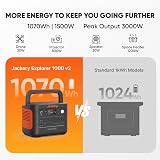
Jackery Explorer 1000 v2 Portable Power8.2
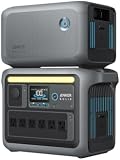
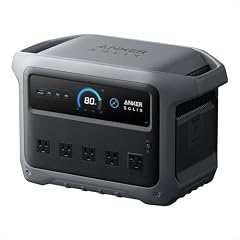
Anker SOLIX C1000 Gen 2 Portable Power Station8.8
Anker SOLIX C1000 Portable Power Station with Car8.7
Jackery Explorer 300 Portable Power Station,292Wh8.1
GRECELL Portable Power Station 330W, 230.88Wh Solar7.1
Recorded price (USD)
BLUETTI AC180 Portable Power Station 1152Wh 1800W$499.00
Jackery Explorer 1000 v2 Portable Power$559.00
Anker SOLIX C1000 Gen 2 Portable Power Station$699.99
Anker SOLIX C1000 Portable Power Station with Car$479.99
Jackery Explorer 300 Portable Power Station,292Wh$289.00
GRECELL Portable Power Station 330W, 230.88Wh Solar$169.99
Comparison of reviewed portable power stations
Product
Capacity
Continuous Wattage
Chemistry
Price
BLUETTI AC180
1152Wh
1800W
LiFePO4
$499.00
Jackery 1000 v2
1070Wh
1500W
LiFePO4
$559.00
Anker C1000 G2
1024Wh
2000W
LiFePO4
$699.99
Anker SOLIX C1000
1056Wh
1800W
LiFePO4
$499.99
Jackery 300
292Wh
300W
LiFePO4
$289.00
GRECELL 330W
230Wh
330W
Lithium
$169.99
How Does a Portable Power Station Function?
At its core, a portable power station works by storing energy in an internal battery pack and then using an inverter to convert that stored DC (direct current) electricity into AC (alternating current), which is the standard format for home appliances. Most modern units are built with modular interfaces that allow you to charge phones, laptops, and larger equipment simultaneously. Unlike the Best Portable Power Station for Camping of the past, contemporary models are highly sophisticated.
Key internal components include an MPPT (Maximum Power Point Tracking) charge controller, which optimizes the power intake from solar panels. When you plug the station into a wall outlet, the internal AC-to-DC converter fills the battery. Once charged, the station acts as a reservoir of energy that you can take anywhere. Because they lack moving parts and combustion engines, they require minimal maintenance compared to gas-powered alternatives.
Understanding the distinction between continuous output and surge wattage is vital for proper operation. A station’s continuous rating is the maximum load it can sustain indefinitely, while the surge rating is only for the brief spike in power required to start motors. For a deeper look at how to size your requirements, refer to our What size portable power station do you need? guide. Always prioritize the continuous rating when matching a station to your appliances, as exceeding this limit will trigger automatic safety shutdowns to protect the internal circuitry.
Batteries store energy (measured in Watt-hours or Wh).
Inverters convert energy for standard household appliances.
Charge controllers regulate input from solar or wall adapters.
Multiple ports allow for simultaneous charging of different devices.
Solid-state construction removes the need for fuel or oil.
The chemical makeup of your power station's battery is the most significant factor in its long-term value. Many older power stations used Nickel Manganese Cobalt (NMC) chemistry, which typically degrades significantly after 500 to 800 charge cycles. In contrast, modern manufacturers have widely adopted Lithium Iron Phosphate (LiFePO4 or LFP) cells, which can endure 3,000 to 4,000 cycles before dropping to 80% capacity. This evolution is the primary reason why The Best Portable Power Stations for Off-Grid and Emergency Power are now more durable than ever.
When choosing a station, check the manufacturer's stated cycle life. An LFP-based unit, such as the BLUETTI AC180 or the Anker SOLIX C1000 Gen 2, offers an amortized cost-per-cycle that is far lower than legacy lithium-ion models. This makes them a smarter investment for frequent users, such as those relying on them for home backup or regular seasonal camping. Thermal stability is another advantage; LFP cells are generally more resistant to the high-heat scenarios that can accelerate battery degradation.
While LFP units can be heavier and larger than NMC versions, the trade-off in longevity is substantial. For home backup, where you might want to cycle the battery daily during peak utility hours, this longevity is non-negotiable. Our Portable power stations & solar FAQ covers common concerns regarding battery health and safety. Always ensure the device you choose comes with a clear, verified cycle life rating so you know exactly what level of performance to expect over the next decade of ownership.
LiFePO4 provides 3,000+ cycles compared to 500+ for NMC.
Enhanced thermal stability reduces the risk of overheating.
Lower cost-per-cycle makes them better for long-term use.
Heavier cell density is a common side effect of this chemistry.
Marketing often highlights surge wattage. For your planning, only the continuous output rating dictates what appliances the station can safely run.
Real-World Solar Charging Expectations
One of the most frequent misconceptions is that solar panels will always charge your power station at their 'nameplate' wattage. If a panel is marketed as 200W, that is the output under perfect laboratory conditions, which are rarely achieved in the field. Factors such as atmospheric haze, improper sun angles, cable resistance, and heat buildup all contribute to efficiency losses. For advice on building your own system, check out our buying tips.
When planning your off-grid setup, you should realistically assume a 20% to 30% reduction in rated output. If you are using a 100W panel, expecting 70W to 80W of actual input is a safe, conservative planning estimate. This gap between 'advertised' and 'actual' performance is essential to account for when calculating how long it will take to replenish your Jackery Explorer 1000 v2 or similar mid-capacity units. To minimize these losses, using a high-efficiency MPPT charge controller (included in all reputable models we review) is crucial.
Positioning matters significantly. Using integrated kickstands to tilt your panels directly toward the sun, especially during the peak solar window of 10:00 AM to 2:00 PM, will yield the best results. If you are preparing for emergencies, consider buying panels with higher wattage than the station's minimum requirement to ensure faster replenishment during limited daylight hours. Read more in our Choosing a Portable Solar Power Generator for 2026 article to learn how to properly match panel arrays to your specific power station capacity.
Solar panels rarely reach their full nameplate rating.
Plan for 20-30% power loss due to real-world variables.
Use MPPT controllers to maximize charge efficiency.
Position panels at the correct angle to the sun.
High-wattage panels are better for rapid replenishment.
It is easy to get caught up in the marketing hype of 'total power,' but you must differentiate between capacity and continuous output to make an informed choice. Capacity, measured in Watt-hours (Wh), tells you how much energy the battery can hold. It is the size of the 'fuel tank.' If you have a 1,000Wh station, it can power a 100W device for approximately 10 hours, assuming typical inversion efficiency. Higher capacity is better for long-term outages, but it does not dictate what you can turn on.
Continuous output wattage, measured in Watts (W), tells you what you can run. This is the 'engine' size. If your inverter is rated for 300W, it will fail to power a 1,500W coffee maker, regardless of how large the battery capacity is. Always match your inverter's output to the wattage requirements of your most power-hungry appliance. For those needing higher performance, Anker SOLIX C1000 Power Station and BP1000 Expansion Battery provides both the capacity and the output needed for serious home backup.
For smaller needs, like the GRECELL 330W or Jackery Explorer 300, the focus is on extreme portability. These units are perfect for powering a laptop, camera batteries, or a small fan. However, attempting to overload them with heating elements like space heaters or hot plates will immediately trigger safety cutoffs. Always check the labels on your appliances to find their 'running' or 'rated' wattage, not just their peak or start-up wattage, to ensure your station can handle the load sustainably.
Portable panels rarely hit their advertised output. Expect 20-30% lower performance in the field due to heat, angle, and atmospheric conditions.
Common Maintenance and Safety Rules
Maintaining your portable power station is straightforward, provided you follow a few basic rules. Because these stations use complex lithium-based batteries, you should avoid leaving them fully discharged for long periods, as this can degrade battery chemistry. Ideally, keep your station between 20% and 80% charge if you are storing it for emergency backup, and check it every few months to top it off. Avoid storing it in extreme temperatures, as excessive heat or sub-freezing cold can damage the internal cells.
For cleaning, use a dry or slightly damp soft cloth to wipe down the exterior. Never use solvents or harsh chemicals, which can strip the protective coatings or damage port seals. If your unit has an active cooling fan, ensure the air vents remain unobstructed. Dust buildup can reduce thermal dissipation, forcing the unit to run its fan at higher speeds, which consumes extra energy and creates unnecessary noise. You can find more detailed care tips in our mistakes to avoid section.
Safety is paramount when dealing with high-voltage electricity. Never attempt to open the casing of the power station; internal capacitors can hold high charges even after the device is turned off and disconnected. If your unit is damaged, exhibits swelling, or develops a burning odor, stop using it immediately and contact the manufacturer. Proper handling ensures that your investment remains a safe, reliable tool for years to come. If you have questions about specific models, explore our all reviews index.
Never leave the battery at 0% charge for long periods.
Keep storage in a cool, dry environment.
Ensure air vents are clean and unobstructed.
Do not attempt to open or modify the station.
Use only manufacturer-recommended charging cables.
Value is not just about the upfront price tag; it is about the cost per watt-hour and the total usable lifespan of the unit. A $200 unit that lasts 500 cycles is ultimately more expensive than a $400 unit that lasts 4,000 cycles when you calculate the cost-per-cycle over time. When selecting your power station, consider how often you plan to use it. If you need it for occasional camping, a cheaper unit might suffice. If you need it for critical medical gear or frequent home power outages, the upfront investment in premium LiFePO4 cells is almost always justified.
Check for included accessories. Bundles that include high-quality solar panels, like the Jackery Solar Generator 1000 v2, often save you the hassle of finding compatible cables, adapters, and panels later. Compatibility is a common pain point; ensuring you have the right connections (like XT60, Anderson, or MC4) can save you additional costs. We have compiled a comprehensive list of buying tips to help you avoid hidden expenses when building your solar generator system.
Finally, research the manufacturer's warranty and customer support track record. Since portable power stations are heavy and often used in remote locations, having a manufacturer that provides reliable support is invaluable. Read through the Portable power stations & solar FAQ to see if your potential model has reported issues with port durability or firmware bugs. A quality station should be a stable utility, not a constant troubleshooting project, so choose established brands that offer transparent performance and long-term support for their products.
Compare cost-per-cycle, not just initial price.
Bundles often save on adapter and accessory costs.
Verify compatibility with your specific solar panels.
1Determine the total 'running watts' of all devices you intend to power simultaneously.
2Select a power station with a continuous output rating at least 20% higher than your total load.
3Calculate the total battery capacity needed by multiplying device watts by desired operating hours.
4Ensure your chosen station utilizes LiFePO4 battery chemistry to maximize cycle life.
5Verify that the charging input ports are compatible with your existing or planned solar panels.
6Read manufacturer instructions to properly calibrate the battery during the first full charge cycle.
7Position your solar panels during peak sunlight hours to achieve optimal replenishment speeds.
Quick checklist
Identify your must-run appliances and their wattage.
Calculate total watt-hours needed for your expected runtime.
Choose LiFePO4 chemistry for better long-term cycle life.
Verify the unit's continuous inverter output meets your appliance needs.
Check input specifications to ensure your solar panels are compatible.
Review the warranty and manufacturer support reputation.
Confirm physical weight is manageable for your specific transport needs.
Frequently asked questions
Can a portable power station run a refrigerator?
Yes, but only if the station has an inverter capable of handling the refrigerator's continuous running wattage. While many fridges run at 100-200W, they often require a high starting surge. Always ensure the station's continuous output exceeds the fridge's rating and the surge rating exceeds the compressor's start-up spike.
How long do these power stations last?
The lifespan depends on battery chemistry. Modern units using LiFePO4 (LFP) chemistry are typically rated for 3,000 to 4,000 charge cycles before reaching 80% capacity. Older lithium-ion (NMC) units usually last 500 to 800 cycles. With daily use, LFP units can last over a decade.
Are these devices safe to use indoors?
Yes. Unlike gas or propane generators, portable power stations produce no emissions, fumes, or carbon monoxide. They are silent and safe to use inside tents, RVs, cabins, or homes, provided you keep them away from water and allow for proper air circulation to keep the internal cooling system efficient.
Can I charge the station while it is powering a device?
Most modern portable power stations support 'pass-through' charging, which allows you to charge the battery while simultaneously drawing power from the AC or DC outlets. Check your specific manual to see if this feature is supported, as it is very common in current-generation models.
What is the difference between pure sine wave and modified sine wave?
Pure sine wave inverters produce a smooth, clean electrical current identical to grid power, making them safe for sensitive electronics like laptops and CPAP machines. Modified sine wave inverters produce a 'stepped' wave that can cause buzzing, heat, or damage in sensitive equipment and should generally be avoided for modern electronics.
Amazon links are affiliate links; we may earn a commission at no cost to you.
Shortlists in this category
Ranked lists from our portable power stations & solar reviews, limited to listings whose titles confirm the product type, with budget cuts where enough recorded prices sit on both sides of the line.
This page summarizes our research reviews of Amazon listings, listed specifications and captured buyer ratings. It is not a hands-on test. Scores are editorial assessments, not measured performance; prices are recorded snapshots and may change. A category can include both main products and accessories, so its overall price range is not the cost of a complete setup.
Most recent product record update: October 3, 2026. Individual records may be older; this is not a verification date for every claim. Prices on this page were read from the listings Nov 8, 2026 – Nov 12, 2026.
Compare the same kind of portable power stations & solar
Choose the product type first. These groups require a match in the listing title; an import search term alone is not enough. Scores rank our recorded research assessments within each group, not independently measured performance.
Values are shown as recorded, without unit conversions or inferred compatibility. Not recorded means unknown, not absent. Prices are snapshots, not current offers. Editorial scores are research judgments, not lab results. Amazon links are affiliate links.
Before treating a comparison as complete
Which details are still unknown?
A specification appearing in a listing is not independent verification. These counts show which shortlisted records contain the same field; a blank record does not mean the product lacks the feature.
Engine Power Maximum
Recorded for 2 of 2 shortlisted models
Present in every shortlisted record. Check units, exact variants and the current manufacturer documentation before relying on it.
Output Wattage
Recorded for 2 of 2 shortlisted models
Present in every shortlisted record. Check units, exact variants and the current manufacturer documentation before relying on it.
Power Source
Recorded for 2 of 2 shortlisted models
Present in every shortlisted record. Check units, exact variants and the current manufacturer documentation before relying on it.
Running Wattage
Recorded for 2 of 2 shortlisted models
Present in every shortlisted record. Check units, exact variants and the current manufacturer documentation before relying on it.
Starting Wattage
Recorded for 2 of 2 shortlisted models
Present in every shortlisted record. Check units, exact variants and the current manufacturer documentation before relying on it.
Total Power Outlets
Recorded for 2 of 2 shortlisted models
Present in every shortlisted record. Check units, exact variants and the current manufacturer documentation before relying on it.
Values are shown as recorded, without unit conversions or inferred compatibility. Not recorded means unknown, not absent. Prices are snapshots, not current offers. Editorial scores are research judgments, not lab results. Amazon links are affiliate links.
Compare the stated cycle life, capacity retention and warranty; LiFePO4 often has a cycle-life advantage, but model and operating conditions matter.
Continuous output watts, not surge, decides what you can run.
Check real solar input range — panels rarely hit rated numbers.
If a specification, certification or compatibility detail is absent, mark it as unknown and ask the seller or manufacturer. Do not substitute a star rating, an editorial score or a different model's specification.