Do I Need a GPS Watch for Running? 2026 Buying Guide
Deciding if you need dedicated satellite tracking depends on your training goals and your environment, not just your pace.
By the Niche Picks editorsUpdated November 9, 20269 min readDrawn from our 31 research-based running shoes & watches reviews
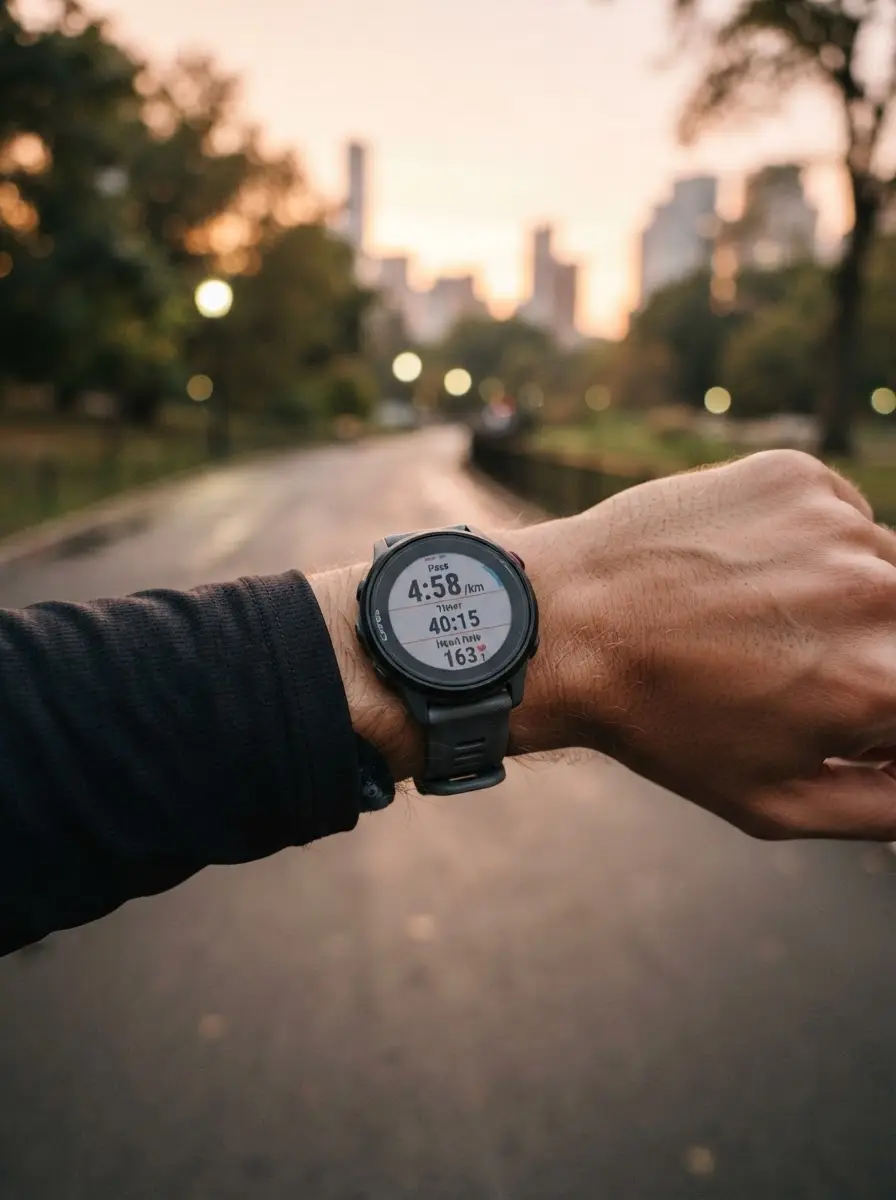
AI-generated editorial illustration; not a product or test photograph.
Short answer
You do not strictly need a GPS watch to run, as smartphone apps can track distance and pace for free. However, if you want reliable real-time metrics without carrying a phone or need advanced training features like heart rate monitoring and structured workout guidance, a dedicated watch is a worthwhile investment. The real performance upgrade to look for is dual-band GNSS for improved accuracy.
4
Product listings discussed; not hands-on tests
4/4
Discussed listings with a recorded price
$41.99–$191.00
Recorded listing price range; not a complete setup cost
Key takeaways
Smartphones provide basic tracking, but a GPS watch offers superior convenience and data integration.
Dual-band GNSS technology is the single most important hardware feature for positional accuracy in urban areas.
Entry-level GPS watches are useful for basic pacing, while mid-tier models add structured training tools.
GPS watches eliminate the need to carry a mobile device, improving comfort during long efforts.
Battery life is a critical factor; entry-level units may struggle with ultra-distance training.
Products discussed in this article
Editorial scores and recorded prices are reference points, not measurements of suitability for every use. Read each review's specifications and limitations.
For many beginners, a smartphone with a GPS-enabled app is the first step into run tracking. Phones are surprisingly capable, utilizing the same satellite constellations as dedicated running watches. However, the necessity of a GPS watch arises when convenience and data precision become priorities. Carrying a bulky phone can shift your gait, cause pockets to bounce, and introduce unwanted distractions from notifications.
Dedicated watches like the Garmin Forerunner 55 are engineered for the specific rigors of running. They offer physical interfaces—usually buttons—that are far more reliable than touchscreens when your hands are slick with sweat or the screen is pelted by rain. These watches are designed to survive the repetitive shock and moisture of high-mileage training, whereas phones are rarely meant to withstand the humidity and vibrations of regular road or trail use.
Beyond just durability, a watch provides real-time pacing feedback that is immediate. Instead of checking a phone tucked into a running belt, you can glance at your wrist for instant cadence and split data. This constant visual loop allows you to adjust your effort dynamically during a workout, helping you maintain a consistent gait. As you advance, you may find that the best running watches also provide recovery metrics, sleep tracking, and heart rate variability insights that help you understand how your body responds to training load.
If you are currently debating a purchase, consider how your phone usage affects your current workouts. If you find yourself constantly adjusting your phone or stopping to check your pace, a dedicated watch will streamline your routine. For more help with selecting the right technology, consult our running shoes & watches buyer's guide. A dedicated device acts as a frictionless companion, letting you focus entirely on your movement rather than managing hardware.
Understanding GPS Accuracy and GNSS
When comparing running watches, you will often encounter terminology like 'dual-band GNSS.' This is not just marketing fluff; it is the fundamental standard for high-accuracy tracking. Traditional single-band GPS systems, found in models like the moutarlier GPS Running Watch, are susceptible to signal multipath interference. This occurs when satellite signals bounce off tall buildings, canyon walls, or thick canopy, creating 'track drift' where your watch records erratic distances or inaccurate pace.
Dual-band GNSS, or L1/L5 frequency reception, effectively ignores these reflections, ensuring the watch locks onto the direct signal from the satellite. If you primarily run in dense urban environments or deep, forested trails, this technology is the true performance upgrade. Without it, you may see 'ghosting' on your run maps where your track appears to run through buildings or zigzag unnecessarily across a road. While a single-band watch like the Garmin Forerunner 165 is perfectly adequate for open suburban roads where the sky is clearly visible, it will inevitably struggle in more complex environments.
It is important to remember that GPS accuracy is not just about the device; it is about where you run. Even the most advanced watches can experience signal degradation in extreme weather or deep tunnels. Always evaluate your regular training route before deciding if the extra cost for dual-band hardware is necessary. For many runners, a reliable single-band unit provides sufficient distance data for routine training. However, if your training program relies on precise intervals where even a few seconds of pace deviation matter, dual-band reception should be a non-negotiable requirement. For more on maximizing your performance, avoid these common mistakes to avoid when using new tech. Being aware of these limitations early on will save you from frustration when your watch doesn't behave as you might expect in challenging terrain.
Battery Management
Always charge your watch before long runs. Cold weather significantly reduces battery performance for all GPS wearables.
Budget Considerations and Value
Entering the world of GPS watches doesn't have to break your budget. You can find simple, functional hardware for under $50, such as the moutarlier or the EZON T031. These budget options typically offer basic distance, time, and speed metrics. They are excellent for casual runners who simply want a digital record of their efforts without needing to sync complex data to a cloud-based platform or monitor advanced physiological metrics.
However, budget units often come with limitations regarding battery life and screen quality. A typical low-cost watch like the T031 might provide only six hours of battery life, which is sufficient for daily runs but could fall short for marathon training or long weekend excursions. Furthermore, the ecosystem integration—the ability of the watch to sync seamlessly with training apps—is often more robust on mid-tier watches like the Garmin series.
Investing in a mid-tier watch often buys you a better display, more comfortable strap materials, and more reliable heart rate sensors. It’s also about longevity. While a cheap watch might serve as a great introduction, it might lack the build quality to last through thousands of miles of sweat, rain, and storage in a gear bag. If you are just starting, you might also consider how your footwear rotation plays a role; check out how long do running shoes last to ensure you aren't over-relying on a single pair of shoes while you build up your mileage. Buying wisely means selecting hardware that meets your current training volume without paying for features you won't use. If you are specifically looking for how these watches compare, check out our Garmin Forerunner 55 vs 165 for beginner runners guide to see if the extra investment for a newer display and features is worth your specific needs.
The Role of Ecosystems and Data
A critical, often overlooked aspect of selecting a running watch is the software ecosystem. When you purchase a Garmin Forerunner 165, you are not just buying the watch; you are gaining access to the Garmin Connect platform. This ecosystem allows you to track long-term progress, view heart rate trends, and participate in training plans. For many runners, this data-driven feedback is what sustains motivation over time.
Entry-level options, by contrast, frequently rely on generic or proprietary companion applications that may have limited functionality. These apps often lack the sophisticated analytical tools found in more mature platforms, which can make it harder to evaluate whether your training intensity is correct. For example, understanding how different running shoes, like those discussed in our guide to the best running shoes for men, impact your running performance requires consistent and reliable data over months, not just days.
When we review products, we prioritize devices that provide actionable insights rather than just raw numbers. An entry-level device that loses your workout data or fails to sync to popular fitness trackers effectively becomes a simple stopwatch. If you are serious about long-term development, you should account for software reliability as much as hardware features. If you are also interested in optimizing your off-road training, our best trail running shoes list can provide options that pair well with your training data. Ultimately, the best watch for you is the one that fits seamlessly into your daily life and encourages consistent activity. Remember, no watch replaces the need for proper mechanics; always refer to our tips on how to choose running shoes to maintain your biomechanical health alongside your tech tracking.
GPS Interference
Tall buildings and deep tree cover can significantly degrade accuracy on single-band GPS watches. If you train in these environments, prioritize dual-band GNSS.
Managing Your Gear and Battery
Maintaining your equipment is as important as the initial selection. GPS watches, particularly those with high-resolution AMOLED screens like the Forerunner 165, have different battery demands than basic monochromatic displays. You should manage your device by turning off unnecessary features like continuous SpO2 monitoring or high-frequency alerts if you need to stretch battery life for longer efforts.
Furthermore, keep the charging ports clean. Sweat and salt buildup can corrode contacts over time, leading to poor charging or data sync failures. The SHOKZ OpenRun Pro is a great example of a device designed with sweat resistance in mind, utilizing magnetic induction to eliminate exposed ports—a design philosophy that, if applied to watches, would significantly enhance durability.
Always store your gear in a dry, room-temperature environment. Extreme heat in a parked car can degrade battery chemistry, while damp gear bags can lead to mold or moisture intrusion, even in water-resistant models rated at 5ATM. For runners preparing for big events, consider our guide on best bone conduction running headphones for marathon training to keep your sensory awareness high alongside your GPS metrics. Regularly audit your gear—check your strap integrity, clean the screen, and ensure your firmware is updated via your phone app. By treating your watch with the same care as your shoes, you extend its functional life significantly, ensuring you get the maximum value from your investment. Following a rigorous maintenance schedule ensures that when you head out for a race, your gear is as ready as you are.
Biomechanics Over Hardware
It is tempting to focus entirely on the bells and whistles of a new watch, but your physical biomechanics are the true foundation of your running health. No amount of precise GPS data or heart rate tracking can override poor running technique or shoes that are past their prime. When you choose a watch, ensure it serves as a feedback mechanism for your training, not a distraction that causes you to sacrifice form.
Many runners fall into the trap of using a watch to chase a specific pace while ignoring physical signs of fatigue. If you are training, ensure your watch provides enough context for you to listen to your body. For instance, the daily suggested workouts in the Garmin Forerunner 55 can provide useful guidance, but they are only aids. You should always balance these suggestions with how your body feels during a run. This is especially true when transitioning between different types of shoes, such as minimalist or high-stack models.
Our reviews frequently emphasize that understanding your own gait is more important than the brand name on your shoes or your watch. Before you obsess over splitting seconds on your screen, ensure your cadence and strike patterns are sustainable. If you are struggling with discomfort, prioritize adjusting your gait or changing your footwear before spending heavily on advanced training devices. There is no replacement for steady, progressive training. A watch is merely a tool; the work happens on the road. If you are curious about how gear impacts your legs, consult our advice on how to choose running shoes to ensure you are building on a stable foundation. Investing in your physical awareness will pay higher dividends than any piece of electronic equipment ever will, allowing you to run for years to come.
Step by step
1Select your target running route and verify it has clear sky access if using a single-band watch.
2Sync your watch with your phone's companion app prior to starting your workout.
3Wait for a full satellite lock before beginning your run to ensure distance accuracy.
4Check your watch periodically during the run to monitor pace against your targets.
5Save the workout immediately upon completion to sync data to the cloud.
6Clean the charging pins and watch case with a damp cloth after each sweaty session.
Quick checklist
Identify your primary running terrain (urban, trail, or open road).
Determine if you need advanced metrics like heart rate or recovery advice.
Verify if the watch model is compatible with your preferred training app.
Assess battery life requirements for your longest planned run.
Check if the strap material is comfortable for long-duration wear.
Ensure the watch buttons are accessible while wearing gloves or in the rain.
Compare the device cost against your seasonal gear budget.
Frequently asked questions
Is an expensive GPS watch more accurate than a cheap one?
Not necessarily based on price alone. Accuracy is determined by the satellite technology used, specifically dual-band GNSS. A cheaper watch with newer sensor tech can outperform an expensive model using older single-band satellite receivers.
Do I need a heart rate monitor on my watch?
If you are following a structured training plan based on heart rate zones, yes. If you are running primarily for enjoyment and general fitness, heart rate is a useful, but optional, metric.
Can I use a running watch for swimming?
Yes, but check the water resistance rating. Look for a 5ATM rating, which is typically sufficient for pool and open-water swimming. Always follow manufacturer guidelines regarding high-pressure water contact and diving.
How do I know if my watch is 'dual-band'?
Check the technical specifications for mentions of 'dual-frequency' or 'L1/L5' GNSS. If the description only mentions 'GPS' or 'multi-system' without specifying L5, it is likely a standard single-band receiver.
Is it worth upgrading from a phone to a watch?
If your phone becomes a distraction or is physically uncomfortable to carry, a watch is a significant quality-of-life upgrade. It provides better reliability, instant feedback, and more robust training data for long-term consistency.
Amazon links are affiliate links; we may earn a commission at no cost to you.
Shortlists in this category
Ranked lists from our running shoes & watches reviews, limited to listings whose titles confirm the product type, with budget cuts where enough recorded prices sit on both sides of the line.
This page summarizes our research reviews of Amazon listings, listed specifications and captured buyer ratings. It is not a hands-on test. Scores are editorial assessments, not measured performance; prices are recorded snapshots and may change. A category can include both main products and accessories, so its overall price range is not the cost of a complete setup.
Most recent product record update: November 8, 2026. Individual records may be older; this is not a verification date for every claim. Prices on this page were read from the listings Nov 8, 2026 – Nov 12, 2026.
Choose the product type first. These groups require a match in the listing title; an import search term alone is not enough. Scores rank our recorded research assessments within each group, not independently measured performance.
Values are shown as recorded, without unit conversions or inferred compatibility. Not recorded means unknown, not absent. Prices are snapshots, not current offers. Editorial scores are research judgments, not lab results. Amazon links are affiliate links.
Before treating a comparison as complete
Which details are still unknown?
A specification appearing in a listing is not independent verification. These counts show which shortlisted records contain the same field; a blank record does not mean the product lacks the feature.
Drop and stack height matter more to your legs than foam branding.
Dual-band GNSS is the real accuracy upgrade in running watches.
If you rotate shoes, use pairs that suit your gait and training; there is no universal one-day recovery requirement for every midsole.
If a specification, certification or compatibility detail is absent, mark it as unknown and ask the seller or manufacturer. Do not substitute a star rating, an editorial score or a different model's specification.