
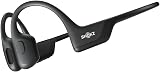
 SHOKZ OpenRun Pro - Open-Ear Bluetooth Bone Conduction Sport Headphones - Sweat Resistant
Recorded price: $109.95 · Editorial score: 8.2/10
- Model Number
- S810
- Model Name
- OpenRun Pro
For long-distance marathon training, open-ear bone conduction headphones offer unmatched road awareness and slip-free stability. Here is what you need to know.
By the Niche Picks editorsUpdated October 13, 20268 min readDrawn from our 30 research-based running shoes & watches reviews

The SHOKZ OpenRun Pro stands as the standout bone conduction option for marathon training in our reviews. Priced at $109.95, it bypasses the auditory canal to transmit audio through the cheekbones, delivering total traffic awareness, zero ear slippage during sweaty long runs, and a durable titanium wraparound frame with magnetic induction charging.
Editorial scores and recorded prices are reference points, not measurements of suitability for every use. Read each review's specifications and limitations.
| Product | Price | Rating | Design Type | Charging Style | Warranty |
|---|---|---|---|---|---|
| SHOKZ OpenRun Pro (S810) | $109.95 | 4.5 / 5 (22,476 reviews) | Open-Ear Bone Conduction (Titanium) | Magnetic Induction Cable | 2 Years |
Marathon training demands audio gear that remains comfortable, stable, and functionally safe over three-to-four-hour weekend long runs. Within our current catalog of verified audio gear, only one dedicated model meets the true technical definition of bone conduction sport hardware: the SHOKZ OpenRun Pro. Listed at $109.95 with an aggregate score of 4.5 out of 5 across more than 22,000 user reviews, it occupies a specialized tier built specifically for endurance athletes.
Unlike traditional in-ear buds that seal the auditory canal or bulky over-ear models, the OpenRun Pro utilizes a ninth-generation bone conduction system that rests directly against the zygomatic arch. This delivers acoustic vibrations to your inner ear while leaving your auditory canal unobstructed. For runners logging heavy miles across suburban streets or busy multi-use paths, this mechanical layout offers baseline safety that sealed headphones cannot match.
While our audio reviews also cover entry-level active noise cancelling headphones like the Soundcore by Anker Q20i at $44.99, over-ear designs are entirely unsuited for endurance road running. Over-ear padding traps sweat, shifts under repetitive footstrikes, and isolates you from ambient vehicle noise. If your training objective is logging high-mileage road blocks safely, the OpenRun Pro is currently the solitary, focused bone conduction solution in our catalog. To explore broader running gear pairings, explore our complete running shoes & watches reviews for companion pacing tools.
Bone conduction operates by transforming digital audio signals into mechanical vibrations. The transducers sit flush against your cheekbones just forward of your ears. The sound bypasses the eardrum entirely and travels straight to the cochlea. This mechanism fundamentally alters the running experience over long distances.
In standard marathon builds, runners frequently face high-humidity conditions, rain, and heavy perspiration. When you wear standard silicone-tipped earbuds for two or three consecutive hours, sweat inevitably pools inside the ear canal. This creates uncomfortable pressure, compromises the acoustic seal, and eventually dislodges the bud mid-stride. In contrast, bone conduction hardware leaves the canal dry and aerated. You completely avoid the thumping occlusion effect—the distracting internal boom of your own footsteps reverberating through your skull with every stride.
More importantly, road safety is not compromised. When preparing for a marathon, you must routinely navigate intersections, cyclists passing from behind, emergency vehicles, and fellow pedestrians. Because bone conduction does not obstruct ambient sound waves from entering the ear canal naturally, you retain genuine situational awareness without having to switch on an artificial, battery-draining software transparency mode. For athletes organizing their training gear, consulting our running shoes & watches buyer's guide helps balance wearable tech choices against core footwear and tracking priorities.
Investing in bone conduction requires realistic acoustic expectations. If you anticipate the deep sub-bass or clinical audio fidelity of studio monitors, bone conduction will disappoint you. By design, transmitting sound waves through cranial bone rather than vibrating air inside a sealed ear chamber causes an inherent drop in lower-frequency registers.
The SHOKZ OpenRun Pro integrates what the manufacturer calls Shokz TurboPitch technology to augment bass response and enhance mid-range clarity. In real-world road conditions, this engineering delivers clear spoken vocal tracks for audiobooks, running podcasts, and rhythm-driven uptempo playlists. Spoken word pacer prompts and coach cues come through legibly, even alongside ambient traffic hum.
However, physics cannot be entirely bypassed. Bass-heavy tracks lack visceral sub-bass impact, and audio can sound noticeably thinner when you run into stiff headwinds. High-velocity wind rushing past your open ears will compete directly with incoming audio, requiring you to bump the volume higher than you would in quiet indoor spaces. Furthermore, at maximum volume, bone conduction transducers can produce a mild buzzing or tingling sensation against the cheekbones, which some runners notice during strenuous intervals. Understanding these physical compromises is vital; for more gear selection advice, review our breakdown of common mistakes to avoid when building an endurance setup.
Fit stability across multi-hour efforts is where the OpenRun Pro excels compared to wireless earbuds. The unit is built around a continuous wraparound titanium frame that maintains balanced inward tension against the head. Because the earhooks loop securely over the superior aspect of the auricle, the transducers do not bounce, slip, or drift out of position as your stride cadence changes.
For marathon runners, headwear compatibility is an essential consideration. Over the course of a 16-to-22-mile weekend workout, you are likely wearing running sunglasses, a sweat-wicking technical cap, or cold-weather headbands. The OpenRun Pro package specifically includes an elastic sport headband and a hard-shell carrying case. When pairing the headphones with sunglasses, the standard practice is to seat the headphone hooks over your ears first, then rest the sunglass arms directly over the headphone frame. The slim profile of the titanium band minimizes pinch points against the temporal bones.
The only physical design limitation arises from the rigid band extending around the back of the neck. Because this band hovers slightly off the base of the skull to maintain flex tension, it can occasionally catch on thick winter jackets or high, rigid mock-neck cold-weather collars. For warm-weather race singlets and standard running shirts, however, the clearance is generous and avoids interference.
A marathon training cycle typically spans 16 to 20 weeks, encompassing hundreds of miles under diverse weather conditions. Headphone longevity depends heavily on ingress protection and charging infrastructure. Corrosive body sweat remains the primary hardware killer for conventional sport earbuds.
The SHOKZ OpenRun Pro addresses moisture ingress by eliminating open micro-USB or USB-C ports on the chassis. Instead, it relies on a proprietary magnetic induction charging cable that snaps securely against flat exterior metal contacts. This solid-contact layout prevents salt and water droplets from penetrating the interior circuit housing, reinforcing its sweat-resistant construction. To maintain the unit over months of heavy sweating, runners should simply wipe down the charging contacts with a dry towel prior to attaching the magnetic lead, avoiding residue buildup.
In terms of operating endurance, battery longevity comfortably spans several typical training sessions or an entire marathon day. Marathoners finishing in four to five hours will not have to worry about mid-run shutdowns. The package also includes a 2-year manufacturer warranty, providing reassurance against hardware degradation over multiple seasonal cycles. When planning your wider endurance purchases, using our running gear budget planner helps allocate resources effectively between essential road shoes, electronics, and nutrition.
Many marathoners prefer to run phone-free during key workouts and official race days, relying instead on a wrist-mounted GPS watch to broadcast cadence, lap splits, and audio prompts. The OpenRun Pro utilizes standard Bluetooth wireless connectivity, allowing it to sync smoothly with modern running watches that support onboard audio or phone-relayed alerts.
While entry-level tracking devices like the Garmin Forerunner 55 ($164.90) cover fundamental pacing and daily workouts, they lack dedicated music storage. Upgrading within the platform to models like the Garmin Forerunner 165 ($199.00) introduces advanced AMOLED displays and structured race widgets, as analyzed in our Garmin Forerunner 55 vs 165 comparison. When paired with compatible watches or a smartphone in a running belt, bone conduction units relay split paces cleanly without cutting you off from footstep cadence.
Crucially, bone conduction headphones frequently solve race-day compliance dilemmas. Many official road marathons and governing bodies prohibit closed in-ear headphones on course due to runner safety and marshal communication requirements. However, major race regulations routinely make specific exceptions for bone conduction models because the ear canals remain completely open. Always verify exact event guidelines with your race director prior to marathon morning.
Referenced reviewSHOKZ OpenRun Pro - Open-Ear Bluetooth Bone Conduction Sport Headphones - Sweat ResistantRecorded specifications and review trade-offs Referenced reviewGarmin Forerunner 55, GPS Running Watch with Daily Suggested Workouts, Up to 2 WeeksRecorded specifications and review trade-offs
 Referenced reviewGarmin Forerunner® 165, Running Smartwatch, 43mm, BlackRecorded specifications and review trade-offs
At an established price point of $109.95, the SHOKZ OpenRun Pro requires a measured investment, but it solves practical running headaches that general consumer headphones ignore. Standard consumer earbuds often retail for comparable or higher sums, yet they frequently fail under the specific physiological demands of marathon preparation: they trap sweat, slide out during humid morning efforts, and isolate you dangerously from surrounding traffic.
With more than 22,000 recorded customer reviews validating its durability and an overall score of 8.2 in our product evaluations, the OpenRun Pro has cemented its status as a dependable road workhorse. You are paying for purposeful engineering: an unyielding titanium wraparound chassis, a dedicated hard-shell storage case, an included sport headband, a sweat-shielded magnetic charger, and open-ear situational safety.
The platform may not replace your premium over-ear headphones for immersive indoor hi-fi listening or frequent air travel, but for road workouts spanning five to twenty miles, its functional utility is tough to beat. When you consider the hundreds of hours spent training along open streets, the combination of physical security and traffic awareness offers immense peace of mind. For broader setup tips, browse our running shoes & watches FAQ for continuous advice.
Amazon links are affiliate links; we may earn a commission at no cost to you.
This page summarizes our research reviews of Amazon listings, listed specifications and captured buyer ratings. It is not a hands-on test. Scores are editorial assessments, not measured performance; prices are recorded snapshots and may change. A category can include both main products and accessories, so its overall price range is not the cost of a complete setup.
Most recent product record update: September 15, 2026. Individual records may be older; this is not a verification date for every claim.
Amazon links are affiliate links. We may earn a commission on qualifying purchases, at no extra cost to you.
A more useful shortlist
Choose the product type first. These groups require a match in the listing title; an import search term alone is not enough. Scores rank our recorded research assessments within each group, not independently measured performance.
SHOKZ OpenRun Pro - Open-Ear Bluetooth Bone Conduction Sport Headphones - Sweat ResistantRecorded price: $109.95 · Editorial score: 8.2/10
If a specification, certification or compatibility detail is absent, mark it as unknown and ask the seller or manufacturer. Do not substitute a star rating, an editorial score or a different model's specification.