 Brooks Men’s Cascadia 19 Mountain Trail Running Shoe
Recorded price: $85.36 · Editorial score: 7.8/10
- Brand Size US Size EU Size 5
- 5
- 5.5
- 5.5
- Reason to pause
- Significantly higher price point
Our trail-shoe picks cover technical mountain routes, wide-foot dirt running, and a minimalist zero-drop option—with important specification gaps noted.
By the Niche Picks editorsUpdated October 7, 20269 min readDrawn from our 30 research-based running shoes & watches reviews
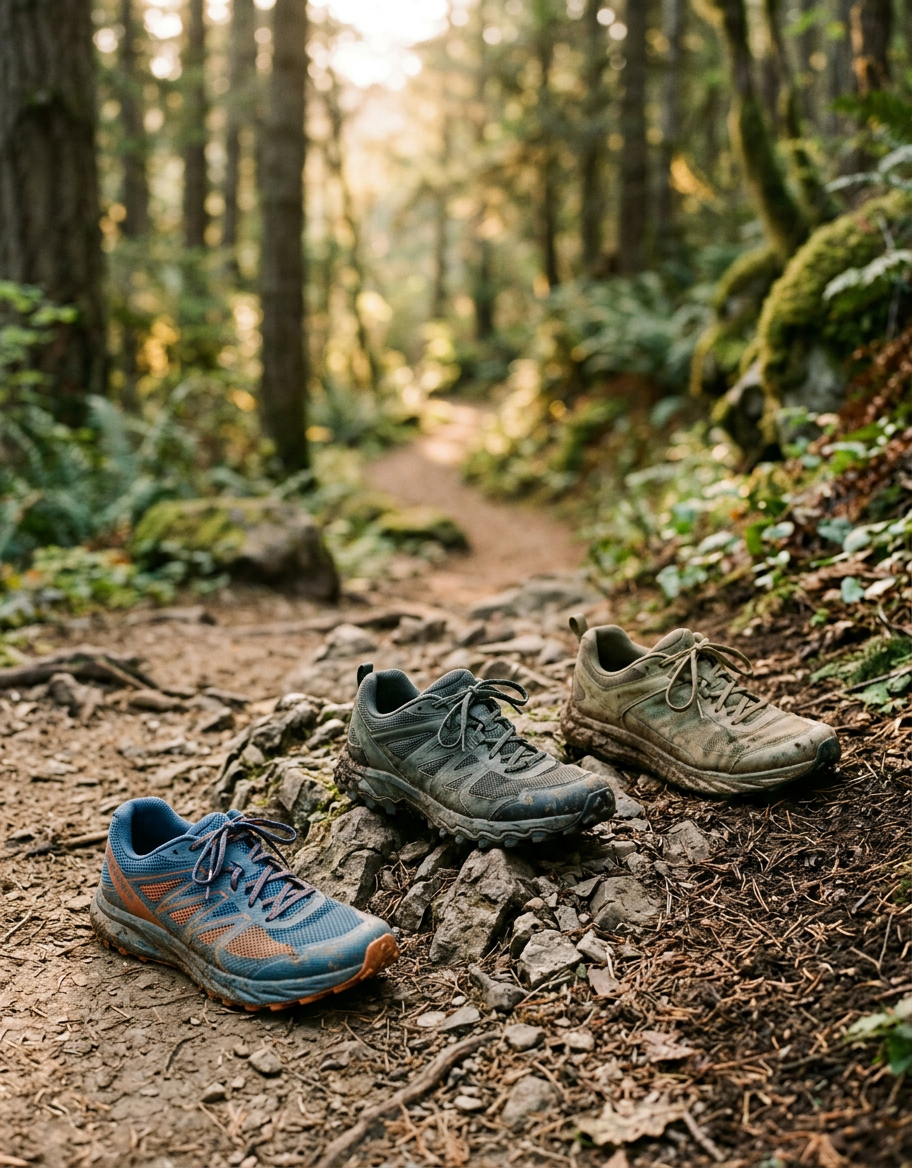
The Brooks Men’s Cascadia 19 is the best trail running shoe in our reviewed selection for technical mountain and rocky terrain because it is the only pick described with dedicated rock shielding, trail-specific rubber, and a protective build. The NORTIV 8 is the budget-minded wide-toe-box choice for non-technical trails, while the Joomra is a zero-drop minimalist option for experienced or carefully transitioning runners.
Editorial scores and recorded prices are reference points, not measurements of suitability for every use. Read each review's specifications and limitations.
Brooks Men’s Cascadia 19 Mountain Trail Running Shoe4.5GBP 85.36Our score 7.8/10Best for Technical mountain and rocky trail running NORTIV 8 Men's Trail Running Shoes Wide Toe Box4.4GBP 40.09Our score 6.9/10Best for Wider feet on non-technical trails
 Joomra Women's Trail Running Barefoot Shoes Zero Drop Minimalist Sneakers4.3GBP 26.49Our score 7.3/10Best for Transitioning to minimalist and zero-drop running
| Product | Listed price | Best for | Rating | Key documented strengths | Key limitations |
|---|---|---|---|---|---|
| Brooks Cascadia 19 | GBP 85.36 | Technical mountain and rocky trail running | 4.5/5 (444 reviews) | Rock shielding, trail-specific rubber, durable debris-resistant upper | Firm structured platform can feel stiff on pavement; stack and drop are not published in the record |
| NORTIV 8 Wide Toe Box | GBP 40.09 | Wider feet on non-technical trails | 4.4/5 (1,284 reviews) | Wide toe box and functional lug pattern for dirt paths | Outsole struggles on wet rock; no rock plate; stack and drop are not published in the record |
| Joomra Zero Drop Minimalist | GBP 26.49 | Transitioning to minimalist and zero-drop running | 4.3/5 (25,946 reviews) | Zero-drop profile and spacious toe box | No impact cushioning or rigid rock plate; careful adaptation is needed |
The best overall trail running shoe in this group is the Brooks Men’s Cascadia 19. Its listing and our review identify the things that most clearly separate a mountain trail shoe from a road trainer: dedicated underfoot shielding, trail-specific rubber, a durable debris-resistant upper, and a stable platform intended for technical climbs and descents. Its listed price is GBP 85.36, with a 4.5-star rating from 444 reviews.
The important limitation is that this is a small, uneven selection. There are only three relevant trail-running models in our reviews, and all are listed in British pounds rather than U.S. dollars. None publishes complete geometry data in the available record, including stack height and heel-to-toe drop. That makes it impossible to name a universal fit winner or to compare calf and Achilles loading precisely.
Use the picks according to terrain and running background:
A trail label is not enough on its own. Start with the surface you actually run—hardpack, loose gravel, mud, wet rock, or rocky descents—then match protection, traction, toe room, and cushioning to it. For broader context, see our running shoes and watches reviews and how to choose running shoes.
Read the reviews: Brooks Men’s Cascadia 19 Mountain Trail Running Shoe, NORTIV 8 Men's Trail Running Shoes Wide Toe Box, Joomra Women's Trail Running Barefoot Shoes Zero Drop
The Brooks Men’s Cascadia 19 is the most purpose-built option here for runners whose trails include rocks, uneven ground, climbing, and descending. Our review identifies dedicated rock shielding, trail-specific rubber, and a durable, debris-resistant upper. Those attributes address the practical demands of technical terrain better than a basic dirt-path outsole or a minimalist sole with no rock plate.
It is also the highest-scoring trail-specific model in this comparison at 7.8/10. Its 4.5-star average comes from 444 customer reviews, and the listed price is GBP 85.36. The trade-off is a firmer, more structured platform that our review says can feel stiff on pavement. It is therefore a terrain-specific shoe rather than the automatic answer for a runner who spends most miles on roads or smooth park paths.
Do not assume the Cascadia 19’s fit or geometry will work for you just because its protection level is stronger. The product record does not state heel stack, forefoot stack, drop, weight, foam composition, or exact upper materials. Stack and drop are more useful indicators of how a shoe may change loading through your calves, Achilles area, knees, and feet than a foam name alone. Confirm the current exact-model specifications and sizing guidance before purchase.
For a deeper product breakdown, read our Cascadia 19 review. Also consult our buyer’s guide before choosing a technical shoe solely by price or online rating.
Read the reviews: Brooks Men’s Cascadia 19 Mountain Trail Running Shoe
Yes—for recreational runners with wider feet who stick mainly to non-technical trails, the NORTIV 8 is the value-oriented pick in this group. Its wide toe box is its defining feature. Extra forefoot space can be especially welcome on descents, when feet tend to move forward, and it may feel less confining than a narrow conventional running last. The reviewed model is listed at GBP 40.09 and has a 4.4-star rating from 1,284 reviews.
Terrain is the boundary. Our review considers its lug pattern functional for dirt paths, flat hardpack, moderate ascents, dry earth, and loose gravel. It specifically cautions that the outsole rubber struggles on wet rock, and it lacks rock-plate protection from sharp stones. That makes it a reasonable low-cost option for smoother local trails, but not our recommendation for wet roots, slick rock slabs, or persistently rocky mountain routes.
The available record does not identify the upper textile, outsole-rubber compound, stack height, heel-to-toe drop, or foam compound. Those are meaningful unknowns, not details to fill in from the shoe’s appearance. In particular, runners changing from a high-stack or high-drop road shoe should verify the NORTIV’s geometry rather than presume that a wide toe box determines its ride.
It can make sense as one member of a shoe rotation, perhaps alongside a more protective pair for technical terrain. Rotate based on comfort, wear, training load, and the roles your shoes serve—not on a blanket belief that every shoe requires exactly one recovery day. Review common selection errors in our trail and running-shoe mistakes guide.
Read the reviews: NORTIV 8 Men's Trail Running Shoes Wide Toe Box
The Joomra Women’s Trail Running Barefoot Shoes are a specialized choice, not the best all-purpose trail shoe for most runners. They use a zero-drop design, meaning the heel and forefoot sit at the same height from the ground, and they have a spacious toe box. At GBP 26.49, they offer a low-cost way to try minimalist footwear; the model holds a 4.3-star average from 25,946 reviews.
Minimal cushioning is the defining compromise. Our review describes the shoe as better suited to soft dirt and groomed park paths than loose scree or technical rocky descents, where it has no rigid rock plate to spread sharp impacts. It also notes that the absent cushioning demands a cautious transition for runners accustomed to more protective shoes. A zero-drop profile may alter the demands placed on the calves and Achilles area, so increase running time and difficulty gradually if you are new to this category.
Do not treat “barefoot” or “zero drop” as a performance upgrade by default. It is simply a substantially different geometry and cushioning level. The listing does not document outsole tread depth, rubber density, upper breathability, or total stack height. Those unknowns matter for wet traction, durability, and rock protection.
This shoe can work well for runners who deliberately want ground feedback and already tolerate minimalist footwear. Everyone else should prioritize a trail shoe matched to their route first. Our running-shoe FAQ and buying tips can help frame that decision.
Read the reviews: Joomra Women's Trail Running Barefoot Shoes Zero Drop
Start with your most demanding regular route, not the occasional scenic outing. A shoe that is comfortable on packed dirt can be inappropriate for wet rock, sharp stones, long descents, or unstable ground. Match the platform to the conditions below.
Then assess fit. Leave appropriate room ahead of the toes for descents, make sure the heel is secure enough to limit slipping, and wear the socks you will run in when checking fit. A wide toe box helps some runners but does not replace heel and midfoot security.
Finally, evaluate stack height and drop from a reliable current source before committing. The reviewed records do not provide those figures for these three models. Read our guide to choosing running shoes and use the comparison tool to organize the specifications you can verify.
Read the reviews: Brooks Men’s Cascadia 19 Mountain Trail Running Shoe, NORTIV 8 Men's Trail Running Shoes Wide Toe Box, Joomra Women's Trail Running Barefoot Shoes Zero Drop
After a trail run, remove loose dirt and stones, take out the insoles if they are wet, and let the shoes air-dry away from direct heat. Do not place footwear on a radiator, in a clothes dryer, or against another intense heat source; excessive heat can affect adhesives, foams, and upper materials. For deeper cleaning, follow the exact-model manufacturer instructions rather than assuming machine washing is acceptable.
Check the outsole before each technical outing. Look for worn or damaged lugs, cuts in the upper, loose overlays, and a midsole that feels noticeably uneven or permanently compressed. A shoe can still look clean while providing less predictable footing or impact protection. On the Cascadia 19, inspect the protective upper and underfoot structure after rocky routes. On the NORTIV 8, pay special attention to traction condition if you run on mixed gravel and rock. On the Joomra, monitor the sole closely because the minimalist construction leaves less material between your foot and trail hazards.
Shoe rotation can be useful, particularly if one pair is for rocky trails and another is for easier routes or road miles. But there is no universal, evidence-free one-day recovery requirement that applies to every midsole and every runner. Let comfort, material condition, mileage, weather, and your training pattern guide use. Avoid relying on a pair that is soaked or visibly damaged.
For signs that a pair may be nearing retirement, see how long running shoes last and our budget planner for planning a two-pair setup.
Read the reviews: Brooks Men’s Cascadia 19 Mountain Trail Running Shoe, NORTIV 8 Men's Trail Running Shoes Wide Toe Box, Joomra Women's Trail Running Barefoot Shoes Zero Drop
Amazon links are affiliate links; we may earn a commission at no cost to you.
This page summarizes our research reviews of Amazon listings, listed specifications and captured buyer ratings. It is not a hands-on test. Scores are editorial assessments, not measured performance; prices are recorded snapshots and may change. A category can include both main products and accessories, so its overall price range is not the cost of a complete setup.
Most recent product record update: September 15, 2026. Individual records may be older; this is not a verification date for every claim.
Amazon links are affiliate links. We may earn a commission on qualifying purchases, at no extra cost to you.
A more useful shortlist
Choose the product type first. These groups require a match in the listing title; an import search term alone is not enough. Scores rank our recorded research assessments within each group, not independently measured performance.
Brooks Men’s Cascadia 19 Mountain Trail Running ShoeRecorded price: $85.36 · Editorial score: 7.8/10
Joomra Women's Trail Running Barefoot Shoes Zero Drop Minimalist SneakersRecorded price: $26.49 · Editorial score: 7.3/10
Brooks Men’s Cascadia 19 Mountain Trail Running ShoeRecorded price: $85.36 · Editorial score: 7.8/10
Joomra Women's Trail Running Barefoot Shoes Zero Drop Minimalist SneakersRecorded price: $26.49 · Editorial score: 7.3/10
If a specification, certification or compatibility detail is absent, mark it as unknown and ask the seller or manufacturer. Do not substitute a star rating, an editorial score or a different model's specification.