Best Running Watches: 2026 Reviews and Buying Advice
We analyze the top GPS running watches to help you track your fitness milestones, from entry-level trackers to advanced training interfaces.
By the Niche Picks editorsUpdated November 8, 202610 min readDrawn from our 31 research-based running shoes & watches reviews
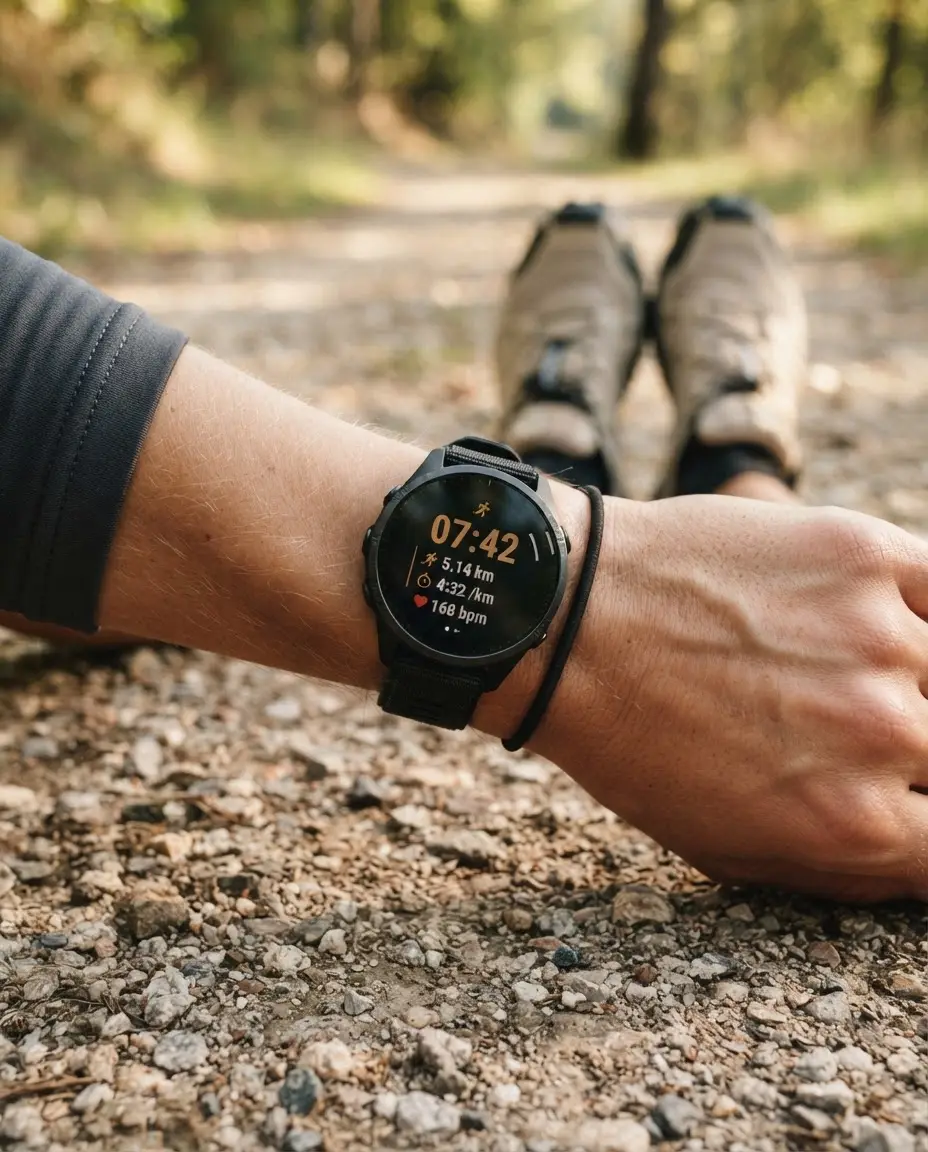
AI-generated editorial illustration; not a product or test photograph.
Short answer
The best running watches for most athletes prioritize reliable GPS, long battery life, and intuitive training metrics. While entry-level models like the Garmin Forerunner 55 offer core pacing, intermediate options like the Garmin Forerunner 165 provide AMOLED displays and advanced physiological recovery insights. For all serious athletes, dual-band GNSS remains the gold standard for satellite accuracy in complex urban environments.
3
Product listings discussed; not hands-on tests
3/3
Discussed listings with a recorded price
$41.99–$191.00
Recorded listing price range; not a complete setup cost
Key takeaways
Dual-band GNSS technology is the most critical feature for improving GPS accuracy around tall buildings and heavy tree cover.
Look for watches with physical buttons rather than relying solely on touchscreens, which can be unreliable when running in rain or with sweat.
Entry-tier watches effectively track pace and distance, but you typically need mid-range models to access advanced physiological recovery metrics.
Battery life is a primary differentiator; aim for models that provide at least 10 days of smartwatch mode to avoid daily charging hassles.
The most important factors for your legs remain the shoe's drop and stack height rather than any specific brand name of foam.
Products discussed in this article
Editorial scores and recorded prices are reference points, not measurements of suitability for every use. Read each review's specifications and limitations.
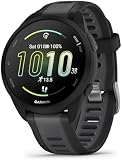
GPS Running Watch for Men & Women, Distance Tracking$41.99
Running Watch Comparison Overview
Product
Price
Display Type
GPS Type
Best Use
Forerunner 55
$161.99
Transflective
Single-band
Entry Training
Forerunner 165
$191.25
AMOLED
Single-band
Intermediate
Moutarlier GPS
$41.99
AMOLED
Single-band
Casual Jogging
Why Dual-Band GNSS Matters for Your Accuracy
When navigating city routes or dense forest trails, GPS signal bounce is a frequent issue that plagues standard wearables. Single-frequency GPS watches, such as the Garmin Forerunner 55, rely on a single signal layer that can struggle when blocked by urban canyons or thick canopy. This often results in tracked distances that fluctuate or appear jagged on a digital map. For runners serious about logging precise splits, dual-band GNSS technology is the real accuracy upgrade. By receiving signals on multiple frequencies, the watch can better filter out environmental interference and maintain a locked position during your workout.
Improved reliability in cities where signals frequently reflect off glass and steel.
Consistent pace tracking during interval sessions on tracks or winding trails.
Faster signal acquisition at the start of your run, minimizing wait times.
While budget watches like the GPS Running Watch for Men & Women provide basic distance tracking, they typically use single-frequency chips. These are excellent for casual joggers who do not require surgical precision but may lack the consistency needed for elite-level training blocks. If you find your current device often registers an extra tenth of a mile on a loop you know by heart, a move to a dual-band receiver is the most effective way to solve the problem. Learn more about how to choose the right gear by visiting our guide to running shoes and watches for a deeper look at technical specifications and performance benchmarking. It is essential to weigh whether you need high-end mapping or if you simply require reliable pacing to maintain your cadence throughout your weekly mileage goal. Precision in data acquisition is not merely about having numbers, but about trusting your progress as you push toward new endurance goals, allowing you to objectively verify the intensity of every training block you complete.
Garmin Forerunner 55 vs 165: Which Fits Your Training?
Deciding between the entry-level Forerunner 55 and the intermediate Garmin Forerunner 165 often comes down to your need for modern interface features and daily usage. The Forerunner 55 is built around a transflective display that prioritizes readability in direct sunlight and exceptional battery life, often lasting up to two weeks on a single charge. It is a workhorse device designed for runners who need core metrics like PacePro and daily suggested workouts without the visual distraction of a complex, energy-demanding high-resolution screen. The physical interface uses durable buttons that remain reliable regardless of weather conditions.
Transflective displays reflect ambient light, making them the superior choice for consistent outdoor training in bright sunlight.
AMOLED screens on the 165 provide vibrant colors and deep blacks, useful for checking stats in low light or indoor gym settings.
Structured workout engines in both devices support custom intervals and training cycles that adapt to your fitness level.
In our Garmin Forerunner 55 vs 165 for Beginner Runners deep dive, we compare these models across various metrics, noting that the Forerunner 165 adds an AMOLED touchscreen and advanced recovery algorithms. While the 165 is more expensive, its ability to integrate with your smartphone for contactless payments and incident detection adds a layer of daily utility that standard running watches often lack. However, both units are primarily built for the road. If you are looking to refine your training protocol, integrating these watches with your footwear rotation—using pairs suited to your specific gait as mentioned in our blog for running shoes and watches—will yield the best overall results for your lower limbs. Always ensure your hardware and software are updated to the latest manufacturer firmware to maintain data integrity and connectivity with your preferred training apps, ensuring you are never left with an inaccurate log due to outdated satellite ephemeris data.
Keeping your watch's firmware updated and reducing screen brightness can significantly extend both your daily runtime and the long-term health of the battery.
Navigating the Budget Market: What You Should Know
The sub-$60 market for running watches is filled with devices that promise comprehensive tracking for a fraction of the cost of premium sports gear. The GPS Running Watch for Men & Women is a prime example of this, offering built-in GPS, 5ATM water resistance, and even music controls. However, it is important to manage expectations regarding the software experience. Often, these devices use proprietary companion apps that do not sync as seamlessly with third-party platforms like Strava or TrainingPeaks compared to larger ecosystem players. You are paying for entry-level hardware, which means the user experience is functional rather than polished.
5ATM water resistance ensures protection against sweat, rain, and short swimming sessions.
Physical button inputs are a significant benefit over generic touchscreens, especially for winter running when gloves are necessary.
Battery capacity in this bracket is usually lower, requiring more frequent charging cycles compared to mid-tier units.
Before committing to a budget wearable, review our mistakes to avoid when buying running shoes and watches to understand why hardware quality matters for long-term reliability. In this price tier, sensor accuracy for heart rate and GPS positioning will generally show higher variance than specialized sports watches. This does not mean they are useless; for a casual runner tracking general mileage and heart rate trends, they perform admirably. However, if your goals involve specific marathon pace targets or highly technical trail navigation, the accuracy gap can become apparent. When you combine this with the right footwear, such as finding the best running shoes for men, you create a comprehensive training ecosystem that doesn't require an enormous financial investment to get started on your path toward consistent, long-term fitness improvement. Always evaluate your actual training volume; if you are running daily, the durability of the watch becomes as crucial as the accuracy of its data logging.
The physical construction of a running watch is often overlooked until you are mid-run, sweaty, and struggling to tap a small screen. Watches like the Garmin Forerunner 55 utilize button-based navigation that is inherently more reliable when conditions become less than ideal. When you are pushing hard during a workout, the last thing you want is for moisture to inhibit your ability to see your pace or start a new lap. A well-designed watch should be lightweight, unobtrusive, and easy to interact with on the fly without breaking your stride or focusing too much on the device itself.
Fiber-reinforced polymers offer a perfect balance of low weight and high durability.
Standardized lugs allow for the easy replacement of bands if the silicone starts to wear down or becomes uncomfortable.
Tactile button feedback provides confidence that your input has been registered, which is essential for interval training.
Our FAQ for running shoes and watches discusses why these physical features are critical for long-term satisfaction. Modern runners often gravitate toward touchscreens for their smartphone-like appeal, but the Garmin Forerunner 165 thoughtfully combines both touchscreen and button controls. This hybrid approach allows you to swipe through deep data menus when you are recovering at home, while sticking to physical buttons when you are out on the road. Remember that the watch is meant to support your training, not dictate it. By focusing on models that prioritize robust build quality, you ensure that the device remains a reliable partner through hundreds of miles of training. Whether you prefer a classic transflective display for its battery longevity or a vibrant screen for its aesthetic appeal, the hardware must stand up to the daily rigors of the sport. Check the water resistance ratings as well—5ATM is a standard, reliable baseline for any device you intend to wear through all four seasons and into the pool.
If you live in a wet or cold climate, prioritize watches with physical buttons. Touchscreens often fail to register input correctly when wet from rain or sweat.
Maximizing Your Gear's Lifespan
Owning a premium running watch is only half the battle; how you maintain it directly affects how long it will stay accurate and responsive. Firmware updates are often neglected by users, yet they frequently contain critical optimizations for GPS satellite connectivity and heart rate sensor algorithms. Manufacturers like Garmin release these updates to improve the performance of existing hardware over time. If your watch suddenly starts struggling to find a signal, a simple sync with the companion app to check for pending updates is often the most effective first step.
Charge your watch during periods of inactivity to maintain a healthy battery chemistry.
Clean the charging contact points regularly with a soft cloth to prevent sweat-induced corrosion.
Utilize screen protectors if you are running on rocky trails where the watch might impact debris.
Our article on how long do running shoes last? provides insight into the lifecycle of your gear, which applies similarly to the components of your watch. Sensors like the optical heart rate monitor can become degraded by excessive salt buildup from sweat. A quick rinse with fresh water after a particularly intense session and a thorough drying will keep the sensors clear and accurate. Furthermore, avoid the temptation to leave your watch on a charger indefinitely, as this can negatively affect the long-term capacity of lithium-ion batteries. Instead, top it off when you reach 20-30% and remove it once fully charged. By practicing these simple maintenance habits, you ensure that your investment pays off over years rather than months. As mentioned in our buyer's guide for running shoes and watches, consistent care leads to consistent performance, allowing you to focus your energy entirely on your training cycles rather than troubleshooting faulty electronics or worn-out accessories mid-session.
Integrating Watches with Your Training Rotation
Training is a holistic effort that goes beyond just the hardware on your wrist. While we often focus on the GPS accuracy of a watch, the biomechanical impact of your footwear is just as significant for your performance. Rotating your running shoes, as discussed in our blog for running shoes and watches, is essential because midsoles need time to rebound from compression. When you pair your daily training runs with a reliable watch, you can track your cadence and heart rate data to ensure you are not overtraining or stressing your body improperly. Using the data from your Garmin Forerunner 165 to guide your recovery is a hallmark of intelligent, long-term training strategy.
Track your HRV status to gauge how well your body is absorbing the training load.
Use structured workout alerts to manage your pacing on recovery days vs. tempo days.
Coordinate your shoe rotation with your watch logs to identify patterns in performance based on your current footwear.
For those interested in specialized trail running, our guide on best trail running shoes highlights how terrain changes your mechanical load. Combining that specific footwear with a high-accuracy GPS watch ensures that you aren't just logging mileage, but logging meaningful data that reflects your growth. If you find that your calves or knees are feeling strained, check your shoe's drop and stack height—these factors, as emphasized in our how to choose running shoes guide, usually impact your legs far more than the foam branding or the watch's tracking features. Ultimately, the best running watch is the one that provides you with the clear, actionable insights needed to train consistently while avoiding injury. By treating your running watch as a tool for self-awareness rather than just a digital stopwatch, you unlock a more efficient way to approach your running journey, ensuring that you stay healthy and motivated for years to come.
Confirm if the watch supports your preferred sports modes (running, swimming, cycling).
Check if the display is readable in the specific lighting conditions where you train.
Verify compatibility with your smartphone's operating system.
Ensure the watch band is replaceable or compatible with standard lugs.
Look for the inclusion of essential safety features like incident detection.
Check the manufacturer's rating for water resistance to match your usage (5ATM for swimming).
Measure your wrist circumference to ensure the case size fits comfortably without sliding.
Frequently asked questions
Do I really need dual-band GPS for running?
If you frequently run in cities with tall buildings or under dense trees, dual-band GNSS is highly recommended for improved accuracy. For runners on open roads, standard single-band GPS is typically sufficient for tracking pace and distance.
How often should I charge my running watch?
Most modern running watches last between 7 and 14 days in smartwatch mode. However, using high-precision GPS or streaming music will deplete the battery much faster, potentially requiring a charge every 2-3 days during heavy training weeks.
Are expensive watches more durable than budget ones?
Often, higher-priced watches use more durable materials like fiber-reinforced polymers or scratch-resistant glass. While budget watches are functional, their casings and screen materials may degrade faster under the daily stresses of intense athletic training.
Can I use a running watch for swimming?
Most dedicated running watches are rated 5ATM, meaning they are water-resistant up to 50 meters. You can safely use them for surface swimming or rain, but you should avoid high-pressure water, diving, or steam saunas.
What is the benefit of a transflective screen vs AMOLED?
Transflective screens use ambient light to stay visible, making them excellent for sunny outdoor runs and battery efficiency. AMOLED screens offer vibrant, high-contrast colors, making them easier to read in low light but typically requiring more battery power.
Amazon links are affiliate links; we may earn a commission at no cost to you.
Shortlists in this category
Ranked lists from our running shoes & watches reviews, limited to listings whose titles confirm the product type, with budget cuts where enough recorded prices sit on both sides of the line.
This page summarizes our research reviews of Amazon listings, listed specifications and captured buyer ratings. It is not a hands-on test. Scores are editorial assessments, not measured performance; prices are recorded snapshots and may change. A category can include both main products and accessories, so its overall price range is not the cost of a complete setup.
Most recent product record update: November 8, 2026. Individual records may be older; this is not a verification date for every claim. Prices on this page were read from the listings Nov 8, 2026 – Nov 12, 2026.
Choose the product type first. These groups require a match in the listing title; an import search term alone is not enough. Scores rank our recorded research assessments within each group, not independently measured performance.
Values are shown as recorded, without unit conversions or inferred compatibility. Not recorded means unknown, not absent. Prices are snapshots, not current offers. Editorial scores are research judgments, not lab results. Amazon links are affiliate links.
Before treating a comparison as complete
Which details are still unknown?
A specification appearing in a listing is not independent verification. These counts show which shortlisted records contain the same field; a blank record does not mean the product lacks the feature.
Drop and stack height matter more to your legs than foam branding.
Dual-band GNSS is the real accuracy upgrade in running watches.
If you rotate shoes, use pairs that suit your gait and training; there is no universal one-day recovery requirement for every midsole.
If a specification, certification or compatibility detail is absent, mark it as unknown and ask the seller or manufacturer. Do not substitute a star rating, an editorial score or a different model's specification.