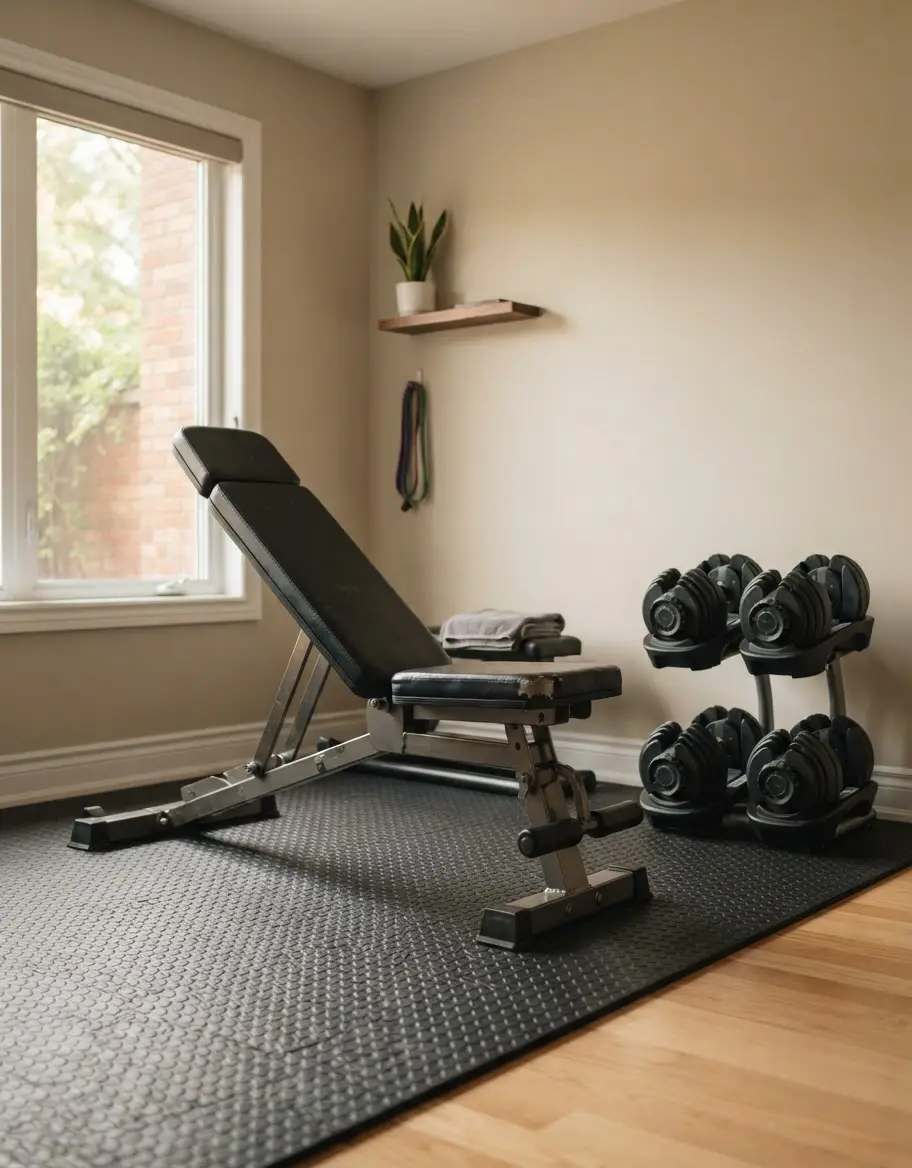
We analyze leading workout benches to find stable, space-saving options that provide reliable support for your home strength training routines.
By the Niche Picks editorsUpdated November 8, 20269 min readDrawn from our 35 research-based home gym equipment reviews
AI-generated editorial illustration; not a product or test photograph.
Short answer
A reliable workout bench provides the foundation for safe strength training, balancing structural integrity with adjustable versatility. For most home gyms, the best choice offers high weight capacity, a stable footprint, and rapid incline adjustments. We recommend prioritizing models with a heavy-duty steel frame to ensure safety and longevity, even when training with moderate weight loads.
6
Product listings discussed; not hands-on tests
5/6
Discussed listings with a recorded price
$44.32–$149.98
Recorded listing price range; not a complete setup cost
Key takeaways
Prioritize high weight capacities and steel frames to ensure long-term equipment stability.
Measure your ceiling height before purchasing an adjustable bench for overhead pressing movements.
Folding designs offer excellent space-saving utility but often introduce more movement at hinge points.
Always verify the bench width and padding quality to ensure comfort and proper scapular support during heavy sets.
Consider your specific floor type when selecting a bench to avoid instability during aggressive training sessions.
Products discussed in this article
Editorial scores and recorded prices are reference points, not measurements of suitability for every use. Read each review's specifications and limitations.
FLYBIRD Adjustable Weight Bench, Full Body Workout$104.46
Comparison of popular workout benches for home use.
Product
Max Capacity
Folding
Best For
YOLEO Bench
827 lbs
Yes
Budget Strength
FitinOne
660 lbs
Yes
Small Spaces
VUSIGN
600 lbs
Yes
Entry Level
Rockvale
660 lbs
Yes
Out-of-box Setup
FLYBIRD WB5
1000 lbs
Yes
Incline/Decline
FLYBIRD 99
750 lbs
Yes
General Routine
What defines a safe workout bench?
Safety is the foremost concern in any home training environment. When reviewing the best home gym equipment, we focus on documented load ratings, steel material quality, and bracing architecture. A high-quality bench uses alloy steel, preferably in a triangular configuration to distribute weight evenly across the frame. While entry-level options like the YOLEO Adjustable Weight Bench advertise impressive 827-pound capacities, home users should maintain realistic expectations regarding dynamic movements versus static loads.
Inspect weld points periodically to identify early signs of metal fatigue.
Ensure non-slip feet are properly attached to prevent shifting on slick concrete or wood flooring.
Avoid benches that exhibit excessive play at pivot hinges, as this vibration can compromise your stability during heavy lifts.
Many common mistakes to avoid involve purchasing equipment based solely on marketing claims rather than physical mass. Commercial standards typically rely on 11-gauge steel, which provides the rigidity required for heavy-duty use. Benches that feel exceptionally light for their size often compensate for lack of material density with complex folding mechanisms, which can be a point of structural compromise. If you are serious about strength, we suggest reviewing our home gym equipment buyer's guide to understand how structural mass correlates with long-term performance. Reliable bench mechanics should feel secure when you place them under load, without unnecessary rattling or wobble that might distract from your focus on proper form and muscle contraction.
The choice between a folding or fixed-frame bench often depends on your available floor space. If you are living in an apartment, a folding unit like the FitinOne Adjustable Folding Weight Bench provides incredible space efficiency, allowing you to reclaim your room after a workout. However, the convenience of rapid stowage usually comes at the expense of absolute structural rigidity. Fixed-frame benches, such as the Marcy Flat Utility Weight Bench, provide an uncompromised foundation because they lack moving pivot points that can wear down or loosen over time.
Folding benches are ideal for occasional lifters or those working with bands and light dumbbells.
Fixed benches remain the gold standard for dedicated powerlifting or heavy-load training.
Consider how often you intend to move your equipment before committing to a hinge-based design.
When you review our must-have home gym equipment, you will see that flat benches serve as a versatile piece of kit for everything from chest pressing to step-ups. For many home gym equipment reviews, we emphasize that the presence of a folding mechanism often limits the maximum weight you should safely load onto the bench. Always check the manufacturer’s advice for maintenance and bolt-tightening to ensure that folding hinges remain secure over years of service. If your gym footprint allows for it, a fixed-frame setup will almost always provide a more stable and confidence-inspiring surface for heavy pushing movements. Conversely, if you are strictly focused on bodyweight or low-load resistance training, the benefit of a folding bench—such as its ability to be stowed away within a two-square-foot footprint—often outweighs the structural trade-off.
Before buying, measure your total reach. Adding a bench height plus your overhead extension often leaves less clearance than you think in standard basements.
How does ceiling height affect your workout?
A frequently overlooked detail in home gym planning is vertical clearance. Before investing in an adjustable bench, you must verify your room's ceiling height, particularly if you plan to perform seated overhead shoulder presses. An upright bench adds significant vertical length to your stature, and when combined with the height of your raised arms and the length of your dumbbells, you may find yourself unexpectedly restricted by low ceilings or hanging light fixtures. This is a critical factor when considering best home gym equipment on a budget that might be positioned in an unfinished basement or garage.
Measure from the floor to the lowest point of your ceiling or light fixture.
Account for the bench's upright height plus your torso length.
Add at least 12 inches of buffer space to ensure you can fully extend your arms without safety hazards.
If you find your space is limited, look for benches that offer a lower incline profile or prioritize floor-based movements like floor presses. Our home gym equipment FAQ regularly highlights the importance of the initial planning phase. For example, using the FLYBIRD WB5 Weight Bench for seated work requires careful assessment if your ceilings are under eight feet. Always prioritize your safety; if you cannot achieve a full range of motion without hitting an obstacle, you are prone to altering your technique, which can lead to poor biomechanical habits or injury. Being proactive about your space configuration allows you to choose the right bench the first time, ensuring your home gym remains a productive, safe environment for every set you perform, whether it’s a standard flat press or an intense shoulder-focused circuit.
While a 600 or 800-pound capacity rating is a common marketing claim, this figure often conflates total load with the actual frame integrity. When we examine the best home gym equipment, we look beyond these numbers. The actual steel gauge is a far better indicator of how the bench will perform under long-term use. Many affordable benches utilize thinner 14- or 16-gauge tubing, which can flex or sway under aggressive loading. While products like the VUSIGN Adjustable Weight Bench work well for light-to-moderate training, advanced lifters should seek out heavier construction to prevent the 'wobble' that occurs when the frame’s mass is too low to remain grounded during hard training sets.
A heavy bench stays planted on the floor, allowing for better leg drive during chest presses.
Check whether the capacity rating includes your own body weight and the weight of the dumbbells.
Note that wider stabilizer feet generally result in a more secure, less tippy experience.
For those comparing different options, the compare feature in our system can help you align bench dimensions with your personal training goals. Remember that heavy-duty commercial equipment uses 11-gauge steel, a benchmark that provides the most reliable structural rigidity. While you might pay a premium for this, the long-term investment is often worth it if you plan to progress in strength over time. If you are building a budget setup, consider pairing your bench with a quality set of weights, such as the Adjustable dumbbell set, to maximize your utility per dollar spent. Never let high capacity claims distract you from assessing the real-world utility of the materials used in the bench's design and assembly.
For maximum stability and longevity, look for benches using 11-gauge steel. It is the industry standard for commercial-grade equipment.
Maintenance and longevity tips
To keep your equipment performing safely for years, basic maintenance is essential. Regularly checking the hardware on your bench—especially the bolts and hinge pins—is the best way to prevent safety issues before they start. Most home-use benches, including the FLYBIRD Adjustable Weight Bench, rely on locking pins to secure the backrest and seat angles. Over time, these can loosen or accumulate dust. Keeping the pins lubricated and ensuring the bolts remain tight is a simple, five-minute task that ensures the bench remains stable for every rep you perform.
Wipe down upholstery after every session to prevent sweat-related deterioration of the synthetic material.
Re-tighten all assembly bolts every 3-6 months, especially after frequent folding or adjustments.
Use a dedicated gym mat underneath the bench to protect the floor and improve overall traction.
Many of our buying tips for home gyms emphasize that well-maintained equipment lasts significantly longer and performs more reliably. If you notice any squeaking or rattling during your workout, take the time to investigate. Often, this is just a sign that a bolt has backed off slightly during use. Furthermore, if you are working on a budget, take a look at the best home gym equipment on a budget to see how simple accessories can protect your investment. By being meticulous about the condition of your gear, you not only extend the functional life of your bench but also create a more consistent environment for your training. If your bench begins to show significant wear at the hinges or excessive frame flex, it may be time to upgrade to a more robust, non-folding model that can better support your long-term athletic progression and safety needs.
A workout bench is the anchor of your training space, but it needs to work in tandem with your other tools. Whether you are using dumbbells or a full power rack, your bench placement matters. For instance, if you are using a power rack, ensure your bench fits securely inside the cage area without blocking the safety pins. If you are limited in space, you might pair a simple, sturdy bench with a set of best adjustable dumbbells to perform a wide variety of exercises within a minimal footprint. This combination allows for almost every primary compound movement without needing an entire room full of dedicated machines.
Always ensure the bench is positioned for proper balance before you un-rack a barbell.
Consider how the height of your bench affects your ability to reach for weights when training solo.
Use markers on the floor or a persistent gym mat to keep your bench in a consistent, optimal position.
When you look at our must-have home gym equipment, you will realize that efficiency is key. By selecting gear that integrates well—like a bench with a slim profile that leaves room for you to move in a cage—you create a more fluid workout flow. Furthermore, don’t underestimate the value of simple floor mats to keep your equipment in place. A sliding bench can be a real distraction and a potential safety hazard during heavy sets. Whether you choose a foldable model or a fixed-frame piece, ensure it is anchored well enough to handle your style of training. Remember that the best home gym is not about the amount of equipment you own, but how well the pieces work together to support your long-term health, fitness goals, and consistent, safe training routines over time.
1Clear your workout area of all obstacles to verify usable square footage.
2Measure your ceiling height and subtract the height of the bench and your torso length to confirm safe overhead press clearance.
3Assemble the frame on a flat surface, ensuring all bolts are tightened to the manufacturer's torque specifications.
4Test the bench by sitting and performing bodyweight movements to ensure stability before adding external resistance.
5Add your dumbbells or barbell increments gradually to assess frame rigidity under load.
6Adjust the bench to various incline and decline positions, checking the locking pin for a secure fit in each slot.
Quick checklist
Verify your available ceiling height for overhead pressing.
Choose between fixed-frame stability or folding convenience.
Check for genuine ASTM or weight capacity certification.
Measure your floor space to ensure the bench footprint fits your gym layout.
Confirm the upholstery material is sweat-resistant and easy to clean.
Inspect the adjustment mechanism for simple, secure locking pins.
Read verified buyer feedback specifically regarding hinge wobble.
Frequently asked questions
How much weight capacity do I actually need?
Most users require far less than the advertised maximums. A bench rated for 600-800 pounds is typically more than sufficient for a home user, as this figure includes both your body weight and the weight of the dumbbells or barbell you are lifting.
Are folding benches safe for heavy lifting?
Folding benches are generally safe for moderate weights, but the hinges inherently introduce more flex than welded fixed-frame benches. If you are a serious strength athlete lifting heavy iron regularly, a fixed-frame, fully welded bench is a more reliable choice.
Can I use a yoga mat under my workout bench?
Yes, but use a high-density mat rather than soft, fluffy yoga foam. Soft mats can compress unevenly under the weight of a bench, creating an unstable base that may cause the bench to tip during heavy chest presses.
Do I need a bench with a decline position?
Decline positions are useful for specific abdominal work or targeted lower-chest pressing, but they are not mandatory for a basic strength routine. If you are on a tight budget, you can often skip decline options to find a more rigid, higher-quality flat or incline-only bench.
How often should I check the bolts on my bench?
You should perform a quick inspection of your bench bolts every three to six months. Frequent movement and the vibrations from daily use can cause nuts to loosen slightly over time, which may result in frame rattle or stability issues if left unaddressed.
Amazon links are affiliate links; we may earn a commission at no cost to you.
Shortlists in this category
Ranked lists from our home gym equipment reviews, limited to listings whose titles confirm the product type, with budget cuts where enough recorded prices sit on both sides of the line.
This page summarizes our research reviews of Amazon listings, listed specifications and captured buyer ratings. It is not a hands-on test. Scores are editorial assessments, not measured performance; prices are recorded snapshots and may change. A category can include both main products and accessories, so its overall price range is not the cost of a complete setup.
Most recent product record update: October 28, 2026. Individual records may be older; this is not a verification date for every claim. Prices on this page were read from the listings Nov 8, 2026 – Nov 12, 2026.
Choose the product type first. These groups require a match in the listing title; an import search term alone is not enough. Scores rank our recorded research assessments within each group, not independently measured performance.
Values are shown as recorded, without unit conversions or inferred compatibility. Not recorded means unknown, not absent. Prices are snapshots, not current offers. Editorial scores are research judgments, not lab results. Amazon links are affiliate links.
Before treating a comparison as complete
Which details are still unknown?
A specification appearing in a listing is not independent verification. These counts show which shortlisted records contain the same field; a blank record does not mean the product lacks the feature.
Item Weight
Recorded for 2 of 2 shortlisted models
Present in every shortlisted record. Check units, exact variants and the current manufacturer documentation before relying on it.
Weight Capacity Maximum
Recorded for 2 of 2 shortlisted models
Present in every shortlisted record. Check units, exact variants and the current manufacturer documentation before relying on it.
Check documented load ratings, steel gauge, anchoring and attachment compatibility; upright dimensions alone do not establish safety.
Adjustable dumbbells fail at the selector — check the mechanism.
Measure ceiling height before anything you plan to press overhead.
If a specification, certification or compatibility detail is absent, mark it as unknown and ask the seller or manufacturer. Do not substitute a star rating, an editorial score or a different model's specification.