What equipment does a home gym really need?
A home gym needs clear exercise space and resistance suited to your routine; a bench, mat, and rack are useful only when your workouts call for them.
Research-based article drawn from our 27 home gym equipment reviews. Updated September 2026.
Short answer
The must-have home gym equipment is the equipment your routine actually uses: start with bodyweight training or one resistance option, then add a bench for supported lifting and a mat for floor exercises. Adjustable weights save space but need careful handling. Measure overhead clearance first, and reserve racks and heavier flooring for a dedicated barbell setup.
Our picks for “must have home gym equipment”
- 1
 CAP ADJUSTABELL Adjustable Dumbbell Set, Premium Quick Select Adjustable Weights for Strength Training, Singles & Pairs, 25 LB & 55 LB, Hex Dumbbells, Multiple Handle Options4.5$297.79Our score 8.3/10
 - 2
 BowFlex SelectTech 840 Adjustable Kettlebell4.8$149.00Our score 8.4/10
 - 3
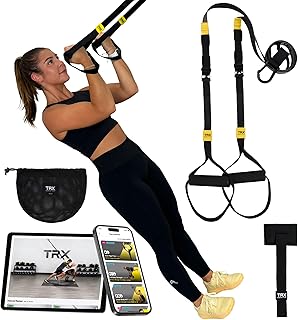 TRX GO Suspension Trainer, At Home, Portable Gym Workout, For Strength Training, Full Body Exercise Equipment4.7GBP 103.93Our score 8.1/10
 - 4
 Marcy Flat Utility Weight Bench for Home Gym Weight Training and Ab Exercises4.7$77.52Our score 8/10
 - 5
 Amazon Basics Extra Thick Exercise Yoga Mat with Carrying Strap4.6$22.48Our score 8/10
Start with your routine and room, not a shopping list
Before buying equipment, decide whether you mainly want bodyweight workouts, dumbbell strength training, kettlebell work, or barbell lifting. You do not need to equip for all four at once. Write down the exercises you expect to perform, then buy only what those movements require. Leave enough clear space to move and put equipment away without creating trip hazards.
Measure ceiling height before choosing anything you plan to press overhead. Consider your reach and the equipment’s position throughout the movement, not just whether you can stand upright. Seated pressing also needs clearance. Check the equipment manual for model-specific setup requirements.
For portable bodyweight resistance, the TRX GO Suspension Trainer is an alternative to weights, not an automatic addition to them. It packs down small and supports pushing and pulling movements through changes in body angle. Its essential requirement is a suitable load-bearing anchor: verify the structure and follow the manual before applying bodyweight.
Read the reviews: TRX GO Suspension Trainer
Choose one resistance option and inspect its mechanism
Adjustable weights make sense when storage is limited, but their convenience comes with moving parts. Our buying rule for adjustable dumbbells is to treat the selector as the primary failure point. Before purchase, examine how weights select and lock; before use, follow the manual’s engagement checks. Return weights gently to their cradle rather than dropping or forcing them into place.
The CAP ADJUSTABELL Adjustable Dumbbell Set combines quick weight changes with an anti-roll hex profile. That shape helps prevent floor rollout, but it does not protect the internal selector from impact. The BowFlex Results Series SelectTech Dumbbells also offer fast dial changes and a compact footprint, with plastic locking teeth that demand careful handling.
If your routine centers on kettlebell training, the BowFlex SelectTech 840 Adjustable Kettlebell replaces multiple bells from 8 to 40 pounds. Its bulkier shell differs from standard cast iron, and its internal dial is vulnerable to drops. Choose it for kettlebell work rather than assuming it substitutes for every dumbbell exercise.
Read the reviews: CAP ADJUSTABELL Adjustable Dumbbell Set, BowFlex Results Series SelectTech Dumbbells, BowFlex SelectTech 840 Adjustable Kettlebell
Add a bench only when you need supported lifting
A bench is useful for supported exercises, but it is not essential for every home routine. Decide whether you need only a flat surface or genuinely plan to use incline and decline positions. Adjustability adds exercise options, while hinges and pivots add parts that require attention.
The Marcy Flat Utility Weight Bench is a straightforward choice for dedicated flat pressing. Its fixed frame avoids folding hinges, and its listed dimensions are 41 by 14 by 16.5 inches. The trade-off is simple: it offers no angle adjustment. Its listed weight capacity is 600 pounds; check the manual for how that limit applies to the user and external load.
For incline, flat, and decline work with compact storage, the FLYBIRD WB5 Weight Bench folds flat and has an extended 30-inch backrest. Its folding hinges introduce potential play compared with a rigid frame. Follow the manual for locking adjustments and hardware inspection, and measure ceiling clearance before seated overhead presses.
Read the reviews: Marcy Flat Utility Weight Bench for Home Gym Weight Training, FLYBIRD WB5 Weight Bench
Match flooring and racks to the loads you actually use
A comfortable exercise mat and a lifting surface serve different purposes. For stretching and low-impact floor routines, the Amazon Basics Extra Thick Exercise Yoga Mat supplies cushioning and a carrying strap. Its soft foam compresses under load, so it is not a good surface for standing balance work. Inspect the edges for wear, particularly if shoes contact the foam.
Interlocking foam is not a substitute for a heavy-lifting floor. The BalanceFrom Puzzle Exercise Mat 1/2-inch protects finished floors from light scuffs and suits floor work, but it compresses under benches and will not absorb dropped iron loads. Choose flooring appropriate to your planned loads and follow equipment and flooring installation guidance.
A rack belongs on the shopping list when your barbell routine requires one, not simply because the room is called a gym. Our durability line is 11-gauge steel with 3-by-3-inch uprights. No reviewed rack appears in this list, so we cannot recommend a specific model. Check its manual for anchoring, safety setup, and clearance requirements.
Read the reviews: Amazon Basics Extra Thick Exercise Yoga Mat with Carrying St, BalanceFrom Puzzle Exercise Mat 1/2" Thick
Frequently asked
- What should I buy first for a small home gym?
- Choose your routine before buying anything. For strength work, start with one resistance option that fits your exercises and storage space. Add a bench only if you need supported lifting, and a mat if you do floor work. Measure the room, including overhead clearance, before choosing equipment.
- Are adjustable dumbbells worth it for home use?
- They can be useful when compact storage and quick weight changes matter. The trade-off is the selector mechanism, a primary failure point in the reviewed adjustable weights. Inspect the locking system, follow the manual’s checks, and avoid drops or aggressive re-racking. They suit controlled handling rather than impact.
- Do I need a weight bench to start exercising at home?
- No. Bodyweight routines, floor exercises, and many standing resistance exercises do not require a bench. Buy one when your program calls for supported lifting. A flat bench covers flat pressing; an adjustable bench adds angles. Check the manual for capacity definitions, setup, and any restrictions on intended use.
- Can I put heavy gym equipment on foam puzzle mats?
- The reviewed EVA puzzle mats are better suited to floor exercise and light training than heavy equipment. They can dent or compress under concentrated loads, and they do not replace a lifting platform. Match the surface to the equipment and loads, checking installation instructions rather than relying on thickness alone.