Design and build
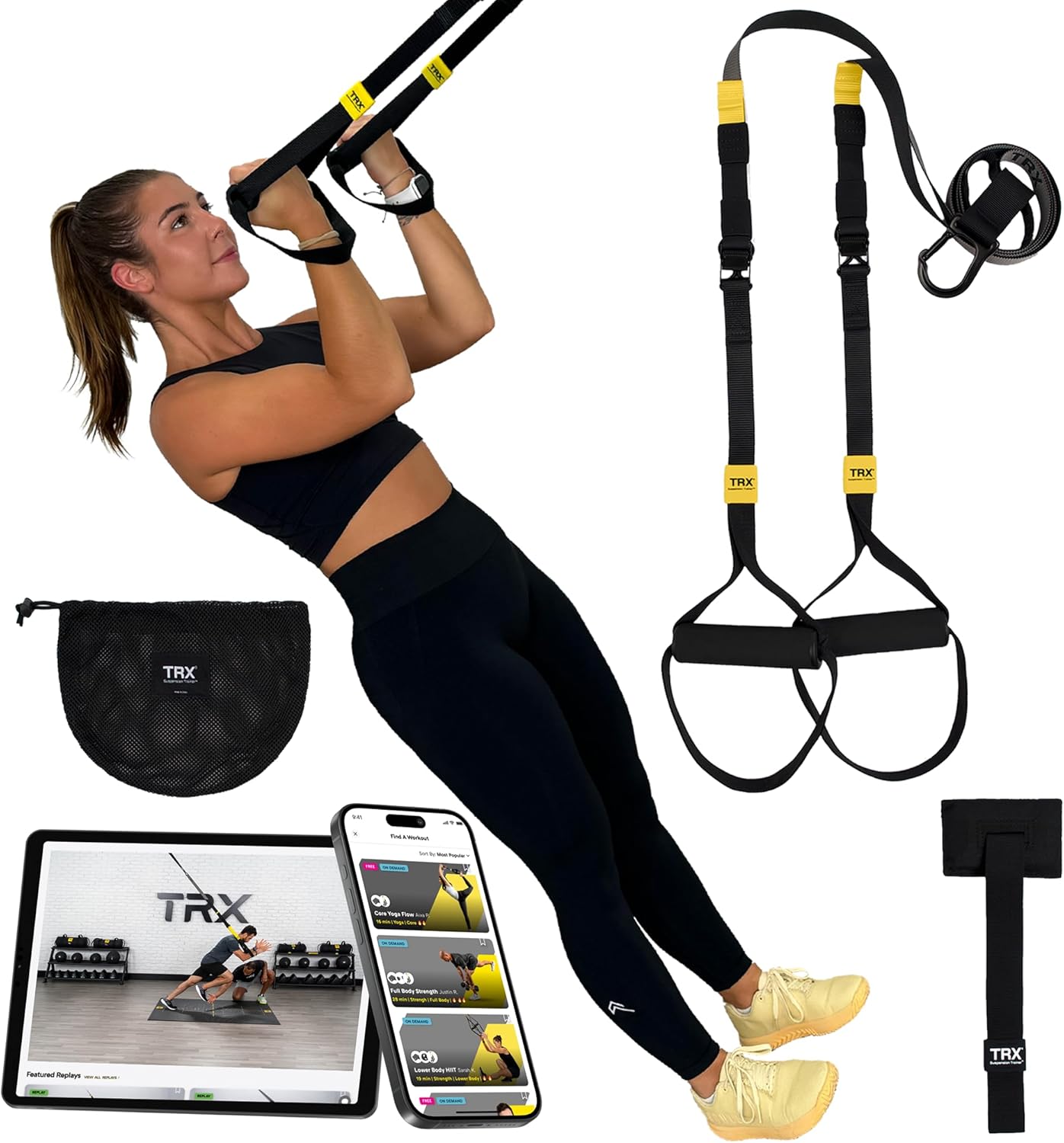
The TRX GO centers on high-tensile nylon mesh straps paired with lightweight foam handles. TRX rates the maximum user weight at 700 pounds, a figure that matches the load capacity found on the company's heavier commercial offerings despite this unit's total weight of just two pounds. The adjustment buckles are stamped metal, enabling quick friction-based changes in strap length. The primary concession made to reduce bulk and travel weight is the handle material. Rather than the textured, non-porous rubber found on higher-tier TRX models, the GO uses open-cell foam sleeves over a rigid core. While light, foam handles are vulnerable to tearing under friction and inevitably absorb perspiration over extended sessions. The package includes an integrated door anchor, a separate outdoor anchor strap with a heavy-duty carabiner, and a lightweight mesh carrying pouch. Stitching along high-stress seams uses reinforced box-X patterns to ensure tensile integrity under bodyweight loads.
Real-world performance
In operation, the system functions by adjusting the user's angle relative to the anchor point to modulate mechanical disadvantage. Transitioning between exercises—such as inverted rows, chest presses, and suspended lunges—requires manual strap adjustments via the slide buckles. Movement is smooth, with the single-point anchor design allowing a degree of rotational freedom that recruits core stabilizers. When mounted over a standard interior door, clearance is dictated by ceiling height and room depth. Overhead movements, such as triceps extensions, require users to verify ceiling clearance, particularly in rooms with low clearance or ceiling fixtures. Outdoors, the anchor strap wraps reliably around structural posts or tree branches, provided the surface lacks sharp edges that could fray the nylon. The unit remains stable during dynamic transitions, though the foot cradles, built directly into the strap below the handles, can feel tight when wearing wide training footwear.
Value for money
Priced at GBP 103.93, the TRX GO sits at an intermediate cost threshold within the suspension training market. Generic strap kits retail for substantially less, yet TRX retains an aggregate rating of 4.7 across more than 11,000 reviews, largely due to dependable material tolerances and safety testing. The package includes a trial to the TRX Training Club platform, offering access to roughly 500 on-demand sessions. However, prospective buyers should recognize that this app access is an introductory trial rather than a permanent subscription, meaning recurring software fees apply once the period concludes. For users seeking an entirely manual, self-powered training tool, the ongoing app cost holds negligible value. The physical hardware justifies its cost if travel utility and high tensile confidence are paramount, but buyers seeking permanent home gym gear will find comparable value in models with non-absorbent rubber handles.
Who should skip it
Dedicated home gym owners who do not intend to travel should bypass the GO in favor of units equipped with textured rubber grips. Foam handles degrade prematurely under heavy daily use, particularly in unconditioned garage gym environments where humidity and sweat accelerate wear. Athletes who require rigid, knurled metal handles or dedicated gymnastics rings for strict muscle-ups and dips will find the flexible nylon handles inadequate for static pressing strength. Furthermore, individuals whose living spaces lack solid-core doors or accessible overhead framing will face anchoring limitations; hollow-core interior doors are structurally insufficient to support bodyweight loads anchored at the top hinge line. If you cannot confirm a reliable, structural anchor point capable of bearing your dynamic weight, suspension straps should not be purchased. Heavy lifters focused exclusively on progressive overload via external resistance will find the bodyweight-only modality limiting.