Design and Build Construction
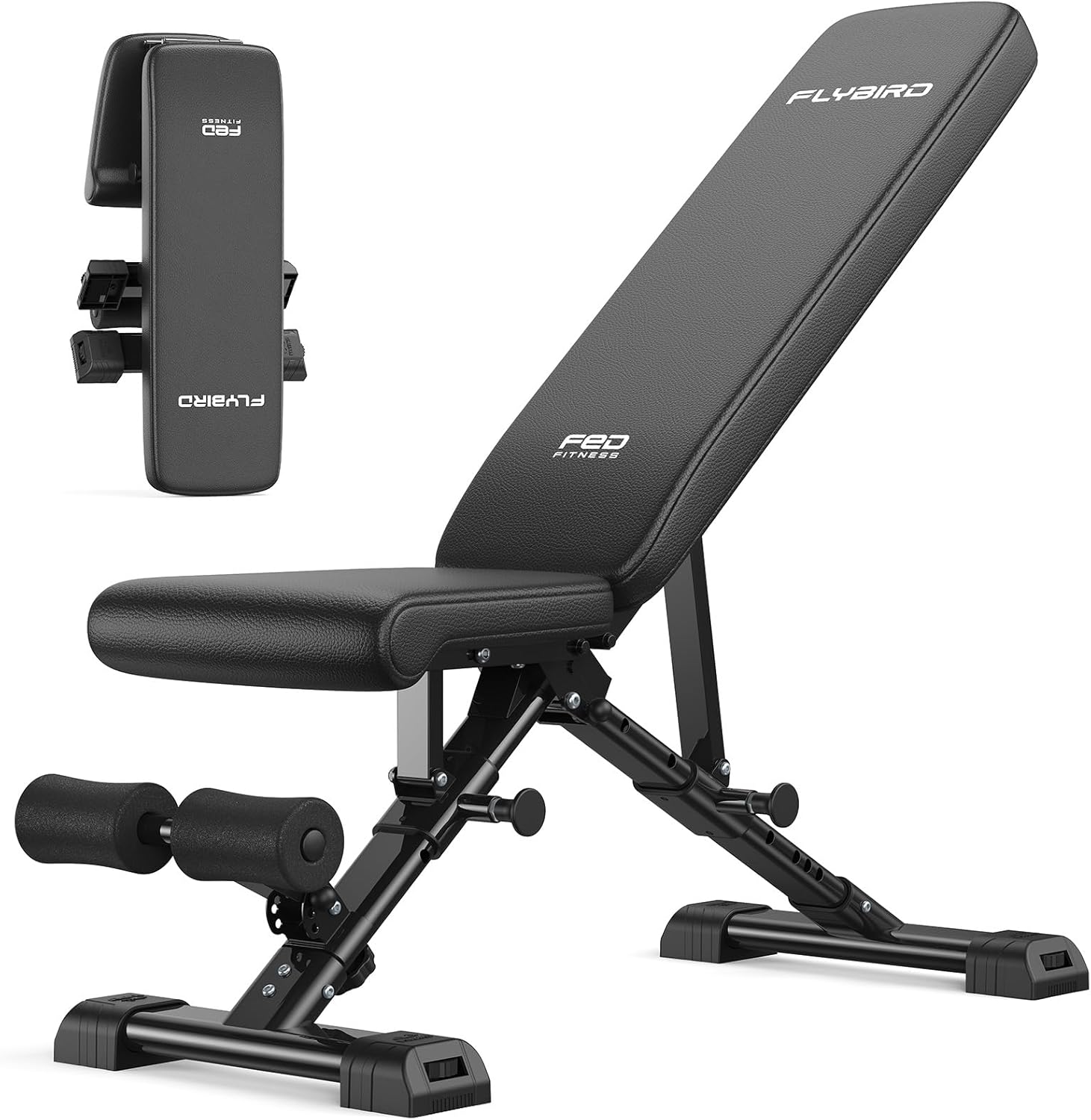
The FLYBIRD WB5 balances mobility with basic structural integrity, weighing just 28.5 pounds fully assembled. Its frame relies on an alloy steel dual-triangle configuration rather than the heavy 11-gauge steel typical of commercial-grade fixtures. The manufacturer states an ASTM-certified 800-pound limit in the marketing copy, though technical specifications also cite a 1000-pound maximum. Buyers should treat the lower 800-pound figure, which includes both lifter and loaded implements, as the functional ceiling. The bench measures 46 inches deep, 13 inches wide, and up to 48.5 inches high in an upright position. The padding comprises a 30-inch backrest and a 15.7-inch seat lined with breathable synthetic leather. Adjustment hinges rely on self-rebounding spring pins rather than heavy-duty drop-in ladders. Underneath, leveling footpads provide mechanical adjustment to counteract uneven garage or basement flooring, preventing minor rocking during lifts.
Real-World Incline and Decline Performance
Adjustment versatility is the unit's primary operational advantage, spanning from a 90-degree upright position to a -30-degree decline, with an intermediate -10-degree setting for lighter decline press work. The spring-lock pin allows for quick transitions between angles, matching the tempo of dumbbell circuits. When set to a true 90-degree angle for seated shoulder presses, users must observe ceiling clearances, as total overhead reach extends past the bench's 48.5-inch upright stature. The 30-inch backrest supports the head and thoracic spine for average-height individuals, but lifters over six feet tall may experience their head extending over the top edge during flat presses. The pad width of 13 inches provides moderate scapular clearance, though the gap between the seat and backrest during incline transitions is noticeable and typical of foldable designs. Stability remains sufficient for moderate dumbbell routines, provided the leveling feet are dialed in.
Value for Money and Warranty Coverage
Retailing at $149.98, the WB5 targets lifters who prioritize low footprint and low cost over commercial rigidity. True 11-gauge, non-folding FID benches frequently exceed double this price point and occupy permanent floor space. With a 4.5 out of 5 rating across more than 26,000 customer entries, the platform demonstrates reliable market acceptance within the budget segment. However, warranty documentation presents some ambiguity. The technical specification lists a standard 1-year total warranty, while the manufacturer's text notes a 1-year frame replacement alongside a 3-year parts coverage policy. Buyers should clarify exact coverage terms directly with FLYBIRD upon purchase. For a secondary bench tasked with auxiliary dumbbell exercises, core movements, and basic upper-body pressing, the cost-to-utility ratio aligns well with budget constraints, especially given the rapid three-step folding mechanism that shrinks storage thickness to approximately 9.06 inches.
Who Should Skip This Bench
Serious strength athletes training with heavy barbell work should look past this model. Because it is engineered to fold flat and weighs under 30 pounds, the platform lacks the raw ballast and lateral stiffness required for handling heavy rack-out bench presses. Lifters moving combined totals approaching 500 pounds or more will find the thin-gauge alloy tubing and mechanical hinge pins less confidence-inspiring than welded, 3x3-inch upright rack platforms. Tall trainees exceeding 6-foot-2 should also avoid it, as the 30-inch backrest will not adequately support both the head and pelvis simultaneously during flat benching. Finally, users in search of dense, non-deformable high-density foam typical of competition equipment will find this breathable synthetic upholstery too soft. For dedicated heavy lifting spaces with permanent room to spare, a welded 11-gauge flat or ladder-style incline bench remains the structurally superior choice.