Design and build
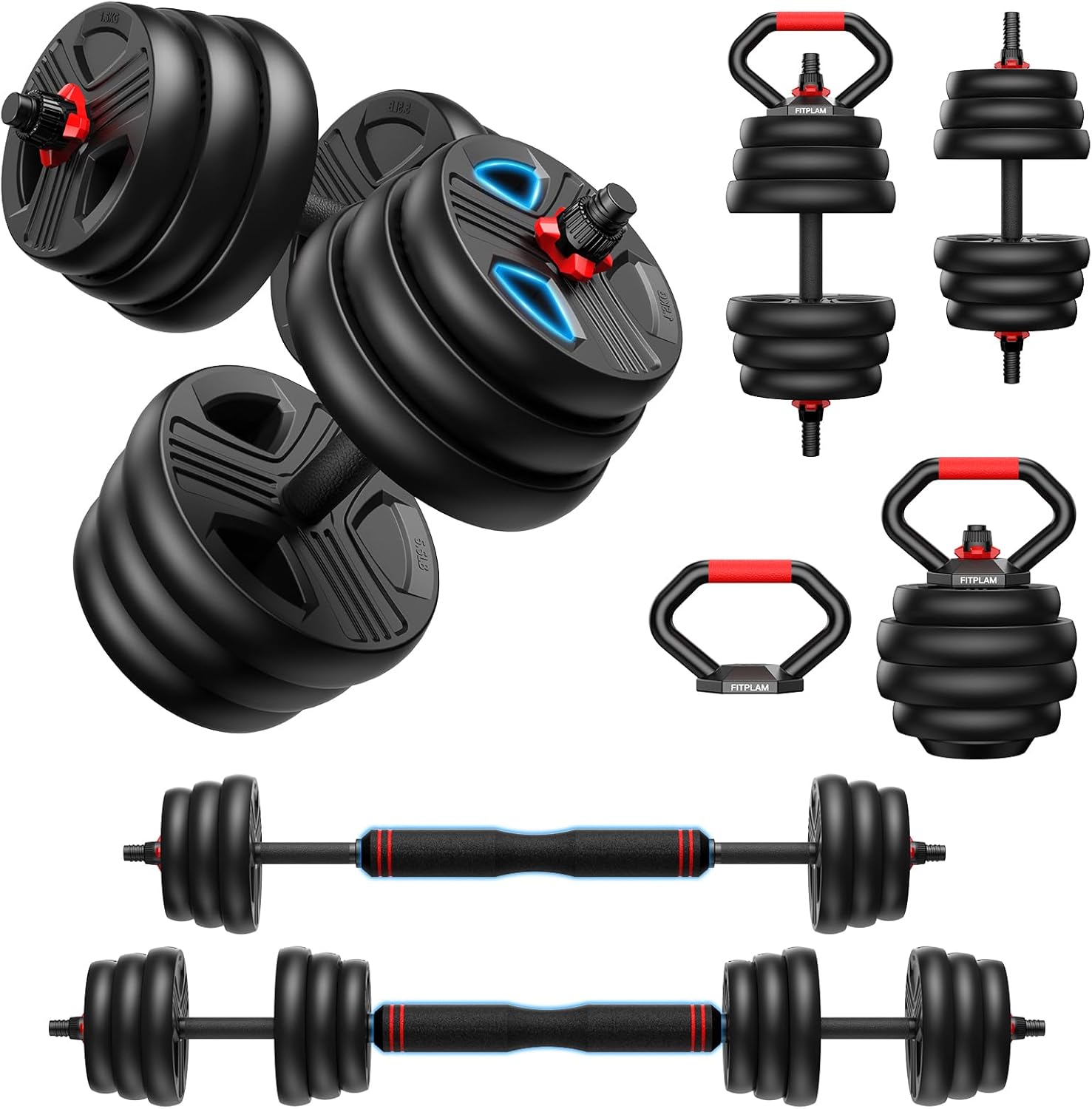
The FITPLAM set avoids the fragile internal dial gears typical of mechanized adjustable dumbbells by using standard threaded alloy steel sleeves and collar nuts. Security relies on a red-and-black dual-lock system, where an outer secondary ring prevents the primary nut from backing off under rotation. The load is supplied by polyethylene-wrapped plates filled with high-density iron sand. This shell material reduces floor scuffing and iron-on-iron clatter, but the lower density of iron sand makes each plate noticeably thicker than cast iron alternatives. The included barbell bridge features a steel core encased in twenty-five millimeters of high-density foam to pad the cervical spine during back squats. While the textured handles offer adequate grip traction, the overall assembly retains a plasticky finish typical of composite budget sets, meaning hardware tolerances are broad rather than precision-machined.
Real-world performance
Workouts with this set require methodical pacing rather than rapid supersets. Shifting between dumbbell presses, the forty-five-pound barbell setup, and the kettlebell frame requires unscrewing the dual collars, reconfiguring the weights, and securing both nuts tightly. In use, the dual-lock collars keep plates seated securely during standard lateral raises and bench presses, eliminating the rattling found on budget spinlocks. However, the sheer physical bulk of the iron-sand plates limits range of motion on close-grip rows and kettlebell swings. Because the maximum dumbbell load reaches twenty-two and a half pounds per hand, intermediate lifters will exhaust the resistance quickly on compound movements. Before committing to overhead presses with either the barbell connector or individual handles, lifters should measure room clearance, as the extended sleeve length demands more lateral and vertical clearance than compact fixed hex dumbbells.
Value for money
At $67.99, the set represents a low financial commitment for lifters seeking basic utility. A 4.3-star average across 1,364 buyer ratings indicates that consumer expectations are generally met, provided buyers understand the trade-offs of sand-filled weights. True dial-selector dumbbells often cost between two hundred and five hundred dollars, making this plate-loaded kit an affordable bridge for light resistance work. It stores within a two-square-foot footprint, combining the functionality of light push-up stands, isolated dumbbells, and a light-duty barbell into a single package. The cost per pound is competitive against traditional cast iron plates and separate handles. What the buyer sacrifices is not fundamental utility, but execution speed, tactile refinement, and the long-term structural resilience of solid metal plates.
Who should skip it
Experienced lifters requiring steady progressive overload should pass on this package. With an upper limit of twenty-two and a half pounds per dumbbell and roughly forty-six pounds for the barbell, the set cannot serve progressive strength training for squats, deadlifts, or heavy pressing. Cross-training athletes who drop weights must also avoid this design; the polyethylene plastic shells can rupture upon hard impact, spilling iron sand across the floor. Lifters engaged in high-density interval training or complex workout splits that demand immediate weight adjustments will find the manual spinlock process frustratingly slow compared to modern selectorized dumbbells. Anyone with sufficient budget for solid cast iron plates or a dedicated rack system should invest in higher-gauge hardware with standardized two-inch Olympic sleeves instead.