How Much Does a Bench Press Bar Weigh? A Home Gym Guide
Learn the standard weight of a bench press bar and essential considerations for selecting safe, durable equipment for your home training space.
By the Niche Picks editorsUpdated November 9, 20269 min readDrawn from our 35 research-based home gym equipment reviews
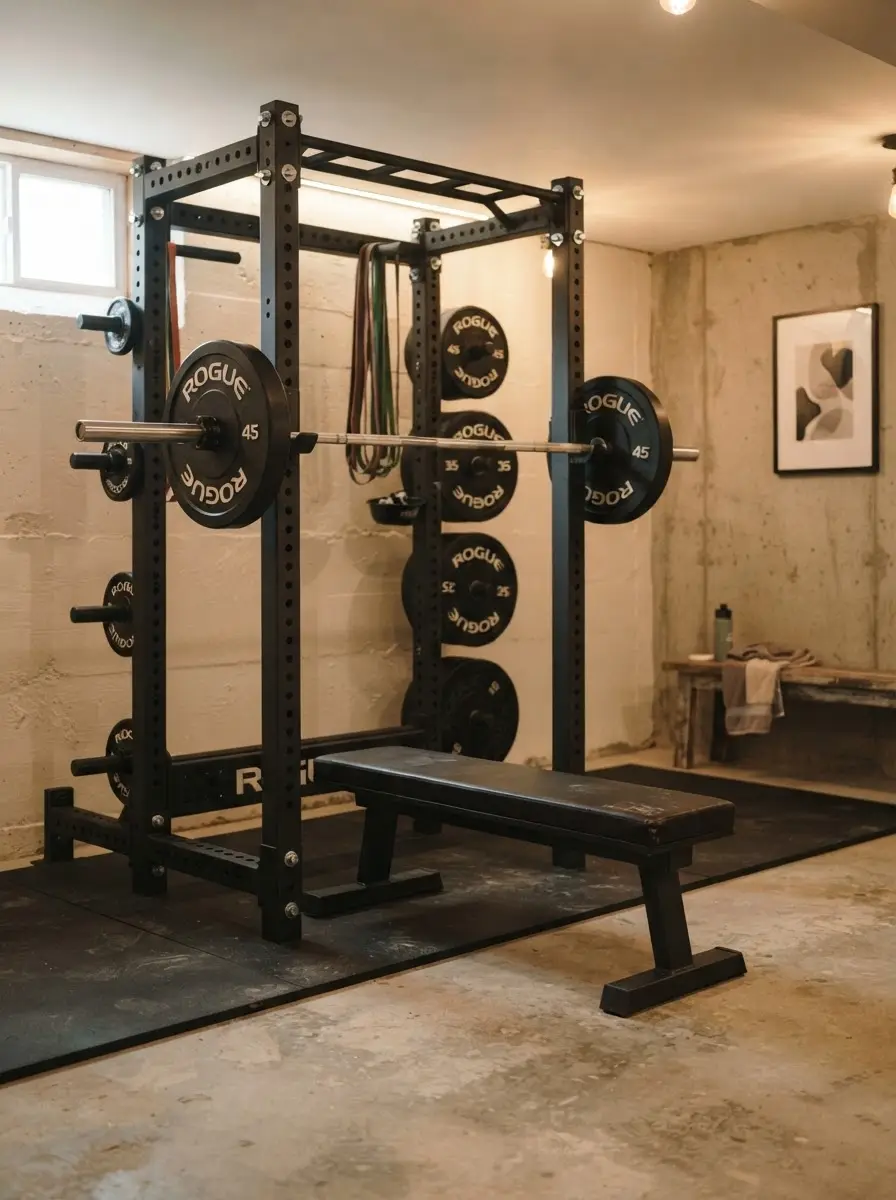
AI-generated editorial illustration; not a product or test photograph.
Short answer
A standard Olympic barbell typically weighs 45 pounds, or 20 kilograms. While this is the industry benchmark, lighter technique bars or non-standard home gym bars may weigh significantly less. Always verify your specific bar's weight and ensure your rack and bench capacities can safely support the total combined load.
6
Product listings discussed; not hands-on tests
6/6
Discussed listings with a recorded price
$79.99–$481.99
Recorded listing price range; not a complete setup cost
Key takeaways
Standard Olympic barbells are universally designed to weigh 45 pounds.
Lighter training bars often exist for technique work, requiring verification.
Your total load capacity must account for the bar, plates, and your body weight.
Check ceiling heights before purchasing a power rack for overhead press safety.
Fixed-frame benches are more stable than folding options for heavy pressing.
Ensure your equipment is rated for your current and future strength gains.
Products discussed in this article
Editorial scores and recorded prices are reference points, not measurements of suitability for every use. Read each review's specifications and limitations.
Titan Fitness T-2 Series Short Power Rack, Skinny Pull$481.99
CAP Power Rack Stand with Pull-Up Bar, 500lb Capacity$119.99
2026 FDB2 Updated Adjustable Dumbbell Set of 2$139.99
Comparison of selected home gym bench and rack equipment.
Product
Max Weight Capacity
Item Weight
Primary Material
Marcy Flat Bench
600 lbs
18 lbs
Alloy Steel
FLYBIRD WB5
1000 lbs
28.5 lbs
Alloy Steel
YOLEO Bench
827 lbs
23.2 lbs
Alloy Steel
Titan T-2 Rack
2200 lbs
130 lbs
Alloy Steel
CAP Power Rack
500 lbs
54 lbs
Alloy Steel
LifeOG Dumbbells
55 lbs (per unit)
50 lbs (pair)
Alloy/PE
What is the standard weight of a barbell?
Knowing the precise weight of your barbell is fundamental for accurate progression. The gold standard for commercial gyms and serious home setups is the 45-pound (20kg) Olympic barbell. This weight is consistent across most high-quality training equipment, allowing you to track your volume precisely. Beginners frequently overlook this baseline, focusing only on the plates added to the ends. When using our recommended home gym equipment, recognizing that the bar itself is a major component of the load is the first step in proper training documentation.
Standard Olympic Bar: 45 pounds (20 kg)
Women's Olympic Bar: Often 35 pounds (15 kg)
Technique/Training Bars: Range from 5 to 25 pounds
It is important to note that lighter bars often lack the tensile strength required for heavy compound lifts. If you are training with higher loads, you must verify the steel gauge of your equipment. For a secure and reliable setup, we often suggest looking at robust gear detailed in our home gym buyer's guide. If you find a bar feels significantly different than expected, it is likely a smaller-diameter training implement not intended for maximal loading. Always check the manufacturer’s specifications to confirm the exact mass before attempting a personal best. Ignoring this figure can lead to inaccurate logging and potential safety hazards when pushing your limits. For further details on how to structure your space, our articles on must-have home gym equipment provide a solid foundation for your purchases.
Why does bench stability determine safety?
When asking how much a bench press bar weighs, you must also consider the bench supporting your body. A bar weighing 45 pounds plus your heavy working plates places significant downward pressure on your bench. The FLYBIRD WB5 and YOLEO Adjustable Weight Bench are popular for their versatile angles, but they rely on hinges that can introduce minor frame flex. If you prioritize maximum rigidity for heavy pressing, a fixed-frame option like the Marcy Flat Utility Weight Bench eliminates the mechanical failure points commonly associated with hinges. A bench that wobbles under the weight of the bar and your own body will compromise your stability during heavy lifts.
When evaluating bench safety, always look for these criteria:
Weight capacity: Does the total exceed your body weight plus the maximum expected bar load?
Footprint: A wider base prevents tipping during heavy, asymmetrical movements.
Frame material: While we see many alloy steel units, commercial gold standards rely on 11-gauge steel for long-term durability.
Many users fail to account for the dynamic force of re-racking a heavy bar. If your bench slides or flexes under load, your form will likely break, increasing the risk of injury. We discuss the risks of poor equipment choices in our mistakes to avoid section, which highlights why thin-walled steel often fails. For those strictly focusing on flat pressing, our review of workout benches provides context on why fixed designs remain a superior choice for heavy training cycles. Always ensure your bench is rated for a total weight that includes both the user and the heavy iron you plan to move.
Regularly inspect your barbell sleeves and locking collars for stress cracks. A failing collar can allow heavy plates to slide mid-set, creating a dangerous imbalance.
Selecting a rack for safe bench pressing
A rack is the most vital safety feature for any solo lifter. Whether you are using a basic unit like the CAP Power Rack Stand or a robust system like the Titan Fitness T-2 Series, the rack's primary job is to provide a reliable bail point if you fail a repetition. While some racks claim high capacities, always remember that the capacity of the J-cups may differ from the rack’s total static load rating. If you are training alone, a full cage with safety bars or pin-and-pipe systems is far superior to simple, open-ended squat stands.
Before installing your rack, follow these guidelines to ensure safety:
Check for floor levelness: Racks on unlevel ground will shift during heavy re-racks.
Measure overhead clearance: Ensure your ceiling accommodates the rack height plus your bar height for standing presses.
Verify upright sizing: Ensure your J-cups match the tubing dimensions for a secure, tight fit.
Our analysis of the best power racks shows that while price is a primary factor, structural integrity should never be compromised. A rack that flexes during a heavy squat or bench press can be dangerous. Many entry-level racks, such as the ones listed in our best home gym equipment on a budget list, achieve their low price by using thinner, 14-gauge steel. While this is acceptable for moderate loads, advanced lifters should seek out 11-gauge alternatives to maximize longevity. Our FAQ on home gym equipment covers common installation tips to ensure your setup is properly anchored and safe for daily use, helping you avoid the common pitfalls of improperly balanced structures.
When you lack the space or budget for a full Olympic barbell setup, adjustable dumbbells offer a space-efficient alternative. The LifeOG Adjustable Dumbbell Set provides rapid weight changes, which helps maintain training tempo for hypertrophy. However, like barbells, you must be aware of the total load. Unlike a static 45-pound barbell, adjustable dumbbells have a fixed length that does not change as you add or subtract plates. This creates a longer lever arm, which can feel awkward for beginners during close-grip pressing. Understanding this biomechanical shift is as important as knowing the weight of the bar itself.
If your training focuses on accessory movements, using adjustable dumbbells allows you to mimic the progressive overload of a barbell. However, keep in mind these factors when choosing adjustable weights:
Dial mechanisms: These are convenient but generally more fragile than plate-loaded spinlock systems.
Fixed dimensions: Adjustable units often retain their maximum length even at low weights.
Grip diameter: Standardized grips are easier to use for long durations.
By maintaining a consistent log of your total lifting volume, you can ensure that your progression remains safe. If you find that your adjustable dumbbell set maxes out, it is likely time to graduate to a dedicated barbell and rack system. For those who are just starting out, check our budget planner to see how to allocate funds between high-quality bars and protective flooring. Proper equipment allows you to focus on form rather than worrying about mechanical failure or shifting hardware. Remember that consistent, controlled training beats sporadic, high-intensity work every time.
Before finalizing your gym layout, measure your ceiling height in the exact spot your rack will sit. Overhead pressing requires more vertical clearance than the rack itself.
Optimizing your training environment
Establishing a proper training environment involves more than just selecting the right barbell. It requires a clean, level, and safe floor surface. Because a standard barbell and heavy plates create high-pressure points, you should avoid placing them directly on soft, thin foam tiles which can compress and tear under the weight. Instead, look for high-density rubber or specialized gym flooring that can withstand the weight of your rack and your loaded bar. When your barbell is placed on a rack, ensure the floor underneath is stable enough to prevent any shifting when you rack a heavy, 45-pound bar after a difficult set.
Consider these environmental factors for your home gym:
Lighting: Ensure your bench and rack area are well-lit to monitor your form.
Airflow: Proper ventilation is crucial during long, intense training sessions.
Storage: Keep plates off the floor to minimize trip hazards and protect your gear.
Our tips for buying home gym equipment emphasize that most injuries occur when a space is cluttered or when equipment is used for purposes beyond its design. For instance, do not use a light-duty folding bench for heavy compound barbell work. The rigidity of your furniture is just as important as the bar weight. If you are currently building out your space, consider how your barbell interacts with your other equipment. A crowded space limits your range of motion and creates unnecessary safety risks. By investing in a dedicated, open zone for your main lifts, you create a more professional and effective training environment. Always review your equipment manuals, as manufacturer-recommended maintenance schedules are designed to extend the life of your steel and protect your investment for years to come.
Maintaining your equipment for longevity
Once you have determined that your bench press bar weighs 45 pounds and you have established your safe lifting zone, maintenance is the final key to longevity. Barbells are simple machines, but they rely on consistent care. Check your sleeves for rotation smoothness and your knurling for any signs of oxidation. If you have a rack, check all bolts regularly to ensure they remain tight, especially if your rack is a lighter-duty model that may exhibit more vibration during training. A well-maintained barbell and rack setup will support your fitness goals for years, provided you treat them with appropriate care.
Recommended maintenance schedule:
Monthly: Check all bolts and fasteners on your rack and bench.
Quarterly: Inspect barbell sleeves for rotation and grease them if the manufacturer allows.
Yearly: Clean your bar knurling with a soft brush to remove chalk and moisture buildup.
When you maintain your gear, you also maintain your training consistency. Nothing halts progress faster than a broken J-cup or a seized sleeve on a barbell. If you are working within the limits of your equipment, as outlined in our best home gym equipment on a budget list, these routine checks will highlight any wear long before it becomes a safety concern. Never ignore strange noises from your rack or excessive wobble in your bench, as these are indicators that components are under stress. By staying proactive, you ensure that your home gym remains a place of growth and success. Always refer to the manufacturer’s documentation for specific maintenance protocols, as some specialized gear requires unique procedures to stay under warranty and perform optimally during your toughest sessions.
Step by step
1Consult the manufacturer's spec sheet to confirm your bar's weight.
2Use a personal scale to weigh the bar if the markings are missing.
3Subtract the bar weight from your total load for accurate tracking.
4Place the bar into J-cups before adding weight plates.
5Load your weight plates symmetrically to prevent uneven tilting.
6Test the rack stability with an empty bar before your first set.
Quick checklist
Verify your barbell weight with a scale (the standard is 45 lbs).
Measure your room ceiling height before ordering a power rack.
Choose 11-gauge steel uprights for superior structural integrity.
Ensure your bench has a non-slip, high-friction surface.
Clear at least 3 feet of floor space around your bench.
Confirm your rack includes heavy-duty safety spotter arms.
Check for secure, level flooring under your rack base.
Frequently asked questions
Does every bench press bar weigh 45 lbs?
No. While the 45-pound (20kg) Olympic barbell is the industry standard, many specialty bars, technique bars, and standard 1-inch bars weigh between 15 and 35 pounds. Always consult the specific manufacturer's documentation for your bar to ensure you are tracking your total lift weight accurately.
How can I identify if my bar is an Olympic bar?
Olympic bars typically feature 2-inch diameter sleeves that rotate independently from the main shaft. If your bar is designed for 1-inch plates, it is a standard bar and likely weighs significantly less than the 45-pound Olympic standard.
Is a folding weight bench stable enough for heavy lifting?
Folding benches offer excellent space-saving utility, but they are generally less stable than fixed-frame, welded benches. While they are often rated for high weights, the hinge points can introduce lateral movement. For consistent heavy lifting, a fixed-frame bench is recommended.
How should I stabilize a light home rack?
Many lightweight racks include rear storage pegs for Olympic plates. Stacking your iron plates on these pegs acts as a counterweight, helping to prevent the rack from rocking during intense re-racking. If stability remains an issue, consider bolting the rack directly to the floor.
What are the risks of exceeding a rack's capacity?
Exceeding a rack's weight rating can lead to metal fatigue, bent uprights, or structural failure of the J-cups and safety pins. Always adhere strictly to the manufacturer’s maximum load ratings to keep your home gym environment safe.
Amazon links are affiliate links; we may earn a commission at no cost to you.
Shortlists in this category
Ranked lists from our home gym equipment reviews, limited to listings whose titles confirm the product type, with budget cuts where enough recorded prices sit on both sides of the line.
This page summarizes our research reviews of Amazon listings, listed specifications and captured buyer ratings. It is not a hands-on test. Scores are editorial assessments, not measured performance; prices are recorded snapshots and may change. A category can include both main products and accessories, so its overall price range is not the cost of a complete setup.
Most recent product record update: October 28, 2026. Individual records may be older; this is not a verification date for every claim. Prices on this page were read from the listings Nov 8, 2026 – Nov 12, 2026.
Choose the product type first. These groups require a match in the listing title; an import search term alone is not enough. Scores rank our recorded research assessments within each group, not independently measured performance.
Values are shown as recorded, without unit conversions or inferred compatibility. Not recorded means unknown, not absent. Prices are snapshots, not current offers. Editorial scores are research judgments, not lab results. Amazon links are affiliate links.
Before treating a comparison as complete
Which details are still unknown?
A specification appearing in a listing is not independent verification. These counts show which shortlisted records contain the same field; a blank record does not mean the product lacks the feature.
Item Dimensions LxWxH
Recorded for 2 of 2 shortlisted models
Present in every shortlisted record. Check units, exact variants and the current manufacturer documentation before relying on it.
Item Package Dimensions L x W x H
Recorded for 2 of 2 shortlisted models
Present in every shortlisted record. Check units, exact variants and the current manufacturer documentation before relying on it.
Item Weight
Recorded for 2 of 2 shortlisted models
Present in every shortlisted record. Check units, exact variants and the current manufacturer documentation before relying on it.
Material
Recorded for 2 of 2 shortlisted models
Present in every shortlisted record. Check units, exact variants and the current manufacturer documentation before relying on it.
Package Weight
Recorded for 2 of 2 shortlisted models
Present in every shortlisted record. Check units, exact variants and the current manufacturer documentation before relying on it.
Size
Recorded for 2 of 2 shortlisted models
Present in every shortlisted record. Check units, exact variants and the current manufacturer documentation before relying on it.
Values are shown as recorded, without unit conversions or inferred compatibility. Not recorded means unknown, not absent. Prices are snapshots, not current offers. Editorial scores are research judgments, not lab results. Amazon links are affiliate links.
Check documented load ratings, steel gauge, anchoring and attachment compatibility; upright dimensions alone do not establish safety.
Adjustable dumbbells fail at the selector — check the mechanism.
Measure ceiling height before anything you plan to press overhead.
If a specification, certification or compatibility detail is absent, mark it as unknown and ask the seller or manufacturer. Do not substitute a star rating, an editorial score or a different model's specification.