How to Use a Foam Roller: Techniques for Effective Recovery
Discover the proper techniques for using a foam roller to support your recovery, manage muscle tightness, and improve your daily mobility routine.
By the Niche Picks editorsUpdated November 9, 202611 min readDrawn from our 33 research-based massage guns & recovery tools reviews
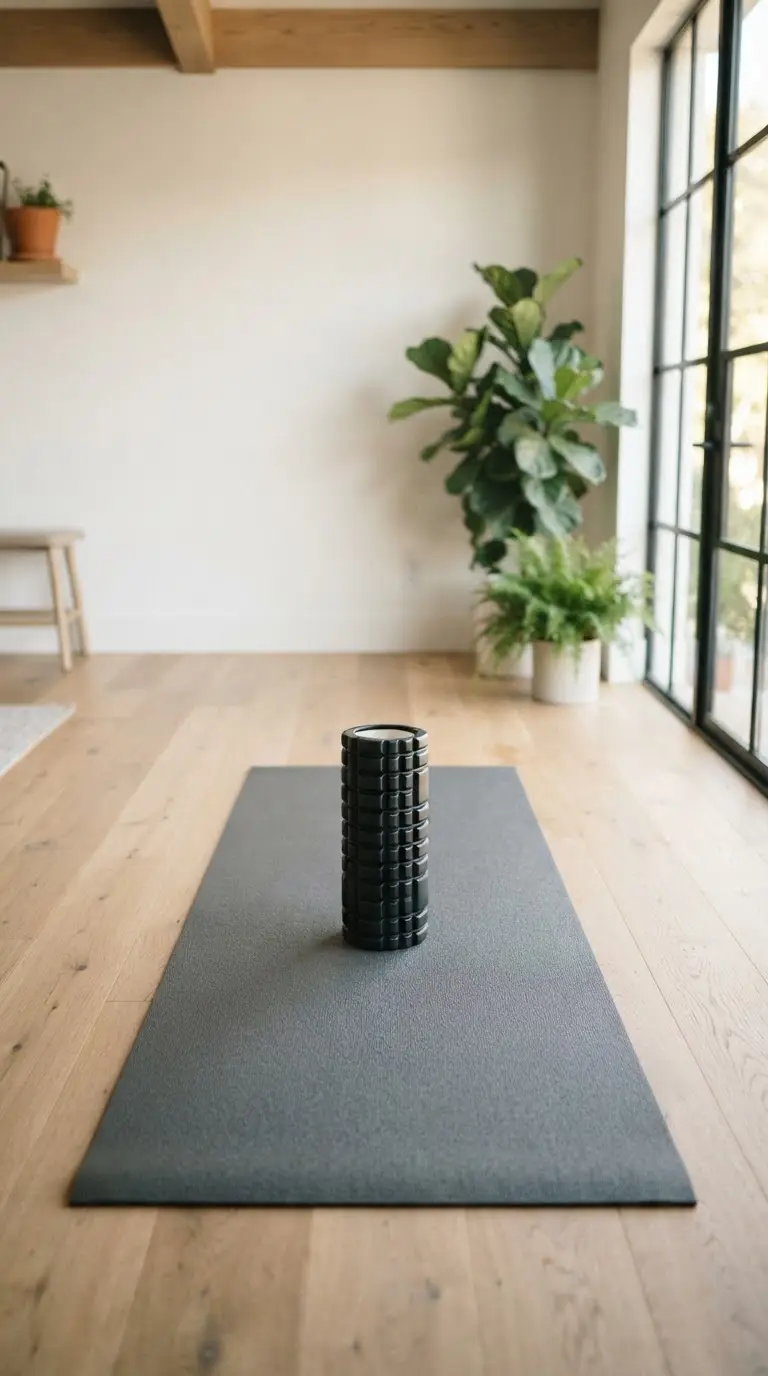
AI-generated editorial illustration; not a product or test photograph.
Short answer
To use a foam roller effectively, place it on a stable surface and apply your body weight to target specific muscle groups, rolling slowly to identify tension. Use controlled movements to massage the muscle belly rather than joints or bones, pausing on sensitive areas for 20-30 seconds to encourage relaxation. Always prioritize comfort to avoid unnecessary strain.
5
Product listings discussed; not hands-on tests
5/5
Discussed listings with a recorded price
$15.29–$26.09
Recorded listing price range; not a complete setup cost
Key takeaways
Foam rolling is a passive, body-weight-driven method for myofascial release that requires zero electrical maintenance.
Targeting large muscle groups like your quadriceps, hamstrings, and calves provides the most consistent recovery benefits.
Slow, deliberate movements are superior to fast, erratic rolling for helping muscle fibers relax.
Avoid rolling directly over joints, the lower back, or sensitive bony protrusions to prevent injury.
High-density rollers maintain their shape better over time, while textured surfaces help isolate specific trigger points.
Products discussed in this article
Editorial scores and recorded prices are reference points, not measurements of suitability for every use. Read each review's specifications and limitations.
Amazon Basics High-Density Foam Roller for Exercise$22.69
The Original Body Roller - High Density Foam Roller$19.99
Comparison of Recommended Foam Rollers for Myofascial Release
Product
Length
Density
Surface Type
Amazon Basics 18"
18"
Firm
Smooth
TriggerPoint Grid 1.0
13"
Extra Firm
Textured/Grid
321 STRONG
12.5"
Medium
3-Zone Texture
Amazon Basics 36"
36"
Firm
Smooth
Original Body Roller
12.5"
Medium
Dual-Grid
How does foam rolling facilitate recovery?
Foam rolling, often categorized as self-myofascial release, is a purely mechanical recovery strategy that relies on gravity and your own body weight. Unlike active recovery tools like percussion massage guns, which deliver high-frequency vibrations via a motor, a foam roller functions as a passive resistance tool. This simplicity is its primary advantage; there are no batteries to charge, no motors to overheat, and zero acoustic output. You can explore how these compare to powered recovery gear in our guide to recovery tools or see how they fit into a broader approach in our massage guns & recovery tools reviews.
When you apply pressure to a muscle using a roller like the Amazon Basics High Density Foam Roller, you are essentially forcing the tissue to adapt to an unyielding surface. This compression can help manage localized tightness in the muscle belly. Because the tool is passive, you possess total control over the intensity—a feature that contrasts with the stall force limits found in many percussion massagers. As discussed in our analysis of how massage guns work, percussive tools provide a different type of stimulation that may be too intense for some users. For a quiet, controlled, and cost-effective recovery session, a high-density foam roller remains a cornerstone for many athletes. Whether you are addressing deep-seated knots or simply loosening muscles after a long workday, the lack of moving parts makes these rollers incredibly durable and reliable. They do not suffer from the mechanical failure points that can affect more complex electronic gear, ensuring your recovery routine remains uninterrupted by hardware issues. By using a basic cylinder, you can focus entirely on your body's feedback without worrying about firmware, charging cords, or motor noise that might disturb a quiet home environment during evening recovery sessions.
What are the essential steps for using a foam roller?
Using a foam roller correctly is about managing the angle of contact and the pace of your movement. Start by positioning yourself on a flat, non-slip floor surface. Place the roller underneath the muscle group you wish to address—typically starting with larger, less sensitive areas like the calves or hamstrings. Use your limbs to support your weight, lifting your hips or torso to modulate how much downward pressure is applied. If you find a particularly tight spot, hold your position on that location for about 20 to 30 seconds to let the muscle adapt.
Textured rollers, such as the 321 STRONG Patented 3-Zone Massage Roller, provide varied geometry that can help you target specific tissue depths. The key is to keep your core engaged throughout the movement; this stabilizes your body and prevents you from arching your back or putting undue stress on your shoulders. For those who want to avoid common mistakes to avoid, remember that rolling is not a race. Moving too quickly across a muscle often prevents the tissue from truly relaxing under the compression. Instead, aim to move at a pace of about one inch per second.
Start with your weight distributed across your arms to keep the pressure light.
Roll from the center of the muscle toward the muscle insertion points.
Breathe consistently throughout each pass to prevent muscle guarding.
Adjust your body angle slightly to find the most effective contact zone.
Stop immediately if you experience sharp or radiating nerve pain.
If you find the standard high-density models too intense for initial use, you can shift more weight onto your hands or feet to reduce the load. Consistency is far more valuable than intensity; spending five minutes daily is more effective than a single high-intensity session that leaves you feeling bruised or sore the next day. Always check your posture while rolling to ensure that your spine remains neutral and your joints are not being compromised.
If the pressure feels too intense, distribute more of your body weight through your hands or feet. You should always be in full control of the applied force.
Should you select a smooth or textured surface?
Deciding between a smooth and a textured roller depends on your specific recovery needs and your sensitivity to localized pressure. Smooth rollers, such as the Amazon Basics 36-inch model, provide uniform compression. This consistency makes them an excellent choice for broad muscle groups like the quadriceps or for longitudinal support along the spine. Because there are no ridges to catch on muscle fibers, many beginners prefer the predictable nature of a smooth roller for their initial recovery efforts. These rollers are particularly good at providing a baseline level of myofascial engagement without targeting one specific knot with intense sharpness.
On the other hand, a textured or grid-patterned roller like the TriggerPoint Grid 1.0 is engineered to simulate the variations found in professional massage therapy. These surfaces include ridges and nodules that can isolate stubborn knots more effectively than a flat cylinder. The Original Body Roller is another option that uses distinct tactile zones to manage adhesions. While these ridges can be highly effective, they are also more intense and might not be suitable for someone with high tactile sensitivity or acute muscle inflammation. If you are struggling with specific deep-tissue knots, reading our guide on the best high-density foam roller for deep tissue back pain might help you understand how different materials affect your muscle release.
Structural longevity is also worth considering when choosing your model. Hollow-core rollers are designed to withstand significant vertical loads without losing their shape over time. Generic solid foam rollers may eventually compress into ovals after months of daily use, but reinforced cores maintain their cylindrical geometry. For users who prioritize daily maintenance and travel, a 13-inch grid roller is often the most portable and durable solution. Ultimately, the right choice aligns with whether you want a gentle, broad-surface flush for your muscles or a more precise, high-pressure trigger-point release.
How to manage pressure intensity for sensitive muscles?
Managing the intensity of your foam rolling session is critical for effective recovery. It is a common misconception that more pain equals better results; in reality, excessive pain triggers your nervous system to tense up, which is counterproductive to muscle release. The objective is to apply enough pressure to the muscle to encourage blood flow and tissue mobilization without forcing your body to go into a state of defensive guarding. If you are finding that a firm, high-density roller is simply too much, you have several options for moderating the impact.
First, adjust your body weight distribution. By using your arms to support more of your weight, you can effectively reduce the force transmitted through the roller into the targeted muscle. Second, consider the surface on which you are rolling. A carpeted surface provides more cushion than a hardwood floor, which can soften the overall experience. If you are using a textured roller, try shifting your angle slightly so that the nodules are not pressing directly into a painful trigger point. You can find more advice on this in our blog on recovery tools.
Place a thin towel over the roller to soften the contact surface.
Use your feet to help control the speed and depth of the movement.
Avoid rolling on areas that feel bruised or inflamed from previous efforts.
Focus your attention on the muscles surrounding a painful area rather than directly on the painful spot itself.
Remember that your tolerance for pressure can change based on how recently you trained. On days when your muscles are heavily fatigued, you may need less aggressive compression than on rest days. If you find yourself holding your breath while rolling, that is a clear indicator that the intensity is too high. Proper breathing—specifically slow, rhythmic exhales—helps your muscles physically relax into the pressure. Maintaining a neutral, relaxed nervous system is the secret to getting the most out of every recovery session, whether you are using a basic entry-level roller or a sophisticated, grid-based recovery system for your daily maintenance.
Never roll directly over the lumbar spine or bony joints. Focus strictly on the fleshy muscle groups to avoid unnecessary pain or injury.
Can foam rollers support back and spinal health?
Foam rollers are frequently used to improve postural alignment and thoracic spine mobility, though they must be used with caution. When working on your back, it is important to understand that you should never roll directly over the lumbar spine—the lower back—or the vertebrae themselves. The lumbar area lacks the protection of the rib cage, and rolling directly onto the bony protrusions can lead to unnecessary pain and potential nerve irritation. Instead, focus on the thoracic region, which includes the upper and middle back where muscle mass is thicker.
Using a longer roller, such as a 36-inch model, allows you to lie longitudinally along the cylinder. This position supports your head, spine, and pelvis simultaneously, facilitating a chest-opening stretch that can help counteract the forward-slumped posture many people develop from desk work. For specific techniques and best practices regarding this area, our article on the best foam roller for back pain provides detailed instructions on safe spinal alignment. The goal of using a roller here is to improve range of motion and decrease muscular tension, not to put direct, forceful pressure on the spinal column.
If you feel discomfort during these sessions, stop immediately. Your spine is a sensitive area, and any recovery tool should be used to gently support mobility, not as a high-impact percussion device. If you have a history of back surgery, chronic pain, or spinal conditions, you must consult with a medical professional before incorporating any rolling techniques into your routine. They can provide a safe framework for how to use the roller without risking your musculoskeletal health. By sticking to gentle, longitudinal stretches and avoiding direct bony pressure, you can effectively use your foam roller to improve your mobility and reduce the stiffness associated with daily sedentary habits. Always treat your spine with the care it requires by limiting rolling to the supportive muscle bellies nearby.
While foam rollers are excellent for broad myofascial release, there are times when other tools may be more appropriate. If you need pinpoint accuracy to release a deep-tissue trigger point that a large, cylindrical roller cannot reach, you might consider smaller, more focused instruments. A solid rubber massage ball, for instance, can isolate small muscle groups like the rhomboids or gluteus medius far better than any roller. Similarly, if you have acute soreness that makes even light rolling unbearable, a percussive massager or a compression system might be more effective for facilitating circulation without the need for manual, weight-bearing pressure.
Our compare tool allows you to look at different recovery devices side-by-side. For instance, if you are struggling with chronic calf tightness that standard rolling does not alleviate, a compression recovery system can help flush fluid and assist venous return in a way that mechanical rolling cannot. Conversely, if you are looking for static, guided stretches, an OPTP Stretch Out Strap provides a level of leverage and control that a foam roller simply cannot replicate. Knowing when to transition from a broad, passive roller to a more specific tool is part of becoming proficient in your own recovery.
Use a roller for broad muscle bellies like the quadriceps and hamstrings.
Use a massage ball for targeted trigger points between shoulder blades.
Use a strap for static stretching and improving joint range of motion.
Use a percussive gun if you need high-frequency stimulation on a specific muscle belly.
Use compression boots if you require systemic circulatory recovery after endurance training.
Ultimately, the most successful recovery routines are modular. They combine the broad myofascial benefits of foam rolling with targeted work from other devices, ensuring that no muscle group is neglected. By building a diverse set of recovery options, you avoid the trap of using a single tool for every problem. This multi-modal approach allows you to address everything from general surface tension to specific, deep-seated muscle adhesions using the tool best suited for that particular anatomical location and recovery goal.
1Place your chosen foam roller on a stable, flat floor surface.
2Lower the targeted muscle group slowly onto the roller.
3Use your hands to support your weight, keeping your core engaged for stability.
4Roll back and forth at a slow, controlled pace of one inch per second.
5Pause for 20 to 30 seconds on any tight or sensitive areas you encounter.
6Repeat the movement for 5-10 minutes across your major muscle groups.
Quick checklist
Identify the muscle group you wish to target before starting your session.
Clear at least six feet of floor space to allow for full-body movements.
Ensure your floor is non-slip to keep the roller stable during use.
Wear comfortable clothing that won't irritate your skin while rolling.
Start your session with the lowest pressure setting possible to test muscle tolerance.
Breathe deeply and rhythmically throughout the entire session to aid relaxation.
Frequently asked questions
How often should I use a foam roller for recovery?
Most people benefit from foam rolling on a daily basis, especially after workouts or during morning mobility routines. Spend about 5-10 minutes focusing on key muscle groups. Listen to your body—if a specific area feels overly tender or bruised, it is best to skip that spot for a day or two.
Does the material density of the roller matter?
Yes, density significantly impacts your session. Firm, high-density rollers provide deeper, more aggressive pressure that is ideal for dense muscles like your glutes or quads. Softer rollers offer more cushion and are generally better for beginners or individuals who are highly sensitive to deep-tissue pressure.
Why does foam rolling feel intense?
The intensity comes from applying focused pressure to tight muscle fibers and connective tissue, often referred to as myofascial adhesions. This feeling should be categorized as 'intense' rather than 'painful.' Keeping the pressure within a manageable range allows your nervous system to relax, which is essential for releasing muscle tension.
Can I use a foam roller on my neck safely?
It is generally recommended to avoid using large-diameter foam rollers on your neck. The area is extremely sensitive, housing vital structures. For neck or trap tension, consider using smaller, specialized manual massage tools that allow for much greater precision and gentler, targeted pressure than a standard foam cylinder.
How do I know if I'm rolling correctly?
You are rolling correctly if you are moving slowly, maintaining a neutral spine, and feeling a deep but tolerable release in your muscles. You should not be rolling over bones, joints, or your lower back. If you are holding your breath or tensing up against the roller, back off the pressure.
Amazon links are affiliate links; we may earn a commission at no cost to you.
Shortlists in this category
Ranked lists from our massage guns & recovery tools reviews, limited to listings whose titles confirm the product type, with budget cuts where enough recorded prices sit on both sides of the line.
This page summarizes our research reviews of Amazon listings, listed specifications and captured buyer ratings. It is not a hands-on test. Scores are editorial assessments, not measured performance; prices are recorded snapshots and may change. A category can include both main products and accessories, so its overall price range is not the cost of a complete setup.
Most recent product record update: September 29, 2026. Individual records may be older; this is not a verification date for every claim. Prices on this page were read from the listings Nov 8, 2026 – Nov 11, 2026.
Compare the same kind of massage guns & recovery tools
Choose the product type first. These groups require a match in the listing title; an import search term alone is not enough. Scores rank our recorded research assessments within each group, not independently measured performance.
Values are shown as recorded, without unit conversions or inferred compatibility. Not recorded means unknown, not absent. Prices are snapshots, not current offers. Editorial scores are research judgments, not lab results. Amazon links are affiliate links.
Before treating a comparison as complete
Which details are still unknown?
A specification appearing in a listing is not independent verification. These counts show which shortlisted records contain the same field; a blank record does not mean the product lacks the feature.
Item Dimensions
Recorded for 2 of 2 shortlisted models
Present in every shortlisted record. Check units, exact variants and the current manufacturer documentation before relying on it.
Item Weight
Recorded for 2 of 2 shortlisted models
Present in every shortlisted record. Check units, exact variants and the current manufacturer documentation before relying on it.
Compare documented amplitude, force settings and instructions; these specifications do not establish a medical benefit or suitability for an injury.
Noise level decides whether you actually use it at night.
Compression boots need chamber count and pressure control.
If a specification, certification or compatibility detail is absent, mark it as unknown and ask the seller or manufacturer. Do not substitute a star rating, an editorial score or a different model's specification.