Design and build
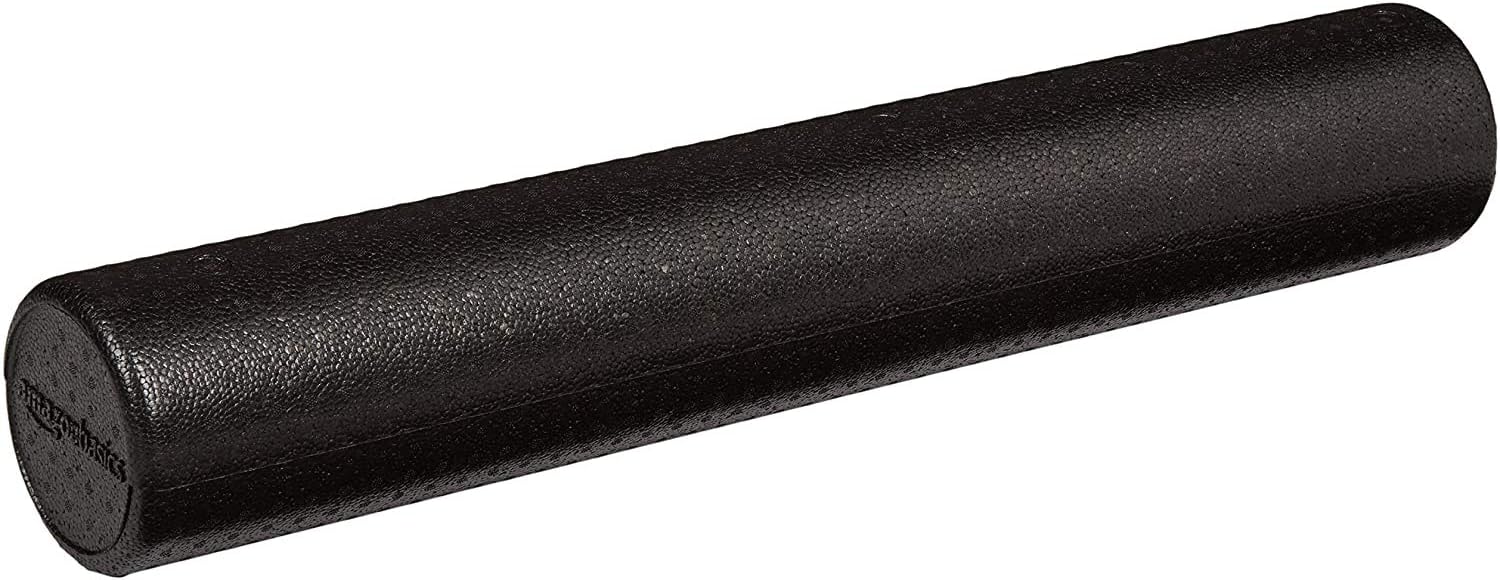
The Amazon Basics roller measures 36 inches long by 6 inches in diameter, offering a standardized footprint for home and clinical settings. It is constructed from molded polypropylene, denoted by part number EPPBK-36-1, which provides a rigid, unyielding core rather than the compliant give seen in lower-density open-cell foams. Molded bevels along the outer perimeter prevent sharp cutoffs, aiding comfort when rolling onto the edges. The official specification lists an item weight of 4.32 ounces alongside a package weight of 0.55 kilograms, indicating an expanded polypropylene construction that yields structural firmness without excessive mass. The exterior features a smooth, lightly textured black surface intended to be wiped down with a damp cloth after use. While the polypropylene maintains its cylindrical shape under sustained compressions, it lacks interior reinforcement pipes, relying entirely on the density of the molded beads. Buyers should verify whether their storage space accommodates a full three-foot cylinder, as it cannot be collapsed or disassembled.
Real-world performance
Unlike percussive massage guns where stall force dictates tissue penetration, mechanical foam rollers depend on applied body weight and material resistance to deformation. This roller exhibits minimal deflection under standard user loads, yielding firm, broad myofascial compression across large muscle groups like the quadriceps, hamstrings, and thoracic spine. The 36-inch length allows users to lie along the cylinder longitudinally, supporting the head, spine, and sacrum simultaneously for postural alignment and chest-opening stretches—an exercise impossible on shorter 12- or 18-inch models. From an acoustic perspective, the tool operates at complete silence. Where high-stall percussive devices frequently emit between 50 and 65 decibels, making nocturnal recovery sessions disruptive in shared living environments, this passive tool introduces zero noise. The flat surface distributes load evenly rather than targeting acute trigger points, delivering broad ischemic compression rather than localized deep-tissue impact. For broad recovery protocols, it provides predictable, stable structural support across both floor-based mobilization and balance training regimens.
Value for money
Retailing at $24.14, the Amazon Basics 36-inch roller sits comfortably below premium foam roller brands and remains an order of magnitude cheaper than motorized recovery hardware. With over 31,000 user ratings averaging 4.6 out of 5 stars, its market position is firmly established around straightforward utility rather than proprietary technical features. It does not provide variable vibration frequencies, adjustable pneumatic chambers, or specialized textured grip patterns, all of which drive up manufacturing and purchase costs in adjacent recovery gear. Instead, it offers a single, durable physical density suitable for general conditioning. The initial investment covers a core recovery requirement without ongoing battery degradation, mechanical motor wear, or replacement component expenses. The 30-day Amazon guarantee represents a minimal official warranty window, which is typical for budget fitness equipment. Provided the user requires straightforward, full-length cylindrical support without motorized assistance, the financial expenditure represents an efficient allocation of recovery funds.
Who should skip it
Athletes seeking focal, deep-tissue therapy on specific trigger points—such as the piriformis or suboccipital areas—should bypass this model. The broad 6-inch diameter distributes weight over a large surface area, failing to achieve the pinpoint penetration offered by massage guns or high-density mobility spheres. Furthermore, individuals with acute tissue sensitivity, hypermobility, or severe soreness may find the high-density polypropylene composition too rigid; such users should consider softer ethylene-vinyl acetate alternatives. Frequent travelers or commuters should also look elsewhere. At 36 inches in length, the roller is cumbersome to transport to commercial gyms or pack into luggage, a task better suited to compact 12-inch travel rollers. Finally, athletes looking for motorized vibration to desensitize muscle spindles during warmups will not find it here. This unit is strictly a passive compression implement, meaning all therapeutic force must be manually generated and regulated through careful user positioning and body-weight manipulation.