Navigate the trade-offs between bagged and bagless docks, brush mechanics, and laser navigation to find the best hands-free vacuum for your home.
By the Niche Picks editorsUpdated November 9, 20268 min readDrawn from our 30 research-based robot & cordless vacuums reviews
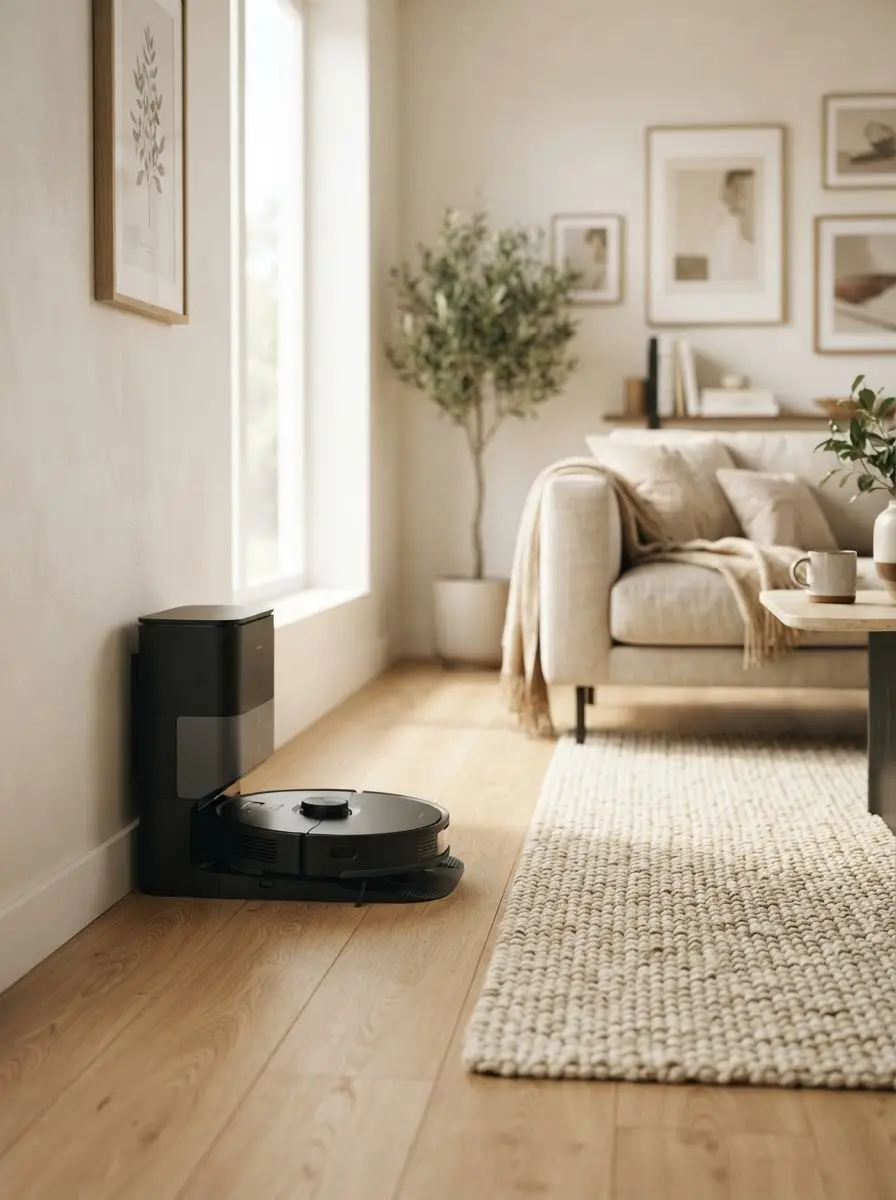
AI-generated editorial illustration; not a product or test photograph.
Short answer
To choose the right self-emptying robot, prioritize LiDAR for reliable navigation and mechanical brush design over suction stats for effective carpet cleaning. Decide between the hygiene of sealed, disposable bags versus the long-term savings of bagless canisters. Always ensure the dock's physical footprint and noise level during evacuation align with your living space needs.
6
Product listings discussed; not hands-on tests
6/6
Discussed listings with a recorded price
$269.00–$1,249.99
Recorded listing price range; not a complete setup cost
Key takeaways
LiDAR navigation is the most consistent choice for homes with dark flooring or low-light rooms.
Mechanical brushroll design is the primary factor for extracting pet hair and grit from carpets.
Bagged stations offer the most hygienic, dust-free disposal process for allergy sufferers.
Bagless stations remove recurring consumable costs but require occasional manual bin cleaning.
Robot height is a critical factor if you need the unit to fit under low-clearance furniture.
Products discussed in this article
Editorial scores and recorded prices are reference points, not measurements of suitability for every use. Read each review's specifications and limitations.
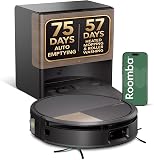
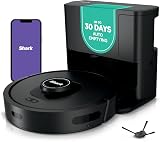
Shark AV2501S AI Ultra Robot Vacuum, with Matrix$419.99
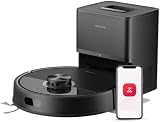
roborock Q7 M5+ Robot Vacuum and Mop, Up to 7-9 Weeks$299.99
Comparison of Recommended Self-Emptying Robots
Product
Base Type
Navigation
Capacity
Best For
Shark Matrix Plus
Bagless
LiDAR
60 Days
Budget Hybrid
Roomba 705X
Bagged
LiDAR
75 Days
Large Homes
Roomba 415X
Bagged
LiDAR
90 Days
Automation
Roomba 105
Bagged
LiDAR
75 Days
Mixed Flooring
Roborock Q7 M5+
Bagged
LiDAR
7-9 Weeks
Scheduled Care
Shark AV2501S
Bagless
LiDAR
30 Days
Pet Owners
Why LiDAR Navigation Beats Optical Sensors
When navigating a home, your robot vacuum is only as good as its map. In our research on robot vacuums, we have found that LiDAR (Light Detection and Ranging) is significantly more reliable than optical cameras. Camera-based robots often struggle in low-light conditions or on dark, high-contrast carpets where the system may misinterpret shadows as physical barriers or drop-offs. LiDAR, however, functions independently of ambient light by pulsing laser arrays to calculate exact room geometry.
Consistent navigation in dark rooms and at night.
Faster room mapping that persists across cleaning sessions.
Accurate identification of boundaries, reducing collisions with walls.
For complex layouts, LiDAR systems provide precise room-by-room dispatching. This is a vital feature when you want the robot to clean the kitchen after dinner but skip the bedroom. Models like the iRobot Roomba 105 use ClearView LiDAR to create these logical paths, which in turn reduces runtime by avoiding the erratic 'bounce' patterns seen in entry-level gyroscopic vacuums. By ensuring the robot always knows its exact location, LiDAR prevents navigation errors that often lead to stuck units or stalled tasks. When you invest in a robot, you are investing in its intelligence; prioritize units with laser arrays to avoid the common frustrations associated with optical, light-dependent systems. This efficiency directly translates to longer battery health and faster chore completion, as the robot spends less time circling randomly or re-mapping the same hallway twice.
Marketing campaigns often focus heavily on inflated pascal suction ratings, yet these numbers rarely tell the whole story. Our review of the best robot vacuum hardware shows that mechanical agitation is what truly cleans your carpets. Airflow alone cannot pull deeply embedded pet hair from woven backing; you need a brushroll specifically engineered to agitate fibers and move debris into the intake.
Fin-and-bristle rollers physically pull hair from carpet backing.
Anti-tangle designs prevent long fibers from wrapping around the core axle.
Dynamic contact ensures high cleaning performance across mixed surface types.
The Shark Matrix Plus is a standout in this area, utilizing a brushroll designed to actively deter hair accumulation. In homes with pets, this feature is non-negotiable; standard bristle rollers often clog after just a few runs, forcing you to use scissors to clear hair manually. By contrast, dual counter-rotating rubber brushes—found on higher-tier units like the iRobot Roomba 705X—provide superior agitation while remaining easy to wipe clean. When selecting your next vacuum, disregard the suction pressure and focus on the brush architecture. If the robot uses a high-quality, anti-tangle roller system, it will outperform a higher-suction unit with a basic, flat-suction port every time. This mechanical advantage keeps the robot operating at peak capacity for longer, meaning fewer maintenance interruptions for you.
Even with LiDAR, smaller obstacles like socks or cables can cause stalls. A quick walk-through to clear the floor significantly improves the robot's efficiency.
Convenience Versus Costs in Docking Bases
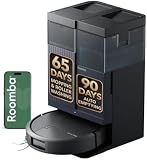
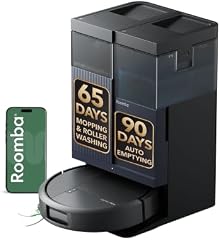
Self-emptying docks are the hallmark of modern robotic floorcare, but they represent a significant shift in home maintenance strategy. These stations trade floor space and periodic noise for long-term convenience. Before you buy, consider the specific needs of your household regarding hygiene and recurring expenditures. Bagged systems, common in iRobot Roomba models, offer the most hygienic disposal method as dust is vacuumed into a sealed compartment, keeping allergens out of the air.
Sealed bags: Best for allergy sufferers and those who prefer 'zero-contact' cleanup.
Bagless canisters: Best for those looking to avoid ongoing consumable costs.
Noise trade-off: Evacuation cycles are loud but brief across all station types.
Conversely, bagless docks, such as those on certain Shark models, are better for long-term budgets. By eliminating the need for proprietary disposal bags, you can save substantially over the lifespan of the robot. However, you must account for the mess that occurs when you manually empty the canister; this can release dust plumes back into your home. Additionally, look at the dock's overall size. Models like the roborock Q7 M5+ include large bases that occupy a significant footprint in your room. If you live in a smaller apartment or are short on closet storage, check the dimensions first. A docking station is a permanent piece of home furniture, so ensure its design and height fit your specific floor plan before finalizing your purchase.
If you are interested in a hybrid vacuum-mop, you must carefully evaluate how the robot handles transitions between hard flooring and carpet. A common issue with entry-level models is the inability to avoid rugs during a wet mopping cycle, which can result in damp or mildewed carpets. Advanced robots now include ultrasonic or LiDAR-based sensors that detect surface changes and automatically lift their mop pads. The iRobot Roomba 105 excels here, providing automated avoidance so you do not need to set up manual barriers or swap components between cleaning runs.
Automated mop lifting protects low-pile carpets from moisture.
Multi-surface sensors prevent the robot from attempting to mop rugs.
Consistent cleaning modes allow for separate vacuum and mop scheduling.
Effective mopping requires more than just a trailing damp pad; look for systems that offer active pressure or scrubbing patterns. A passive wipe may be sufficient for quick dust removal, but it will struggle with dried spills or stickiness. When researching robot vacuum and mop combos, verify whether the dock includes features for automatic pad washing or heated drying. This prevents the robot from spreading dirty water across your floors. These automated cleaning maintenance steps are crucial, as they remove the need for you to rinse a smelly, damp microfiber pad after every use. By investing in a robot that manages its own mop hygiene, you ensure that your home stays consistently clean without becoming a secondary chore for you to manage daily.
Measure the height of your lowest furniture. Taller LiDAR-based robots may be too tall to fit underneath, unlike compact alternatives.
Operational Noise and Maintenance Reality
Self-emptying docks are undeniably convenient, but they bring a specific operational sound signature into your home. During the self-empty cycle, the station utilizes high-powered suction to pull debris from the robot’s internal bin into the base. This is a high-decibel, high-pitch event that typically lasts 15 to 30 seconds. If you have a home office or a nursery, consider the placement of the dock carefully. It is wise to place these bases in a hallway or a mudroom rather than the master bedroom, where the sudden evacuation cycle could disturb your sleep.
Evacuation cycles generate brief but significant high-decibel noise.
Monthly filter maintenance is required regardless of the dock's convenience.
Periodic sensor cleaning prevents the robot from failing its navigation routines.
Beyond noise, understand that a self-emptying robot is not truly 'maintenance-free'. You must commit to a basic schedule to keep the system running for years. This includes rinsing the HEPA filters every month to prevent airflow blockage, which is a common cause of suction degradation in any vacuum. Additionally, wipe the cliff and LiDAR sensors regularly. A thin layer of dust on an optical sensor can trigger a 'stuck' error, even if the robot has plenty of room to move. These small habits, which we detail further in our vacuum guide, prevent the long-term hardware failures that lead people to regret their purchase. By staying ahead of these routine tasks, you maximize the utility of your investment and enjoy a consistently clean home with minimal frustration or manual intervention.
When selecting your unit, consider the availability of parts and the software support ecosystem. Robotic vacuums are computer-controlled appliances, and their value is often tied to the consistency of their application updates. A high-quality unit is one that receives regular firmware patches to improve navigation and map retention over time. Brands that provide long-term support for their software, such as those discussed in our buying tips, offer better protection for your investment than off-brand models that may lack consistent server connectivity.
Check for app availability and user-reported software stability.
Prioritize models with swappable brushes and filters.
Evaluate the manufacturer's track record for firmware updates.
Furthermore, think about the future of the device. Batteries in all cordless and robot vacuums are consumables that will eventually degrade after several hundred charge cycles. A well-designed robot allows for an easy user-replaceable battery module. Avoid units where the battery is permanently encased, as this forces you to discard the entire robot once the runtime drops to an unusable length. By reviewing the FAQ, you can learn to spot which designs offer this modular flexibility. Investing in a robust, well-supported brand ensures that you aren't stuck with a bricked machine because of a software glitch or a dead battery. Your purchase should be viewed as a multi-year commitment to your household hygiene; choosing a platform with a proven, stable history is the best way to ensure that your home cleaning remains efficient and reliable well into the future.
1Map your home layout using the initial run to identify high-traffic zones.
2Set up no-go zones in the app to protect cords and delicate floor items.
3Schedule recurring cleanings during daylight hours for optimal sensor performance.
4Inspect the dock and bin monthly, regardless of capacity, to ensure no clogs.
5Wash HEPA filters and clean the brushroll monthly to maintain peak suction.
Quick checklist
Verify the robot chassis height to ensure it fits under your furniture.
Choose between the convenience of bagged docks or the savings of a bagless bin.
Measure your available space for the docking station and evacuation base.
Ensure your home has 2.4GHz Wi-Fi for reliable app-based mapping and control.
Confirm the presence of automatic mop-lifting if you have area rugs and carpets.
Read manufacturer maintenance instructions for the specific brushroll design.
Frequently asked questions
Do I need a robot vacuum with a self-emptying base?
A self-emptying base is recommended if you want to minimize daily chores. If your home is large or you have pets that shed significantly, a dock allows you to go weeks without handling the dustbin, which is a massive convenience compared to manual-empty models.
Is LiDAR really better than camera-based navigation?
Yes, LiDAR is generally more reliable for home mapping. Camera-based systems can struggle in low light or on dark carpets where they might mistake shadows for drops. LiDAR pulses lasers to map geometry regardless of lighting, ensuring consistent performance in any environment.
Why do some self-emptying robots use bags while others are bagless?
It is a trade-off between hygiene and cost. Bagged models offer a sealed, clean experience and hold more debris, but require buying replacement bags. Bagless models use a reusable bin to eliminate recurring costs but can be messier to manually empty.
Does suction power (Pascals) matter for carpet cleaning?
Pascals measure static suction, which is less critical for carpets than mechanical brush agitation. A robot with a well-designed brushroll will consistently extract more pet hair and grit from carpets than a unit with high suction but a weak, poorly designed roller system.
Are self-emptying robot vacuums loud?
Yes, the evacuation cycle is loud. It uses high-powered airflow to move debris into the base, resulting in a brief, high-decibel purge that is standard for all self-emptying models. It is significantly louder than the robot’s normal vacuuming mode.
Amazon links are affiliate links; we may earn a commission at no cost to you.
Shortlists in this category
Ranked lists from our robot & cordless vacuums reviews, limited to listings whose titles confirm the product type, with budget cuts where enough recorded prices sit on both sides of the line.
This page summarizes our research reviews of Amazon listings, listed specifications and captured buyer ratings. It is not a hands-on test. Scores are editorial assessments, not measured performance; prices are recorded snapshots and may change. A category can include both main products and accessories, so its overall price range is not the cost of a complete setup.
Most recent product record update: October 3, 2026. Individual records may be older; this is not a verification date for every claim. Prices on this page were read from the listings Nov 8, 2026 – Nov 13, 2026.
Choose the product type first. These groups require a match in the listing title; an import search term alone is not enough. Scores rank our recorded research assessments within each group, not independently measured performance.
Values are shown as recorded, without unit conversions or inferred compatibility. Not recorded means unknown, not absent. Prices are snapshots, not current offers. Editorial scores are research judgments, not lab results. Amazon links are affiliate links.
Before treating a comparison as complete
Which details are still unknown?
A specification appearing in a listing is not independent verification. These counts show which shortlisted records contain the same field; a blank record does not mean the product lacks the feature.
Battery Life
Recorded for 2 of 2 shortlisted models
Present in every shortlisted record. Check units, exact variants and the current manufacturer documentation before relying on it.
Battery Type
Recorded for 2 of 2 shortlisted models
Present in every shortlisted record. Check units, exact variants and the current manufacturer documentation before relying on it.
Included Components
Recorded for 2 of 2 shortlisted models
Present in every shortlisted record. Check units, exact variants and the current manufacturer documentation before relying on it.
Values are shown as recorded, without unit conversions or inferred compatibility. Not recorded means unknown, not absent. Prices are snapshots, not current offers. Editorial scores are research judgments, not lab results. Amazon links are affiliate links.
Values are shown as recorded, without unit conversions or inferred compatibility. Not recorded means unknown, not absent. Prices are snapshots, not current offers. Editorial scores are research judgments, not lab results. Amazon links are affiliate links.
Check navigation and obstacle performance for the model; dark-floor behavior also depends on cliff sensors and floor material, not LiDAR alone.
Brush design beats pascal numbers on carpet and hair.
Self-empty bases trade noise and bag cost for convenience.
If a specification, certification or compatibility detail is absent, mark it as unknown and ask the seller or manufacturer. Do not substitute a star rating, an editorial score or a different model's specification.