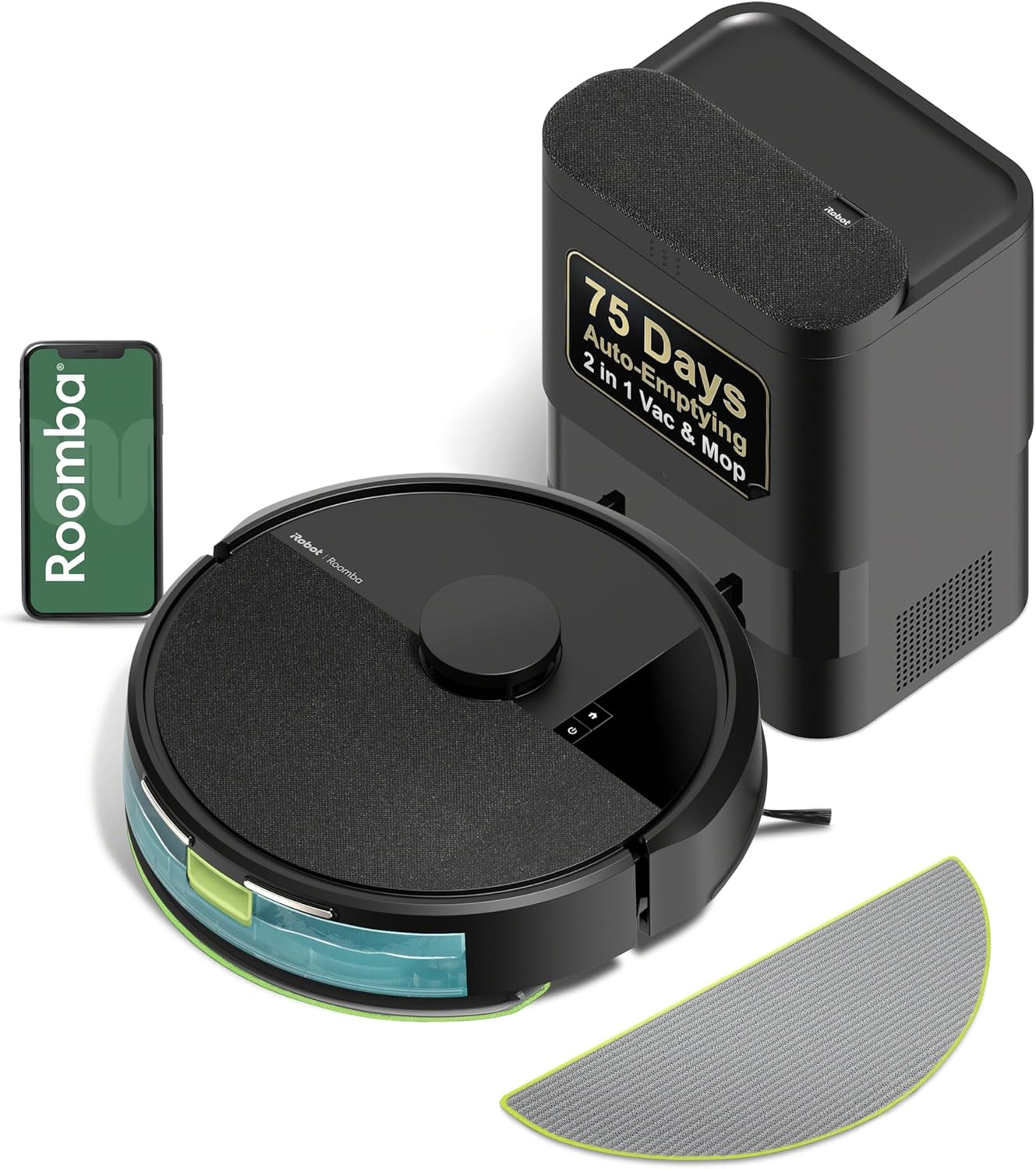
Design and Hardware Architecture
The Roomba 105 Combo uses a standard disc-shaped chassis finished in smoke grey, riding on a two-wheel drive system supplemented by front caster support. Navigation is driven by a top-mounted ClearView LiDAR turret, an essential upgrade over camera-based systems because optical sensors often fail on dark carpets or low-contrast floor patterns. Underneath, debris intake relies on a motorized multi-surface main brush supported by an edge-sweeping brush calibrated for corners and baseboard perimeters. A cartridge filter handles internal airflow exhaust, trapping particles before air recirculates. At the rear, the combination wet-dry assembly features a micro-pump reservoir and a flat microfiber mopping pad. The included AutoEmpty dock accepts dry debris, routing dirt into enclosed allergen-rated bags that filter down to 0.7 microns. Overall assembly is pragmatic and utility-focused, prioritizing accessible consumable parts and standardized mechanical drive assemblies over elaborate motorized mop lifts or active chassis suspensions.
Real-World Vacuuming and Mopping Performance
Performance centers on structured navigation and automated floor separation. LiDAR mapping builds floorplans quickly and guides systematic parallel passes rather than erratic bounce routines. The multi-surface main roller provides mechanical agitation against low-pile carpet and hard surfaces, which is consistently more decisive for hair extraction than raw air-watt ratings. When mopping modes are engaged, the robot uses surface detection to bypass rugs automatically, preventing accidental fiber dampening without requiring manually drawn exclusion barriers. Mopping relies on a micro-pumped water drip system coupled with SmartScrub linear passes. This level of wet cleaning is adequate for dust suppression and light surface stains, but it will not replicate the downward scrubbing force of counter-rotating dual pads or heavy oscillating assemblies. Run time is rated at up to 100 minutes from the lithium-ion battery, making it suitable for small-to-medium single-level layouts between charging cycles.
Cost Analysis and Value Assessment
At $299.00, the Roomba 105 Combo sits in a highly competitive entry-to-midrange tier. Packing both a self-empty charging base and true laser navigation at this price point delivers considerable convenience per dollar. Competing vacuums in this price bracket often rely on camera mapping or bump sensors, both of which suffer from higher failure rates in low-light environments. The self-emptying base substantially reduces regular maintenance, rated to hold approximately 75 days of dry debris. However, long-term ownership costs must factor in proprietary replacement disposal bags, new mopping pads, and replacement cartridge filters. Because this unit lacks automated mop-pad washing and drying at the base station, human labor is still necessary to remove, wash, and dry the microfiber cloth after every mopping cycle to prevent mildew. For consumers focused primarily on hands-free dry debris vacuuming, the bundled dock delivers high operational value.
Limitations and Who Should Skip It
Households with large footprints or predominant high-pile plush carpeting should look elsewhere. The 100-minute maximum battery life is modest, meaning larger single-level floor plans will necessitate mid-cycle recharging sessions. While the vacuum detects and routes around carpets when mopping, the pad does not lift mechanically; thick area rugs bordering hard surfaces may see minor friction or contact along their edges. Homes dealing with heavy liquid spills or sticky dried residues will find the passive microfiber pad underpowered compared to vibrating or pressurized spinning mop designs. Pet owners whose animals frequently leave loose, damp accidents should also avoid entry-tier obstacle systems, as standard LiDAR turrets detect furniture legs and walls effectively but miss low-profile ground hazards like cables and soft waste. Finally, buyers who refuse to pay ongoing consumable fees for proprietary base bags should prioritize bagless self-emptying docks.