The best robot vacuums
The iRobot Roomba 105 Combo is our best robot vacuum pick for mixed-floor homes, while the eufy C28 better suits households that prioritize active hard-floor mopping.
Research-based article drawn from our 22 robot & cordless vacuums reviews. Updated September 2026.
Short answer
The iRobot Roomba 105 Combo is our best robot vacuum pick for mixed-floor homes: at $299, it combines LiDAR mapping, an auto-empty dock and carpet avoidance while mopping. Choose the eufy C28 for active roller mopping, the roborock Q7 M5+ for lower-priced self-emptying, or the Roomba 205 DustCompactor for small spaces without a bulky evacuation dock.
Our picks for “best robot vacuum”
- 1
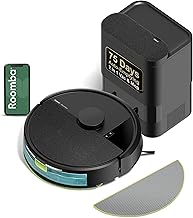 iRobot Roomba 105 Combo Robot Vacuum & Mop with AutoEmpty Dock - Self-Empties for 75 Days, Intense Power-Lifting Suction, LiDAR Navigation, Multiple Cleaning Modes, Avoids Mopping Carpet4.4$299.00Our score 8.2/10
 - 2
 eufy C28 Robot Vacuum Cleaner and Mop Combo, 15,000 Pa, HydroJet Roller Mop4.3$499.99Our score 8.5/10
 - 3
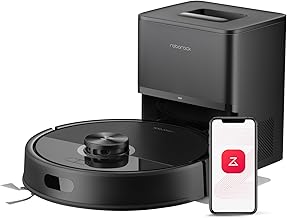 roborock Q7 M5+ Robot Vacuum and Mop, Up to 7-9 Weeks Self-Empty, 10000Pa4.0$249.99Our score 8.2/10
 - 4
 iRobot Roomba 205 DustCompactor Vac Robot Vacuum - Compacts Dirt Inside, No Emptying for 60 Days, Space Saving, No Dock Needed, Bagless, Intense Power-Lifting Suction, LiDAR Navigation, Multi-Surface4.2$149.99Our score 8.1/10
Best for most mixed-floor homes: iRobot Roomba 105 Combo
The iRobot Roomba 105 Combo brings together the features we would prioritize for everyday automated cleaning: LiDAR navigation, an auto-empty dock and automatic carpet avoidance while mopping. Its listed price is $299, and our score is 8.2/10. It is our default recommendation for households that want vacuuming and mopping without routinely emptying the robot’s onboard bin.
LiDAR is particularly useful on dark floorboards and in unlit rooms, where camera-only navigation can struggle. Carpet avoidance also makes this model a practical match for hard floors interrupted by rugs, rather than a purchase driven primarily by a suction number.
The dock is the main compromise. Its evacuation cycle produces brief, loud noise, and proprietary disposable bags add recurring expense. Choose it for reduced bin handling, not maintenance-free ownership. Check the manual for dock placement, bag replacement and mop-care instructions before deciding where the system will live.
Read the reviews: iRobot Roomba 105 Combo Robot Vacuum & Mop with AutoEmpty Do
Best for active hard-floor mopping: eufy C28
The eufy C28 is the stronger fit when frequent wet scrubbing matters more than hands-off dust disposal. At $499.99, it uses an active HydroJet roller mop rather than simply dragging a static damp pad. Our score is 8.5/10, reflecting its appeal for homes dominated by hard surfaces rather than making it the automatic choice for every floor plan.
The important trade-off is maintenance: the roller mechanism requires frequent physical cleaning, and this model lacks an auto-empty base. Its listed auto mop washing feature should not be read as eliminating manual roller care. Check the manual for the cleaning routine and approved floor surfaces.
Do not choose it solely for its 15,000 Pa suction rating. Brush design and hair handling matter more when assessing carpet pickup. The $649.99 eufy E25 is another active roller option, with listed self-emptying and self-refilling features, but its higher 20,000 Pa rating does not establish better carpet extraction.
Read the reviews: eufy C28 Robot Vacuum Cleaner and Mop Combo, eufy E25 Robot Vacuum and Mop Combo
Best lower-priced self-emptying pick: roborock Q7 M5+
The roborock Q7 M5+ suits buyers who want scheduled vacuuming, mopping and automated dirt disposal for less than the Roomba 105 Combo’s listed price. It costs $249.99 and earns our score of 8.2/10. Its supplied specifications include PreciSense LiDAR navigation, a dual anti-tangle design and a claimed seven-to-nine-week self-emptying interval.
Those features are more useful buying signals than the headline 10,000 Pa suction figure alone. On carpet, brush agitation and hair management remain central to cleaning performance. The anti-tangle design is relevant for hair-heavy households, but it is not a reason to stop inspecting the roller for wrapped strands.
Allow dedicated floor space for the dock and budget for replacement disposal bags. Treat the advertised emptying interval as a claim, not a fixed schedule for every home. Check the manual for dock clearances, maintenance intervals and how to manage the mop when cleaning a mixture of rugs and hard floors.
Read the reviews: roborock Q7 M5+ Robot Vacuum and Mop
Best for small spaces: iRobot Roomba 205 DustCompactor
The iRobot Roomba 205 DustCompactor is our pick for small apartments where a large self-emptying station would be awkward. At $149.99, it compacts debris inside its onboard bin instead of transferring it into a bulky evacuation dock. It earns our score of 8.1/10 and includes LiDAR mapping for navigation across dark floors and mixed surfaces.
The arrangement avoids dock-bag expenses, but it does not eliminate emptying. You still need to dump the onboard bin eventually, and the internal compaction mechanism needs periodic checks for jams. Follow the manual’s instructions before accessing or clearing that mechanism.
For a simpler alternative, the $149 iRobot Roomba 105 Vac also provides LiDAR navigation, but uses a standard charge-only dock and requires manual bin maintenance after each cycle. The 205 makes more sense if reducing routine bin handling matters; the 105 Vac suits buyers willing to empty a conventional bin themselves.
Read the reviews: iRobot Roomba 205 DustCompactor Vac Robot Vacuum, iRobot Roomba 105 Vac Robot Vacuum
Frequently asked
- What matters more for carpet cleaning: suction or brush design?
- Brush design and agitation matter more than a headline pascal rating when choosing for carpet and hair. A higher pressure figure alone does not establish better embedded-debris pickup. Inspect the roller design and hair-clearing requirements, and check the manual for maintenance instructions rather than treating anti-tangle features as maintenance-free.
- Are self-emptying robot vacuums worth it?
- Self-emptying is worth considering if frequent bin dumping is your main frustration. The trade-offs are dock space, brief evacuation noise and replacement-bag costs on bagged models. Bagless docks avoid bag purchases but still need manual dumping, which can release dust. Check the manual for clearances and cleaning requirements.
- Which robot vacuum should I choose for dark floors?
- Prioritize LiDAR mapping for dark floors and unlit rooms rather than relying on camera-only navigation. The Roomba 105 Combo, Roomba 205 DustCompactor and roborock Q7 M5+ all list LiDAR. Navigation is only part of suitability: also check the manual for floor restrictions, sensor care and guidance around rugs or stairs.
- Is a robot vacuum and mop combo better than a vacuum-only model?
- A combo makes sense when hard floors need frequent wet cleaning, but it adds mop maintenance. The eufy C28 uses an active roller rather than a static pad. For dry-only cleaning, the Shark AV2511AE avoids mop care. Check your flooring guidance and the robot’s manual before using water or cleaning solution.