How to Brew Loose Leaf Tea: Guide to Perfect Extraction
Achieve a cafe-quality cup at home by choosing the right water temperature, inert brewing materials, and spacious infusers for every tea variety.
By the Niche Picks editorsUpdated November 8, 202610 min readDrawn from our 32 research-based tea accessories reviews
AI-generated editorial illustration; not a product or test photograph.
Short answer
To brew loose leaf tea, heat fresh filtered water to the specific range required for your leaf—typically 160°F–185°F for greens or 200°F–212°F for blacks. Use a spacious, wide-basket infuser to allow leaves to unfurl completely. Pour water over the leaves, steep for the appropriate duration, and remove the infuser to prevent bitterness.
6
Product listings discussed; not hands-on tests
6/6
Discussed listings with a recorded price
$6.99–$79.99
Recorded listing price range; not a complete setup cost
Key takeaways
Use wide-basket infusers rather than tea balls to provide sufficient space for full leaf expansion.
Invest in kettles with degree-level or preset temperature control to avoid scorching delicate tea cultivars.
Prioritize borosilicate glass or 304 stainless steel contact surfaces to ensure flavor purity and avoid plastic taint.
Measure tea leaves precisely by weight (2 grams per 8 ounces) for consistent, reproducible brewing strength.
Preheat your teapot or mug with a quick rinse of hot water to maintain stable extraction temperatures.
Products discussed in this article
Editorial scores and recorded prices are reference points, not measurements of suitability for every use. Read each review's specifications and limitations.
Fu Store 2pcs Stainless Steel Mesh Tea Ball 2.1 Inch$6.99
Govee Smart Electric Kettle, WiFi Variable Temperature$79.99
Fri4Free 2PCS Fine Mesh Stainless Steel Tea Infusers$6.99
Comparison of Recommended Brewing Gear
Product
Material
Infuser Style
Temp Control
HIWARE Teapot
Glass/Steel
Removable Basket
Manual
Reinmoson Infuser
304 Stainless
Fine Mesh
N/A
Elite Gourmet Kettle
Steel/Glass
Kettle Base
Digital/Preset
Fu Store Tea Ball
304 Stainless
Mesh Ball
N/A
Govee Gooseneck
304 Stainless
Kettle Base
App/Digital
Fri4Free Infuser
304 Stainless
Cylinder
N/A
The Science of Leaf Expansion and Infuser Design
The primary obstacle in extracting the full aromatic spectrum from high-grade loose leaf tea is physical space. When dried leaves hydrate, they expand significantly—some high-mountain oolongs or rolled greens can swell to four times their dry volume. When restricted by novelty tea balls or small, hinged mesh strainers, the leaves collide and compress into a dense mass. This forces the water to only circulate around the exterior of the cluster, leading to an uneven brew where the center leaves remain dry and the outer leaves become over-extracted and astringent.
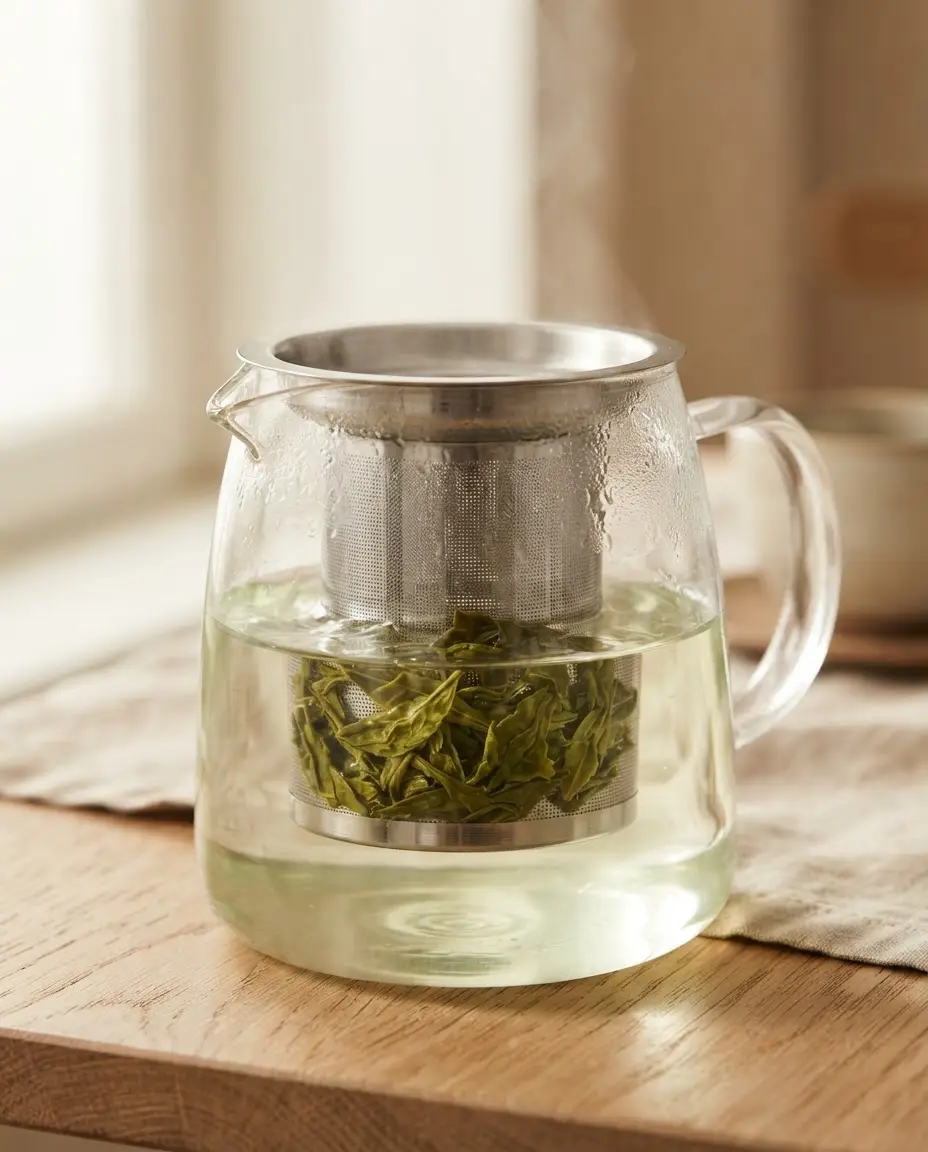
Our reviews consistently show that a wide-basket infuser is essential for any serious brewing setup. A spacious cylinder, such as those included with the HIWARE 1000ml Glass Teapot, allows leaves to float, unfold, and release their nuanced flavors evenly. Even for single-cup brewing, you should look for tools that maximize surface area. While small devices like the Reinmoson Extra Fine Mesh Tea Infuser or the Fri4Free 2PCS Infuser are portable, they are better suited for small-leaf broken grades than for whole-leaf varieties. Traditional mesh balls, such as the Fu Store 2pcs Stainless Steel Mesh Tea Ball, are structurally ill-equipped for full-leaf orthodox teas. Always verify the diameter and mesh quality of your steeping accessory; 304-grade stainless steel with micro-perforations provides the best balance between containing small particles and allowing the necessary turbulence for a high-quality liquor. If your infuser is cramping your leaves, your tea is effectively being held captive, resulting in a flat, one-dimensional profile that fails to represent the quality of the tea leaves themselves. To learn more about selecting the right gear for your specific brewing style, consult our tea accessories index and best tea infuser research.
Mastering Water Temperature for Different Tea Types
Water temperature is the most significant variable you control during the brewing process. While many kitchen appliances aim for a 212°F rolling boil, that temperature is often destructive for delicate leaves. Green teas, particularly sensitive Japanese senchas or gyokuros, require temperatures between 160°F and 180°F to avoid extracting bitter tannins and harsh, grassy astringency. Conversely, robust black teas and dark oolongs thrive at 195°F to 212°F, as the higher heat is necessary to extract the deeper, maltier compounds and sugars within the leaf structure.
To manage these requirements, you need a vessel that provides more than just a simple on-off boil. Our analysis of best electric kettles confirms that variable-temperature kettles are the most effective tool for consistent tea preparation. The Govee Smart Electric Kettle and the Elite Gourmet EKT8717 offer the control needed to step precisely through these temperature thresholds. Relying on an analog, stovetop kettle leaves you guessing; unless you are using a secondary thermometer, you are essentially gambling with the flavor of your cup. Even basic glass kettles, which are excellent for clarity, often fail our core testing metric if they lack a thermostat. If you are using a stove, ensure your pot is compatible—see our can you put a glass teapot on the stove guide for safety details. For the best results, dedicate your kettle to tea only and avoid the mistakes to avoid of using it for multiple liquid types, which can transfer flavors. Investing in a tool that allows you to lock in 175°F or 200°F removes the variability from your routine, ensuring that your first cup is as high-quality as your last. This level of control is the defining characteristic of a refined home tea station and makes a dramatic difference in the clarity and sweetness of your infusions.
Always pour your heated water directly over the tea leaves, not the other way around. This helps push the leaves down into the water, prevents clumping, and ensures an even extraction from the very first second.
Why Material Purity is Non-Negotiable
When we review stainless steel electric kettles, we prioritize material purity as the single most important hardware requirement. Plastics, rubber gaskets, and silicone seals in low-cost kettles are notorious for leaching chemical odors or off-tastes into water, especially when exposed to the high heat required for brewing. For the delicate, volatile aromatics found in high-quality loose leaf tea, these synthetic contaminants are disastrous; they coat the palate and obscure the true character of the tea. We advocate exclusively for 304 food-grade stainless steel or thermal shock-resistant borosilicate glass vessels because these materials are chemically inert. They neither add to nor subtract from the water quality, ensuring that your tea tastes exactly as the estate intended.
Beyond flavor, purity also relates to maintenance. Plastics tend to retain the scents of the tea or cleaning agents used previously, creating a 'ghosting' effect that lingers in every brew. Stainless steel and glass are non-porous and easy to scrub clean, especially when you follow our tips on how to clean and descale an electric kettle. Descaling is vital not just for longevity, but because mineral scale buildup—while not necessarily toxic—can impart a metallic or dusty quality to your tea liquor. As you refine your setup, check for the composition of internal lids, seals, and filter screens. Many units advertise themselves as stainless, yet feature plastic components in the steam path that drip back into your reservoir. A truly clean tea brewing experience requires a holistic approach to material selection, where every surface contacting the water is intentionally chosen to maintain the neutral, unadulterated foundation needed for a balanced cup. If your gear smells even faintly like plastic when hot, it is likely compromising your tea's potential, and it may be time to look into more robust tea accessories built for long-term neutrality.
The process of brewing is just as important as the equipment you use. Once your water has reached the target temperature, the timing of your infusion determines the final body and balance of the tea. A common error is steeping for too long in an attempt to get 'more flavor,' which often results in an astringent cup rather than a more flavorful one. Different tea families have distinct windows of optimal infusion time; while white teas might take 3 to 5 minutes to fully release their delicate notes, Japanese steamed greens can be fully extracted in as little as 60 to 90 seconds. Leaving your leaves in the hot water beyond these windows will invariably release excessive, mouth-drying tannins.
We recommend using a dedicated kitchen timer to ensure consistency across every session. The objective is to remove the leaves from the water at the exact moment the desired flavor intensity is reached. If your infuser basket is properly designed, lifting it out of the pot or cup should be a clean, drip-free process. Many of our recommended tea accessories include fitted drip trays or saucers, which are not just for keeping your table clean—they provide a dedicated place to set the infuser, preventing accidental over-steeping. If you are hosting, consider brewing in a glass teapot to monitor the color of the liquor. The golden rule of tea preparation is that you can always add more water to a weak brew, but you cannot fix an over-steeped, bitter cup. By managing your infusion time as strictly as your water temperature, you gain control over the specific chemical extraction, allowing you to highlight the delicate top-notes of a floral oolong or the deep, cocoa undertones of a classic black tea. Remember that high-quality whole leaves can be re-steeped multiple times; just extend the steeping duration by 30-60 seconds for each subsequent brew to account for the slower extraction rate of the partially-hydrated leaves.
Spherical tea balls and small strainers are the primary cause of poor-quality infusions. They mechanically restrict the leaves from unfolding, leading to an under-extracted and often bitter-tasting cup.
Essential Maintenance for Lasting Performance
Maintaining your brewing equipment is a fundamental part of the ritual that directly impacts your daily cup quality. Over time, all steeping vessels and kettles will accumulate mineral scale—especially if your local water supply is 'hard'—which can interfere with heating efficiency and potentially alter the flavor of your brew. Our guide to tea accessories highlights that regular descaling is not merely a chore but an essential maintenance step. Using a mild solution of food-grade citric acid or vinegar in your kettle removes calcium deposits from the heating element, ensuring that it reaches the correct temperatures accurately and efficiently. Neglecting this buildup can lead to erratic temperature sensing, meaning your kettle might shut off prematurely or overshoot your target by several degrees.
For infusers and teapots, it is equally critical to remove the tannins that accumulate in mesh and on glass surfaces. Tannins have a reddish-brown hue and can build a bitter layer that slowly taints new brews if not scrubbed away. Glass teapots like the HIWARE 1000ml should be rinsed immediately after use, and the stainless steel infuser should be cleaned with a soft brush to remove stuck tea debris from the micro-perforations. Avoid using abrasive steel wool, which can scratch the finish of your stainless components and create rough areas where bacteria and scale can lodge. Instead, use soft sponges and natural cleansers to preserve the integrity of your gear. If you find that your infuser is becoming difficult to clean, it may be time to replace it; our best tea infuser research covers models designed for easier maintenance. By keeping your surfaces clean and your heating elements free of mineral deposits, you ensure that your brewing equipment remains neutral and effective for years, allowing the true profile of your loose leaf tea to shine through without interference or degradation. Consistency is built on a foundation of clean equipment, making this an essential part of the brewing cycle.
Building an exceptional tea station doesn't require a commercial-level investment, but it does require allocating your budget where it matters most: thermal control and material purity. You can easily spend more money on aesthetic flourishes that add nothing to the quality of your tea, while missing out on features that would objectively improve your daily cup. We suggest using our budget planner to prioritize essential equipment over non-functional accessories. A simple, inert glass teapot and a high-quality, wide-basket infuser will serve you better than an overpriced, plastic-heavy kettle. If you are starting from scratch, look for bundles that offer both a kettle and a specialized steeping vessel, or find entry-level digital kettles that allow you to set specific temperature targets.
Many drinkers save money by opting for best stainless steel electric kettles that are robust and durable, eschewing fancy smart features like WiFi connectivity unless those functions truly serve your daily workflow. The most important feature to pay for is internal material quality—avoiding all-plastic interiors. If your budget is limited, focus on the infuser first. A cheap, wide-basket stainless steel infuser used with a stove-heated kettle of pure glass is significantly more effective than an expensive, automated machine that forces your tea leaves into a cramped, plastic-filtered chamber. Value is defined by how much a tool contributes to the quality of the beverage, not the number of buttons it has. By focusing your funds on a wide-basket tea infuser and a reliable variable-temperature kettle, you can establish a high-quality, repeatable tea routine for a fraction of the cost of premium artisan systems. Regularly check our tea accessories for updates, as we frequently find high-performing equipment in the budget tier that meets all our criteria for purity and precision. Investing wisely allows you to enjoy high-grade, single-estate teas at home with confidence, knowing that your equipment is working to maximize the leaf's potential, not hindering it.
1Preheat your steeping vessel with a rinse of hot water.
2Measure the appropriate amount of loose leaves for your water volume.
3Heat filtered water to the specific temperature target (e.g., 175°F for green).
4Add leaves to a spacious, wide-basket infuser.
5Pour the heated water over the leaves.
6Begin your timer immediately to avoid over-steeping.
7Remove the infuser promptly once the timer sounds.
8Enjoy your infusion immediately while at its peak flavor.
Quick checklist
Select high-quality loose leaf tea.
Verify your kettle interior is glass or 304 stainless steel.
Check that your infuser has a wide, spacious basket.
Confirm your water is filtered and fresh.
Set your kettle to the specific temperature for your tea type.
Use a scale to measure exactly 2 grams of leaf per 8 ounces.
Prepare a timer to monitor your steeping duration.
Frequently asked questions
How do I know if my infuser is too small?
If your tea leaves are pressed against the mesh walls immediately after hitting the water, your infuser is too small. A proper infuser allows leaves to float freely; if they are trapped or compressed, the flavor will be muted and unevenly extracted.
Is filtered water necessary for tea?
Yes. Chlorine and minerals in tap water can significantly dull the nuanced aromatics of fine tea. Using a simple carbon-filtered pitcher or bottled spring water will make a noticeable difference in the clarity and sweetness of your final cup.
How many times can I steep my tea leaves?
Most whole-leaf teas, especially oolongs and green teas, can be steeped multiple times. Increase the steeping time by 30-60 seconds for each additional infusion. Ensure the leaves remain moist between infusions for the best results.
Why is my green tea always bitter?
Bitterness in green tea usually means your water temperature was too high or you steeped the leaves for too long. Try lowering your water temperature by 10-15 degrees and reducing your steeping time to see if the sweetness returns.
Do I really need a temperature-controlled kettle?
If you brew delicate teas like silver needle, white tea, or sencha, a temperature-controlled kettle is essential. It prevents the leaves from scorching, which happens instantly at 212°F. For black teas, a standard boil is often acceptable.
Amazon links are affiliate links; we may earn a commission at no cost to you.
Shortlists in this category
Ranked lists from our tea accessories reviews, limited to listings whose titles confirm the product type, with budget cuts where enough recorded prices sit on both sides of the line.
This page summarizes our research reviews of Amazon listings, listed specifications and captured buyer ratings. It is not a hands-on test. Scores are editorial assessments, not measured performance; prices are recorded snapshots and may change. A category can include both main products and accessories, so its overall price range is not the cost of a complete setup.
Most recent product record update: November 8, 2026. Individual records may be older; this is not a verification date for every claim. Prices on this page were read from the listings Nov 8, 2026 – Nov 13, 2026.
Choose the product type first. These groups require a match in the listing title; an import search term alone is not enough. Scores rank our recorded research assessments within each group, not independently measured performance.
Values are shown as recorded, without unit conversions or inferred compatibility. Not recorded means unknown, not absent. Prices are snapshots, not current offers. Editorial scores are research judgments, not lab results. Amazon links are affiliate links.
Degree-level temperature control is the whole point of a tea kettle.
Stainless or glass interiors avoid the plastic-taste problem.
Wide infusers let leaves open; tea balls choke them.
If a specification, certification or compatibility detail is absent, mark it as unknown and ask the seller or manufacturer. Do not substitute a star rating, an editorial score or a different model's specification.