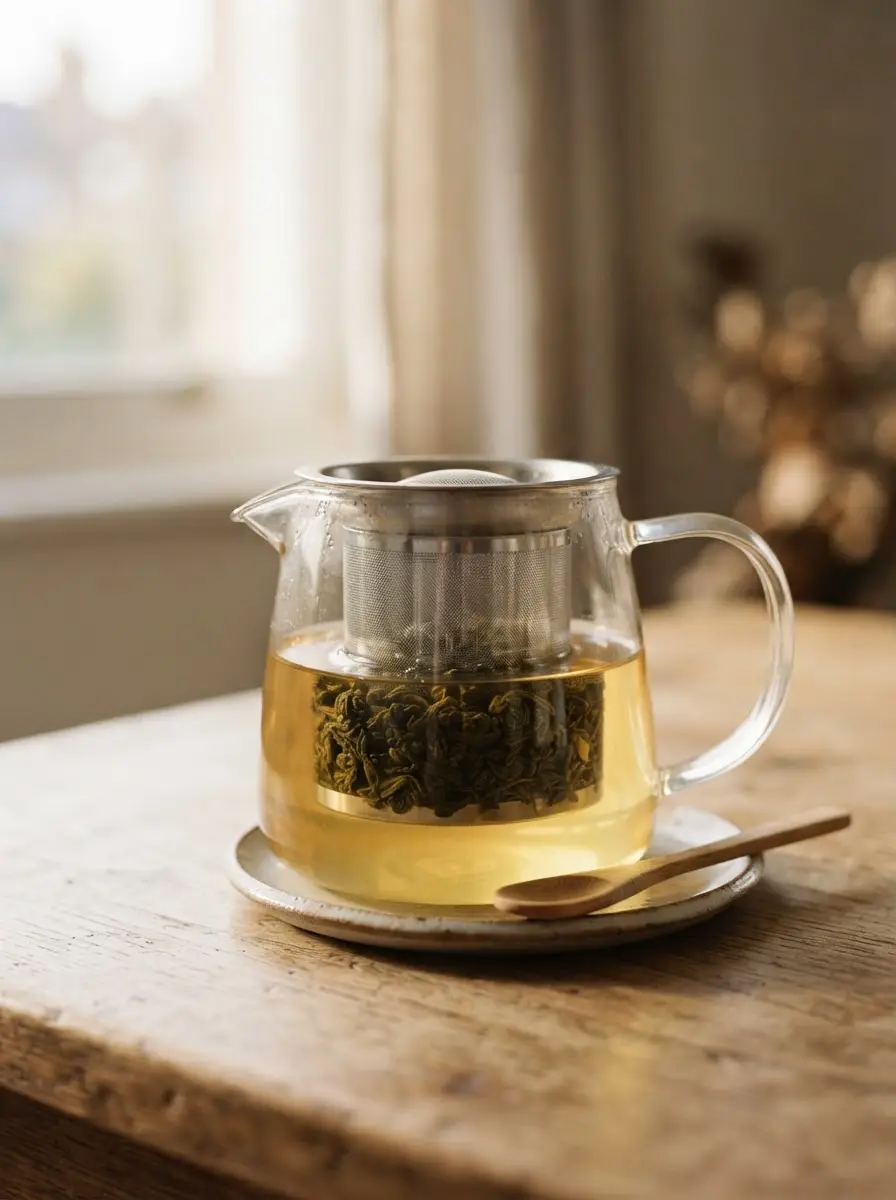
Discover the golden ratio for loose leaf tea and learn why using the right brewing vessel is essential for unlocking full flavor profiles.
By the Niche Picks editorsUpdated November 8, 20269 min readDrawn from our 32 research-based tea accessories reviews
AI-generated editorial illustration; not a product or test photograph.
Short answer
The standard ratio for loose leaf tea is one to two teaspoons of dry leaves per eight-ounce cup of water. You may need more for light, fluffy herbs and less for tightly rolled oolongs. Always ensure your infuser is wide enough to allow the leaves to fully expand during the steeping process.
6
Product listings discussed; not hands-on tests
6/6
Discussed listings with a recorded price
$6.99–$39.99
Recorded listing price range; not a complete setup cost
Key takeaways
Use one to two teaspoons of loose tea for every eight ounces of water.
Adjust ratios based on leaf volume; fluffy leaves require more space.
Wide baskets allow leaves to unfurl, while tea balls restrict flavor extraction.
Water temperature significantly impacts the final taste profile of your tea.
Choose inert materials like stainless steel or borosilicate glass to prevent plastic-taste contamination.
Invest in a temperature-controlled kettle for consistent, repeatable results.
Products discussed in this article
Editorial scores and recorded prices are reference points, not measurements of suitability for every use. Read each review's specifications and limitations.
Aigostar Electric Kettle with Temperature Control$39.99
Fri4Free 2PCS Fine Mesh Stainless Steel Tea Infusers$6.99
Comparison of tea accessories and kettles
Product
Primary Material
Capacity
Temp Control
HIWARE Teapot
Glass/Stainless
33 oz
None
Reinmoson Infuser
304 Stainless
Single-cup
N/A
HOUSE AGAIN Infuser
304 Stainless
Single-cup
N/A
Elite Gourmet Kettle
Glass/Stainless
1.7 L
Yes
Aigostar Kettle
Glass/Stainless
1.7 L
Yes
Fri4Free Infuser
304 Stainless
Single-cup
N/A
What is the standard ratio for loose leaf tea?
For most loose leaf teas, starting with one teaspoon of dry leaves per eight-ounce cup of water is a reliable baseline. However, tea density varies wildly between types. Delicate white teas, which are often voluminous and fluffy, may require two full teaspoons to reach desired strength, while tightly rolled oolongs or heavy black teas might reach a balanced profile with just one teaspoon. Our how to brew loose leaf tea guide emphasizes that volume-based measurements are a starting point rather than a rigid rule. If your tea tastes thin, increase the quantity of dry leaf rather than increasing the steeping time, which often introduces bitterness from tannins.
For delicate greens and white teas, try 1.5 to 2 teaspoons per cup.
For bold black teas and robust herbals, start with 1 level teaspoon.
For compressed oolong pearls, 1 teaspoon is often sufficient as they expand significantly.
It is also important to consider the size of your brewing vessel. If you are preparing multiple cups using a pot like the HIWARE 1000ml Glass Teapot, multiply your ratio accordingly. Using a scale to measure grams is a more accurate method than using spoons, especially for consistent results with high-quality harvests. Most professional brewers recommend approximately 2 to 3 grams of tea for every 6 ounces of water as a starting point. Experimenting with these ratios allows you to fine-tune the liquor to your personal preference, keeping in mind that the quality of the water and the infusion time play equally important roles in the final result. Understanding how to use your tea accessories correctly will help you manage these ratios and avoid common mistakes that lead to over-extraction or muddy, inconsistent flavors.
The biggest mistake beginners make is confining leaves in small, restrictive tea balls. Proper extraction requires water to circulate around every leaf. When you force tea into a tight metal ball, the center leaves remain dry and compressed, leading to an under-extracted and flat cup. In contrast, using a wide-basket infuser, such as those found in our best tea infuser selections, allows the leaves to unfurl completely. This expansion is necessary for the leaves to release their essential oils and subtle flavor notes.
Wide baskets provide optimal flow for leaf expansion.
Restricted tea balls choke leaves and prevent even extraction.
Stainless steel construction is superior for maintaining flavor neutrality.
When evaluating tea accessories, always prioritize baskets that occupy a large portion of your mug or pot. The Reinmoson Extra Fine Mesh Tea Infuser or the HOUSE AGAIN Tea Infuser are excellent examples of compact gear that utilizes fine mesh to keep small particles out of your cup, though their limited diameter means they are better suited to smaller servings. For whole-leaf varieties, an in-kettle infuser often provides the necessary surface area. If your infuser is too small, the tea effectively acts like a tea bag, which is rarely an ideal way to brew high-quality whole-leaf tea. By switching to a wider vessel, you will immediately notice a difference in the clarity and complexity of your infusion, as the water can extract the deeper, nuanced notes that remain locked inside tightly packed leaves.
For ultimate consistency, use a kitchen scale to measure 2-3 grams of loose leaf tea per 6-8 ounces of water rather than relying on volume-based spoon measurements.
Does material choice affect the taste?
The material of your kettle and infuser is critical to preserving the integrity of the tea's natural oils. Cheap kettles often contain plastic components, silicone seals, or inferior metal alloys that can impart a chemical or 'off' taste to hot water. This is particularly noticeable with delicate teas like silver needle or high-end green teas, which pick up even slight environmental taints. Our best stainless steel electric kettles guide highlights the importance of using 304 food-grade stainless steel or borosilicate glass for the interior boiling chamber. These materials are inert, meaning they will not react with hot water or leach unwanted flavors into your beverage.
Glass offers a clean, neutral surface that is easy to clean.
304 stainless steel is durable and resists rust and corrosion.
Avoid kettles with exposed plastic sensors or lid linings.
When shopping for tea accessories, check the product specifications carefully. Units like the Elite Gourmet Dual-Wall Kettle offer the benefits of stainless steel interiors while providing a thermal buffer to keep the exterior safe to touch. This protects your water purity while also improving safety in a busy kitchen. If your current kettle is made of plastic, you may notice it developing a film or mineral buildup that becomes increasingly difficult to remove. Learning how to clean and descale an electric kettle is a necessary maintenance step regardless of material, but inert materials like glass and stainless steel generally require less effort to keep tasting fresh. Never compromise on the water path if you want to enjoy the full potential of your favorite loose leaf teas, as even the best leaves will be ruined by tainted water.
Temperature control is often the difference between a bitter cup and a sweet, nuanced one. Delicate teas like green or white varietals typically require lower temperatures, between 160°F and 185°F. Brewing these at a full 212°F boil releases excessive tannins, resulting in a harsh, astringent taste that can mask the tea's true character. For serious drinkers, an electric kettle with temperature control is not a luxury; it is a fundamental piece of equipment. Without it, you are forced to rely on manual cooling intervals, which are unpredictable and difficult to replicate consistently.
Green tea thrives between 160°F and 175°F.
Oolong teas benefit from 185°F to 195°F.
Black teas and herbal infusions prefer a full 212°F boil.
Models like the Aigostar Electric Kettle provide built-in presets that cover these ranges effectively. While some professional-grade kettles allow for single-degree adjustments, basic presets are a major upgrade over analog boiling. If you currently use a stovetop whistle kettle, consider using an external thermometer to check your water temperature before pouring. It is common for drinkers to realize they have been using water that is either too cool for black tea or far too hot for greens. Once you control your temperature, you will find that your brewing ratios become more effective and your tea becomes much more consistent. For those who enjoy the ritual of brewing, our tea accessories FAQ covers how to transition to more precise methods, ensuring you get the most out of your investment in high-quality tea leaves.
Restrictive wire mesh tea balls often compress leaves, resulting in an uneven extraction. Opt for wide baskets that allow leaves to fully open.
Making cleanup quick and easy
Cleaning your infuser is often the primary barrier to using loose leaf tea daily. Many people find that thin wire mesh balls are difficult to clear, as tea leaves get stuck in the weave. By opting for high-quality stainless steel infusers, you get a more durable, easier-to-maintain solution. These infusers typically use micro-perforations instead of woven wire, which prevents leaves from becoming embedded. A quick rinse under warm water after every session is usually all it takes to keep your accessory in top condition.
Rinse infusers immediately to prevent staining.
Use a soft brush for occasional deep cleaning of micro-perforations.
Avoid leaving damp leaves in an infuser for extended periods to prevent odor buildup.
If you are brewing at your desk or in a compact space, look for sets that include a dedicated drip tray or saucer. This prevents the constant annoyance of having wet, stained surfaces on your table or counter. Keeping your workspace clean is just as important as the quality of your tea. If you find your tea is leaving behind residue, it might be a sign that you need to descale your primary water source. Keeping your gear clean is the final step in ensuring that every cup is as pure and delicious as the last. Use our buying tips to help you select products that are built for longevity and ease of maintenance, ensuring your routine remains enjoyable rather than a chore. Maintaining clean gear ensures that the delicate flavor profiles of your next batch of loose leaf tea are never tainted by the remnants of the last.
The perfect cup of tea is a balance of quantity, temperature, and time. Once you have mastered the amount of tea per cup and ensured your vessel allows for proper leaf expansion, focus on timing. Start with three minutes for most teas and adjust by 30-second increments based on your preference. Over-steeping is the most common cause of bitterness, even if your temperature and ratio are perfect. If your tea is consistently too bitter, try reducing the steeping time first, then the temperature, and finally the quantity of dry leaves. This methodical approach allows you to isolate which variable is causing the imbalance in your liquor. For those curious about deep-diving into this hobby, check our tea accessories buyer's guide to learn about different methods of extraction and the equipment required to excel at each.
Keep a simple log of times and temperatures to track what works best.
Pre-warm your teapot with a small amount of hot water to maintain steady temperatures.
Always pour through a strainer if your infuser allows fine particles to pass.
Investing in a quality budget plan helps you prioritize gear that directly impacts the cup, such as a precise kettle or a superior infuser, while skipping expensive or unnecessary extras. By focusing on the basics—the amount of leaf, the quality of water, and the control of heat—you can achieve professional results at home. Never underestimate the impact of a clean, well-maintained set of tools. As you progress, you will find that the ritual of steeping tea is just as rewarding as the drink itself, providing a quiet moment of clarity in a busy day. Use the compare tool to see how different kettle or infuser models stack up against your specific requirements.
Step by step
1Boil fresh, filtered water to the recommended temperature for your specific tea.
2Pre-warm your mug or teapot by swirling the hot water and discarding it.
3Place 1-2 teaspoons of loose leaf tea into your wide-basket infuser.
4Insert the infuser into the vessel and pour the hot water over the leaves.
5Cover the vessel to trap heat and aromatics during the steeping process.
6Steep for the recommended time, typically 2-4 minutes depending on tea variety.
7Remove the infuser promptly to stop extraction and prevent bitterness.
8Enjoy your perfectly balanced cup of tea.
Quick checklist
Choose 304 stainless steel or borosilicate glass accessories.
Ensure your infuser basket is wide enough to allow full leaf expansion.
Use filtered, fresh cold water for every boil.
Check the manufacturer temperature recommendations for your specific tea type.
Verify that your infuser mesh is fine enough to catch tea dust.
Establish a consistent steeping time of 2-5 minutes as your starting point.
Clean your infuser immediately after use to prevent flavor cross-contamination.
Frequently asked questions
How long should I steep loose leaf tea?
Most loose leaf teas require between two and four minutes. Delicate white and green teas often only need two minutes, while robust black teas or robust oolongs can handle three to five. Always taste-test and adjust your timing for future brews.
Can I reuse loose leaf tea?
Yes, many high-quality loose leaf teas, especially oolongs and green teas, can be steeped multiple times. Subsequent infusions often reveal different flavor profiles. Simply increase the steeping time by 30-60 seconds for each additional brew.
Why does my loose leaf tea taste bitter?
Bitterness usually stems from over-extraction. This occurs if your water is too hot, you use too much tea, or you steep the leaves for too long. Try dropping the water temperature by 10-15 degrees or shortening the steeping time.
Should I wash my loose leaf tea?
Washing or 'rinsing' tea is a common practice with tightly rolled oolongs or aged pu-erh. You briefly pour hot water over the leaves and discard it instantly to wake up the leaves and remove dust, preparing them for the first real infusion.
Does the type of water matter for tea?
Absolutely. Water makes up the vast majority of your cup, so its mineral content affects flavor. Filtered or bottled spring water is generally superior to tap water, which may contain chlorine or other additives that dull the tea's natural brightness.
Amazon links are affiliate links; we may earn a commission at no cost to you.
Shortlists in this category
Ranked lists from our tea accessories reviews, limited to listings whose titles confirm the product type, with budget cuts where enough recorded prices sit on both sides of the line.
This page summarizes our research reviews of Amazon listings, listed specifications and captured buyer ratings. It is not a hands-on test. Scores are editorial assessments, not measured performance; prices are recorded snapshots and may change. A category can include both main products and accessories, so its overall price range is not the cost of a complete setup.
Most recent product record update: October 3, 2026. Individual records may be older; this is not a verification date for every claim. Prices on this page were read from the listings Nov 8, 2026 – Nov 13, 2026.
Choose the product type first. These groups require a match in the listing title; an import search term alone is not enough. Scores rank our recorded research assessments within each group, not independently measured performance.
Values are shown as recorded, without unit conversions or inferred compatibility. Not recorded means unknown, not absent. Prices are snapshots, not current offers. Editorial scores are research judgments, not lab results. Amazon links are affiliate links.
Degree-level temperature control is the whole point of a tea kettle.
Stainless or glass interiors avoid the plastic-taste problem.
Wide infusers let leaves open; tea balls choke them.
If a specification, certification or compatibility detail is absent, mark it as unknown and ask the seller or manufacturer. Do not substitute a star rating, an editorial score or a different model's specification.