Design and build
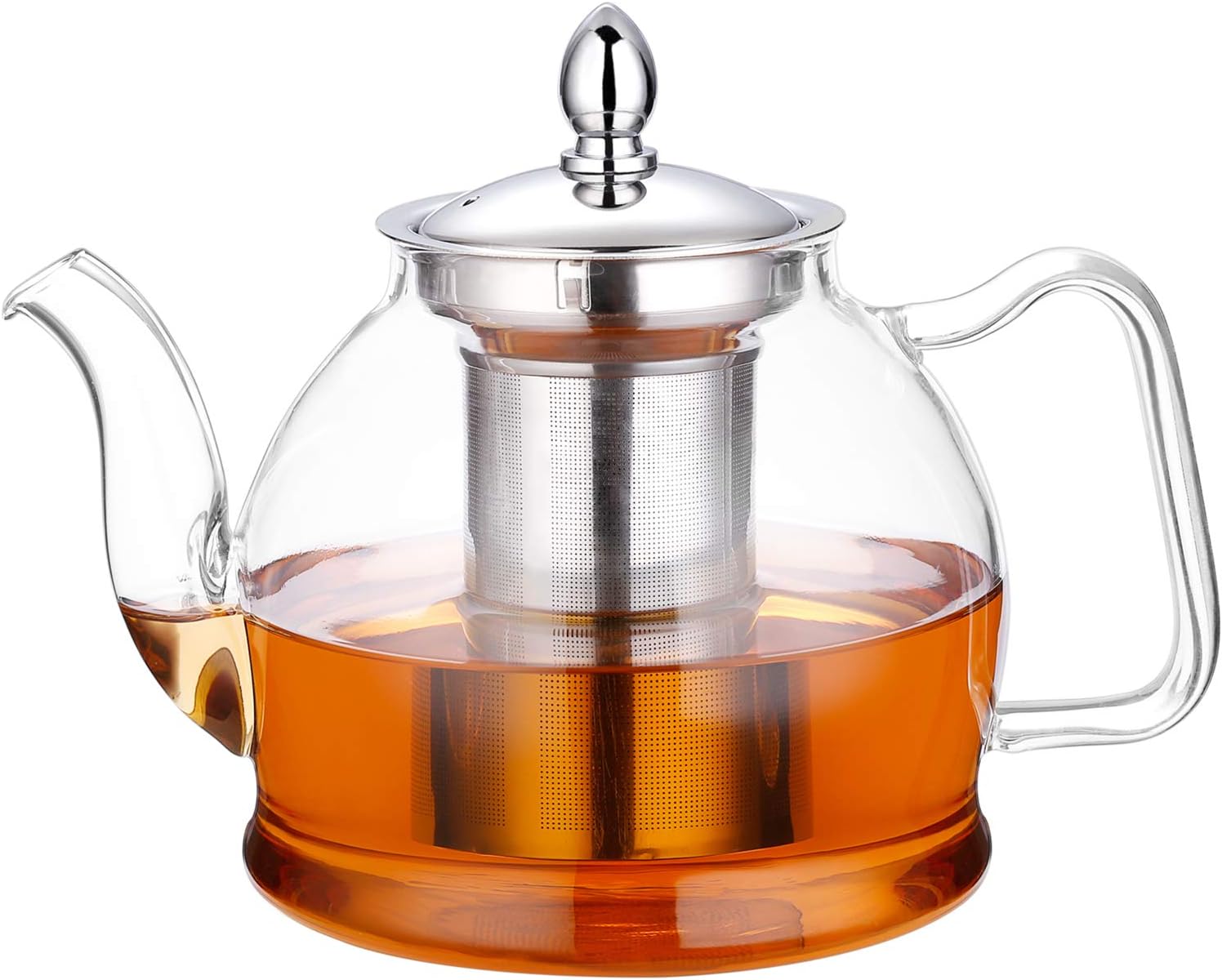
The Hiware teapot relies on a straightforward, material-first construction. Its primary body is hand-crafted from borosilicate glass, sized to hold 1000 milliliters (approximately 33 fluid ounces) of liquid. At 1.2 pounds empty, the unit feels light yet balanced, measuring 10 inches in depth by 6 inches in width and height. A key attribute of this construction is the complete exclusion of internal plastic components. Water interacts solely with the borosilicate vessel and an 18/10 stainless steel mesh filter basket. The infuser features fine micro-perforations to catch broken leaf debris while providing an expansive central cylinder. The stainless lid is engineered to seat cleanly either directly onto the glass rim or atop the infuser collar. While the glass is formulated to resist thermal shock across electric and gas cooktops, wall thickness remains moderate, meaning physical impacts against cast iron grates or granite countertops remain a constant operational risk.
Real-world performance
In functional use, the Hiware performs best as an infusion pot rather than an all-in-one water boiler. The wide infuser basket is a distinct technical asset over restrictive wire tea balls; large, whole-leaf oolongs and twisted black teas expand thoroughly across the full diameter of the cylinder, facilitating even extraction. The spout geometry restricts drips during steady pours, provided the vessel is not filled beyond the 1000-milliliter line. When used directly over a gas or electric burner on low-to-medium heat, the water comes to temperature steadily, but the process highlights an inherent limitation: the lack of temperature management. Without an external thermometer, hitting the exact 160°F to 185°F range needed for greens and whites requires guesswork or passive cooling. Used instead as a steeping vessel with water poured from a variable-temperature kettle, it excels, offering full visual inspection of leaf unfurling.
Value for money
Priced at $22.99, the Hiware teapot occupies an accessible bracket within manual tea ware. More than 22,000 recorded consumer reviews averaging 4.4 out of 5 indicate broad satisfaction regarding standard daily reliability. At this price point, obtaining genuine 18/10 stainless steel components alongside stovetop-rated borosilicate glass represents sound mechanical value, particularly because many competing economy pots utilize lower-grade steel alloys prone to early rusting or incorporate plastic retaining rings in their lids. Replacement costs are modest if a break occurs, which offsets the natural fragility of glass cookware. However, buyers should remember that this purchase only solves the infusion and serving equation. If you do not already own a thermometer or a dedicated temperature-controlled kettle for hot water delivery, you will need to factor in additional expenditures to achieve strict thermal control over your brewing cycle.
Who should skip it
Serious tea drinkers who prioritize exact degree-level thermal management should look elsewhere for their primary heating device. If you primarily brew delicate green teas, gyokuro, or high-mountain oolongs, heating water directly in this glass vessel on a stovetop introduces thermal inconsistency that easily leads to bitter, over-extracted cups. Dedicated electric gooseneck kettles with digital thermistors remain the proper hardware for that specific task. Additionally, users operating high-output induction ranges cannot use this unit directly on the cooking surface without an intermediary induction interface disc, as borosilicate glass is non-ferrous. Those seeking an ultra-rugged, knockabout vessel for busy commercial environments or chaotic family kitchens may also want to bypass glass altogether in favor of an insulated, heavy-gauge stainless steel teapot, which will eliminate the break risk entirely and provide superior heat retention over extended periods at the table.