 Teabloom Stovetop & Microwave Safe Glass Teapot with Removable Loose Tea Glass Infuser
Recorded price: $29.99 · Editorial score: 7.4/10
- Item Weight
- 0.69 kg
- Capacity
- 1.7 pounds
Learn when glass teapots are stovetop safe, which glass types withstand direct burner heat, and how to brew loose-leaf tea without thermal shock.
By the Niche Picks editorsUpdated October 15, 20268 min readDrawn from our 30 research-based tea accessories reviews
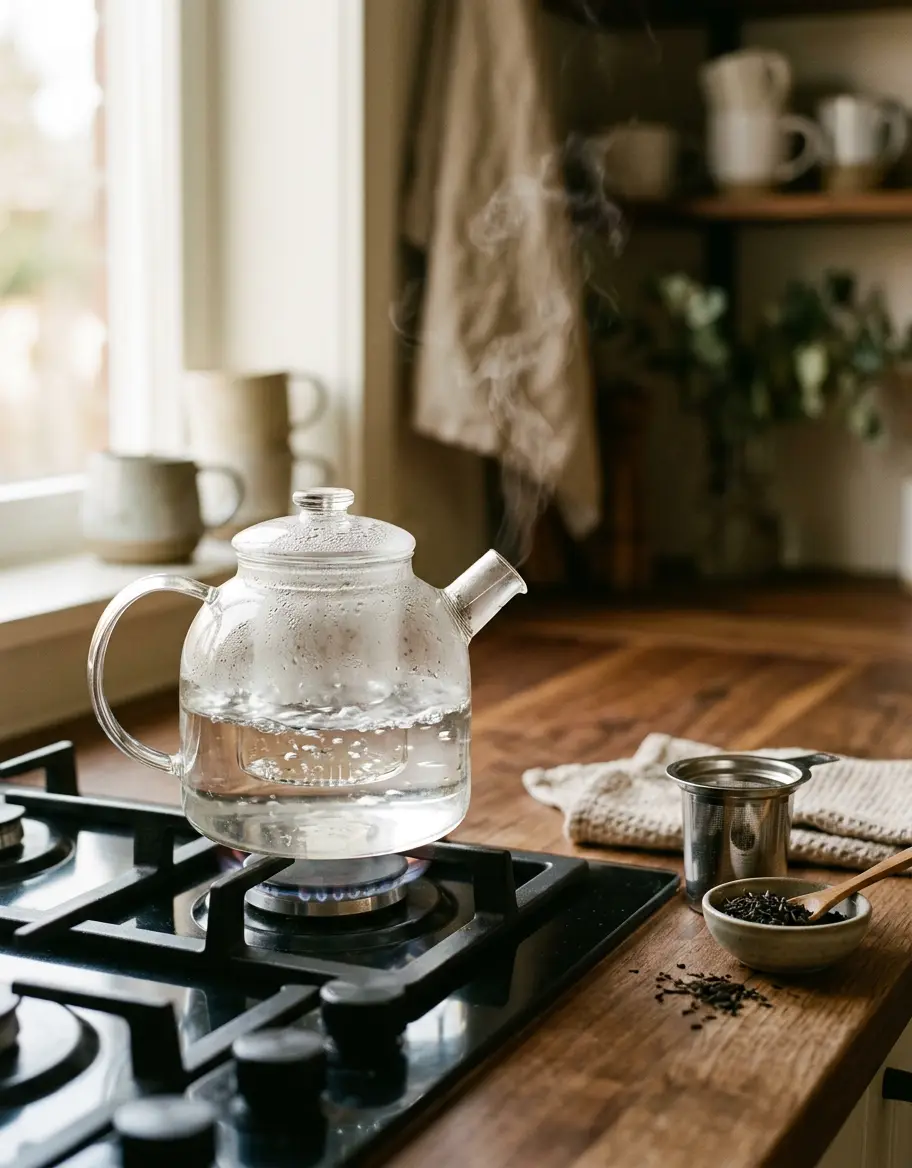
Yes, you can put a glass teapot on the stove, but only if it is explicitly made from heat-resistant borosilicate glass. Standard soda-lime glass will crack or shatter under direct burner heat. Even with stovetop-safe borosilicate pots, you must use low-to-medium heat, ensure liquid is inside before heating, and avoid sudden temperature shifts to prevent thermal shock.
Editorial scores and recorded prices are reference points, not measurements of suitability for every use. Read each review's specifications and limitations.
 HIWARE 1000ml Glass Teapot with Removable Infuser, Stovetop Safe Tea Kettle, Blooming and Loose Leaf Tea Maker Set4.4$22.99Our score 7.1/10Best for Visual brewing of blooming and loose teas
 PARACITY Glass Teapot Stovetop 18.6 OZ, Borosilicate Clear Tea Kettle with Removable 18/8 Stainless Steel Infuser, Teapot Blooming and Loose Leaf Tea Maker Tea Brewer for Camping, Travel (550ML)4.1$9.89Our score 7.2/10Best for Solo desktop or compact travel brewingTeabloom Stovetop & Microwave Safe Glass Teapot with Removable Loose Tea Glass Infuser – Includes 2 Blooming Teas – 2-in-1 Tea Kettle and Tea Maker – Tea Purist's Choice4.6$29.99Our score 7.4/10Best for Budget-conscious visual brewing and whole-leaf steeping
| Product | Price | Capacity | Glass Type | Infuser Material |
|---|---|---|---|---|
| HIWARE 1000ml Glass Teapot | $22.99 | 33 fl oz (1000 ml) | Borosilicate Glass | 18/10 Stainless Steel |
| PARACITY Glass Teapot | $9.89 | 18.6 fl oz (550 ml) | Borosilicate Glass (-68°F to 302°F) | 18/8 Stainless Steel |
| Teabloom Celebration Teapot | $29.99 | 27 fl oz (800 ml) | Lead-Free Borosilicate Glass | Slotted Borosilicate Glass |
The short answer is yes, but strictly under specific conditions. You can place a glass teapot on the stove only if the manufacturer clearly rates the item as stovetop safe and fabricates it from borosilicate glass. Ordinary kitchen glassware, decorative serving carafes, and drinkware made from soda-lime glass cannot withstand direct contact with gas flames or electric heating coils. If exposed to intense heat, ordinary glass expands unevenly, resulting in violent structural failure.
Even when using certified cookware, brewing tea directly on a stove burner requires careful technique. Glass is not a metal conductor; it absorbs and transmits heat at a much slower rate. Sudden spikes in thermal energy create stress between the hot exterior surface and the cooler interior. Always ensure liquid is present inside the reservoir prior to turning on the flame or burner element. Heating an empty glass pot will cause thermal shock the moment cooler water is introduced.
For readers exploring our broader tea accessories category, understanding vessel construction is paramount. Dedicated stovetop models, such as the HIWARE 1000ml Glass Teapot, are engineered specifically to endure thermal gradients when managed properly over low-to-medium heat. When handled with basic caution, borosilicate glass provides a completely neutral, inert brewing environment that will never impart synthetic or metallic off-flavors into your water.
The secret behind stovetop-ready glass is borosilicate formulation. Unlike traditional soda-lime glass, borosilicate incorporates boron trioxide into the silica matrix. This chemical addition drastically lowers the material's coefficient of thermal expansion. In plain terms, borosilicate glass expands far less when exposed to high heat and contracts less when cooling down.
This physical property provides high thermal shock resistance. For example, the PARACITY Glass Teapot features a specified operational thermal tolerance spanning from -68°F to 302°F. This broad threshold allows the pot to safely accommodate cold water and steady stovetop heating without fracturing. Similarly, the Teabloom Celebration Glass Teapot uses lead-free borosilicate glass to endure transitions between the stove, microwave, and dishwasher.
Despite this resistance, borosilicate glass is not indestructible. It remains vulnerable to rapid, localized temperature differentials. Setting a hot borosilicate pot directly onto a cold, wet granite countertop or plunging a piping-hot teapot into cold wash water can induce immediate cracking. Always place heated glass vessels onto a dry wooden board, silicone trivet, or folded cloth. Understanding these material characteristics prevents accidents and ensures your cookware lasts for years.
Heating a glass teapot safely depends heavily on your stove type. Gas ranges and electric cooktops present different thermal dynamics, each requiring specific precautions to protect your teapot.
Regardless of your stove type, patience is essential. Cranking heat to maximum will not boil water substantially faster, but it will dramatically increase the risk of thermal stress. Adhering to manufacturer guidelines in our tea accessories buyer's guide ensures safe operation.
While boiling water in a clear glass teapot creates an attractive display, it introduces a major brewing challenge: temperature precision. Our tea evaluation standards emphasize that degree-level temperature control is critical for quality tea preparation. Different tea cultivars require distinct water temperatures to extract nuanced aromatics without scorching delicate leaves.
Stovetop pots like the HIWARE 1000ml Glass Teapot and the Teabloom Celebration operate as manual boiling tools without integrated sensors, readouts, or automatic shutoffs. Water simply heats until reaching an uncontrolled 212°F rolling boil. For robust black teas or herbal tisanes, full boiling water is acceptable. However, delicate green teas require 160°F to 175°F, while white and oolong varieties steep best between 180°F and 195°F.
When heating water in an analog glass teapot on the stove, you must either monitor the liquid with an external probe thermometer or let the water cool manually after removing it from the burner. For drinkers who prioritize effortless heat calibration, dedicated appliances reviewed in our roundup of the best electric kettles or an electric kettle with tea infuser and temperature control offer digital presets that eliminate stovetop guesswork.
When using a glass teapot on the stove, deciding when and how to steep your leaves determines cup quality. A core rule in tea preparation is that wide infusers let leaves open fully, whereas cramped tea balls choke them. Whole-leaf oolongs, white teas, and twisted greens expand several times their dry volume upon hydration. Restricting them to narrow infusers prevents water from circulating through the core of the leaf mass, leading to weak, uneven extraction.
Both the HIWARE 1000ml Glass Teapot and the PARACITY Glass Teapot include removable stainless steel mesh infusers that offer substantially more interior volume than traditional 2-inch wire tea balls. However, you should never place the metal infuser loaded with tea leaves inside the pot while the water is heating on an active stove burner. Cooking tea leaves as water slowly rises to a boil results in severe over-extraction, excessive bitterness, and stewed off-notes.
The proper method is to heat fresh water in the teapot on low-to-medium heat. Once the liquid reaches your desired temperature, remove the glass pot from the stove, place it on a heat-safe trivet, insert the leaf-filled infuser basket, and begin your timed steep. This protects delicate botanicals while keeping handling safe.
If you want a versatile pot capable of both stovetop heating and visual steeping, several models meet strict material standards by combining heat-tempered borosilicate glass with plastic-free fluid pathways.
The HIWARE 1000ml Glass Teapot, listed at $22.99, holds 33 fluid ounces (1000 ml) and weighs 1.2 pounds empty. Handcrafted from borosilicate glass, it pairs with an 18/10 stainless steel micro-perforated infuser basket and fitted metal lid. Water touches only glass and steel. It heats reliably over low-to-medium gas or electric burners, offering ample volume for two to three mugs.
For compact or single-serving applications, the PARACITY Glass Teapot retails at $9.89 and holds 18.6 fluid ounces (550 ml). Weighing 0.22 kg, it is crafted from borosilicate glass rated from -68°F to 302°F. It features an 18/8 stainless steel infuser and an eagle-beak pour spout, making it well-suited for solo brewing, office desks, or camping setups.
The Teabloom Celebration Glass Teapot, priced at $29.99, provides a 27-fluid-ounce capacity (0.69 kg) and is constructed entirely from lead-free borosilicate glass across the vessel body, lid, and slotted glass infuser insert. This all-glass design is especially well-suited for blooming display teas, allowing full 360-degree visibility while remaining safe for direct stovetop and microwave heating.
Referenced reviewHIWARE 1000ml Glass Teapot with Removable Infuser, Stovetop Safe Tea Kettle, BloomingRecorded specifications and review trade-offsReferenced reviewPARACITY Glass Teapot Stovetop 18.6 OZ, Borosilicate Clear Tea Kettle with Removable 18/8Recorded specifications and review trade-offsReferenced reviewTeabloom Stovetop & Microwave Safe Glass Teapot with Removable Loose Tea Glass InfuserRecorded specifications and review trade-offsEven high-grade borosilicate teapots can crack if subjected to improper kitchen habits. Reviewing typical mistakes to avoid will safeguard both your glassware and your kitchen surfaces.
First, never heat an empty teapot. When dry glass sits directly over a burner, the temperature escalates rapidly. Adding room-temperature water to an overheated vessel causes instantaneous thermal shock that can fracture the base plate.
Second, beware of sudden resting surface transitions. Moving a teapot from a hot burner directly onto cold stone countertops, metal sink basins, or damp dish rags is the most frequent cause of post-brew breakage. Always use a dry cork pad, silicone trivet, or thick wooden cutting board as a dedicated landing zone.
Third, do not exceed maximum fill lines. Glass teapots feature lower spout openings than tall electric kettles. Filling a pot like the 1000ml Hiware right to the rim causes boiling water to surge out of the spout or vent hole, creating scald hazards and extinguishing gas burners.
Finally, inspect your teapot regularly for hairline cracks or rim chips. Impact damage from bumping faucets or sink edges compromises the structural integrity of the vessel, making it unsafe for future stovetop heating cycles.
Amazon links are affiliate links; we may earn a commission at no cost to you.
This page summarizes our research reviews of Amazon listings, listed specifications and captured buyer ratings. It is not a hands-on test. Scores are editorial assessments, not measured performance; prices are recorded snapshots and may change. A category can include both main products and accessories, so its overall price range is not the cost of a complete setup.
Most recent product record update: September 25, 2026. Individual records may be older; this is not a verification date for every claim.
Amazon links are affiliate links. We may earn a commission on qualifying purchases, at no extra cost to you.
A more useful shortlist
Choose the product type first. These groups require a match in the listing title; an import search term alone is not enough. Scores rank our recorded research assessments within each group, not independently measured performance.
Teabloom Stovetop & Microwave Safe Glass Teapot with Removable Loose Tea Glass InfuserRecorded price: $29.99 · Editorial score: 7.4/10
PARACITY Glass Teapot Stovetop 18.6 OZ, Borosilicate Clear Tea Kettle with Removable 18/8Recorded price: $9.89 · Editorial score: 7.2/10
| Specification | Teabloom Stovetop & Microwave Safe Glass Teapot | PARACITY Glass Teapot Stovetop 18.6 OZ, Borosilicate |
|---|---|---|
| Item Weight | 0.69 kg | 0.22 kg |
| Capacity | 1.7 pounds | 18.6 fluid ounces |
| Item Dimensions D x W x H | 5"D x 8"W x 6"H | 4"D x 4"W x 4.4"H |
| Size | 27 FL OZ (2-3 CUPS) | 18.6oz |
Values are shown as recorded, without unit conversions or inferred compatibility. Not recorded means unknown, not absent. Prices are snapshots, not current offers.
Teabloom Stovetop & Microwave Safe Glass Teapot with Removable Loose Tea Glass InfuserRecorded price: $29.99 · Editorial score: 7.4/10
PARACITY Glass Teapot Stovetop 18.6 OZ, Borosilicate Clear Tea Kettle with Removable 18/8Recorded price: $9.89 · Editorial score: 7.2/10
| Specification | Teabloom Stovetop & Microwave Safe Glass Teapot | PARACITY Glass Teapot Stovetop 18.6 OZ, Borosilicate |
|---|---|---|
| Item Weight | 0.69 kg | 0.22 kg |
| Capacity | 1.7 pounds | 18.6 fluid ounces |
| Item Dimensions D x W x H | 5"D x 8"W x 6"H | 4"D x 4"W x 4.4"H |
| Size | 27 FL OZ (2-3 CUPS) | 18.6oz |
Values are shown as recorded, without unit conversions or inferred compatibility. Not recorded means unknown, not absent. Prices are snapshots, not current offers.
If a specification, certification or compatibility detail is absent, mark it as unknown and ask the seller or manufacturer. Do not substitute a star rating, an editorial score or a different model's specification.