Best Office Chairs for Back Support: 2026 Editor Picks
We analyze leading ergonomic seating based on lumbar design, weight capacity, and structural durability to help you find long-term comfort for your spine.
By the Niche Picks editorsUpdated November 8, 202610 min readDrawn from our 32 research-based standing desks & ergonomic office reviews
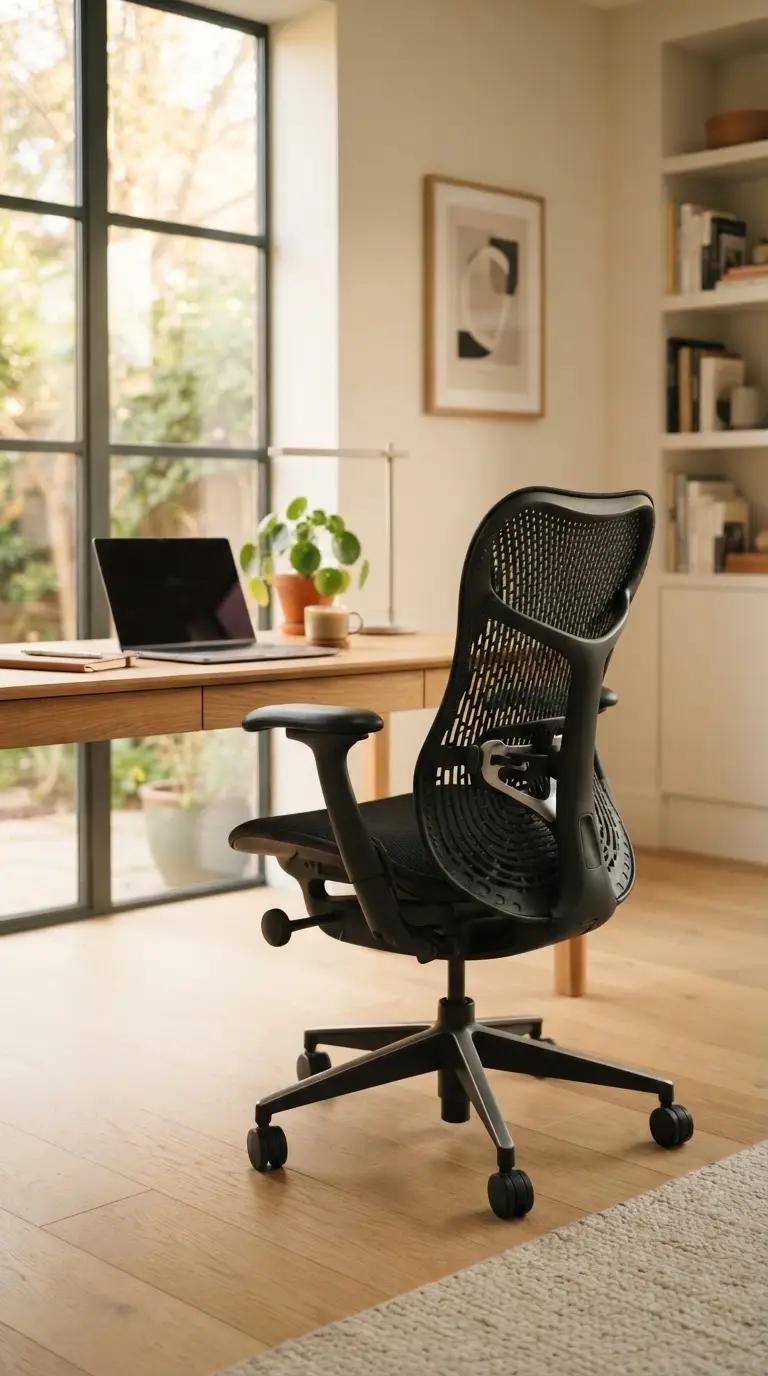
AI-generated editorial illustration; not a product or test photograph.
Short answer
The best office chair for back support aligns with your physical dimensions and daily task profile. For versatile lumbar and cervical spine adjustment, the SIHOO M18 is a top contender, while the GABRYLLY Ergonomic Office Chair provides excellent passive airflow. Larger users should prioritize the GTPLAYER Big and Tall Chair for its reinforced, high-capacity steel frame.
4
Product listings discussed; not hands-on tests
3/4
Discussed listings with a recorded price
$146.99–$299.99
Recorded listing price range; not a complete setup cost
Key takeaways
Prioritize chairs with independent lumbar adjustment if you spend more than four hours daily at your desk.
BIFMA certification serves as a baseline indicator for mechanical durability and structural safety in office furniture.
Full-mesh chairs excel in thermal management, but require specific frame widths to avoid pressure points on the thighs.
For heavy-duty applications, steel chassis construction is essential to prevent frame flex and ensure long-term stability.
Always verify warranty terms for moving parts like gas cylinders, which often differ from frame coverage.
Products discussed in this article
Editorial scores and recorded prices are reference points, not measurements of suitability for every use. Read each review's specifications and limitations.
SIHOO M18 Ergonomic Office Chair, Mesh Back Desk Chair7.9
GABRYLLY Ergonomic Office Chair, High Back Home Desk7.8
GTPLAYER Big and Tall Gaming Chair 400lbs Heavy Duty7.4
SIHOO B100 PRO Ergonomic Mesh Office Chair7.8
Recorded price (USD)
SIHOO M18 Ergonomic Office Chair, Mesh Back Desk Chair$146.99
GABRYLLY Ergonomic Office Chair, High Back Home Desk$239.50
SIHOO B100 PRO Ergonomic Mesh Office Chair$299.99
Comparison of Recommended Ergonomic Chairs
Product
Best For
Lumbar System
Seat Material
Weight Capacity
SIHOO M18
Home office ergonomics
Adjustable (Depth/Height)
Molded Foam
330 lbs
GABRYLLY
Warm home offices
Integrated (Fixed)
Mesh
300 lbs
GTPLAYER
Larger users
Pocket Spring
Faux Leather
400 lbs
SIHOO B100
Reclining/Posture
Dynamic Spring
Mesh
300 lbs
Why Back Support Matters for Your Workflow
Ergonomic support is the cornerstone of a sustainable home office. When you sit for extended periods, your lumbar spine—the inward curve of your lower back—tends to flatten, placing excessive pressure on spinal discs. Effective office chairs, such as those discussed in our Best Ergonomic Office Chair overview, are designed to maintain this natural alignment. By providing constant contact along the lower back, these chairs reduce muscle fatigue, which is often the primary cause of workday discomfort. For professionals working long hours, fixed backrests may be insufficient. Chairs like the SIHOO M18 allow you to adjust the depth and height of the lumbar support, ensuring the curve of the chair matches your specific torso length.
Improved spinal alignment reduces daily neck and shoulder strain.
Consistent lumbar engagement prevents the "slump" common in standard office seating.
Dynamic lumbar systems adapt to your movement as you shift between tasks.
Understanding your ergonomic needs involves looking at how the chair interacts with your desk. If your workstation is not properly configured, even the most expensive chair cannot compensate for poor monitor height or improper keyboard placement. We recommend exploring our standing desks & ergonomic office category for a holistic view of how desk height and seat elevation work in tandem to support posture. Avoiding common mistakes starts with ensuring your feet are flat on the floor and your elbows rest at a neutral 90-degree angle. Investing in a chair that allows you to lock your recline angle during breaks or upright tasking also helps distribute pressure across your entire back surface, rather than concentrating it on your lower lumbar region alone. When your posture is supported, the resulting reduction in muscle tension allows for longer, more focused work blocks throughout the day.
The debate between mesh and foam seating often comes down to personal comfort preference and office climate. Mesh backrests, like the one found on the GABRYLLY Ergonomic Office Chair, provide superior passive airflow, which is ideal for home offices that tend to get warm. The tensioned mesh provides a firm, consistent support that cradles the spine without the heat retention associated with thick leather or synthetic foam upholstery. However, mesh chairs require a rigid perimeter frame. If you are wider than the seat cushion, this frame can cause discomfort along the thighs. Our buyer's guide emphasizes that chair width is a critical, often overlooked dimension for long-term satisfaction.
Mesh keeps you cool during summer months or high-intensity work sessions.
Foam cushions provide a softer initial feel but may degrade and lose density over time.
Dual-material chairs, such as those incorporating spring-core seats, offer the support of firm foam with the pressure-point reduction of internal coils.
For those who prefer a more traditional feel, options like the GTPLAYER Big and Tall Gaming Chair offer a pocket-spring seat layout. This design is markedly different from standard slab foam, as the individual coils respond to your weight independently, reducing the tendency for the cushion to bottom out. While this offers exceptional comfort, the bulky frame requires more floor space. If your workspace is compact, always check the footprint dimensions against your room capacity to ensure you have room to move the chair comfortably. Comparing these options can be made easier through our compare tool, which highlights the specific differences in upholstery and mechanical adjustment depth between popular models, helping you navigate the trade-offs between tactile softness and supportive responsiveness.
If you choose a mesh chair, ensure the seat width accommodates your frame comfortably. Rigid perimeter frames on mesh seats can dig into your thighs if the chair is too narrow for your posture.
Durability and Mechanical Longevity
When evaluating the back support and structural integrity of an office chair, always look for BIFMA (Business and Institutional Furniture Manufacturers Association) certification. This indicates that the product has met standardized testing for durability, stability, and safety. The SIHOO B100 PRO, for instance, utilizes a reinforced metal base and an SGS-certified Class 4 gas lift, which are key indicators of a chair intended for long-term use. The gas cylinder is the most likely component to fail in a budget chair; therefore, knowing the lift class gives you insight into the manufacturer's expectations for daily load cycles. Higher-class cylinders handle vertical pressure more effectively and are less prone to sinking over time.
Class 3 and Class 4 cylinders are standard for commercial and high-quality home use.
Steel bases provide significantly higher structural rigidity than composite polymer bases.
Multi-stage tilt-lock mechanisms allow you to secure the chair at specific angles, preserving your preferred ergonomic setup.
Warranty length serves as a vital proxy for how the manufacturer perceives the mechanical lifespan of their product. While some entry-level chairs offer a limited one-year warranty on parts, mid-tier options like the SIHOO M18 provide three-year coverage. This added protection on the tilt mechanism and gas piston is often worth the modest price increase. Always read the warranty fine print, as exclusions for upholstery wear are common. For more information on what to expect at various price points, visit our budget planner to align your investment with the expected feature set. Prioritizing chairs with a track record of parts availability will ensure that a minor hardware failure doesn't require an expensive, total replacement of your primary seating, allowing your ergonomic investment to serve you for years to come.
Adjusting your office chair is an iterative process that must be performed after assembly. Most ergonomic issues stem from improper initial calibration. Begin by adjusting the seat height so your feet are flat on the floor and your thighs are parallel to the ground. Once the height is set, navigate the lumbar mechanism. For the SIHOO M18, you should feel the support pressing firmly into the lower curve of your spine; if it presses too high or too low, use the vertical adjustment slider to align it correctly. If the chair features a recline lock, test multiple positions to determine which offers the best relief for your specific task. Deep tasking often requires a locked 90-degree position, while reading may be more comfortable with a 110-degree recline.
Ensure your hips are pushed all the way to the back of the seat pan.
Adjust armrests to support your elbows, avoiding pressure on your shoulders.
Use headrests to support the base of the skull, not just the neck, if the feature is adjustable.
Many users struggle with chairs that have fixed-position arms, as these can collide with the underside of a desk. The GABRYLLY Ergonomic Office Chair features flip-up arms, which solve the storage issue but limit your ability to find a precise elbow-support angle. Always observe how the chair interacts with your desk's height-adjustable settings if you transition to a standing position. Our blog provides deeper insights into maintaining neutral posture as you shift throughout the workday. By taking five minutes to customize the tension and height settings upon arrival, you significantly decrease the likelihood of developing chronic tension. Remember, support is a function of geometry, and small changes in armrest height or lumbar depth can yield large improvements in your perceived comfort levels after just a few hours of use.
Avoid picking chairs solely for their aesthetic or 'gaming' branding. Always confirm the presence of lumbar support and verify the weight capacity matches your needs before purchasing.
Identifying Your Ideal Ergonomic Configuration
Not every user requires the same type of ergonomic intervention. If you suffer from mid-back stiffness, a high-back chair like the GABRYLLY Ergonomic Office Chair provides the continuous surface area necessary to support your thoracic and lumbar spine. Conversely, if you require dynamic support that responds as you twist or reach, the SIHOO B100 PRO and its dynamic spring-loaded backrest architecture offer a more fluid experience. This fluidity reduces static load on the spinal muscles by permitting constant, small-scale movements. We also recommend checking your environmental needs: do you work in a humid area where air circulation is a primary concern? Then mesh, such as the tensioned fabric on the B100 PRO, should be your primary filter.
Evaluate your chair based on your primary task: typing, reading, or video conferencing.
Ensure your chair is compatible with your floor surface—hardwood versus carpet requires different caster materials.
Check whether your chosen model supports multi-angle locking or just standard tension-recline.
If you find yourself frequently leaning forward, you may need an ergonomic seat pan that supports a slight forward tilt, though few budget chairs include this feature. In such cases, a high-quality footrest can help elevate your knees and correct your pelvic angle, providing back relief indirectly. Refer to our FAQ to see how common accessories supplement the base functionality of these chairs. Ultimately, your choice should be dictated by the duration of your sessions. If you are seated for more than four hours at a time, prioritize chairs with depth-adjustable lumbar support and a sturdy steel frame, as these components have the greatest impact on daily pain mitigation. Balancing these requirements against the price points of the models we reviewed will help you avoid the common mistake of buying based on features you will rarely use while neglecting the ones that matter most for long-term spinal health.
The structural rating of a chair is one of the most critical metrics for safety and performance. When a manufacturer states a 300-pound or 400-pound capacity, they are communicating that the base, gas lift, and chassis have been rated to withstand these stresses without collapsing or sustaining frame-flex. The GTPLAYER Big and Tall Gaming Chair, with its 400-pound rating, utilizes a heavily reinforced internal frame and a wider seat cushion than typical mid-tier office chairs. For users at the higher end of the weight spectrum, purchasing a chair designed for their weight is not just about comfort—it is about avoiding the inevitable mechanical degradation that occurs when a lightweight frame is constantly forced beyond its design limit.
Exceeding a chair's weight capacity voids warranty terms and reduces mechanical lifespan.
Heavy-duty models often have a wider center of gravity, making them more stable during recline.
Always verify if the 'Big and Tall' label reflects actual steel-gauge reinforcement or simply increased seat padding.
Conversely, lighter users should ensure that the gas lift sensitivity matches their weight. In rare cases, a heavy-duty cylinder may feel unresponsive to a very light user's desire to adjust height. However, most Class 4 cylinders found in modern ergonomic chairs provide a broad enough range to satisfy most users comfortably. As noted in our Best Ergonomic Office Chair review, structural mass and frame rigidity often correlate with higher price points. If you are choosing between a budget model and a premium one, the difference is usually in the quality of the welds and the density of the plastic in the backrest housing. By investing in a chair that aligns with your weight, you ensure that the lumbar support mechanism functions as intended, as a bowed or damaged frame will prevent the lumbar support from exerting the necessary pressure on your lower spine. Stick to manufacturers who clearly state their weight-tested BIFMA compliance to guarantee the durability of your purchase.
Verify your weight falls within the manufacturer's stated capacity.
Measure your desk height to ensure the chair's lift range allows for neutral typing posture.
Check for independent lumbar depth or height adjustments.
Confirm the base material—steel is preferred for longevity.
Read the warranty terms specifically for the gas lift and tilt mechanism.
Assess whether you prefer mesh (airflow) or foam (softness) for your local climate.
Frequently asked questions
Does lumbar support actually help with back pain?
Yes, proper lumbar support helps maintain the natural inward curve of your lower spine. By preventing the spine from flattening while seated, it reduces stress on the discs and lowers the risk of muscle strain caused by slouching.
How do I know if a chair has 'good' back support?
A good chair for back support should offer a curvature that aligns with your lower spine. Look for models that allow you to adjust the lumbar height or depth, as a 'one-size-fits-all' static backrest rarely suits every individual's torso length.
What is the benefit of a mesh backrest?
Mesh backrests provide excellent passive ventilation, allowing air to circulate between your back and the chair. This is particularly beneficial if you experience overheating or discomfort while sitting for long periods in a home office.
Should I choose a chair with an adjustable headrest?
A headrest is helpful if you frequently recline or lean back to rest. If you mostly lean forward to type, a headrest may not provide significant functional benefit and could even push your head into an unnatural forward position if not properly adjusted.
Are 'Big and Tall' chairs worth the extra cost?
If you exceed the standard 250-pound weight capacity of typical office chairs, yes. These models use reinforced steel frames and higher-density components designed to maintain structural integrity under heavier loads, which prevents mechanical failure and ensures consistent support.
Amazon links are affiliate links; we may earn a commission at no cost to you.
Shortlists in this category
Ranked lists from our standing desks & ergonomic office reviews, limited to listings whose titles confirm the product type, with budget cuts where enough recorded prices sit on both sides of the line.
This page summarizes our research reviews of Amazon listings, listed specifications and captured buyer ratings. It is not a hands-on test. Scores are editorial assessments, not measured performance; prices are recorded snapshots and may change. A category can include both main products and accessories, so its overall price range is not the cost of a complete setup.
Most recent product record update: September 22, 2026. Individual records may be older; this is not a verification date for every claim. Prices on this page were read from the listings Nov 12, 2026 – Nov 13, 2026.
Compare the same kind of standing desks & ergonomic office
Choose the product type first. These groups require a match in the listing title; an import search term alone is not enough. Scores rank our recorded research assessments within each group, not independently measured performance.
Recorded intended fit: Warm home offices requiring space-saving storable seating
Why consider it
Breathable full-mesh seat and backrest
What could change your decision
Lumbar support cannot be adjusted independently
Included Components
High back, wide seat, 3D headrest, flip up arms, silent wheels, steel mechanism, clear user manual & tool kit
Additional Features
3-Stage tilt lock,ergonomic lumbar support, BIFMA certified, class-4 gas lift, Flip up armrest 45°, Large 3D headrest, Stable chair base,support up to 300LBS
Room Type
office, home, bedroom, library,school, meeting room, company
High back, wide seat, 3D headrest, flip up arms, silent wheels, steel mechanism, clear user manual & tool kit
Additional Features
Ergonomic, Adjustable Headrest, Arm Rest, Adjustable Lumbar, Tilt, Back Support, Adjustable Recliner
3-Stage tilt lock,ergonomic lumbar support, BIFMA certified, class-4 gas lift, Flip up armrest 45°, Large 3D headrest, Stable chair base,support up to 300LBS
Values are shown as recorded, without unit conversions or inferred compatibility. Not recorded means unknown, not absent. Prices are snapshots, not current offers. Editorial scores are research judgments, not lab results. Amazon links are affiliate links.
Before treating a comparison as complete
Which details are still unknown?
A specification appearing in a listing is not independent verification. These counts show which shortlisted records contain the same field; a blank record does not mean the product lacks the feature.
Included Components
Recorded for 2 of 2 shortlisted models
Present in every shortlisted record. Check units, exact variants and the current manufacturer documentation before relying on it.
Additional Features
Recorded for 2 of 2 shortlisted models
Present in every shortlisted record. Check units, exact variants and the current manufacturer documentation before relying on it.
Age Range Description
Recorded for 2 of 2 shortlisted models
Present in every shortlisted record. Check units, exact variants and the current manufacturer documentation before relying on it.
Indoor Outdoor Usage
Recorded for 2 of 2 shortlisted models
Present in every shortlisted record. Check units, exact variants and the current manufacturer documentation before relying on it.
Item Type Name
Recorded for 2 of 2 shortlisted models
Present in every shortlisted record. Check units, exact variants and the current manufacturer documentation before relying on it.
Number of Packs
Recorded for 2 of 2 shortlisted models
Present in every shortlisted record. Check units, exact variants and the current manufacturer documentation before relying on it.
For standing desks, check the working-height range, desktop dimensions and exact-model stability evidence. A listed load capacity does not prove stability at your preferred height.
Compare the documented lift capacity with your desktop, monitors, arms and equipment. For converters and monitor arms, check the separate mounting and load requirements.
Read warranty terms for the frame, motor and electronics separately, including exclusions and parts support. Warranty length is not a measured durability result.
If a specification, certification or compatibility detail is absent, mark it as unknown and ask the seller or manufacturer. Do not substitute a star rating, an editorial score or a different model's specification.