Design and Frame Construction
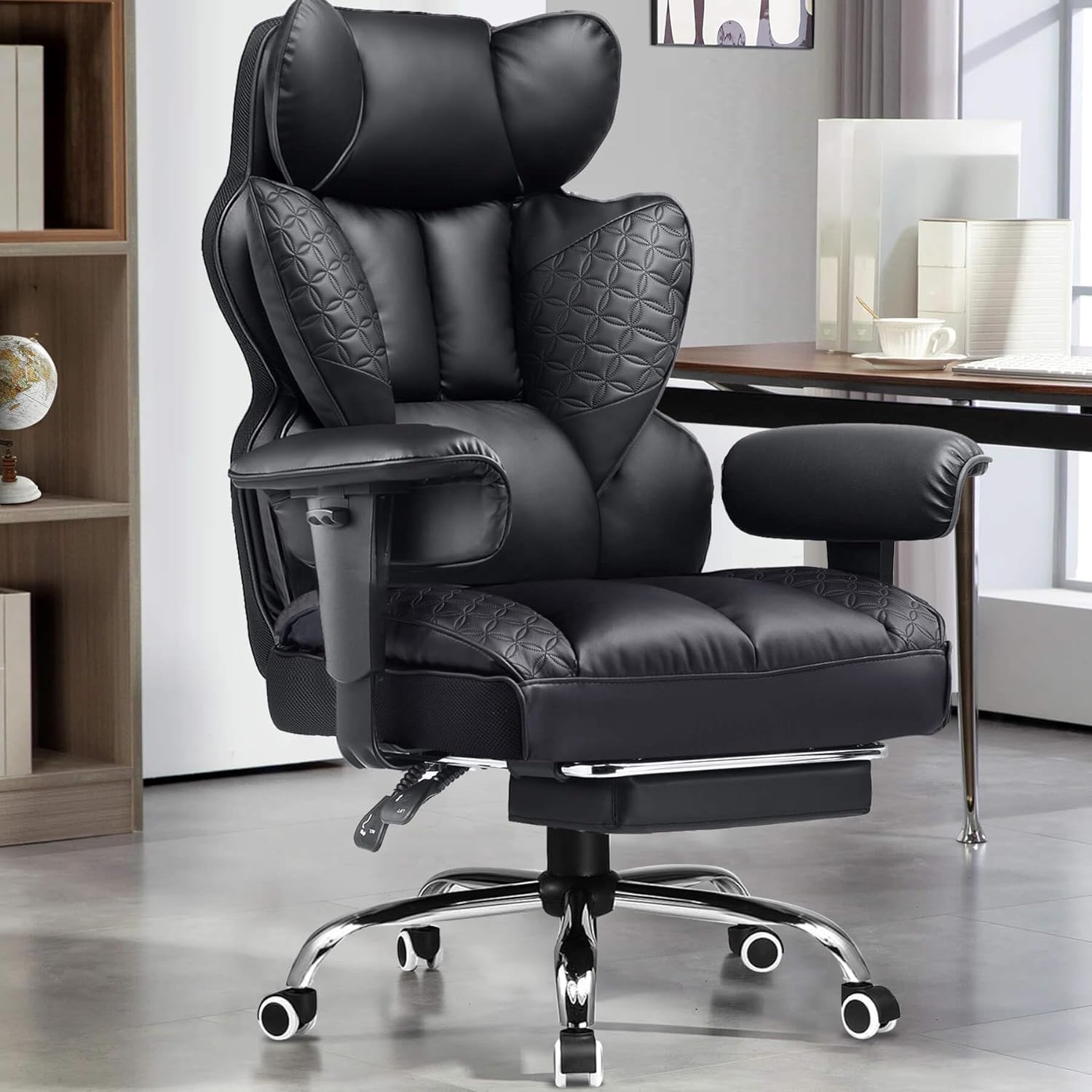
The GTPLAYER L-CH510 is engineered around an internal steel chassis and a heavy-duty metal base, rated to accommodate users up to 400 pounds. Central to the lifting mechanism is a class-3 gas cylinder, designed to hold height under substantial loads without premature settling. The upholstery consists of embossed polyurethane faux leather stretched over a dual-layer sponge backrest, accented by reinforced side bolsters. Underneath the seating surface, the manufacturer departs from typical slab foam by implementing a pocket-spring core paired with a segmented triple-pad cushion layout. While the structural components prioritize mass and structural rigidity, prospective buyers should inspect the tolerances of the mechanical joints upon assembly, as heavy-duty chairs in this tier rely on precise bolt seating to prevent creaking over time. Overall, the component selection favors raw load capability and reinforced steel over lightweight synthetic composites, aligning with its designated heavy-duty footprint.
Ergonomic Performance and Adjustability
The chair addresses ergonomic support through a built-in spring lumbar system, rather than an adjustable dial or dynamic external strap mechanism. Backrest recline articulates between 90 degrees upright and 135 degrees back, supplemented by an integrated pull-out footrest for reclined rest periods. The wide seat cushion distributes mass across segmented high-density foam pads and internal coil springs, reducing localized pressure on the hips and thighs during long desk shifts. However, adjustment parameters remain relatively traditional. The headrest provides enlarged surface contact, but fine dimensional adjustments for specific cervical heights are constrained. Additionally, the manufacturer does not specify multi-directional armrest mechanics, which indicates standard fixed or height-only linkage. Users seeking pinpoint biomechanical alignment may find the fixed lumbar geometry either well-matched or slightly rigid, making trial placement essential before committing to eight-hour work stretches.
Price-to-Performance Assessment
Priced at $249.99, the GTPLAYER sits at an entry-to-intermediate price tier within the 400-pound capacity segment. Similar heavy-duty ergonomic models frequently demand higher prices due to the specialized hardware required to prevent frame flex. Here, the inclusion of a metal base, coil-spring seating, and a recline mechanism delivers notable mechanical utility per dollar spent. Nevertheless, the warranty coverage provides a pragmatic perspective on long-term expectations. GTPLAYER offers a one-year warranty for defective replacement parts, accompanied by a 30-day return window. In office furniture, warranty duration directly correlates with manufacturer confidence regarding mechanical wear. A single-year warranty on an intensive-use chair signals that while the steel frame and class-3 cylinder meet baseline standards, moving elements like recline hinges, footrest slides, and faux leather will require careful maintenance to ensure sustained service life beyond the initial twelve months.
Limitations and Who Should Look Elsewhere
This chair is specifically optimized for big and tall frames needing wide clearances and stiff foundational support, meaning lighter individuals will likely find the seat pan overly broad and the spring resistance stiff. Buyers who prioritize thermal regulation should also look elsewhere; despite the embossed surface detailing, solid polyurethane synthetic leather inherently retains body heat longer than open mesh chairs. Furthermore, task workers requiring deep ergonomic personalization—such as four-way adjustable armrests, seat pan depth translation, or independent tilt tension tuning—will find the adjustability options too restricted for precise workstation alignment. Finally, if your office standard demands enterprise warranties spanning five to twelve years, the one-year parts protection provided here will fall short of procurement policies. For users who fit outside the high-capacity profile or need fine-tuned ergonomic controls, a dedicated ergonomic mesh chair remains the superior alternative.