Allen Sports Trunk vs. Hitch Mount Bike Racks: 2026 Guide
We compare Allen Sports' trunk and hitch bike racks to help you decide which transport method best fits your vehicle and cycling needs.
By the Niche Picks editorsUpdated November 9, 20269 min readDrawn from our 30 research-based e-bikes & cycling accessories reviews
AI-generated editorial illustration; not a product or test photograph.
Short answer
Trunk mount racks like the Allen Sports 102DN-R are budget-friendly, tool-free solutions for lightweight acoustic bikes, while hitch-mounted options like the Allen Sports 542RR-R offer superior stability, higher weight capacities, and better accessibility. Choose a hitch rack for frequent use with multiple bikes, and reserve trunk racks for occasional, short-distance transport of lighter cycles.
3
Product listings discussed; not hands-on tests
3/3
Discussed listings with a recorded price
$58.00–$127.99
Recorded listing price range; not a complete setup cost
Key takeaways
Trunk racks use strap-and-hook systems that avoid the need for permanent vehicle hardware.
Hitch racks anchor to a 2-inch receiver, providing superior rigidity for highway transit.
Trunk-mounted systems are generally restricted to light, non-motorized bicycle frames.
Hitch-mounted racks often feature tilt-away masts, permitting vehicle trunk access while loaded.
Storage of trunk racks is more convenient due to their lightweight, folding steel construction.
Products discussed in this article
Editorial scores and recorded prices are reference points, not measurements of suitability for every use. Read each review's specifications and limitations.
Allen Sports Deluxe 2-Bike Trunk Mount Rack, Model7.8
Allen Sports Deluxe 4-Bike Hitch Mount Rack (2-Inch7.9
Allen Sports Deluxe Trunk Mount 3-Bike Carrier, Model6.5
Recorded price (USD)
Allen Sports Deluxe 2-Bike Trunk Mount Rack, Model$58.00
Allen Sports Deluxe 4-Bike Hitch Mount Rack (2-Inch$127.99
Allen Sports Deluxe Trunk Mount 3-Bike Carrier, Model$89.99
Comparison of Allen Sports Rack Configurations
Product
Mount Type
Max Capacity
Vehicle Access
Price
Allen Sports 2-Bike Trunk
Trunk Strap
70 lbs
No (must remove)
$58.00
Allen Sports 4-Bike Hitch
2" Receiver
140 lbs
Yes (tilt-away)
$127.99
Allen Sports 3-Bike Trunk
Trunk Strap
70 lbs
No (must remove)
$89.99
Vehicle Integration and Attachment Methods
The fundamental distinction between these two rack categories lies in their mechanical connection to your vehicle. Trunk mount racks, such as the Allen Sports 102DN-R and the Allen Sports 103DN-R, utilize a system of tensioned nylon webbing and coated metal hooks. These hooks engage with the seams between your trunk lid, hatch, or bumper, effectively suspending the rack against the vehicle's rear exterior. This design is highly accessible and requires zero modification to your vehicle, making it a popular choice for sedan and hatchback owners. However, because the load rests against the car's body panels, users must keep the high-density foam contact pads and the vehicle surface clean to prevent grit from marring the paint during transit.
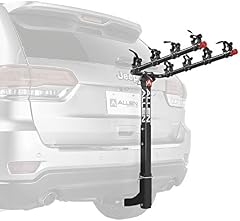
Conversely, a hitch-mounted rack like the Allen Sports 542RR-R anchors securely into a dedicated 2-inch receiver. This design completely bypasses the vehicle's bodywork, transferring the load directly to the frame through a threaded, no-wobble bolt mechanism. While this necessitates an existing receiver hitch, the resulting connection is far more stable. By eliminating the reliance on strap tension, hitch racks remove the need for periodic manual re-tensioning, which is a common requirement for trunk-based systems during long road trips. The choice between these two methods usually comes down to whether your vehicle is already equipped for towing or if you prefer a non-permanent, budget-oriented attachment method that can be quickly removed and tucked away inside your garage when not in use.
Handling Weight and Cargo Considerations
When analyzing transport capabilities, weight capacity stands as the most critical variable. Standard trunk racks have an inherent structural limit determined by the tensile strength of the straps and the load-bearing capacity of your vehicle's sheet metal. For instance, the Allen Sports 102DN-R is rated for a modest 70-pound load, which is sufficient for two standard acoustic bikes but inadequate for the significantly higher mass of modern e-bikes. In the context of e-bikes, which often weigh over 50 pounds each, the leverage exerted on trunk seams becomes a genuine safety concern. Attempting to use a trunk-mounted system for heavy motorized frames risks both frame and vehicle damage.
Hitch-mounted racks, particularly the Allen Sports 542RR-R, provide a much higher aggregate capacity, capable of supporting up to 140 pounds. This makes them the only viable choice among our reviewed models for transporting multiple conventional mountain or commuter bikes. However, it is vital to note that even with a high capacity, these are 'hanging' style racks. Bikes with non-traditional frames, such as step-through e-bikes, struggle with this mounting style, often requiring a third-party top-tube adapter to level the frame. Before committing to a hitch carrier, always check that your bike's frame geometry is compatible with two horizontal support arms. For riders investing in heavier machines, our Best Ebike for Commuting: 2 Safer Budget Picks provides insight into how e-bike weight and motor torque affect your transport requirements and safety. Never rely on the rack's total capacity without confirming that individual bicycle weights also fall within the manufacturer's per-bike allowance.
Check Your Weight Limits
Trunk-mounted racks are rarely designed to support the heavy weight of modern e-bikes. Exceeding the rack's weight rating can damage both your vehicle's trunk and the rack's steel structure.
Vehicle Accessibility and User Convenience
Accessibility is a major differentiator in daily operation. When a trunk-mounted rack is strapped into place, accessing your trunk or hatch becomes a multi-step process that usually requires offloading your bicycles and potentially detaching the rack itself. This can be deeply inconvenient on a road trip where you need to retrieve gear from the rear of your car at rest stops or trailheads. For casual users, this trade-off is often acceptable given the low price of entry for these units, but it remains a notable limitation of the design.
In contrast, the Allen Sports 542RR-R offers a distinct functional advantage through its tilt-away feature. By removing a manual pin near the base of the central mast, the entire rack—even when loaded with bikes—can be tilted away from the vehicle. This motion provides sufficient clearance to lift a trunk lid or open a rear hatchback, effectively granting full access to your cargo area without disturbing your load. While this adds a small amount of mechanical complexity to the rack structure, the ability to open the vehicle while bikes are loaded is consistently cited by users as a major benefit of hitch-based systems. If you are frequently using your vehicle's cargo capacity, the time and effort saved by a tilting hitch rack significantly improves the user experience. For further security tips regarding bikes left on these racks while parked, review our advice on Is a U Lock or Chain Lock Better for Ebikes? to ensure your gear remains secure during those brief, accessible stops.
Storage and Space Efficiency
Storage trade-offs become prominent when the bicycles are off the car and the rack is detached. Trunk-mounted models, such as the Allen Sports 103DN-R, excel in this regard. Their construction relies on a relatively lightweight tubular steel frame that lacks the bulk of a hitch mast. Most models in this category are designed to fold completely flat, allowing them to be slid behind a couch, into a hallway closet, or under a bed. For residents of small apartments or those with tight garage storage, the portability of a trunk rack is a significant advantage.
The Allen Sports 542RR-R, while equipped with folding carry arms, remains a substantial piece of heavy equipment. Once detached from the vehicle, it occupies a significant footprint in a garage or shed. It is not designed for apartment shelf storage, and its bulk can make it a cumbersome item to maneuver. Those with limited floor space who choose a hitch system should ensure they have a dedicated corner or wall-mount solution to keep the rack out of the way. If you find your bike storage is also becoming a challenge, you might consider alternatives like the Gravity Bike Rack for Apartment Without Drilling Walls to reclaim floor area. Ultimately, the best rack for your living situation depends on whether you have a large garage to store a sturdy hitch unit or if you require an ultra-portable, foldable storage solution for your gear.
Protect Your Paint
If you choose a trunk rack, clean your vehicle's contact area thoroughly before mounting. Road grit trapped under the rack's foam padding will cause paint scratches.
Durability, Maintenance, and Long-Term Value
Investing in bicycle transportation hardware requires a look at both initial cost and expected lifecycle. The Allen Sports 102DN-R sits at an exceptionally accessible price, acting as a low-risk entry point for recreational riders. Because it is a simple assembly, there are fewer moving parts to fail; however, the nylon straps and plastic buckles are points of wear that may require replacement over years of outdoor exposure to UV light and rain. The ongoing maintenance is straightforward: inspect the webbing for signs of fraying and ensure the hooks remain securely coated to avoid rusting against your car.
For the frequent rider, the Allen Sports 542RR-R offers a more robust path to longevity. Its powder-coated steel mast and heavy-duty hitch connection are designed for the high-frequency vibrations associated with highway commuting. While the upfront investment is higher, the cost-per-use drops as you accumulate thousands of miles of transport. Maintenance here focuses on the hitch interface; ensuring the no-wobble bolt remains correctly torqued is vital to suppressing lateral sway and protecting the rack’s structural integrity. Before finalizing your decision, you may want to consult our budget planner to see how this fits into your overall cycling expenses. It is also important to note that while Allen Sports offers a lifetime warranty on structural components, this does not cover items purchased from unverified third-party sellers, so ensuring you buy from an authorized vendor is critical for your long-term protection. By keeping your rack clean and periodically checking the hardware fasteners, you can ensure many years of reliable, safe transport for your bicycles.
Safety and Best Practices
Safety during transport is paramount. Regardless of the rack type, users must adhere to specific best practices to ensure the security of their bicycles and the safety of following motorists. For trunk-mounted carriers, the most common error is failing to tension the lateral side straps properly, which can lead to shifting during sharp turns. Always ensure that the weight is distributed evenly between the carry arms, and manually check that pedals and handlebars do not make contact with your vehicle's paint. A common oversight is allowing wheel spin, which can be mitigated by ensuring the front wheel is stabilized or removed if your bike's geometry allows.
With hitch-mounted racks, the emphasis shifts to the connection interface. A loose hitch bolt will allow the rack to 'wobble' in the receiver, which not only causes distracting vibrations but also places unnecessary fatigue-inducing stress on the rack's mast. After mounting the rack, check that the threaded bolt is torqued securely against the receiver wall. If you are transporting multiple bikes, use the provided tie-down cradles to isolate each frame, and stagger the bikes to prevent handlebar interference, which is the primary cause of minor cosmetic damage to frames. For those new to rack usage, avoid the common mistakes to avoid by performing a short test drive at low speeds after initial assembly to ensure the load remains fixed and secure. This simple step validates your setup before you head onto a highway. Always remember that an improperly loaded rack, whether hitch or trunk, can present a hazard to others on the road, so treat loading as an essential part of your pre-ride safety routine.
Step by step
1Clean the rear surface of your vehicle to ensure a dust-free mounting area.
2Position the rack pads against the trunk or bumper per manual instructions.
3Hook the side and top straps securely into the vehicle seams.
4Cinch all straps until the rack is firm and resists lateral movement.
5Load your bikes, ensuring pedals and handlebars do not touch the vehicle.
6Perform a test drive at low speed to ensure all tension points remain tight.
Quick checklist
Verify if your vehicle has a 2-inch hitch receiver installed.
Calculate the total weight of your bicycles including batteries and motors.
Confirm your bike frame geometry is compatible with top-tube hanging arms.
Measure your available storage space for when the rack is not in use.
Inspect vehicle trunk seams for structural integrity before trunk mounting.
Verify the rack manufacturer's warranty and buy from authorized vendors.
Frequently asked questions
Can I use a trunk rack for my heavy e-bike?
Most trunk racks are designed for standard, lightweight bicycles and cannot support the significant weight of an e-bike. Always check the rack's weight capacity, and consider a hitch-mounted platform rack instead, which is better suited for heavier electric bicycles.
Do I need to install a hitch on my car for a hitch rack?
Yes, if your car does not currently have a hitch receiver, you must have a 2-inch receiver professionally installed to use a hitch-mount bike rack. This is a one-time investment that provides a significantly more secure, stable mounting system.
Will a trunk rack scratch my car's paint?
It can if the contact points or your car's paint are dirty. To minimize risks, ensure the rack pads are clean and free of debris, and that you wipe down the car's surface thoroughly before attaching the rack straps.
Are hitch racks better than trunk racks for highway driving?
Generally, yes. Hitch racks are anchored to the vehicle's frame, making them significantly more stable and resistant to the wind-driven sway that can affect strap-based trunk racks at higher highway speeds.
Which rack is easier to store in an apartment?
Trunk racks are typically easier to store because they fold flat and lack the heavy, bulky steel mast found on hitch-mounted racks. They are perfect for small spaces, closets, or under-bed storage.
Amazon links are affiliate links; we may earn a commission at no cost to you.
Shortlists in this category
Ranked lists from our e-bikes & cycling accessories reviews, limited to listings whose titles confirm the product type, with budget cuts where enough recorded prices sit on both sides of the line.
This page summarizes our research reviews of Amazon listings, listed specifications and captured buyer ratings. It is not a hands-on test. Scores are editorial assessments, not measured performance; prices are recorded snapshots and may change. A category can include both main products and accessories, so its overall price range is not the cost of a complete setup.
Most recent product record update: September 22, 2026. Individual records may be older; this is not a verification date for every claim. Prices on this page were read from the listings Nov 8, 2026.
Compare the same kind of e-bikes & cycling accessories
Choose the product type first. These groups require a match in the listing title; an import search term alone is not enough. Scores rank our recorded research assessments within each group, not independently measured performance.
Values are shown as recorded, without unit conversions or inferred compatibility. Not recorded means unknown, not absent. Prices are snapshots, not current offers. Editorial scores are research judgments, not lab results. Amazon links are affiliate links.
Before treating a comparison as complete
Which details are still unknown?
A specification appearing in a listing is not independent verification. These counts show which shortlisted records contain the same field; a blank record does not mean the product lacks the feature.
Capacity
Recorded for 2 of 2 shortlisted models
Present in every shortlisted record. Check units, exact variants and the current manufacturer documentation before relying on it.
Included Components
Recorded for 2 of 2 shortlisted models
Present in every shortlisted record. Check units, exact variants and the current manufacturer documentation before relying on it.
Individual tie-down cradles
Recorded for 2 of 2 shortlisted models
Present in every shortlisted record. Check units, exact variants and the current manufacturer documentation before relying on it.
Item Type Name
Recorded for 2 of 2 shortlisted models
Present in every shortlisted record. Check units, exact variants and the current manufacturer documentation before relying on it.
Torque, not top speed, is what you feel on a loaded hill start.
Verify exact-model UL 2849 certification for the e-bike electrical system; UL 2271 applies to battery packs. A listed component alone does not certify the whole bike.
Check brake type, rotor size and maintenance requirements against total load, terrain and intended speed; bike weight alone does not establish stopping performance.
If a specification, certification or compatibility detail is absent, mark it as unknown and ask the seller or manufacturer. Do not substitute a star rating, an editorial score or a different model's specification.