 Delta Cycle Michelangelo 2 Bike Storage Rack - Gravity Fully Adjustable Bike Storage
Recorded price: $94.41 · Editorial score: 8/10
- Shelf Weight Capacity
- 40 pounds
- Material Type
- Alloy Steel
Store two bikes vertically without security deposits on the line. Learn how no-drill leaning gravity racks work, structural limits, and safe setup.
By the Niche Picks editorsUpdated October 12, 20269 min readDrawn from our 30 research-based e-bikes & cycling accessories reviews
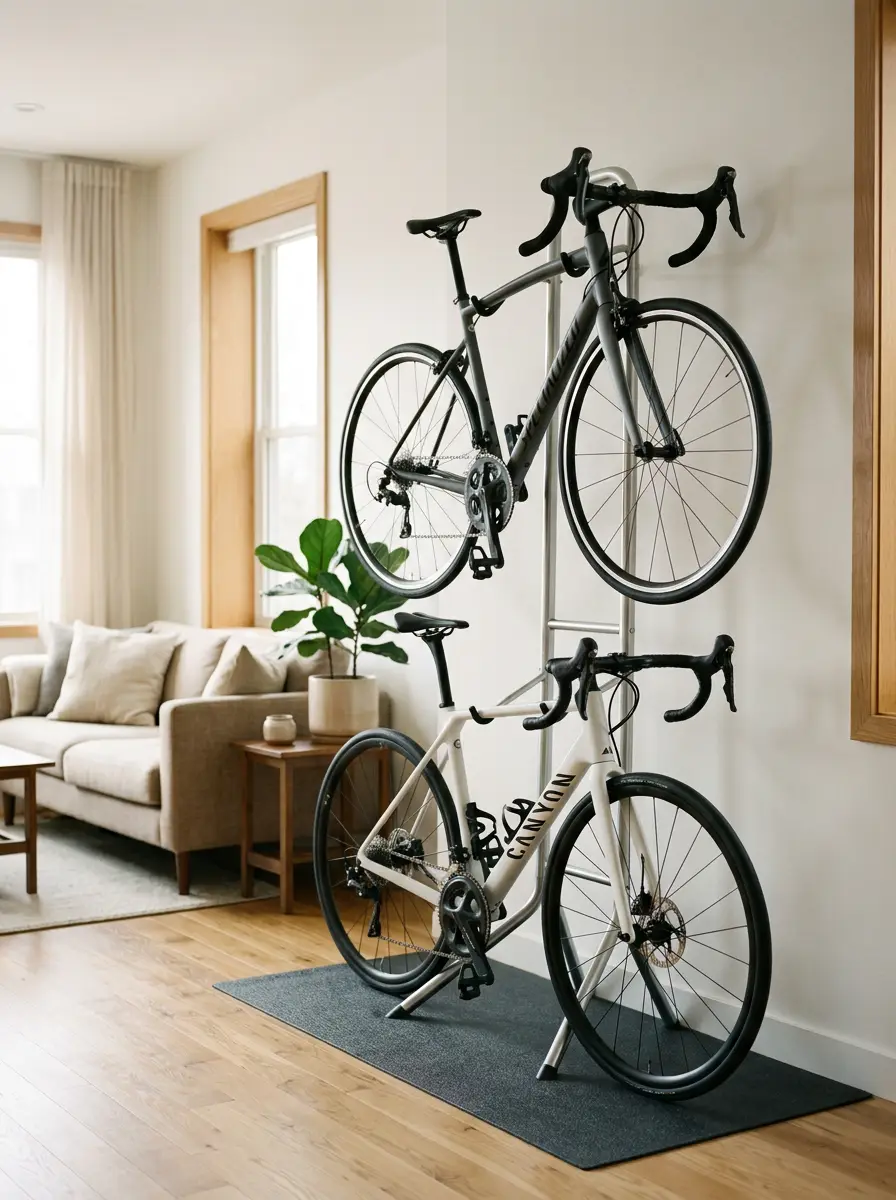
A gravity bike rack stores two bicycles vertically against an interior wall using the downward force of gravity rather than permanent wall bolts or anchors. Freestanding options like the Delta Cycle Michelangelo hold up to 80 pounds total (40 pounds per hook), making them ideal for standard acoustic road, hybrid, and gravel bikes in apartments.
Editorial scores and recorded prices are reference points, not measurements of suitability for every use. Read each review's specifications and limitations.
| Product | Price | Per-Shelf Capacity | Total Capacity | Material | Mounting Style |
|---|---|---|---|---|---|
| Delta Michelangelo | $94.41 | 40 lb | 80 lb | Alloy Steel | Passive Gravity Lean (No Drill) |
A gravity bike rack operates on basic physics rather than mechanical fasteners. Instead of driving lag bolts into wall studs, the entire frame utilizes a deliberate rearward lean. When you place a bicycle onto the cradle arms, downward gravitational force transfers through the vertical alloy steel tubes. This mechanical leverage pushes the top rubber-coated pads firmly inward against your drywall while the rubber feet grip the floor surface.
Because the structural integrity relies on opposing forces—the vertical weight pushing down and the cantilevered arms directing horizontal force into the wall—the rack actually becomes more planted as weight is added. In apartment living, this eliminates the need to patch plaster, locate wall framing, or violate lease clauses restricting wall modifications. When moving out, the entire assembly lifts away cleanly, leaving zero holes, paint scuffs, or anchor marks.
However, understanding this passive mechanical leverage is essential for safety. A gravity rack is not bolted down, which means lateral stability is maintained strictly through friction at the top contact points and base feet. If an occupant bumps the rack sideways with significant momentum, the friction balance can shift. For daily storage inside compact living spaces, placing the unit in a designated low-traffic alcove or bedroom corner ensures consistent stability without risking accidental knocks. If you are comparing indoor options against vehicle racks like the Allen Sports Deluxe 2-Bike Trunk Mount Rack, remember that interior storage demands strict focus on floor grip rather than vehicle straps.
The short answer is no: conventional gravity racks are engineered strictly for traditional acoustic bicycles. In our review data, the Delta Cycle Michelangelo 2 Bike Storage Rack lists an explicit shelf weight capacity of 40 pounds per tier, resulting in an aggregate maximum payload of 80 pounds across both positions.
Modern commuter and utility electric bicycles routinely exceed these boundaries. For example, entry-level adult models like the Jasion EB5 weigh 49.6 pounds, which instantly overshoots the 40-pound single-arm threshold. Heavier fat-tire commuters and moped-style builds push curb weights past 65 to 90 pounds, presenting an extreme structural overload. Attempting to place an e-bike on a passive leaning rack risks catastrophic frame failure, bent alloy steel tubing, or base slippage that drops the machine onto living room floors.
If you navigate urban spaces on a motorized build, consult our E-bikes & cycling accessories buyer's guide for dedicated floor-stand configurations. For non-motorized frames, keeping individual bicycle weights below the 40-pound limit ensures the tubular structure remains within its engineered yield strength.
When evaluating vertical indoor storage solutions that avoid drilling, the Delta Cycle Michelangelo stands out as the premier option in our reviews. Constructed from alloy steel with a clean silver finish, the unit stands 84 inches high with a base profile measuring roughly 16 to 26 inches. Retailing at a listed price of $94.41, it provides an economical way to reclaim living area in tight rental units.
The Michelangelo incorporates two sets of independently adjustable cradle arms. This modular design addresses a common frustration with dual-bike racks: sloping top tubes. Whether hanging a horizontal road bike top tube or an aggressive mountain bike geometry, each support arm can be repositioned along the vertical spine. This keeps both bikes balanced horizontally rather than tilted awkwardly into living quarters. Soft molded rubber cushions line each cradle to protect bike frames from surface scuffs and clear-coat abrasions.
Installation requires zero power tools. The tubular steel segments slot together using included hardware, allowing full assembly in under twenty minutes. Rubber end caps cushion the wall contact points, preventing paint transfer on rental drywall. With an aggregate 4.4 out of 5 consumer rating spanning over 10,000 recorded user evaluations, the rack has established long-term reliability across dense urban apartments. For cyclists seeking a no-damage organizational upgrade without investing in ceiling hoists or tension poles, you can read our full Delta Cycle Michelangelo review to confirm frame fitment.
Because a gravity rack relies on friction rather than anchors, the interface between the rack feet and your apartment flooring determines baseline safety. The bottom feet must maintain high-traction contact to prevent the base from sliding outward under downward load. Smooth surfaces like freshly waxed hardwood, polished ceramic tile, or sealed concrete demand careful attention.
If your apartment features slick hard flooring, placing a dense rubber grip mat or anti-slip furniture pad directly beneath the base feet dramatically increases lateral and forward resistance. Avoid placing the rack on thick, plush shag carpeting. High-pile carpet fibers can compress unpredictably under an 80-pound load, causing the vertical alloy steel frame to tilt slightly outward from the wall and compromising top pad pressure. Low-pile industrial rugs or bare level flooring offer the most predictable structural footing.
Wall construction matters equally. The top rubber bumpers require a flat, rigid vertical plane, such as standard drywall or plaster. Avoid leaning the rack against hollow decorative room dividers, lightweight drywall partitions with loose framing, or surfaces covered in fabric wall hangings that reduce bumper friction. Before loading expensive frames, push against the unladen steel frame to confirm the rubber feet stay anchored without creeping forward.
Loading a two-tier leaning rack requires deliberate sequence to preserve center-of-gravity balance and protect your living space. Always load the heavier bicycle on the bottom tier. Placing the bulkier frame closer to the floor lowers the overall center of mass, stabilizing the tubular steel uprights and reducing tipping leverage.
Before mounting bikes, take time to adjust the independent support arms. Loosen the adjustment hardware and align the cradles so your bicycle rests level when suspended. Mountain bikes with steep top tubes require the seat-side arm to sit higher than the headtube arm. Ensure the handlebars and pedals do not strike the vertical wall behind the rack. If handlebar widths exceed 700mm, rotating the front wheel slightly away from the wall prevents drywall dents.
When hanging or retrieving bicycles, lift the frame cleanly straight up out of the cradles before pulling it forward into the room. Yanking the bike toward you before clearing the cradle lips pulls the rack away from the wall, momentarily breaking the friction contact of the upper bumpers. For riders who manage multiple bikes or commute through varying weather, maintaining your gear correctly helps prevent dirt transfer onto interior walls; explore our mistakes to avoid guide for indoor cycling organization tips.
Apartment dwellers have three primary options when avoiding drilled wall mounts: gravity lean racks, floor-to-ceiling tension poles, and freestanding horizontal floor stands. Each format addresses distinct square-footage and ceiling constraints.
Floor-to-ceiling tension poles use an internal spring or mechanical jack screw to wedge a single vertical column between your floor and ceiling. While they offer a minimal floor footprint, tension poles can crack drywall ceilings, compress acoustic popcorn texture, or slip if thermal expansion shifts the ceiling joists. Furthermore, apartments with vaulted, high, or drop-tile ceilings cannot accommodate tension poles safely.
Horizontal floor stands avoid wall contact entirely by parking bicycles upright on the ground. However, parking two bicycles side-by-side on floor stands consumes substantial floor space—roughly 20 to 25 square feet. A two-bike gravity rack stacks bikes vertically, cutting the required floor footprint down to approximately 4 square feet.
For most rental layouts, gravity racks strike the optimal balance. They bypass ceiling height limitations entirely, require zero drywall patching, and recover valuable horizontal walking space. When deciding how to allocate your apartment gear budget, our budget planner helps balance bicycle storage hardware against daily safety gear.
Storing your bicycle inside an apartment protects high-value components from street theft and weather degradation, but indoor storage introduces secondary care requirements. Bringing outdoor road grime, chain grease, and wet tires into carpeted living quarters requires basic preventative habits.
Always wipe down tires and drivetrain components after wet commutes before placing your bicycle on an elevated indoor rack. Water dripping from the top bicycle can fall directly onto the frame, saddle, or cockpit of the bike stored below. Placing a narrow drip tray or washable runner rug underneath the rack keeps floorboards spotless. If your apartment building features communal indoor bike rooms instead of in-unit storage, private vertical racks are not suitable; communal storage requires heavy-duty physical locks, as detailed in our guide on is a U lock or chain lock better for ebikes.
Finally, inspect the rack’s rubber contact pads every six months. Environmental dust can settle between the wall bumpers and your paint, turning the rubber into a mild abrasive if the frame shifts slightly during daily use. Wiping the bumpers and wall surfaces with a damp cloth maintains strong tackiness and prevents faint ring marks on rental walls, ensuring your storage setup remains completely deposit-safe.
Amazon links are affiliate links; we may earn a commission at no cost to you.
This page summarizes our research reviews of Amazon listings, listed specifications and captured buyer ratings. It is not a hands-on test. Scores are editorial assessments, not measured performance; prices are recorded snapshots and may change. A category can include both main products and accessories, so its overall price range is not the cost of a complete setup.
Most recent product record update: September 22, 2026. Individual records may be older; this is not a verification date for every claim.
Amazon links are affiliate links. We may earn a commission on qualifying purchases, at no extra cost to you.
A more useful shortlist
Choose the product type first. These groups require a match in the listing title; an import search term alone is not enough. Scores rank our recorded research assessments within each group, not independently measured performance.
Delta Cycle Michelangelo 2 Bike Storage Rack - Gravity Fully Adjustable Bike StorageRecorded price: $94.41 · Editorial score: 8/10
If a specification, certification or compatibility detail is absent, mark it as unknown and ask the seller or manufacturer. Do not substitute a star rating, an editorial score or a different model's specification.