Design and build
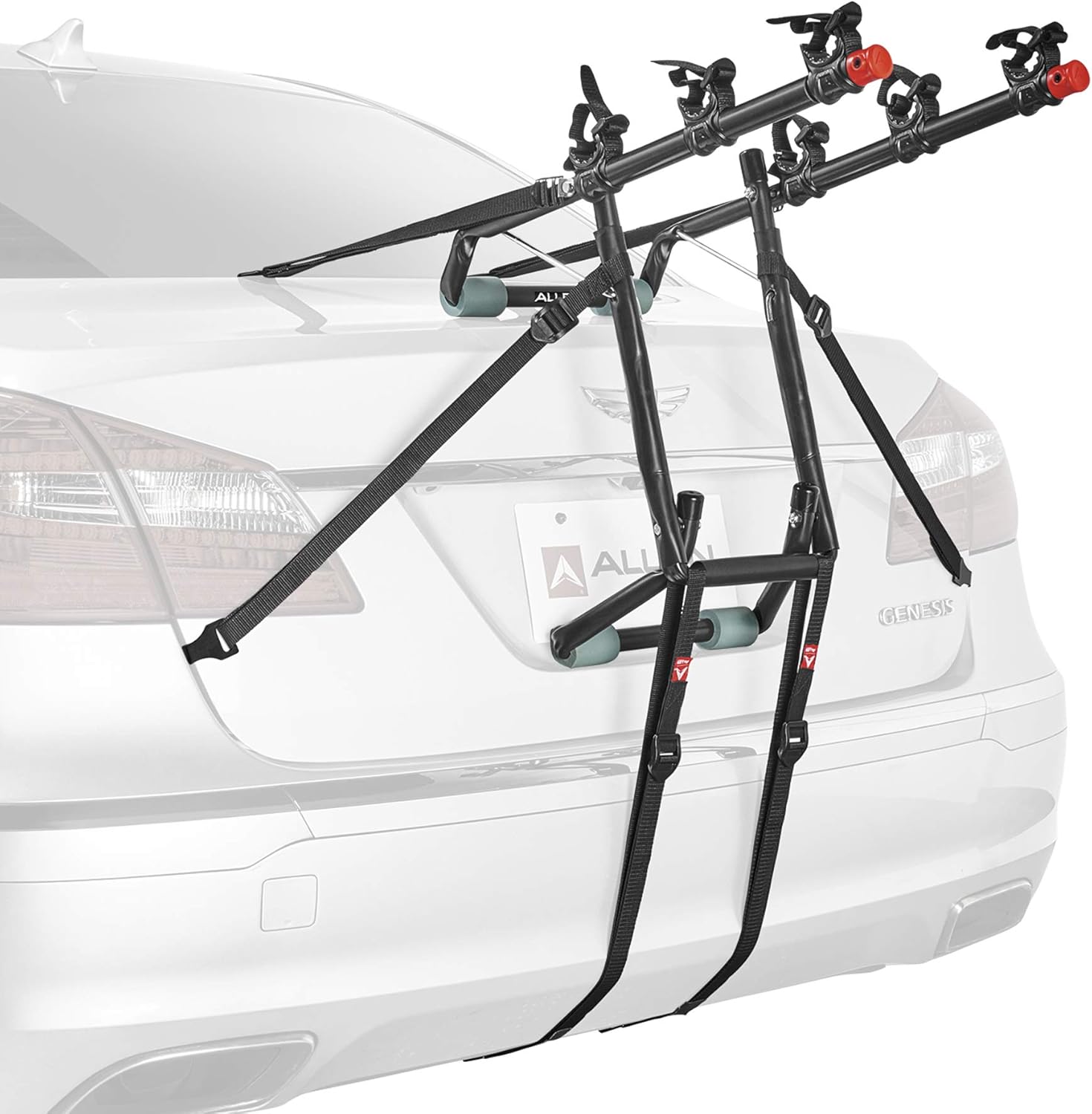
The Allen Sports Deluxe 103DN-R is constructed from tubular steel finished in black powder coating, designed to fold completely flat when removed for storage. It relies on a single-configuration geometry that eliminates the mechanical adjustment hubs found on multi-angle competitors, relying instead on a fixed stance that fits standard sedans, hatchbacks, minivans, and SUVs. Bicycles rest upon molded individual tie-down cradles paired with flexible retention straps to isolate top tubes. Contact with the vehicle is mediated by a padded lower frame bar intended to distribute pressure across sheet metal or bumper covers, alongside a patented lower retention strap configuration. The unit arrives fully assembled out of the box, requiring zero initial hardware assembly. However, buyers should note the manufacturer specification outlines a 70-pound total capacity across its dual support arms, reflecting structural limitations native to strap-anchored, trunk-mounted designs.
Real-world performance
Securing the 103DN-R involves engaging coated metal hooks into vehicle trunk seams and cinching top, side, and bottom nylon straps to tension the assembly. The addition of dedicated left and right side straps mitigates lateral shifting on moderate turns, though highway crosswinds still induce minor oscillation across the support arms. For standard traditional bicycles, the tie-down cradles hold round frame tubing securely, but unconventional hydroformed tubes or step-through frames demand third-party top-tube adapters to maintain horizontal orientation. Because the lower frame rests directly against the paint, accumulated road grime underneath the pads can lead to finish scuffing if vehicle panels are not cleaned prior to mounting. Furthermore, loading traditional bikes near the 35-pound individual threshold makes the strap tension sensitive to road vibration, requiring periodic stops to check strap integrity on extended journeys.
Value for money
Priced at $135.01, the carrier commands an established position backed by a 4.4 out of 5-star rating across 47,894 buyer submissions. The primary justification for its pricing is ease of entry: it does not necessitate the costly installation of an aftermarket hitch receiver or roof rail system, making it an affordable secondary accessory for occasional recreational outings. Allen supports the unit with a lifetime warranty, offering recourse against structural defects. Nevertheless, buyers must evaluate what the price cannot deliver. Platform racks costing substantially more offer tray support, integrated locking mechanisms, and the structural mass required to carry heavier builds. If the user only intends to transport conventional road or cross-country bikes, the investment remains defensible, but prospective buyers seeking a versatile, future-proof hauler may find this trunk-mount design structurally limited.
Who should skip it
Owners of electric bicycles should bypass this rack entirely. Typical electric commuter and utility bikes regularly weigh between 45 and 65 pounds individually; mounting even one standard e-bike approaches the rack's absolute 70-pound structural ceiling, while two e-bikes drastically exceed it. Trunk-mounted strap systems are fundamentally unsuited for the concentrated dynamic mass of heavy batteries and drive units, creating severe risk of vehicular sheet-metal deformation or rack failure. Cyclists whose frames feature carbon fiber top tubes should also avoid this carrier, as strap-down cradles exert clamping stress on thin-walled composites during transit. Furthermore, drivers of vehicles fitted with prominent plastic aerodynamic rear spoilers must skip this model, as the top support straps will apply direct downward pressure onto non-structural exterior trim, risking expensive bodywork damage.