Do Bike Helmets Expire? Safety Guidelines for 2026
Discover why your bike helmet has a limited lifespan and how environmental wear compromises its ability to protect you during an accident.
By the Niche Picks editorsUpdated November 9, 20269 min readDrawn from our 30 research-based e-bikes & cycling accessories reviews
Short answer
Yes, bike helmets expire because their protective materials degrade over time. Manufacturers generally recommend replacing your helmet every three to five years, even if it has never been involved in an impact. UV light, humidity, and the natural breakdown of the internal foam liner reduce its ability to absorb energy safely.
Key takeaways
- Most helmet manufacturers define a 3 to 5-year replacement interval regardless of condition.
- Internal foam degradation happens silently due to UV exposure, sweat, and thermal cycling.
- Any helmet involved in an impact must be retired immediately, even if no damage is visible.
- Structural fatigue often manifests as stiff straps or brittle plastic adjustment mechanisms.
- Always check the manufacture date inside your helmet if a date tag is provided.
| Feature | Replacement Interval | Warning Signs | Ideal Storage |
|---|---|---|---|
| Standard Helmet | 3-5 Years | Cracks, loose straps, brittle plastic | Cool, dry, dark area |
The Science Behind Helmet Material Degradation
Bicycle helmets are engineered for a single mission: managing kinetic energy during a crash. To achieve this, manufacturers use a core of expanded polystyrene (EPS) or similar foams. This material is designed to crush during an impact, dissipating the force before it reaches your skull. However, this foam is not a permanent, inert substance. Over years of use, it undergoes a chemical and physical aging process that can make it lose its resilience. This process is significantly accelerated by the environments in which we store and use our gear. Exposure to direct sunlight (UV radiation) can slowly break down the polymer chains within the outer shell and the foam, causing it to become brittle and lose its structural integrity. Furthermore, repeated exposure to extreme temperatures—such as leaving your helmet in a parked car during the summer or a freezing garage in the winter—forces the material to undergo thermal expansion and contraction cycles. This stress weakens the bonds between the shell and the liner, which are critical for holding the helmet together during an incident. For those who want to ensure they are using reliable equipment, it is useful to review our latest E-bikes & cycling accessories reviews to understand how quality hardware compares. Maintaining the condition of your equipment is a primary focus when managing your budget, as an expired helmet is essentially useless if a crash occurs. Understanding these factors helps you distinguish between a helmet that is merely dirty and one that is structurally unsafe, especially since you cannot see the microscopic degradation occurring deep within the foam core.
Why the Three to Five-Year Window Matters
The recommendation to replace your helmet every three to five years is not an arbitrary suggestion; it is based on the reality of material fatigue in standard riding conditions. Even without a crash, the daily realities of cycling—vibrations, perspiration, and environmental pollution—contribute to the slow deterioration of the helmet. If you are a high-frequency commuter who logs miles daily in harsh weather, your helmet will likely reach the end of its useful lifespan closer to the three-year mark. Conversely, weekend recreational riders might find their gear remains in acceptable shape until the five-year limit. It is important to treat these numbers as a safety ceiling rather than a goal. Some riders mistakenly assume that as long as the shell is intact, the helmet is safe, but this ignores the internal life cycle of the EPS foam. If you have been using your current headgear for more than five years, it is highly likely that the materials have lost the specific density required for modern safety standards. Many riders find that by the time they reach this threshold, the adjustment mechanisms (like the rear fit dial) also begin to show signs of mechanical fatigue, becoming stiff or prone to slipping. You can find more comprehensive advice on cycling safety and maintenance in our guide on E-bikes & cycling accessories. When purchasing new gear, always verify that the model you are considering meets the latest industry standards mentioned in our E-bikes & cycling accessories FAQ. Replacing your helmet is a vital part of your overall safety strategy, especially as technology improves.
Avoid Used Helmets
Never purchase a second-hand helmet. You cannot confirm its impact history, and it may harbor hidden internal damage that makes it unsafe.
The Immediate Retirement Rule for Impacts
The most vital piece of safety knowledge for any cyclist is the 'one-impact rule.' If your helmet is involved in a collision—whether it is a simple drop onto concrete or a higher-speed fall—it must be retired from service immediately. Many riders hesitate to throw away an expensive helmet that shows no visible damage, but this is a critical mistake. The EPS foam is a one-time-use material; once it has compressed or deformed, it cannot 'bounce back' or offer the same level of impact absorption for a second collision. Microscopic cracks can form throughout the structural matrix of the foam and the outer polycarbonate shell that are invisible to the naked eye. Relying on a compromised helmet is effectively the same as riding with no protection at all. We often discuss mistakes to avoid in our editorial content, and failure to replace headgear after an impact is consistently the most dangerous error a cyclist can make. Do not attempt to repair the shell with adhesive or attempt to reshape the foam, as these methods do not restore the structural integrity required to meet safety certifications. If you have recently upgraded your bicycle, you may be riding faster or navigating more complex traffic environments, which makes the reliability of your safety gear even more paramount. Safety should never be sacrificed for cost-saving; if in doubt, err on the side of caution and retire the unit.
Recognizing Signs of Structural Fatigue
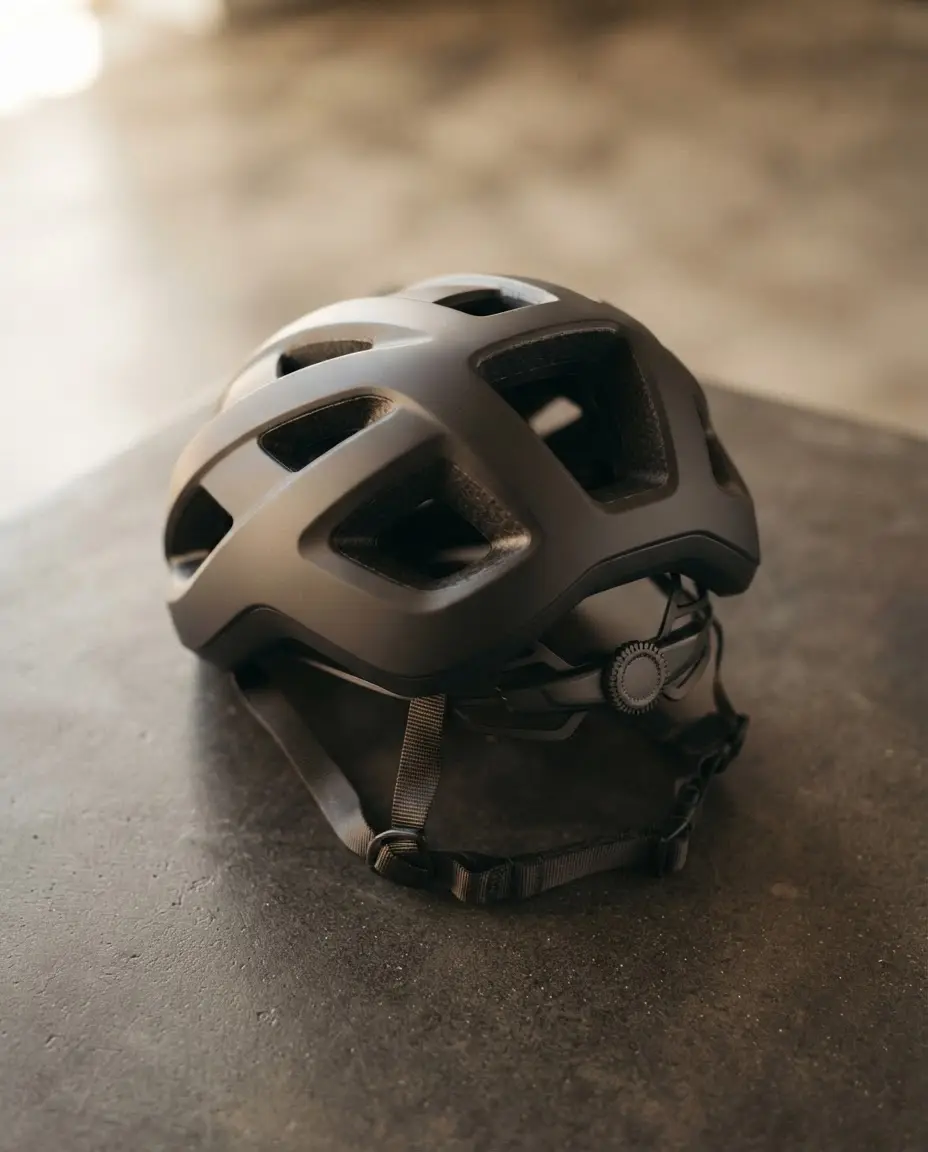
Beyond the calendar, you should be checking your helmet for physical warning signs at the start of every season or after periods of storage. Start by examining the straps; they should be free of fraying, and the stitching at the anchor points should be tight. If the straps are thinning or the buckle has become loose, the helmet cannot hold its position during an accident, which renders it ineffective. Check the rear retention system, which holds the helmet against the back of your skull; if this mechanism is jamming or the teeth have worn down, you need a replacement. Another critical area is the bond between the outer plastic shell and the foam liner. Over time, the adhesive can fail, causing the shell to separate or 'delaminate' from the core foam. This separation is a clear indicator that the structural integrity of the helmet is failing and it can no longer provide the uniform protection expected by international safety standards. Additionally, look for any dents or depressions in the foam. If the foam feels soft or spongy in certain areas when you apply pressure with your thumb, the material has degraded and lost its structural density. For those currently evaluating their gear, reviewing our Best Bike Helmets list provides insight into the build quality of modern models compared to older units. A properly fitting helmet is essential for safety, and you can learn how to check for this in our article on How Should a Bike Helmet Fit. If the padding has begun to disintegrate or flake off, this is a sign that the interior comfort components—and likely the rest of the helmet—are long past their prime.
Check the Date
Look for the production date sticker inside your helmet. If your helmet is older than five years, replace it immediately, even if it looks perfect.
Proper Storage for Longevity
Storing your helmet correctly is the easiest way to ensure it reaches its full, intended lifespan. Heat and ultraviolet light are the primary enemies of the polymers found in modern helmets. For example, never store your helmet in the direct sun, such as on a rear window ledge of a car or in a sunny room, as UV rays can turn the outer casing brittle over time. Keep the helmet in a cool, dark, and dry area where it is not subject to heavy weight or pressure. If you hang your helmet on a garage wall, ensure the hook does not cause a pressure point on the thin foam. If you are struggling with limited space in a home or apartment, consider our Gravity Bike Rack for Apartment Without Drilling Walls to keep your bicycle and associated accessories in a controlled indoor environment. The goal is to avoid situations where the helmet is crushed, exposed to chemical fumes (like those found in garages from paint or solvents), or left in extreme heat. If you use your helmet for commuting, try to bring it inside with you rather than leaving it strapped to your bike handlebars where it can be knocked against poles, exposed to road spray, or even stolen. Taking the time to care for your gear helps you identify wear early, ensuring you are never riding with an unsafe piece of equipment. If you need help finding ways to save on future replacements, our buying tips section offers practical advice on how to shop for high-quality, long-lasting gear during seasonal sales. By building good habits now, you protect yourself from the costs of improper maintenance later.
Evaluating Costs and Compliance
The cost of a high-quality helmet is negligible compared to the medical consequences of an accident. When you break down the price of a helmet over its five-year lifespan, it amounts to a very small daily investment in your personal safety. If you find yourself frequently cycling in varied conditions, it is worth exploring our Best Ebike for Commuting to ensure the rest of your kit—including your bike—is also up to modern standards. Safety certifications are a critical component of this value. When buying a replacement, look for helmets that have been independently tested and carry clear labels from bodies such as the CPSC (in the US) or other global equivalent standards. Avoid 'bargain' helmets that lack these certifications, as they may use inferior foam or weak plastics that will reach their 'expiration' even sooner than mainstream gear. In some cases, premium helmets offer better ventilation or more robust adjustment systems, but they still require replacement after a few years. It is a mistake to believe that a higher price tag grants a helmet immunity from material degradation. By understanding the true lifecycle of your safety equipment, you can plan your purchases more effectively. Using a budget planner can assist you in setting aside funds specifically for your cycle safety kit, ensuring that when the 3-to-5-year mark arrives, you have the financial room to upgrade without delay. Our Best Bike Helmets guide can help you compare models that provide excellent value and high safety ratings, giving you the best of both worlds. Always remember: the most expensive helmet is not the one you pay for today, but the one you have to rely on when the unexpected occurs on the road.
Step by step
- 1Locate the manufacture date sticker inside the helmet lining.
- 2Examine the outer shell for deep scratches, cracks, or impact marks.
- 3Press firmly on the interior foam to check for soft spots or brittleness.
- 4Pull firmly on the chin straps to test their strength and mounting integrity.
- 5Test the retention system by shaking the helmet while it is on your head.
- 6If the helmet is over 5 years old or shows structural damage, dispose of it properly.
- 7Purchase a new helmet that meets modern safety certifications.
Quick checklist
- Check for any visible cracks on the outer plastic shell.
- Inspect the inner foam for dents, soft spots, or cracks.
- Verify that the chin straps are not fraying or losing elasticity.
- Ensure the rear adjustment dial operates smoothly without jamming.
- Confirm the production date is within the last 5 years.
- Test the buckle to ensure it clicks and locks securely.
- Check the bond between the shell and liner for separation.
Frequently asked questions
- Does every bike helmet have a manufacturer expiration date?
- Most manufacturers recommend a 3-to-5-year replacement interval in the user manual. While not all helmets have a clear date sticker, you should track your purchase date and replace the unit accordingly to ensure the foam materials remain effective for impact protection.
- Can I keep using a helmet after a minor fall?
- No. The foam liner is designed to crush during force, and even a minor drop can compromise the material’s structural integrity. Because the damage to the foam is often invisible, it is safest to replace your helmet immediately after any impact.
- Do expensive helmets last longer than cheap ones?
- Not necessarily. While premium helmets may offer more comfort and better ventilation, the EPS foam and plastic shell are still subject to natural degradation from UV light, heat, and age. All helmets should be replaced on a 3-to-5-year schedule regardless of the original cost.
- What should I do with my old, expired helmet?
- Once a helmet is expired, it is no longer safe for cycling. Dispose of it in your regular trash. It is recommended to cut the straps off before throwing it away so that no one else attempts to use it in the future.
- How does sweat affect helmet life?
- Sweat contains salts and oils that can break down the adhesives holding the helmet shell and foam together. Over time, these can also degrade the comfort pads. Regularly wiping your helmet with a damp cloth and mild soap can help maintain the integrity of the materials.
Sources
Amazon links are affiliate links; we may earn a commission at no cost to you.
Shortlists in this category
Ranked lists from our e-bikes & cycling accessories reviews, limited to listings whose titles confirm the product type, with budget cuts where enough recorded prices sit on both sides of the line.
Sources and limits
This page summarizes our research reviews of Amazon listings, listed specifications and captured buyer ratings. It is not a hands-on test. Scores are editorial assessments, not measured performance; prices are recorded snapshots and may change. A category can include both main products and accessories, so its overall price range is not the cost of a complete setup.
Amazon links are affiliate links. We may earn a commission on qualifying purchases, at no extra cost to you.
A more useful shortlist
Compare the same kind of e-bikes & cycling accessories
Choose the product type first. These groups require a match in the listing title; an import search term alone is not enough. Scores rank our recorded research assessments within each group, not independently measured performance.
No reliable same-type shortlist can be made from these titles. Browse the individual reviews and confirm the exact product purpose before comparing.
What to verify before choosing
- Torque, not top speed, is what you feel on a loaded hill start.
- Verify exact-model UL 2849 certification for the e-bike electrical system; UL 2271 applies to battery packs. A listed component alone does not certify the whole bike.
- Check brake type, rotor size and maintenance requirements against total load, terrain and intended speed; bike weight alone does not establish stopping performance.
If a specification, certification or compatibility detail is absent, mark it as unknown and ask the seller or manufacturer. Do not substitute a star rating, an editorial score or a different model's specification.
More on E-bikes & cycling accessories
- How Much Does an Electric Bike Cost in 2026?
- Best Electric Bikes for Adults: Reliable Commuter Picks
- How Fast Do Electric Bikes Go? Reality vs. Marketing
- How Should a Bike Helmet Fit: Safety Guidelines for 2026
- Best Ebike for Commuting: 2 Safer Budget Picks
- Best 2 Seater Fat Tire Cargo Electric Bike for Families
- Is a U Lock or Chain Lock Better for Ebikes?
- Gravity Bike Rack for Apartment Without Drilling Walls
- E-bikes & cycling accessories buyer's guide
- E-bikes & cycling accessories FAQ
- All e-bikes & cycling accessories reviews