Best Bike Helmets: Safety Standards and Buyer Guide
Looking for the best bike helmets? Discover how impact certifications, rotational protection, and fit systems safeguard your ride on road and electric bikes.
By the Niche Picks editorsUpdated October 30, 20268 min readDrawn from our 30 research-based e-bikes & cycling accessories reviews
Short answer
Selecting the best bike helmet requires verifying certified impact compliance—such as CPSC 1203 for general cycling and Dutch NTA 8776 for higher-speed e-bikes—paired with rotational impact protection. Because our review laboratory strictly evaluates products against verified database listings and currently tracks no helmet ASINs, we decline to recommend mismatched accessories, focusing instead on objective safety criteria.
Key takeaways
- Always check for mandatory safety certifications such as CPSC 1203 in the United States or NTA 8776 for e-bikes.
- Rotational impact systems use low-friction slip planes to reduce rotational forces during angled impacts.
- Correct fit requires measuring head circumference in centimeters and positioning the brim two finger-widths above the eyebrows.
- Helmets must be replaced immediately after any direct crash or impact because structural foam sustains irreversible compression.
- Expanded polystyrene (EPS) liners degrade from UV exposure, environmental heat, and sweat over three to five years of regular use.
What standards define the best bike helmets?
When searching for the best bike helmets, personal safety depends entirely on objective impact protection rather than styling, paint finishes, or brand prestige. In our gear evaluations, we uphold strict standards regarding category relevance: accessories like lights or locks cannot substitute for dedicated personal protective equipment. Because our current review catalog does not contain verified bicycle helmet listings, we do not present unrelated hardware as a compromise. Instead, smart shopping starts by understanding how helmets absorb physical impact during roadway incidents.
A dependable cycling helmet relies on an exterior polycarbonate micro-shell fused to an interior core of high-density expanded polystyrene (EPS) foam. During an impact, the EPS foam crushes progressively, dispersing kinetic energy that would otherwise transfer directly to the skull. In the United States, every bicycle helmet manufactured for consumer sale must comply with federal safety standards established by the Consumer Product Safety Commission (CPSC 1203). This standard mandates rigorous testing for impact attenuation, strap retention strength, and roll-off resistance.
For riders commuting on electric bicycles or sharing roads with vehicular traffic, baseline CPSC compliance serves as a starting point. High-speed riders frequently look for extended coverage across the temporal and occipital regions of the cranium. As cycling speeds increase on electric models, kinetic energy rises substantially. If you are outfitting a new commuter rig, consult our comprehensive E-bikes & cycling accessories buyer's guide to evaluate matching safety gear, vehicle load capacities, and motor configurations before making an investment.
Which certifications are needed for electric and urban bikes?
Different cycling disciplines place distinctly varied demands on head protection. Standard acoustic bicycles operated at moderate speeds fall under standard national benchmarks, but electric bicycles operating at speeds up to 28 miles per hour generate higher impact velocities that demand specialized certification protocols.
- CPSC 1203: The baseline legal requirement for all bicycle helmets sold within the United States for riders age five and older. It tests straight-on linear impacts against flat and hemispherical anvils.
- ASTM F1447: A voluntary standard that mirrors CPSC parameters, frequently referenced by manufacturers for recreational road and trail riding.
- NTA 8776: The Dutch technical standard engineered explicitly for speed pedelecs and Class 3 electric bicycles capable of 28 mph assist. Helmets meeting NTA 8776 must absorb higher impact velocities and provide substantially more protective coverage around the base of the skull and temples.
- ASTM F1952: The downhill mountain biking benchmark, requiring full-face chin-bar structural testing for extreme off-road descending.
Riders navigating suburban streets on fast commuter e-bikes should strongly favor helmets carrying the NTA 8776 certification. Standard road lids are engineered for lower average speeds and lighter vehicle weights. When reviewing our catalog of commuter electric bikes, matching vehicle capabilities with corresponding safety certifications remains essential. Avoid purchasing imported headgear from unverified marketplaces that claim safety compliance without showing formal testing laboratory documentation. Legitimate manufacturers stamp certification labels clearly inside the helmet liner.
How does rotational impact protection work?
Traditional helmet safety testing historically focused almost exclusively on direct, linear impacts where the head strikes a flat surface at a 90-degree angle. However, real-world cycling crashes rarely occur in pure perpendicular planes. When a rider falls from motion, the helmet typically contacts the asphalt or dirt at an oblique angle, generating severe rotational motion and torsional strain on brain tissue.
Rotational energy mitigation technologies address this specific mechanical hazard. Systems such as the Multi-directional Impact Protection System (MIPS), WaveCel, and proprietary shear pads introduce a low-friction slip plane between the helmet's structural EPS liner and the rider's scalp. During an angled collision, this low-friction layer permits 10 to 15 millimeters of relative omnidirectional movement during the critical initial milliseconds of impact. By permitting this minute slip, the helmet redirects and absorbs rotational forces that would otherwise transfer into the cranium.
Independent research facilities, such as the Virginia Tech Helmet Lab, assess rotational acceleration heavily when establishing consumer safety star ratings. While no protective system can guarantee immunity from injury, helmets equipped with multi-directional slip planes consistently demonstrate superior energy management across angled crash simulations. As you explore our E-bikes & cycling accessories category, prioritize safety components featuring documented rotational test credentials rather than purely cosmetic ventilation cutouts or aerodynamic fairings.
How do you achieve an accurate, secure helmet fit?
Even the most technologically advanced helmet fails to protect the rider if the chassis shifts out of position during a collision. Ensuring a precise, secure fit requires careful measurement and systematic strap adjustment before your first ride.
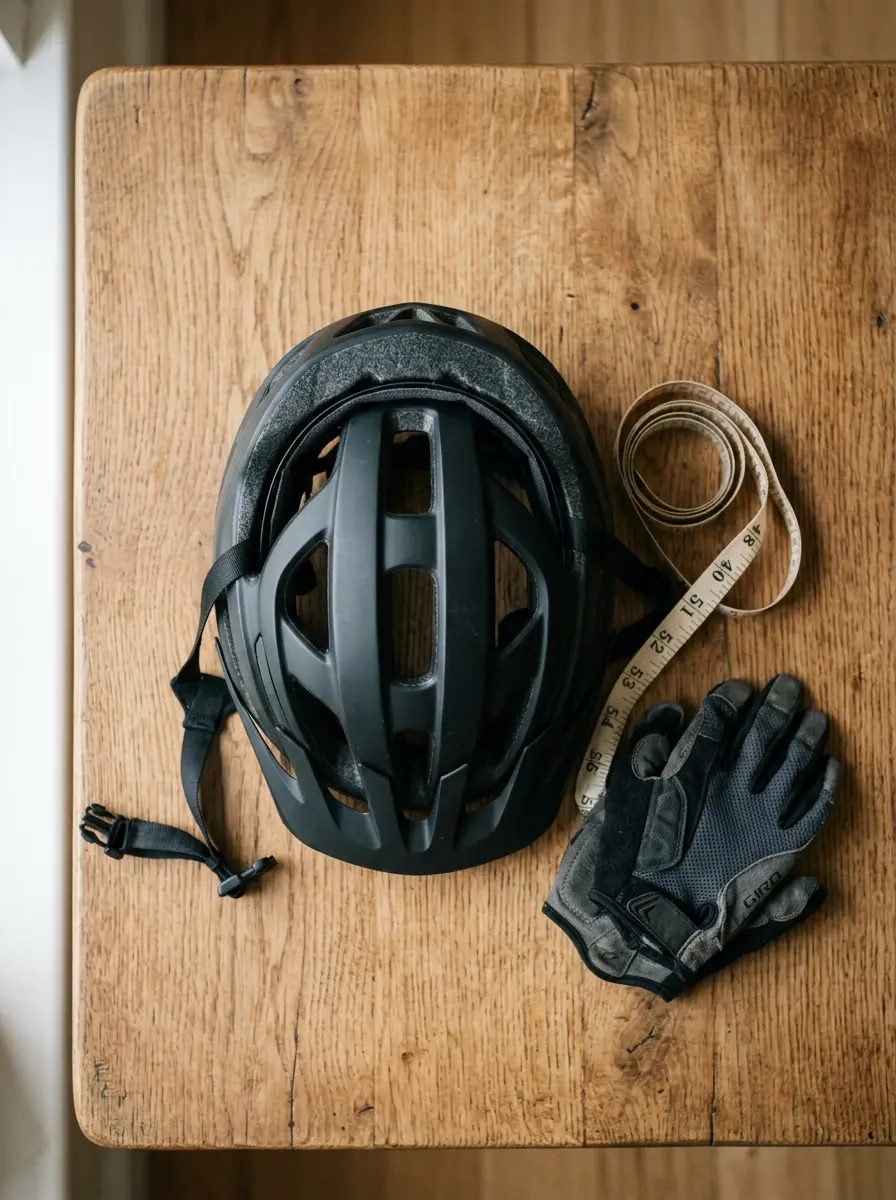
Begin by determining your crown circumference. Wrap a flexible tailor's tape measure around your head approximately one inch (2.5 centimeters) above your eyebrows, keeping the tape level around the widest portion of your skull. Compare this centimeter figure against the manufacturer's specific sizing chart. If your measurement sits right on the boundary between medium and large, try both sizes; interior oval shapes vary significantly between brands, ranging from round to narrow profiles.
Once the helmet rests on your head, adjust the internal fit system. Modern helmets utilize a rear micro-dial tensioner that cinches a 360-degree retention cradle around the occipital bone. Tighten the dial until the helmet feels snug without creating localized pressure points or headaches. Shake your head gently from side to side with the chin strap unfastened; a properly seated helmet should stay stationary on the scalp without sliding.
Next, position the side straps so that the plastic Y-dividers sit immediately below each earlobe, forming a clean V-shape that holds the helmet level. Adjust the chin buckle so that no more than one or two fingers fit between the strap and your throat. When you open your mouth wide in a yawning motion, you should feel the helmet pull down firmly against the top of your head. Check our guide on common cycling mistakes to avoid for more practical equipment setup advice.
When must a bike helmet be retired and replaced?
A bicycle helmet is a single-use protective device designed to sacrifice its internal structure to protect the cyclist. Once a helmet sustains an impact—even if the exterior plastic shell appears unblemished—the EPS foam liner beneath may have undergone permanent structural compression. Compressed foam cannot absorb energy in a subsequent collision. If you crash and your helmet contacts the ground, retire and replace it immediately.
Even in the absence of an accident, helmets possess a finite operational lifespan. Environmental factors degrade the chemical integrity of the underlying polymers over time. Continuous exposure to ultraviolet (UV) radiation from sunlight breaks down the exterior shell and outer EPS foam layers. Daily exposure to body sweat, skin oils, hair care products, and ambient pollution further weakens plastic retention cradles and internal foam densities.
Most safety bodies and major helmet manufacturers advise replacing a helmet every three to five years under regular commuter usage. If you drop a helmet onto concrete from a significant height, inspect the EPS core carefully under bright light for micro-fissures or separating outer shells. When in doubt, defer to the exact replacement guidelines outlined in the manufacturer's manual. Never purchase a secondhand helmet from yard sales or classified listings, as internal crash history cannot be verified by visual inspection alone.
How can riders integrate lights and locks safely?
Maintaining roadway safety extends beyond your headgear to include lighting visibility, secure gear storage, and active situational awareness. While shopping for protective equipment, many riders evaluate integrated helmet lights versus traditional bike-mounted lighting sets.
Mounting accessories to a helmet requires caution. Drilling holes or using rigid clamp hardware can compromise the structural integrity of the EPS foam or create dangerous snag points during an impact slide. Instead, choose lighting accessories engineered with breakaway silicone mounts or utilize dedicated bike-mounted illumination. Installing a bright front beam and rear flasher directly onto your handlebars and seatpost keeps center-of-mass weight low while satisfying state visibility laws for night transit.
Securing your helmet at commuter destinations presents another everyday challenge. Carrying headgear into an office or lecture hall prevents thermal degradation from hot parked car trunks or outdoor weather. If you must lock your gear with your bicycle, loop a sturdy accessory cable through the helmet's triangular strap junction or reinforced vent openings alongside your primary lock. To understand how auxiliary cables pair with heavy-duty shackles to deter opportunistic theft, read our guide on whether a U-lock or chain lock is better for ebikes.
For additional general maintenance inquiries, visit our cycling accessories FAQ to discover how proper equipment care maximizes gear longevity and keeps you safe across every ride.
Quick checklist
- Measure head circumference in centimeters using a flexible tape.
- Verify the helmet carries a certified CPSC 1203 label inside the liner.
- Check for Dutch NTA 8776 certification if riding a Class 3 e-bike.
- Inspect the helmet for rotational impact protection systems like MIPS.
- Tighten the rear dial until the helmet stays in place without the chin strap.
- Align side strap Y-dividers directly underneath both earlobes.
- Fasten the chin strap leaving room for no more than one or two fingers.
Frequently asked questions
- Can I use a regular bike helmet on an electric bike?
- Standard CPSC-certified bike helmets are legally permissible for traditional bicycles and Class 1 or Class 2 e-bikes up to 20 mph. However, for Class 3 e-bikes reaching 28 mph, safety experts recommend helmets certified to the Dutch NTA 8776 standard, which tests higher-speed impact energy.
- How do I know what size bike helmet to buy?
- Measure your head circumference in centimeters using a flexible tailor's tape, wrapping it around the widest point roughly one inch above your eyebrows. Compare this measurement against the manufacturer's size chart, keeping in mind that internal head shapes range from round to intermediate oval.
- What is the difference between MIPS and standard helmets?
- Standard helmets absorb direct linear energy via crushing foam. MIPS incorporates an internal low-friction slip liner that permits 10 to 15 millimeters of omnidirectional rotation during angled impacts, reducing rotational forces that transfer into the brain during real-world collisions.
- How often should a bicycle helmet be replaced?
- Replace any helmet immediately following an accident or direct impact. Even without crashes, manufacturers recommend replacement every three to five years due to the degradation of EPS foam and retention plastics caused by UV exposure, temperature shifts, and sweat.
- Does a more expensive helmet provide better protection?
- All helmets sold legally in the US meet the same baseline CPSC 1203 standard. Higher-priced models typically offer lighter weights, superior ventilation channels, elevated comfort liners, and supplementary rotational impact systems rather than purely increased linear foam thickness.
Sources
Amazon links are affiliate links; we may earn a commission at no cost to you.
Sources and limits
This page summarizes our research reviews of Amazon listings, listed specifications and captured buyer ratings. It is not a hands-on test. Scores are editorial assessments, not measured performance; prices are recorded snapshots and may change. A category can include both main products and accessories, so its overall price range is not the cost of a complete setup.
Amazon links are affiliate links. We may earn a commission on qualifying purchases, at no extra cost to you.
A more useful shortlist
Compare the same kind of e-bikes & cycling accessories
Choose the product type first. These groups require a match in the listing title; an import search term alone is not enough. Scores rank our recorded research assessments within each group, not independently measured performance.
No reliable same-type shortlist can be made from these titles. Browse the individual reviews and confirm the exact product purpose before comparing.
What to verify before choosing
- Torque, not top speed, is what you feel on a loaded hill start.
- Verify exact-model UL 2849 certification for the e-bike electrical system; UL 2271 applies to battery packs. A listed component alone does not certify the whole bike.
- Check brake type, rotor size and maintenance requirements against total load, terrain and intended speed; bike weight alone does not establish stopping performance.
If a specification, certification or compatibility detail is absent, mark it as unknown and ask the seller or manufacturer. Do not substitute a star rating, an editorial score or a different model's specification.
More on E-bikes & cycling accessories
- How much does an electric bike cost?
- The best electric bikes for adults
- How fast do electric bikes go?
- Best Ebike for Commuting: 2 Safer Budget Picks
- Best 2 Seater Fat Tire Cargo Electric Bike for Families
- Is a U Lock or Chain Lock Better for Ebikes?
- Gravity Bike Rack for Apartment Without Drilling Walls
- Brightest Waterproof Bike Light Sets for Night Riding
- E-bikes & cycling accessories buyer's guide
- E-bikes & cycling accessories FAQ
- All e-bikes & cycling accessories reviews