What Temp to Sous Vide Steak? Temperature Guide for Perfect Results
Achieve consistent, professional-grade steak at home by selecting the correct temperature for your preferred level of doneness using precision immersion tools.
By the Niche Picks editorsUpdated November 9, 20267 min readDrawn from our 33 research-based sous vide cooking reviews
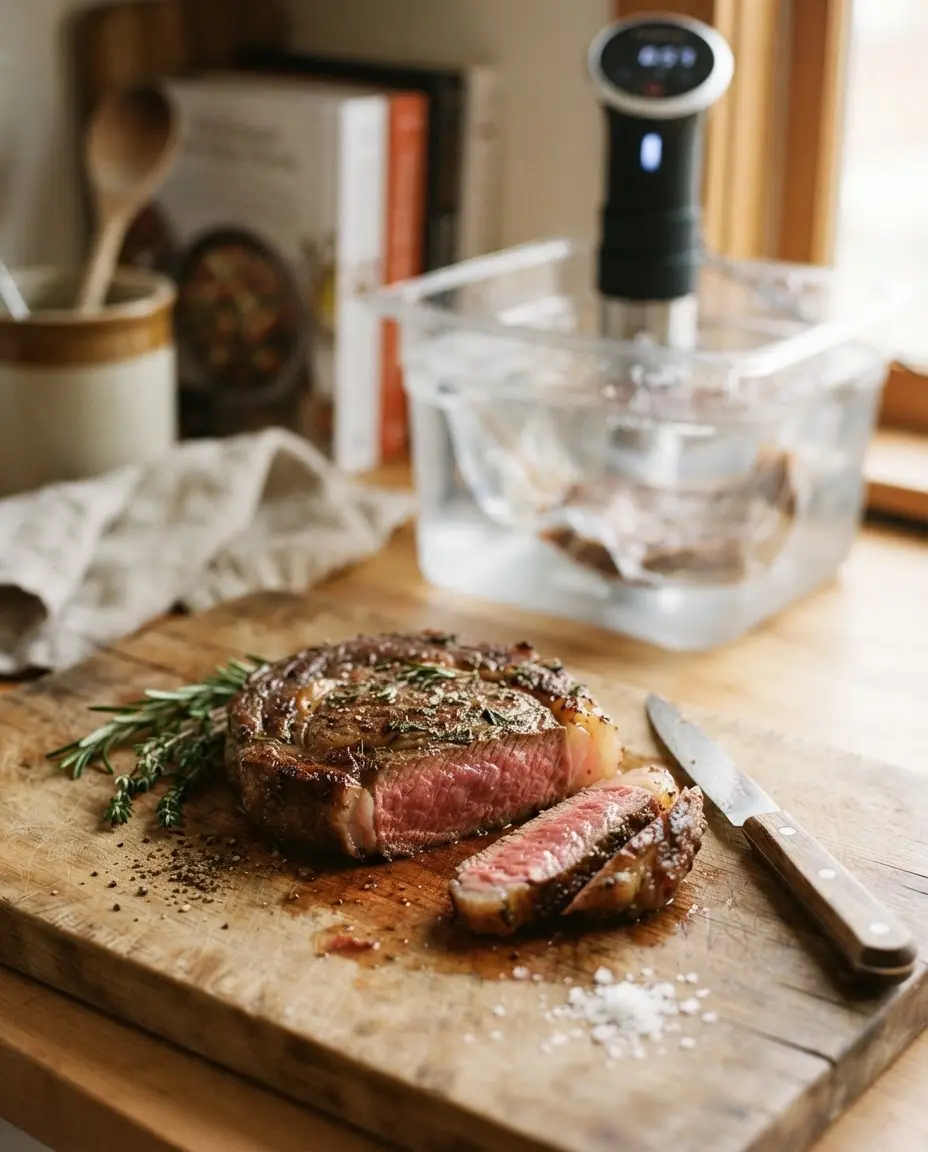
AI-generated editorial illustration; not a product or test photograph.
Short answer
For most steaks, aim for 129°F (54°C) for rare, 133°F (56°C) for medium-rare, and 140°F (60°C) for medium. Setting your circulator to these precise temperatures ensures the meat reaches your desired doneness edge-to-edge. Always use a reliable immersion circulator from our reviews to maintain this specific thermal setpoint throughout the duration of the cooking cycle.
6
Product listings discussed; not hands-on tests
6/6
Discussed listings with a recorded price
$35.00–$374.99
Recorded listing price range; not a complete setup cost
Key takeaways
Rare steak requires a temperature of approximately 129°F to maintain a cool, red center.
Medium-rare, the most common target for ribeye and strip steak, is best achieved at 133°F.
Medium doneness typically calls for a temperature of 140°F, providing a warmer and firmer texture.
Wattage on your circulator determines how fast you reach these temperatures, not the precision of the hold.
Always pair your device with a fitted lid to prevent evaporation during the long cook times often required for thicker cuts.
Products discussed in this article
Editorial scores and recorded prices are reference points, not measurements of suitability for every use. Read each review's specifications and limitations.
Anova Culinary Sous Vide Precision Cooker Nano 2.07.7
NKBIRD WIFI Sous Vide Cooker ISV-100W, 1000 Watts8.4
Sous Vide, Wancle Sous Vide Cooker 1100W IPX78.2
EVERIE EVC-NANO Sous Vide Container 12 Quart8.2
EVERIE 12Qt Sous Vide Container Kit w/Collapsible Lid8.7
Anova Culinary Sous Vide Precision Cooker Pro, 12008.4
Recorded price (USD)
Anova Culinary Sous Vide Precision Cooker Nano 2.0$94.99
NKBIRD WIFI Sous Vide Cooker ISV-100W, 1000 Watts$95.99
Sous Vide, Wancle Sous Vide Cooker 1100W IPX7$43.99
EVERIE EVC-NANO Sous Vide Container 12 Quart$35.00
EVERIE 12Qt Sous Vide Container Kit w/Collapsible Lid$54.95
Anova Culinary Sous Vide Precision Cooker Pro, 1200$374.99
Comparison of Sous Vide Equipment
Product
Wattage
Best For
Connectivity
Anova Nano 2.0
750W
Small batches
Bluetooth
Inkbird 1000W
1000W
Quick preheats
WiFi
Wancle 1100W
1100W
Budget speed
None
Anova Pro
1200W
High volume
WiFi
Why Temperature Precision Matters in Sous Vide
Sous vide cooking is defined by its ability to hold water at a precise temperature for extended periods, eliminating the risk of overcooking that occurs with traditional grilling or pan-searing. When you set your immersion circulator to 133°F, the steak will never exceed that temperature regardless of how long it stays in the bath. This allows you to achieve a consistent edge-to-edge doneness that is physically impossible to replicate with high-heat methods. For those just starting, learning what is sous vide cooking and how do you start? is the first step toward mastering these thermal dynamics.
While wattage is often a primary consideration for buyers, it is crucial to understand that higher wattage, such as that found in the 1000W Inkbird ISV-100W, only dictates the speed at which your water reaches the target temperature. Once the water is at the target, your circulator's sensor and circulation pump take over to maintain stability. For smaller vessels or quick weeknight meals, an Anova Culinary Nano 2.0 works efficiently, but you should always consider the vessel volume. Using a 12-quart container kit helps manage heat loss, ensuring that your chosen temperature remains steady throughout the entire cook duration. Understanding these equipment nuances is covered extensively in our sous vide cooking buyer's guide, which helps you pick the right gear for your kitchen constraints.
Deciding on the right temperature depends entirely on your personal preference for texture and internal color. Most culinary experts recommend staying within the 129°F to 140°F range for high-quality beef. Rare steaks at 129°F offer a very tender, cool center, while the classic medium-rare at 133°F balances texture with fat rendering, particularly for fattier cuts like ribeye. For specific advice on preparing these cuts, refer to our guide on how to sous vide ribeye steak.
Rare: 129°F (54°C) for a deep red, cool center.
Medium-Rare: 133°F (56°C) for the standard, ideal texture.
Medium: 140°F (60°C) for a firmer, warmer center.
If you are working with specialized preparations, you might find that different temperatures affect how long the meat remains in the bath. Learning how long to sous vide steak is just as important as the temperature itself, as thin cuts require less time than thick roasts. Always ensure your device can maintain accuracy; models like the Anova Culinary Precision Cooker Pro are built for heavy-duty, consistent results in larger volumes, ensuring the water bath never drifts from your setpoint during longer, multi-hour cooks.
Always use a fitted lid or a dedicated container lid to prevent water evaporation, especially for cooks lasting longer than 4 hours. Evaporation causes water levels to drop, which can force your circulator to shut off prematurely.
How to Manage Heat and Evaporation
Maintaining the chosen temperature is significantly easier when you control the environment. In an open pot, water evaporates over time, which can trigger low-water alarms on many circulators. A fitted lid is your best tool for long-duration cooks. Utilizing a dedicated container like the EVERIE EVC-NANO 12-quart vessel provides a pre-cut lid that keeps the water level stable and minimizes heat loss. Without a lid, the circulator must work harder to combat radiant heat loss from the surface of the water, which can affect the stability of your set temperature.
Insulation is another factor for extended cooks. A neoprene sleeve, often found in complete kits, helps the machine maintain the target temperature by preventing heat transfer through the walls of the container. For those who frequently perform multi-day cooks, investing in a complete homenote sous vide container kit can simplify your setup, bundling the rack, sleeve, and lid into one package. If you are ever unsure about your setup, review our sous vide cooking FAQ to troubleshoot common temperature-related issues. Remember that safety is paramount; always follow food-safe temperatures for longer durations and be aware of common mistakes to avoid that can lead to uneven results or safety risks.
A common point of confusion for home cooks is whether a 1000W machine can hold a temperature better than an 850W or 750W machine. In the world of sous vide, wattage is only an indicator of the machine's ability to heat a volume of cold water to your target temperature quickly. Once that temperature is reached, the machine's internal PID controller governs stability. For example, the Wancle 1100W Circulator will bring a 15-liter bath to 133°F much faster than a lower-wattage entry-tier device. However, both units are designed to hold the temperature within a standard 0.1°C variance.
If you are planning to host a large dinner party, the speed of preheating becomes a practical advantage, as you spend less time waiting for the bath to be ready. In these scenarios, a higher-wattage unit is an excellent upgrade. Conversely, for a small, single-portion steak, a smaller unit performs perfectly fine. You can explore the full range of options in our best sous vide machine article to see how different wattages compare across various price points. Always check the voltage of the device you purchase to ensure it is compatible with your local electrical grid, as operating a high-wattage device on a low-voltage circuit can lead to slower performance than expected.
Never pull liquid into the vacuum pump of an edge sealer. If your steak is marinated, freeze the liquid first or manually control the seal to prevent damage to your machine.
Essential Preparation for Consistent Temperature
Before your steak enters the water, it must be properly sealed. Vacuum packaging ensures there are no insulating air pockets that could prevent the water from evenly contacting the meat surface. If air is trapped in the bag, it acts as an insulator, which can lead to uneven cooking despite having your water at the perfect temperature. For most home cooks, a reliable edge sealer is sufficient for solid proteins. It is critical to note that edge sealers are designed for dry contents. If you are sealing a steak with a rub or marinade, ensure it is not wet enough to be pulled into the vacuum pump.
If your recipe requires liquid marinades, consider freezing the liquid first or using a manual 'pulse' vacuum mode if your sealer supports it. Understanding the limits of your sealing equipment is a key part of our buying tips for new enthusiasts. Preparing your food correctly ensures that once the meat enters the water bath, the heat transfer is uniform and predictable. By pairing proper vacuum preparation with accurate thermal control, you ensure that every steak reaches the exact doneness you intended, making the entire sous vide process feel effortless and highly repeatable.
Advanced Tips for Perfect Searing
Once your steak has reached the perfect internal temperature in the sous vide bath, the final step is to achieve a flavorful crust through searing. Because the internal temperature is already perfected, the goal of the sear is exclusively to brown the surface quickly without increasing the internal doneness. This is where a high-heat pan or a culinary torch becomes necessary. If you prefer to finish your steak using a torch, ensure you maintain a constant movement to avoid charring the protein.
Keep in mind that searing is not just about heat; it is about moisture control. Before placing the steak in a pan or using a torch, pat the surface extremely dry with paper towels. Any moisture remaining on the surface will result in steaming rather than browning. This step ensures you get the desired Maillard reaction quickly. For beginners looking for a simple start, using a high-quality skillet is often sufficient, but those who want to add a specialized tool to their kitchen can look into butane-powered torches as a supplement to their immersion circulator. Ultimately, the transition from the water bath to the searing surface is what defines the professional quality of your final result, making it a critical part of the entire sous vide workflow.
Step by step
1Select your target temperature (129°F-140°F) based on desired doneness.
2Clamp your immersion circulator to the container and fill it to the level marker.
3Vacuum-seal your seasoned steak, ensuring a tight fit.
4Lower the pouch into the water once it reaches the target temperature.
5Cook for the recommended duration based on the thickness of the cut.
6Remove the steak and pat the surface dry with paper towels.
7Sear the exterior using a hot skillet or culinary torch for 30-60 seconds per side.
Quick checklist
Verify your water bath volume matches your circulator's rated capacity.
Choose a temperature based on your desired doneness (e.g., 133°F for medium-rare).
Seal the steak using a high-quality, BPA-free vacuum bag.
Remove all excess air to ensure efficient thermal conductivity.
Ensure the bag is fully submerged, using weights or a rack if necessary.
Pat the meat completely dry before searing after the bath.
Use a hot pan or torch for a quick, high-heat finish.
Frequently asked questions
Can I leave steak in the sous vide bath too long?
Yes, while sous vide offers a safety margin, leaving a steak in for over 4-6 hours can begin to change the texture to be overly soft or mushy due to the breakdown of collagen and muscle fibers. Aim for the recommended cooking window specific to the thickness of your cut.
Does higher wattage make the steak cook better?
No. Wattage only determines how fast the water bath heats up to the set temperature. Once the water is at the target temperature, a 750W device will maintain the same precision as a 1200W device. Higher wattage is only beneficial for shortening wait times in larger pots.
Do I need a special container for sous vide?
You can use any standard stockpot that is deep enough for your circulator's immersion range, but a dedicated container with a fitted lid significantly improves energy efficiency and prevents water loss during long cooks. Dedicated containers also provide a stable platform for your bags.
Why is my steak gray after sous vide?
If your steak appears gray, you likely skipped the searing step. Sous vide cooking only manages internal doneness; the brown, flavorful crust is created through a separate, high-heat searing step using a pan or torch after the meat exits the water bath.
Can I cook frozen steak directly?
Yes, you can cook frozen steak sous vide, but you should add approximately 30 to 60 minutes to the total cooking time to allow for the initial defrosting process. Ensure the meat is vacuum-sealed before freezing for the best results.
Amazon links are affiliate links; we may earn a commission at no cost to you.
Shortlists in this category
Ranked lists from our sous vide cooking reviews, limited to listings whose titles confirm the product type, with budget cuts where enough recorded prices sit on both sides of the line.
This page summarizes our research reviews of Amazon listings, listed specifications and captured buyer ratings. It is not a hands-on test. Scores are editorial assessments, not measured performance; prices are recorded snapshots and may change. A category can include both main products and accessories, so its overall price range is not the cost of a complete setup.
Most recent product record update: September 15, 2026. Individual records may be older; this is not a verification date for every claim. Prices on this page were read from the listings Nov 8, 2026 – Nov 12, 2026.
Choose the product type first. These groups require a match in the listing title; an import search term alone is not enough. Scores rank our recorded research assessments within each group, not independently measured performance.
Values are shown as recorded, without unit conversions or inferred compatibility. Not recorded means unknown, not absent. Prices are snapshots, not current offers. Editorial scores are research judgments, not lab results. Amazon links are affiliate links.
Before treating a comparison as complete
Which details are still unknown?
A specification appearing in a listing is not independent verification. These counts show which shortlisted records contain the same field; a blank record does not mean the product lacks the feature.
Included Components
Recorded for 2 of 2 shortlisted models
Present in every shortlisted record. Check units, exact variants and the current manufacturer documentation before relying on it.
Voltage
Recorded for 2 of 2 shortlisted models
Present in every shortlisted record. Check units, exact variants and the current manufacturer documentation before relying on it.
Wattage
Recorded for 2 of 2 shortlisted models
Present in every shortlisted record. Check units, exact variants and the current manufacturer documentation before relying on it.
Values are shown as recorded, without unit conversions or inferred compatibility. Not recorded means unknown, not absent. Prices are snapshots, not current offers. Editorial scores are research judgments, not lab results. Amazon links are affiliate links.
Wattage sets how fast you come to temp, not how well you hold it.
Chamber sealers generally handle liquids more easily; for edge sealers, follow the model's instructions and avoid drawing liquid into the pump.
A fitted lid cuts evaporation on long cooks.
If a specification, certification or compatibility detail is absent, mark it as unknown and ask the seller or manufacturer. Do not substitute a star rating, an editorial score or a different model's specification.