How to Fit More in Carry-On Luggage: Pro Packing Secrets
Master your overhead space with these research-backed strategies to maximize capacity, minimize bulk, and avoid costly gate-check fees on your next trip.
By the Niche Picks editorsUpdated November 10, 20269 min readDrawn from our 31 research-based travel gear & luggage reviews
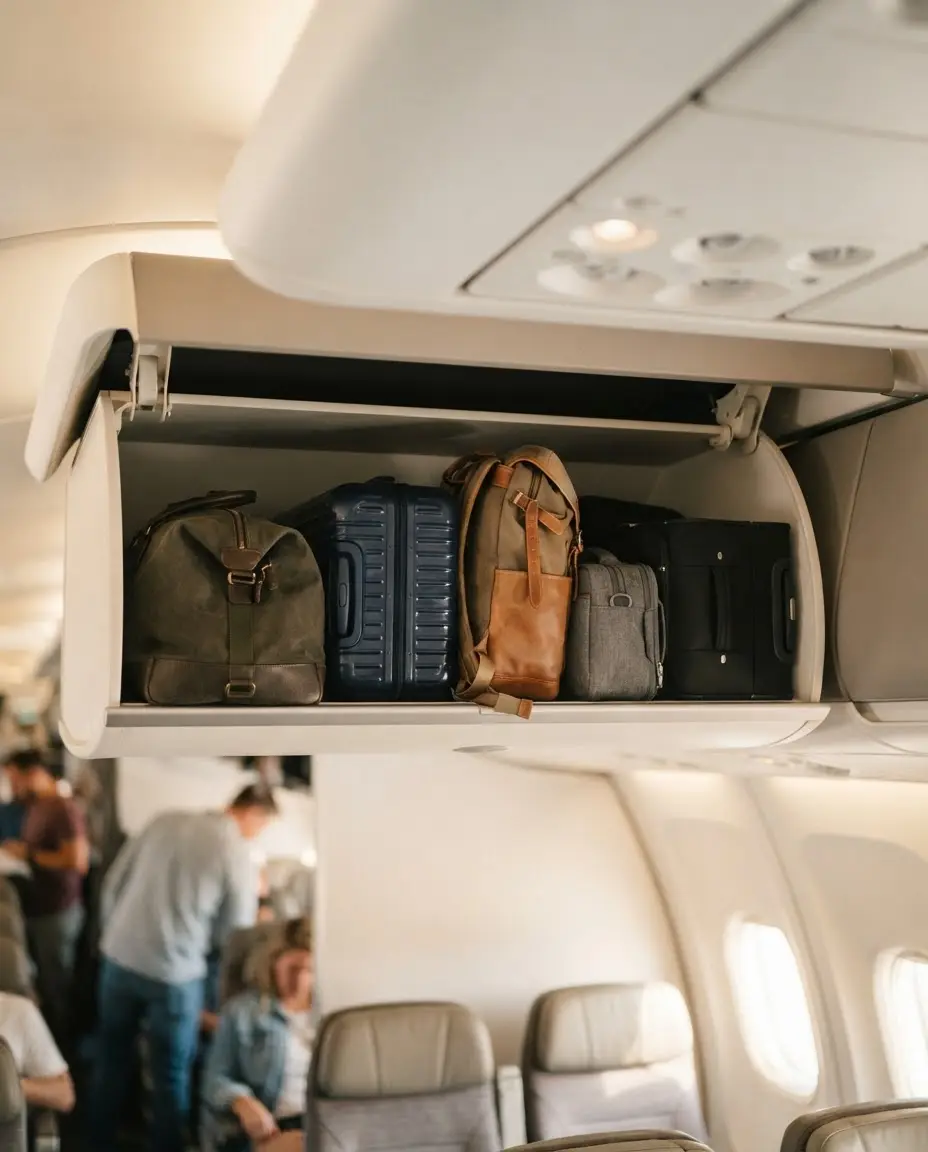
AI-generated editorial illustration; not a product or test photograph.
Short answer
To fit more in carry-on luggage, focus on high-density packing techniques like using mechanical compression cubes and selecting softside luggage that offers flexible packing volume. Always prioritize checking your bag's total exterior dimensions—including wheels and handles—against airline-specific size limits to ensure your bag remains cabin-compliant and avoids mandatory gate-checking.
6
Product listings discussed; not hands-on tests
6/6
Discussed listings with a recorded price
$8.99–$148.00
Recorded listing price range; not a complete setup cost
Key takeaways
Choose soft-sided luggage to gain more flexibility and room for overpacking compared to rigid plastic shells.
Utilize mechanical compression packing cubes to reduce the physical bulk of soft garments by flattening air-trapping fibers.
Place heavy, dense items at the bottom of the suitcase near the wheels to maintain balance and prevent tipping.
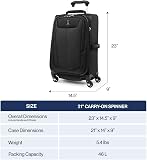
Always measure your total luggage dimensions including hardware, as manufacturers often report only the internal packing volume.
Avoid overstuffing expansion zippers, as this often triggers automatic gate-check requirements at boarding.
Products discussed in this article
Editorial scores and recorded prices are reference points, not measurements of suitability for every use. Read each review's specifications and limitations.
BAGSMART Large Electronic Organizer Travel Case$14.99
Comparison of Key Capacity Features
Product
Type
Material
Capacity
Best Use
Maxlite 5
Softside
Polyester
39-46L
Frequent flyers
Omni PC
Hardside
Polycarbonate
34L
Durable cabin
Veken 9-Set
Organizer
Polyester
Compression
Max volume
OlarHike 10-Set
Organizer
Polyester
Compression
Large wardrobes
tomtoc 40L
Backpack
Polyester
40L
One-bag travel
BAGSMART Case
Organizer
Synthetic
Tech
Electronic gear
Why Compression Cubes Are Essential for Space
One of the most effective ways to increase your packing efficiency is through the use of compression packing cubes. Unlike standard cubes, which merely organize your belongings, compression versions feature a secondary perimeter zipper that mechanically draws the top and bottom panels together. This process flattens bulky knitwear, t-shirts, and denim, allowing you to reclaim significant void space that is usually wasted. Our reviews of the Veken Compression Packing Cubes and the OlarHike 10-Piece Compression Set highlight that these organizers excel at reducing the physical thickness of folded apparel.
Pack items flat to ensure even compression across the entire surface.
Use mesh-top panels to identify contents quickly, preventing the need to unpack and repack during your trip.
Place smaller, denser items in the gaps around the suitcase's trolley handle assembly.
Be aware that mechanical compression does not change the weight of your clothing, only the volume.
While some travelers ask do compression packing cubes really save space, the answer is a definitive yes regarding volume, though the total mass remains constant. For those using a carry-on only strategy, these modules allow you to fit a week's worth of clothing into a 34-39 liter bag. By standardizing the shapes of your gear, you can stack items like Tetris blocks, eliminating the dead air spaces that naturally occur when packing loose garments. This is particularly vital when using smaller, 20-inch carry-on rollers where every cubic inch is valuable. Always check the latest packing organizer reviews to ensure you are choosing durable materials that can withstand the tension of a fully compressed load without seam failure. The right organizer creates a modular system that makes moving from bag to drawer seamless at your destination.
The foundation of your packing strategy is the suitcase itself. Many travelers mistakenly purchase hardside luggage based on aesthetics, failing to account for how shell rigidity limits your ability to "squish" in that one final item. Our research into soft-sided options, such as the Maxlite 5 Softside Spinner, shows that high-quality polyester textiles provide a distinct advantage. Unlike ABS plastic, which is prone to cracking when stressed in cold cargo holds, soft-sided bags can flex, allowing you to effectively overfill them slightly while still fitting into overhead bins.
Soft-sided luggage allows for external pocket storage, ideal for documents and small items.
Molded bottom trays help maintain a stable center of gravity even when the main compartment is overpacked.
Inset wheels offer more internal space and durability compared to protruding spinner casters.
When you opt for a hard-shell like the Omni PC Expandable Spinner, you lose that ability to manipulate the frame. If you choose hard-sided gear, ensure it is made of polycarbonate rather than ABS to guarantee impact resistance, though be aware you are locked into the box's geometry. If your priority is maximum volume, a high-quality travel backpack like the tomtoc 40L Carry-On can also serve as an alternative. These packs lack the external wheel assembly that consumes precious cabin space, providing more raw volume for clothing and gear. Ultimately, the best luggage is one that adheres to strict carry-on size standards without compromising on the organizational features you need to stay organized throughout your journey. Balancing shell resilience with expansion capacity is the key to longevity.
Try the 'ranger roll' folding technique to compress shirts into tight, self-contained rolls. This method prevents garments from unravelling and is often more space-efficient than traditional flat folding.
Managing Tech and Small Accessories
Small, loose electronics often act as space-wasters, scattering across your luggage and preventing you from packing items efficiently. Investing in a dedicated tech organizer pouch is a smart way to streamline your carry-on setup. These organizers, such as the BAGSMART Electronic Case, allow you to consolidate bulky chargers, power banks, and peripheral cables into a single, slim-profile unit. This is much more efficient than having cords tangled around your clothing, which risks damaging both your tech and your garments.
Use thin, flat pouches that slide easily into the narrow gaps between the trolley handle frame.
Keep high-wattage power bricks in the center of the pouch to prevent them from protruding into your clothes.
Always keep batteries in your carry-on, as lithium-ion packs are often prohibited in checked cargo.
Modular tech organization makes security screening faster by providing a clear, visible unit for scanners.
When considering how to maximize space, remember that organization is not just about what fits, but how easily you can access items. By segmenting your travel gear and luggage, you create a workflow that prevents the "dump and search" routine that often ruins the interior layout of a packed suitcase. If you struggle to fit your tech, look for smaller pouches that can reside in the exterior pockets of softside bags. This keeps your main compartment clear for bulkier items like shoes and jackets. Avoiding common packing mistakes like carrying redundant cables or bulky protective cases for items that are already robust will instantly save you valuable capacity, leaving more room for the necessities. A well-organized bag is always easier to pack and unpack during travel.
Maximizing internal volume requires a shift in how you view your luggage interior. Most travelers focus on the large center void, but the periphery—around the handle tubes and corners—is where capacity is won or lost. Utilizing soft packing cubes allows you to mold gear into these unconventional shapes. When utilizing the best carry-on luggage for your trip, look for designs that offer flat, unobstructed interior bottoms. Features like cross-ribbons and zippered dividers are helpful, but they can sometimes limit how items are stacked if they are too bulky.
Fill empty shoes with socks or undergarments to utilize "dead" space.
Use the vertical space by standing clothing cubes on their side rather than stacking them flat.
If your bag has an expansion zipper, deploy it only at the destination to ensure your carry-on passes through the airline sizer at the departure gate.
Always keep a small foldable nylon bag in your main suitcase for extra items acquired during your travels.
Your packing method should be disciplined; folding and rolling are two distinct arts. Rolling clothing is frequently more efficient for knit fabrics, while flat folding is superior for structured garments that need to resist wrinkling. Combining these two methods—rolling undergarments and folding shirts—within compression modules ensures you maintain a clean, organized internal structure. Reviewing your specific luggage’s travel gear and luggage reviews helps you understand if you are working with a 30-liter base or a 45-liter capacity. If your current bag lacks the internal volume, consider whether you are overpacking "just in case" items. A realistic packing list is the best tool for space management, as every ounce counts when navigating overhead bins.
Avoid Expansion Gaps
Expansion zippers are a convenience for return trips, but using them often pushes your bag over the rigid 9-inch depth limit set by many airlines. Always verify your bag size with a luggage sizer before attempting to board.
Safety and Maintenance for Frequent Travel
Maintaining the longevity of your gear while pushing for maximum capacity is a common challenge. Overstuffing can put extreme pressure on your zippers, which are the most common point of failure. When choosing luggage, look for sturdy, self-mending zipper tracks, such as those found on higher-tier softside spinners. If you notice your zipper straining, do not force it; redistribute your load by moving items to a secondary bag or using smaller compression cubes to flatten your items further.
Check your wheel alignment regularly; if a wheel starts to drag, it can damage the housing.
Clean your zippers with a dry brush to remove sand and debris that can impede smooth movement.
Inspect the telescoping handle for "play" or wobbling, as this can worsen over time if handled roughly.
If using softside luggage, apply a fabric protector spray to keep the exterior resistant to spills and grime.
Safety is also a factor when you are traveling with high-density loads. A bag that is too heavy becomes difficult to hoist into the overhead bin, risking shoulder strain for yourself and others. Always test the heft of your bag before you leave for the airport; if you cannot lift it easily above your head, you are risking potential injury. Remember that airline staff monitor the weight of carry-on items on many routes. By focusing on smart organization and high-value luggage picks, you maintain control over your equipment without excessive bulk. Maintaining your gear ensures that your investment provides years of travel utility, regardless of the intensity of your flight itinerary or the frequency of your departure schedule.
Packing for multiple climates requires a modular strategy rather than a "pack for everything" approach. If you are traveling to a location with changing weather, layers are your best friend. A good travel backpack or carry-on spinner allows you to separate your items so you can access what you need quickly. By using the layering principle, you avoid packing bulky winter items if you only need them for a small portion of the trip. Wear your bulkiest items on the plane, such as your coat or heavy boots, to free up significant room in your carry-on.
Layer your clothes: prioritize items that can be worn in multiple combinations.
Choose lightweight fabrics like merino wool, which provide warmth without bulk.
Use vacuum or compression bags for bulky sweaters if you must bring them.
Keep your light, warm-weather items accessible at the top of your bag.
Finally, consider the volume that toiletries consume. Many travelers carry large, heavy liquid containers that are not only unnecessary but also a waste of capacity. Switch to travel-sized containers that adhere to the 3.4-ounce limit. By consolidating these into a clear pouch, you save space and make security screening significantly faster. If you find your bag is consistently over capacity, visit the travel gear blog for more tips on selecting versatile items. Every traveler's needs vary, but the principles of modularity, compression, and weight management remain the universal keys to fitting more into your carry-on. With intentional planning and the right selection of travel gear and luggage, you can easily manage a trip of almost any length without the need for checked bags, saving you time and money at the airport.
Step by step
1Audit your gear and remove redundant items to reach your target volume.
2Pack heavy shoes and boots at the base of the suitcase to provide a stable foundation.
3Fold clothing into compression cubes, then engage the perimeter zipper to flatten.
4Arrange your compressed cubes vertically inside the main compartment to maximize space.
5Tuck small tech organizers and toiletry bags into the gaps around the trolley tracks.
6Check the bag's depth and height with a measuring tape before zipping the main enclosure.
7Verify the final weight on a home scale to ensure compliance with airline caps.
Quick checklist
Check your airline's maximum dimensions for both carry-on and personal items.
Lay all items out on a bed to audit what you actually need versus what is 'just in case'.
Place heavier items, like footwear, at the bottom of the bag.
Use compression cubes to group outfits and reduce garment loft.
Fill shoes with smaller items like socks or belts to utilize wasted volume.
Wear your heaviest items (like boots or jackets) to save space and weight in the bag.
Ensure all liquids meet the 3.4-ounce (100ml) TSA requirement.
Frequently asked questions
Can I really carry more by using compression cubes?
Yes, compression cubes reduce the volume of air-trapping textiles like cotton and fleece. By squeezing out this trapped air, you can fit significantly more clothing into the same amount of space, making it easier to pack for longer trips without increasing your footprint.
Does softside luggage hold more than hardside?
Softside luggage often holds more because the fabric exterior provides flexibility. Unlike a rigid hardshell that is capped by its dimensions, softside bags can slightly expand or 'bulge' to accommodate odd-shaped items, and they often include external pockets for extra storage.
How do I prevent my bag from becoming too heavy?
Use a digital luggage scale to monitor your weight throughout the packing process. Focus on packing versatile clothing that can be layered, and wear your heaviest pieces, such as thick sweaters or boots, onto the plane to keep your bag light.
Are spinner wheels a waste of space?
Spinner wheels are external hardware that counts toward your official height limit. While they offer excellent mobility, they occupy precious overhead bin space. If space is your absolute priority, a travel backpack without wheels provides the highest volume-to-dimension ratio.
Should I roll or fold my clothes?
Rolling is generally better for saving space and preventing deep creases, especially when combined with compression cubes. Flat folding is better for preventing wrinkles in formal wear, but rolling will almost always allow you to fit more items in a small carry-on.
Amazon links are affiliate links; we may earn a commission at no cost to you.
Shortlists in this category
Ranked lists from our travel gear & luggage reviews, limited to listings whose titles confirm the product type, with budget cuts where enough recorded prices sit on both sides of the line.
This page summarizes our research reviews of Amazon listings, listed specifications and captured buyer ratings. It is not a hands-on test. Scores are editorial assessments, not measured performance; prices are recorded snapshots and may change. A category can include both main products and accessories, so its overall price range is not the cost of a complete setup.
Most recent product record update: October 3, 2026. Individual records may be older; this is not a verification date for every claim. Prices on this page were read from the listings Nov 8, 2026 – Nov 13, 2026.
Choose the product type first. These groups require a match in the listing title; an import search term alone is not enough. Scores rank our recorded research assessments within each group, not independently measured performance.
Values are shown as recorded, without unit conversions or inferred compatibility. Not recorded means unknown, not absent. Prices are snapshots, not current offers. Editorial scores are research judgments, not lab results. Amazon links are affiliate links.
Before treating a comparison as complete
Which details are still unknown?
A specification appearing in a listing is not independent verification. These counts show which shortlisted records contain the same field; a blank record does not mean the product lacks the feature.
Capacity
Recorded for 2 of 2 shortlisted models
Present in every shortlisted record. Check units, exact variants and the current manufacturer documentation before relying on it.
Item Dimensions L x W x H
Recorded for 2 of 2 shortlisted models
Present in every shortlisted record. Check units, exact variants and the current manufacturer documentation before relying on it.
Size
Recorded for 2 of 2 shortlisted models
Present in every shortlisted record. Check units, exact variants and the current manufacturer documentation before relying on it.
Values are shown as recorded, without unit conversions or inferred compatibility. Not recorded means unknown, not absent. Prices are snapshots, not current offers. Editorial scores are research judgments, not lab results. Amazon links are affiliate links.
Check the airline's carry-on limits including wheels and handles.
Compare shell construction, repairability and warranty; material names alone do not guarantee impact resistance or a specific failure mode.
Serviceable wheels matter more than shell branding.
If a specification, certification or compatibility detail is absent, mark it as unknown and ask the seller or manufacturer. Do not substitute a star rating, an editorial score or a different model's specification.