Air purifiers can effectively reduce household odors, but their success depends entirely on having a high-quality activated carbon filter stage.
By the Niche Picks editorsUpdated November 8, 20268 min readDrawn from our 30 research-based air purifiers & hvac reviews
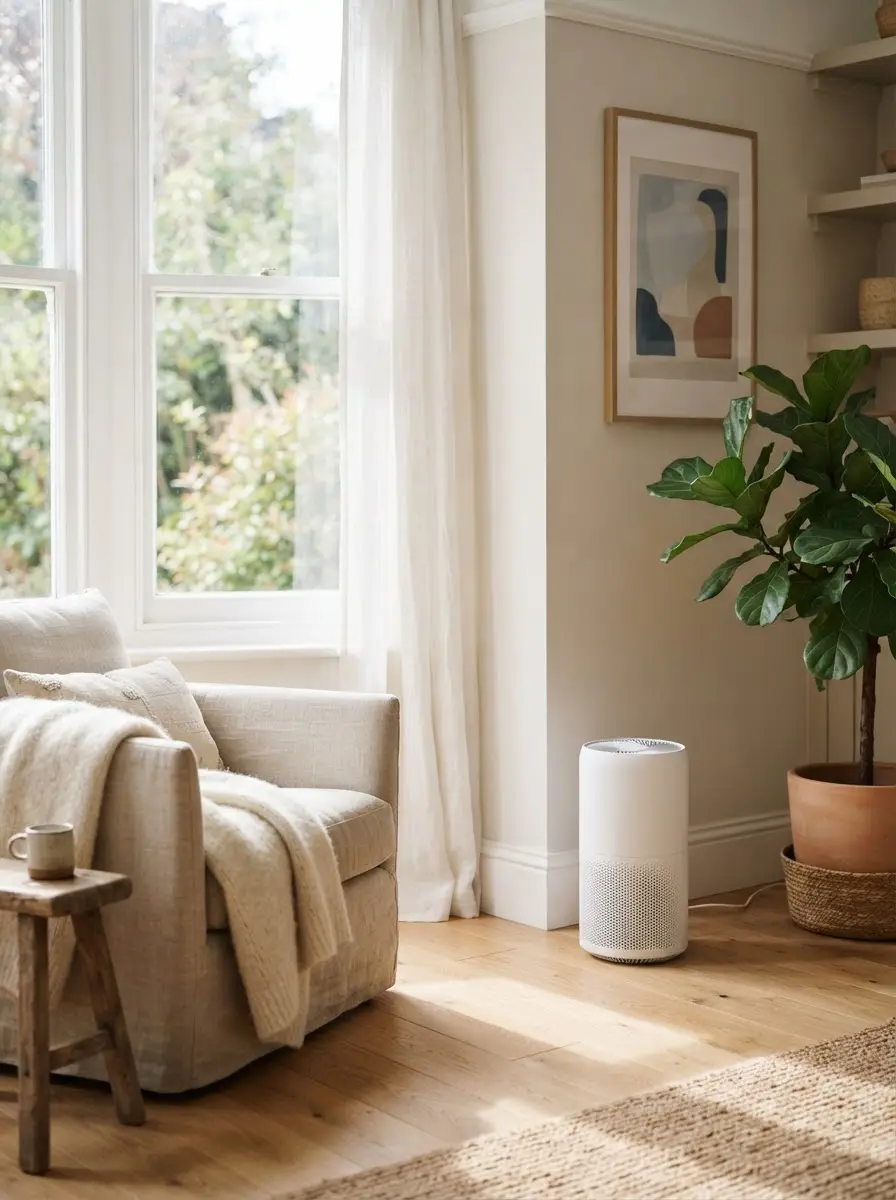
AI-generated editorial illustration; not a product or test photograph.
Short answer
Yes, air purifiers can significantly reduce odors, but only if they feature a substantial activated carbon filter layer. While True HEPA filters capture the particulate matter that carries smells, gaseous odors and VOCs require the chemical adsorption process provided by activated carbon. For best results, ensure your model matches the room size to ensure frequent air turnover.
3
Product listings discussed; not hands-on tests
3/3
Discussed listings with a recorded price
$179.99–$229.99
Recorded listing price range; not a complete setup cost
Key takeaways
True HEPA filters target dust and allergens, while activated carbon is required to neutralize gaseous odors.
Effective odor control requires a thick layer of granular activated carbon rather than thin carbon-coated sheets.
Always verify your room square footage against the unit's AHAM-verified coverage for optimal air changes per hour.
Total cost of ownership should include the price of periodic replacement filters, which often exceed the device's original cost over three years.
Running an air purifier continuously on the lowest speed can help maintain lower ambient odor levels without significant noise.
Products discussed in this article
Editorial scores and recorded prices are reference points, not measurements of suitability for every use. Read each review's specifications and limitations.
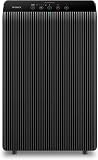
WINIX 5510 Air Purifier (New Generation of 5500-28.2
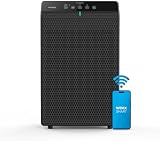
WINIX 5520 Air Purifier for Home Large Room Up to 18828.0
COWAY Air Purifier for Home Up to 1,748ft², HEPA8.1
Recorded price (USD)
WINIX 5510 Air Purifier (New Generation of 5500-2$179.99
WINIX 5520 Air Purifier for Home Large Room Up to 1882$179.99
COWAY Air Purifier for Home Up to 1,748ft², HEPA$229.99
Air purifier performance and odor control features
Product
Filter Type
Carbon Stage
Best Use
AHAM Verified
WINIX 5510
True HEPA
Granular Carbon
Medium living rooms
Yes
WINIX 5520
True HEPA
Carbon Sheet
Living areas
Yes
COWAY AP-1512HH
True HEPA
Granular Carbon
Mid-sized rooms
Yes
How Do Air Purifiers Actually Eliminate Odors?
Understanding how an air purifier interacts with odors requires distinguishing between particulate matter and gas-phase pollutants. Most household smells, such as cooking oils, cigarette smoke, or pet scents, are carried by both tiny particles and gaseous compounds. A True HEPA filter is designed specifically to capture the solid particulate portion, such as skin cells and soot, which helps reduce the source of the odor. However, the odor itself—the 'smell'—is often a gas.
To tackle these molecules, the purifier must use activated carbon. Unlike HEPA material, which acts like a mechanical sieve, activated carbon functions through adsorption. It is a highly porous material that captures gas molecules within its complex internal structure. When air passes through, the volatile organic compounds (VOCs) and odor molecules become trapped in the charcoal, preventing them from recirculating into your living space.
For meaningful odor mitigation, we prioritize units with deep-bed granular carbon canisters rather than 'carbon-coated' mesh screens. The latter lack the surface area required for true odor neutralization and often saturate within weeks. To learn more about how these systems integrate into a home, explore our buying guide and understand the specific mechanical requirements of air purification.
Particulate filters (HEPA) catch dust that can harbor odors.
Activated carbon is essential for chemically trapping gas molecules.
When shopping for an appliance to manage smells, marketing claims often cite large room sizes (e.g., 1,800 sq. ft.) that are misleading. These numbers typically assume only one air change per hour, which is far too slow for active odor removal. For effective performance, follow the Association of Home Appliance Manufacturers (AHAM) guidelines, which recommend enough power to perform four to five air changes per hour.
For example, the WINIX 5510 is AHAM-verified for 392 square feet. If you place this unit in a room significantly larger than its recommended capacity, the carbon filter will not process the room's air volume frequently enough to stay ahead of persistent odors. For larger living spaces, you may need a high-performance unit to ensure odors do not linger. It is always better to slightly oversize the unit for your space to allow for lower, quieter fan speeds while still maintaining high odor-neutralization rates.
Ignore 'maximum coverage' claims; look for AHAM-verified room sizes.
Aim for 4-5 air changes per hour for the best odor control.
Ensure the unit runs frequently to prevent odors from settling into soft surfaces.
Avoid common mistakes like corner placement that limits intake airflow.
Always look for 'True HEPA' certification. 'HEPA-type' or 'HEPA-style' media are marketing terms that do not meet the strict 99.97% capture efficiency required for sub-micron allergens and smoke.
Ownership Costs: Why Filter Replacements Matter
The purchase price of an air purifier is only the first part of your financial commitment. Odor-absorbing carbon filters have a finite life cycle and will stop removing smells once their internal pores are completely saturated. Depending on the level of pollutants in your home—such as persistent pet odors or nearby traffic smog—these filters may require replacement every 6 to 12 months.
When calculating the budget for your appliance, consider that over a three-year window, you will likely spend as much on replacement filters as you did on the original hardware. The COWAY AP-1512HH, for instance, provides exceptional performance, but the long-term expense of maintaining the carbon and HEPA stages is significant. If you choose a model with a single 'all-in-one' cartridge, you might end up throwing away perfectly usable HEPA media just because the carbon stage has become saturated. For those looking for maximum value, compare long-term filter prices before you make a purchase.
Factor in the cost of 3-6 replacement cycles over the life of the unit.
Check the availability of official replacement parts to avoid 'generic' filter failures.
Some units use washable pre-filters to extend the life of the more expensive carbon/HEPA stage.
Consistent running at high speeds may accelerate filter saturation.
Managing smoke odors is one of the most demanding tasks for any air purifier. Smoke consists of extremely fine particulate matter and a complex cocktail of gases. While a good air purifier for smoke will capture the ash and soot particles, the lingering smell of a fire requires substantial activated carbon. If you are dealing with wildfire smoke or cigarette odor, ensure you are not using a filter that is only rated for dust.
True HEPA is the standard for the particulate side, but without that carbon component, the smell will persist. Furthermore, smoke particles are sticky; they adhere to walls, curtains, and furniture. An air purifier can only clean the air currently moving through its intake. It cannot 'suck' smells out of your couch cushions. For severe indoor smoke issues, supplement your air purifier with regular fabric cleaning and source removal, otherwise the unit will be constantly fighting a losing battle against off-gassing from your home's surfaces.
Smoke is both a particulate and a gas; target both.
Use HEPA for soot and carbon for the lingering chemical scent.
Clean soft surfaces to prevent re-emission of trapped smoke odors.
Higher airflow is mandatory to clear smoke quickly after it occurs.
For serious odor control, prioritize air purifiers that list a 'granular' or 'pelletized' carbon filter. Thin carbon sheets often lack the volume required to neutralize strong odors.
Managing Pet Odors and Dander
Pet households present a specific set of challenges for air quality. Allergy sufferers often focus on pet dander, but pet owners also frequently deal with ammonia or general animal odors. A purifier with a True HEPA filter will capture the airborne dander, while an activated carbon filter will mitigate the associated smells. For the best results, look for units that explicitly mention odor control or pet-specific filtration capabilities.
It is helpful to place the air purifier in the room where your pets spend the most time, such as a living room or bedroom. Keep in mind that hair is a coarse particle; ensure your unit has a cleanable pre-filter. This pre-filter catches the large hair and fur before it clogs the expensive HEPA and carbon layers, significantly extending the time between filter replacements. For more detailed information on managing specific household pollutants, check our FAQ.
Pre-filters are crucial for pet owners to keep hair out of the main filter.
Maintain 4+ air changes per hour to keep dander levels suppressed.
Use the unit's 'Auto' mode if it includes a pet-dander-detecting particle sensor.
Always keep the purifier in a central, unblocked location.
A common confusion exists between air purifiers and essential oil diffusers. Many air purifiers—including some models from Levoit—now include built-in aroma pads. It is vital to understand that these are strictly for scent dispersion; they do not clean the air or remove bad smells. They merely mask them by introducing a new, stronger fragrance.
If you use an air purifier at the same time you run a diffuser, the carbon filter in your purifier will likely start to 'adsorb' the essential oils you are trying to diffuse. This effectively wastes your expensive essential oils and saturates your carbon filter much faster than normal household dust would. If you want to use aroma therapy, consider keeping your diffuser in a different part of the home than your air purifier. An air purifier's only job is to remove contaminants, not to improve the 'scent' of the room.
Diffusers mask odors; they do not remove the underlying cause.
Running a diffuser near a purifier will quickly clog the carbon filter.
Keep scent-generating devices away from your HEPA/carbon air cleaning units.
Rely on True HEPA and carbon for genuine air remediation.
1Place the air purifier in a central location with at least 18 inches of clearance around all sides.
2Remove the plastic wrapping from the internal filter cartridges before the first use.
3Set the fan speed to the level appropriate for the current air quality and noise constraints.
4Enable 'Auto' mode if your device has an integrated particle sensor for intelligent speed adjustment.
5Vacuum the outer mesh pre-filter every 2-4 weeks to prevent airflow blockages.
6Monitor the filter status indicator and order replacements before the unit stops effectively removing odors.
7Replace the carbon and HEPA filters according to the manufacturer’s suggested timeline.
Quick checklist
Calculate your room size in square feet (length x width).
Verify the purifier's AHAM-certified CADR rating matches your room size.
Check if the unit includes a dedicated, thick activated carbon filter stage.
Review the price and availability of OEM replacement filter packs.
Ensure the unit has a cleanable pre-filter to protect the primary filter.
Check decibel levels for your intended sleep or living space usage.
Confirm the unit uses True HEPA media rather than 'HEPA-type' marketing.
Frequently asked questions
Do air purifiers remove cooking smells?
Yes, they can significantly reduce cooking smells, provided they have a dedicated, substantial activated carbon filter. The carbon adsorbs the gas-phase odor molecules generated during cooking, while the HEPA filter traps the associated airborne grease and smoke particles. For best results, run the purifier on high immediately after cooking.
How often should I replace the carbon filter?
Most manufacturers recommend replacing the carbon filter every 6 to 12 months, depending on usage and the level of odors in your home. If you notice odors are no longer being neutralized, or if you cook frequently, you may need to replace the carbon stage more often than the primary HEPA filter.
Why does my room still smell after running the purifier?
If the air still smells, either your carbon filter is saturated, or the unit is too small for the room's total volume. Also, air purifiers cannot remove odors trapped in carpets, curtains, or furniture. If the smell persists, clean the surfaces in the room and ensure your purifier is receiving adequate airflow.
Are 'HEPA-type' filters good enough for odors?
No, 'HEPA-type' is a marketing term, not a technical standard. These filters often lack the density to capture fine allergens, and they almost never contain enough activated carbon to neutralize odors. For effective odor control, choose a unit that explicitly states 'True HEPA' and contains a granular carbon filter stage.
Should I run the purifier 24/7?
Running your air purifier continuously on a lower speed is the most effective way to maintain consistent air quality. This prevents odors and particles from building up, which keeps the system efficient and reduces the 'shock' of needing to clear a room after a large odor event.
Amazon links are affiliate links; we may earn a commission at no cost to you.
Shortlists in this category
Ranked lists from our air purifiers & hvac reviews, limited to listings whose titles confirm the product type, with budget cuts where enough recorded prices sit on both sides of the line.
This page summarizes our research reviews of Amazon listings, listed specifications and captured buyer ratings. It is not a hands-on test. Scores are editorial assessments, not measured performance; prices are recorded snapshots and may change. A category can include both main products and accessories, so its overall price range is not the cost of a complete setup.
Most recent product record update: October 18, 2026. Individual records may be older; this is not a verification date for every claim. Prices on this page were read from the listings Nov 8, 2026 – Nov 12, 2026.
Choose the product type first. These groups require a match in the listing title; an import search term alone is not enough. Scores rank our recorded research assessments within each group, not independently measured performance.
Values are shown as recorded, without unit conversions or inferred compatibility. Not recorded means unknown, not absent. Prices are snapshots, not current offers. Editorial scores are research judgments, not lab results. Amazon links are affiliate links.
Before treating a comparison as complete
Which details are still unknown?
A specification appearing in a listing is not independent verification. These counts show which shortlisted records contain the same field; a blank record does not mean the product lacks the feature.
Particle Retention Size
Recorded for 2 of 2 shortlisted models
Present in every shortlisted record. Check units, exact variants and the current manufacturer documentation before relying on it.
Power Source
Recorded for 2 of 2 shortlisted models
Present in every shortlisted record. Check units, exact variants and the current manufacturer documentation before relying on it.
Wattage
Recorded for 2 of 2 shortlisted models
Present in every shortlisted record. Check units, exact variants and the current manufacturer documentation before relying on it.
Contaminant Filtration Capability
Recorded for 2 of 2 shortlisted models
Present in every shortlisted record. Check units, exact variants and the current manufacturer documentation before relying on it.
Control Method
Recorded for 2 of 2 shortlisted models
Present in every shortlisted record. Check units, exact variants and the current manufacturer documentation before relying on it.
Controller Type
Recorded for 2 of 2 shortlisted models
Present in every shortlisted record. Check units, exact variants and the current manufacturer documentation before relying on it.
Match CADR to room size, then check noise at the speed you will actually run.
Annual filter cost often exceeds the purchase price over three years.
True HEPA is a standard; 'HEPA-type' is marketing.
If a specification, certification or compatibility detail is absent, mark it as unknown and ask the seller or manufacturer. Do not substitute a star rating, an editorial score or a different model's specification.