Design and build
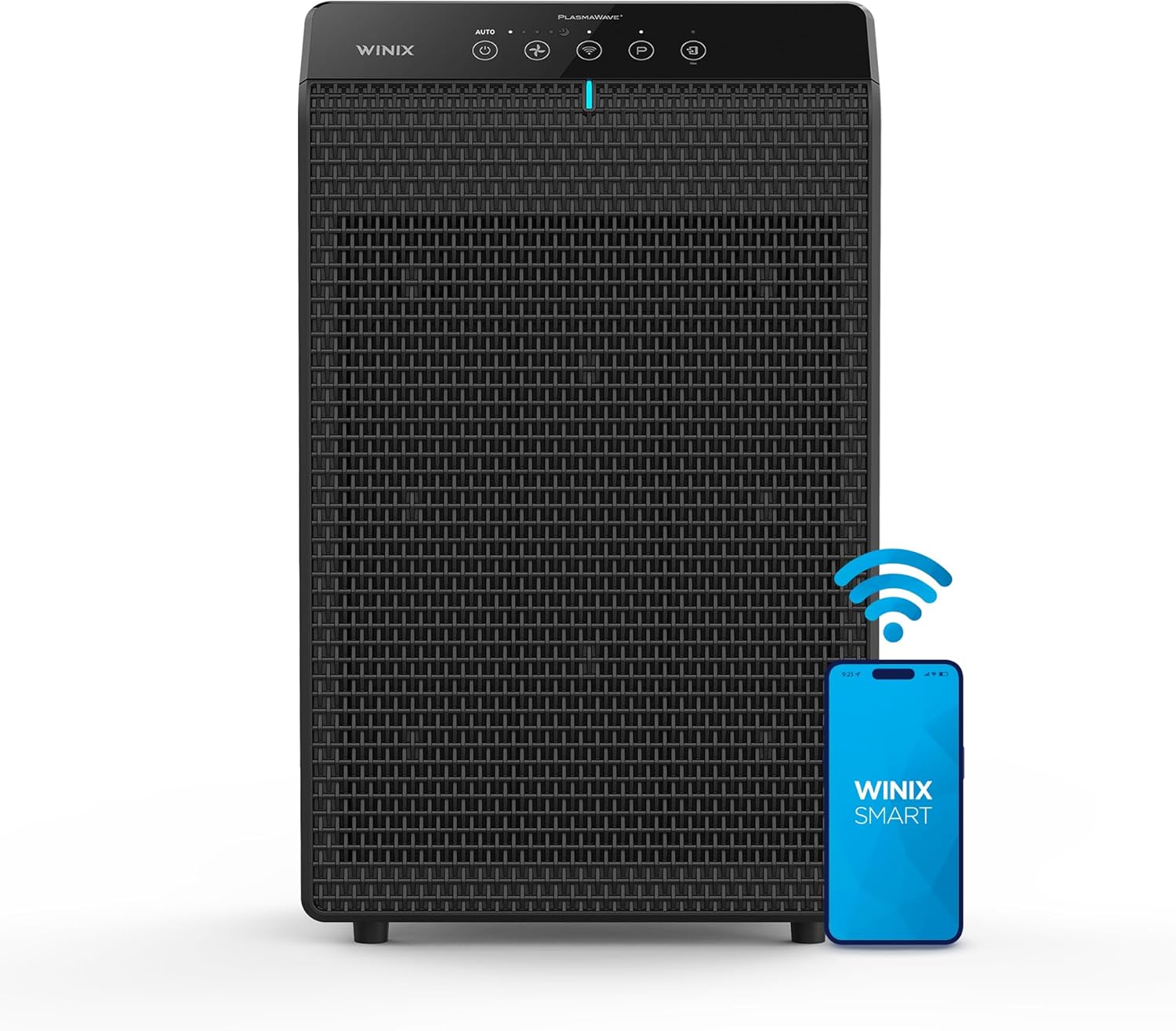
The Winix 5520 employs a conventional upright tower architecture, drawing air through its front intake grille and exhausting cleaned air upward. The physical chassis houses a three-stage mechanical filtration stack comprising a fine mesh pre-filter, an Advanced Odor Control carbon sheet, and a True HEPA main filter. Build quality is standard for molded consumer plastics in this price tier, favoring functional utility over luxury finishes. Top-facing controls include basic push-button operation alongside visual air quality LED indicators that change color based on optical particulate sensor readings. The inclusion of an integrated light sensor automatically switches the unit into its dim, low-noise sleep mode when ambient lighting falls. Measuring standard dimensions for a mid-sized floor unit, the housing provides straightforward access to internal components via a snap-off front panel. Connectivity incorporates 2.4 GHz Wi-Fi, permitting operation through the Winix Smart smartphone application or Amazon Alexa voice platforms without requiring supplementary control hardware.
Real-world performance
Air cleaning performance hinges on the 5520's AHAM-verified baseline of 392 square feet, which delivers roughly five air changes per hour for typical smoke, dust, and pollen containment. The manufacturer claims coverage up to 1,882 square feet, but that metric represents just one air turnover every sixty minutes, which is insufficient for managing severe allergies. The True HEPA filter performs to established standards, capturing 99.99 percent of particulate matter down to 0.01 microns. Gas-phase removal is handled by an activated carbon layer, suitable for light kitchen odors and volatile organic compounds, though not dense enough for heavy industrial off-gassing. Acoustically, the unit drops to an unobtrusive 23.5 decibels on low, making it appropriate for bedrooms. However, high-speed operation is considerably louder, which buyers should anticipate if the unit runs at elevated fan speeds to service rooms larger than its certified footprint. PlasmaWave technology provides supplemental treatment, but can be manually disengaged.
Value for money
Priced at $134.99, the Winix 5520 occupies an aggressive entry-to-midrange position, especially given the inclusion of app control and certified True HEPA filtration. However, total cost of ownership extends well beyond the hardware purchase. Air purifiers incur continuous operating expenses through filter degradation and electricity consumption. Drawing 50 watts at peak output, electrical costs remain predictable and low, particularly if maintained in auto mode. The primary financial calculation involves consumable filter packs. Because HEPA and carbon sheets require replacement roughly every twelve months depending on air quality, three years of continuous operation often equals or exceeds the initial purchase price of the machine. The washable fine mesh pre-filter helps mitigate this somewhat by capturing pet hair and lint before they blind the deeper pleated media. Prospective owners should verify replacement filter pack pricing from Winix before purchasing to calculate accurate multi-year operational budgets.
Who should skip it
Buyers seeking to purify spacious open-concept living areas larger than 400 square feet should bypass this model. The stated 1,882-square-foot rating provides inadequate air cycling to mitigate active allergens or wildfire smoke in large areas, where higher Clean Air Delivery Rate capacity is required. Users dealing with heavy VOC exposure, tobacco smoke, or severe chemical sensitivities should also look elsewhere; the carbon filter sheet contains insufficient activated carbon mass to continuously adsorb heavy gaseous pollutants. Individuals who prefer entirely passive mechanical filtration without electronic ionization should note that while the unit features PlasmaWave functionality, verifying whether it remains permanently disabled between power cycles is necessary. Finally, shoppers who do not intend to connect the device to home Wi-Fi or mobile applications may find comparable raw air cleaning performance in simpler, mechanically identical non-smart purifiers at a lower initial retail price.