Do Air Purifiers Help With Mold? Facts and Reality Check
Air purifiers capture floating mold spores to improve indoor air quality, but they cannot solve the root moisture issues causing growth in your home.
By the Niche Picks editorsUpdated November 8, 20268 min readDrawn from our 30 research-based air purifiers & hvac reviews
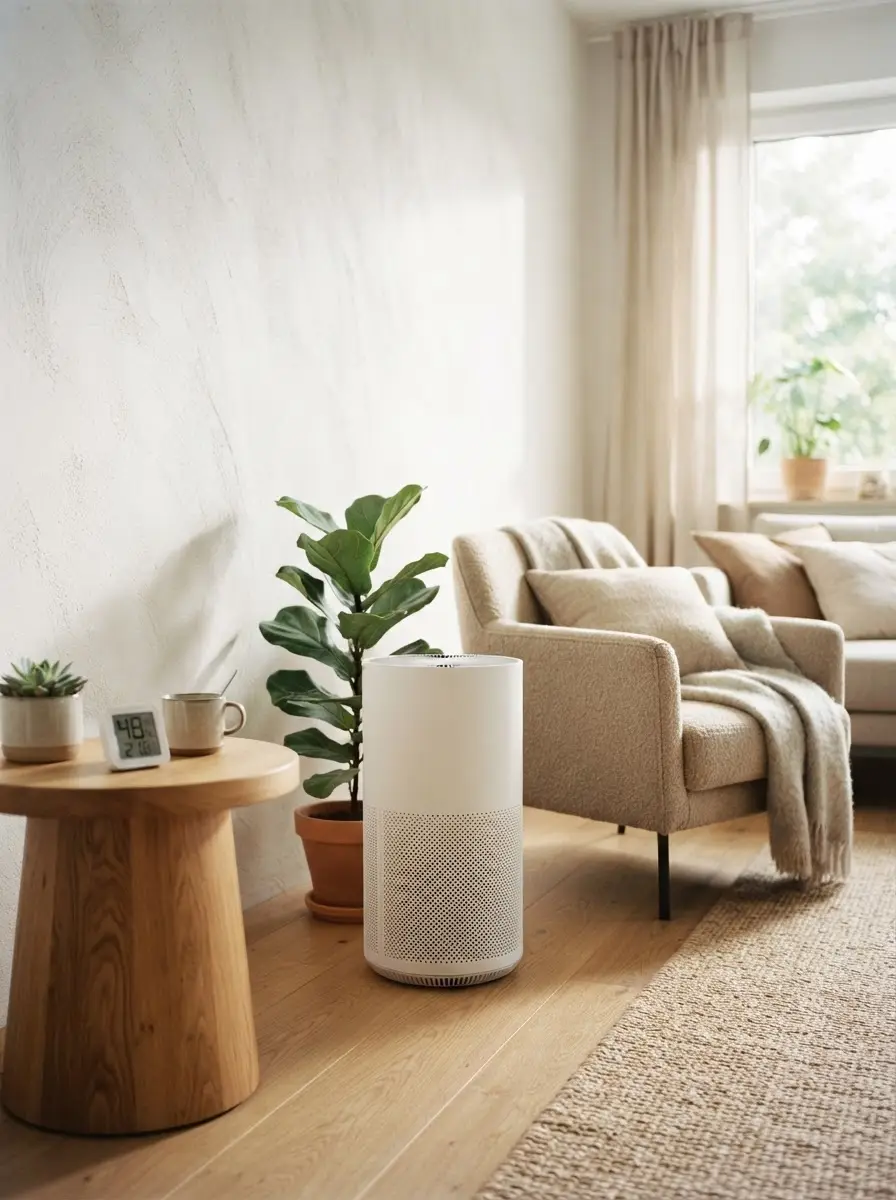
AI-generated editorial illustration; not a product or test photograph.
Short answer
Air purifiers with True HEPA filters effectively trap airborne mold spores as they circulate through the system, which helps reduce respiratory irritation and allergy symptoms. However, these machines do not kill mold colonies or stop growth at the source. Eliminating moisture via ventilation or dehumidification remains the only effective way to prevent mold from returning.
6
Product listings discussed; not hands-on tests
6/6
Discussed listings with a recorded price
$102.99–$249.98
Recorded listing price range; not a complete setup cost
Key takeaways
True HEPA filtration is essential to capture mold spores, which are typically between 1 and 30 microns in size.
Air purifiers act as a secondary defense mechanism to clear the air during and after physical mold remediation.
Moisture control, such as using a dehumidifier or fixing leaks, is mandatory to stop mold growth entirely.
High CADR is required to process the room's air volume multiple times per hour, which is more effective than low-volume, single-turnover rates.
Running the purifier continuously is necessary to prevent spores from resettling on surfaces.
Ionizer-only devices or 'HEPA-type' units often lack the certification and physical barrier needed to reliably trap fine fungal particulates.
Products discussed in this article
Editorial scores and recorded prices are reference points, not measurements of suitability for every use. Read each review's specifications and limitations.
WINIX 5510 Air Purifier (New Generation of 5500-28.2
WINIX 5520 Air Purifier for Home Large Room Up to 18828.0
COWAY Air Purifier for Home Up to 1,748ft², HEPA8.1
LEVOIT Smart Air Purifier for Home Large Room up7.8
MOOKA Air Purifier for Home Bedroom Large Room 22007.7
AEOCKY 5500 Sq.Ft Energy Star Most Efficient 20258.3
Recorded price (USD)
WINIX 5510 Air Purifier (New Generation of 5500-2$179.99
WINIX 5520 Air Purifier for Home Large Room Up to 1882$179.99
COWAY Air Purifier for Home Up to 1,748ft², HEPA$229.99
LEVOIT Smart Air Purifier for Home Large Room up$169.99
MOOKA Air Purifier for Home Bedroom Large Room 2200$102.99
AEOCKY 5500 Sq.Ft Energy Star Most Efficient 2025$249.98
Comparison of Recommended Air Purifiers for Particle Capture
Product
Max Floor Area
Filter Type
Core Benefit
WINIX 5510
1881 sq ft
True HEPA
App Control
WINIX 5520
1882 sq ft
True HEPA
Auto Monitoring
COWAY AP-1512HH
361 sq ft
True HEPA
Compact Size
LEVOIT Vital 200S-P
1875 sq ft
3-Stage Filter
Pet Dander Focus
MOOKA KJ190H
2200 sq ft
HEPA
Budget Pricing
The Functional Role of Purifiers in Mold Management
It is a common misconception that an air purifier serves as a total solution for mold outbreaks. In reality, these devices are diagnostic and preventative tools for indoor air quality management rather than structural remediation equipment. A quality machine, such as the WINIX 5510, utilizes a True HEPA filtration stage designed to capture microscopic particulate matter, including mold spores, as they circulate through the intake. By lowering the airborne spore concentration in your breathing zone, you can significantly mitigate allergy symptoms and respiratory irritation. However, if you have a damp basement, leaky pipe, or poorly ventilated shower area, the mold will continue to propagate faster than any consumer air purifier can physically capture it.
Before relying on an air purifier, you must eliminate the moisture source. If you notice visible mold patches, scrubbing them with appropriate cleaning solutions or hiring professional remediation services is the required first step. Once the surface is disinfected and thoroughly dried, the air purifier serves as a secondary line of defense, capturing any residual spores that become aerosolized during the scrubbing process. Understanding these limits is crucial; you can learn more about how these systems interact with your home environment in our buyer's guide. Without managing ambient humidity, you are effectively treating a symptom while the underlying biological process remains active. For tips on maintaining your specific environment and avoiding common mistakes, consult our blog for best practices in HVAC management.
Not all filter media are created equal when addressing mold. Mold spores range in size, often between 1 and 30 microns, which makes them susceptible to capture by high-efficiency media. However, 'HEPA-type' marketing labels are frequently applied to budget units that lack certified performance, often failing to guarantee a 99.97% capture rate for sub-micron particles. A machine like the COWAY AP-1512HH is a benchmark choice because it utilizes True HEPA media, ensuring consistent capture efficiency that 'HEPA-like' products cannot reliably replicate.
When mold is the primary concern, avoid simple ionization-only devices or units relying primarily on basic activated carbon. While carbon is excellent for gas-phase VOCs and odors, it does not trap solid biological matter. Furthermore, you should avoid improper placement; for instance, pushing a unit into a corner where airflow is obstructed significantly reduces its effective reach. Instead, position the purifier in an open area of the room. For a purifier to be effective, it should be capable of processing the total air volume of your room at least four to five times per hour. Our comparison tool assists in identifying models with the airflow throughput necessary to handle your specific room dimensions, ensuring that the machine is not just running, but actively cleaning the air. If you are questioning the physical mechanics behind these filtration processes, our article on how air purifiers work provides deeper technical insight into airflow dynamics.
An air purifier is not a substitute for moisture control. If you do not address the source of the dampness, the mold will continue to grow regardless of how many air purifiers you run.
Optimizing CADR for Effective Spore Capture
The effectiveness of an air purifier against mold is strictly dictated by its Clean Air Delivery Rate (CADR). If the fan assembly is underpowered for the room size, spores will have ample time to settle on surfaces like furniture and carpet before they can be pulled into the purifier's intake. Devices like the MOOKA KJ190H offer an accessible entry point for small to mid-sized bedrooms, but you must reconcile their actual performance with the physical constraints of your living space. Always aim to match the device's AHAM-verified CADR to roughly two-thirds of your room's square footage to ensure the recommended five air changes per hour.
If you are currently struggling with persistent mold issues, keeping your purifier on its highest setting during the day can help aggressively clear the air, though this typically increases acoustic noise. During the night, you may shift to a quieter, lower-speed setting, but recognize that this reduces the machine's filtration rate. Maintaining high volume throughput is essential, especially in humid climates where mold can regenerate rapidly. Do not be misled by headline square-footage claims; often, these numbers assume only one air change per hour, which is insufficient for managing the concentrations of airborne spores found in a home with mold growth. For a more comprehensive look at choosing the right equipment for specific needs, our best air purifier for home page offers research-based insights on matching hardware power to your room’s requirements.
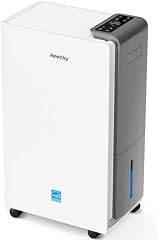
While air purifiers target the spores themselves, dehumidifiers target the environment that enables mold to thrive. If your home routinely experiences humidity levels above 50%, mold growth is almost guaranteed. Using a high-capacity unit like the AEOCKY 80-Pint Dehumidifier is often a more direct and efficient way to address a mold issue than solely relying on an air purifier. By keeping indoor relative humidity below 50%, you essentially 'starve' the mold, preventing new colonies from germinating in porous materials like drywall or carpet. This represents a far more sustainable long-term strategy than simply filtering the air post-growth.
A dehumidifier requires disciplined maintenance, including regular drainage of the reservoir or the implementation of a continuous gravity-fed drain hose, and periodic cleaning of the evaporator coils to prevent buildup. Many households choose a dual-system approach: a dehumidifier to lower moisture levels and an air purifier to continuously catch any spores present in the air. For those operating on a strict budget, investing in a high-efficiency dehumidifier to manage structural moisture will yield better outcomes than spending your funds on a low-end air purifier. Always ensure that your HVAC system is maintained as well, though it is important to note that many standard furnace filters are designed primarily to protect the equipment blower, rather than to sterilize your ambient air to the degree required for medical-grade allergy relief.
Generic replacement filters often lack the proper seal to trap sub-micron mold spores. Using official OEM filters ensures that air is actually forced through the HEPA media.
Maintaining Your Filtration Equipment
Mold spores are biological contaminants that can theoretically colonize a saturated, dirty filter if the unit is housed in a persistently moist area. This biological reality makes a strict filter replacement schedule non-negotiable. If you allow your HEPA filter to become overly clogged with household dust and trapped moisture, the airflow resistance increases, performance drops, and the internal housing of the unit may begin to emit a 'musty' odor. Most manufacturers mandate replacing the primary HEPA element every 6 to 12 months, though environments with active mold or higher pet dander density may require more frequent cycles.
Always purchase genuine replacement filters directly from the manufacturer for units like the WINIX 5520 or LEVOIT Vital 200S-P. Third-party or off-brand filters are often constructed with thinner media, improper sealing, or cheaper materials that allow air to bypass the filter stack entirely. This creates a leakage path that allows fine spores to circulate back into the room, effectively rendering your purifier useless for its intended purpose. Keep track of your filter usage via the manufacturer's mobile application if your unit supports it, or use a manual calendar log. For further reading on finding high-performance units, our best HEPA air purifier list provides insight into the build quality and filter longevity of top-performing devices.
Addressing Musty Odors and Persistent Infestations
If you detect a consistent 'earthy' or 'musty' odor in your living spaces, it serves as a strong indicator of an active mold colony hidden within your structure. While an air purifier with a high-quality activated carbon stage—like those found on many modern air purifiers—can help mask or mitigate some of these odors, it will not resolve the underlying biological degradation of your walls or flooring. If the smell lingers after you have scrubbed accessible surfaces and run your purifiers, you may require professional moisture testing to locate trapped humidity behind drywall, under floorboards, or within HVAC ducting.
Remember that while air purifiers are powerful allies, they have physical limits. They cannot reach behind baseboards, inside attic insulation, or within the deep recesses of your HVAC ducts where mold frequently colonizes. Use your portable purifiers to manage the air quality in your bedrooms and primary living areas, but prioritize a professional building inspection if the musty odor persists despite your mitigation efforts. Our resources on the best air purifiers for allergies can help you identify units that excel at catching fine particulates, which remains the most important metric for anyone suffering from mold-induced respiratory distress. By layering moisture control, professional remediation, and certified HEPA filtration, you can effectively reclaim your indoor air quality.
Step by step
1Locate the primary source of humidity or water ingress in the affected area.
2Employ a dehumidifier to stabilize the room's humidity level to 50% or below.
3Physically remove existing mold colonies from surfaces using safe, approved cleaning methods.
4Position your True HEPA air purifier to maximize airflow intake.
5Set the fan speed to ensure sufficient air turnover for the room's total volume.
6Monitor the filter life indicator and replace the filter promptly when needed.
7Continue running the system to catch any spores displaced during the cleanup process.
Quick checklist
Identify and repair the source of moisture, such as leaky plumbing or condensation.
Use a hygrometer to ensure your indoor relative humidity stays below 50%.
Clean visible mold on surfaces with an approved cleaning solution.
Place your air purifier in a central location with at least two feet of clearance on all sides.
Verify that the unit uses certified True HEPA filtration (99.97% efficiency).
Run the purifier continuously, or at least during the hours you occupy the room.
Replace your HEPA filters every 6 to 12 months according to the manufacturer schedule.
Ensure the CADR of the unit matches your room size for at least 4 air changes per hour.
Frequently asked questions
Do ozone generators help with mold?
No, ozone generators are not recommended for household mold issues. They produce ozone, which is a significant respiratory irritant, and they do not actually remove mold spores from the air. They often create a false sense of security by masking odors while leaving the hazardous spores and moisture source behind.
How do I know if my air purifier is effectively removing mold?
You may observe a reduction in musty odors and a decrease in your allergy-related symptoms. However, since you cannot see the spores, the only reliable way to confirm effective mold control is by verifying the humidity is below 50% and the air purifier's filter is capturing standard household dust and debris.
Can an air purifier kill mold colonies on my walls?
No. Air purifiers are designed to capture floating particles, not to treat surfaces. They have no chemical or physical mechanism to eliminate mold growing on drywall, wood, or fabric. Those surfaces must be cleaned and disinfected manually, and the moisture must be removed to stop regrowth.
Is a high-MERV filter in my HVAC system better than a portable purifier?
A high-efficiency MERV 13 filter can help whole-home particle reduction, but it may stress the blower motor of older HVAC systems. A portable True HEPA purifier provides dedicated, intense filtration for specific problem rooms where mold risk is the highest.
How often should I change the filter if I am managing a mold-prone area?
In a home dealing with active or recurring mold, the HEPA filter will load up with spores and other particulate matter faster than in a clean environment. Inspect your filters every three months and replace them immediately if you see signs of heavy debris buildup, dampness, or a decline in airflow.
Amazon links are affiliate links; we may earn a commission at no cost to you.
Shortlists in this category
Ranked lists from our air purifiers & hvac reviews, limited to listings whose titles confirm the product type, with budget cuts where enough recorded prices sit on both sides of the line.
This page summarizes our research reviews of Amazon listings, listed specifications and captured buyer ratings. It is not a hands-on test. Scores are editorial assessments, not measured performance; prices are recorded snapshots and may change. A category can include both main products and accessories, so its overall price range is not the cost of a complete setup.
Most recent product record update: October 28, 2026. Individual records may be older; this is not a verification date for every claim. Prices on this page were read from the listings Nov 8, 2026 – Nov 12, 2026.
Choose the product type first. These groups require a match in the listing title; an import search term alone is not enough. Scores rank our recorded research assessments within each group, not independently measured performance.
Values are shown as recorded, without unit conversions or inferred compatibility. Not recorded means unknown, not absent. Prices are snapshots, not current offers. Editorial scores are research judgments, not lab results. Amazon links are affiliate links.
Before treating a comparison as complete
Which details are still unknown?
A specification appearing in a listing is not independent verification. These counts show which shortlisted records contain the same field; a blank record does not mean the product lacks the feature.
Particle Retention Size
Recorded for 2 of 2 shortlisted models
Present in every shortlisted record. Check units, exact variants and the current manufacturer documentation before relying on it.
Power Source
Recorded for 2 of 2 shortlisted models
Present in every shortlisted record. Check units, exact variants and the current manufacturer documentation before relying on it.
Wattage
Recorded for 2 of 2 shortlisted models
Present in every shortlisted record. Check units, exact variants and the current manufacturer documentation before relying on it.
Contaminant Filtration Capability
Recorded for 2 of 2 shortlisted models
Present in every shortlisted record. Check units, exact variants and the current manufacturer documentation before relying on it.
Control Method
Recorded for 2 of 2 shortlisted models
Present in every shortlisted record. Check units, exact variants and the current manufacturer documentation before relying on it.
Controller Type
Recorded for 2 of 2 shortlisted models
Present in every shortlisted record. Check units, exact variants and the current manufacturer documentation before relying on it.
Match CADR to room size, then check noise at the speed you will actually run.
Annual filter cost often exceeds the purchase price over three years.
True HEPA is a standard; 'HEPA-type' is marketing.
If a specification, certification or compatibility detail is absent, mark it as unknown and ask the seller or manufacturer. Do not substitute a star rating, an editorial score or a different model's specification.