Discover how ABS-like and standard photopolymer 3D printer resins compare in impact strength, print fidelity, material cost, and workshop handling.
By the Niche Picks editorsUpdated October 25, 202610 min readDrawn from our 30 research-based maker tools reviews
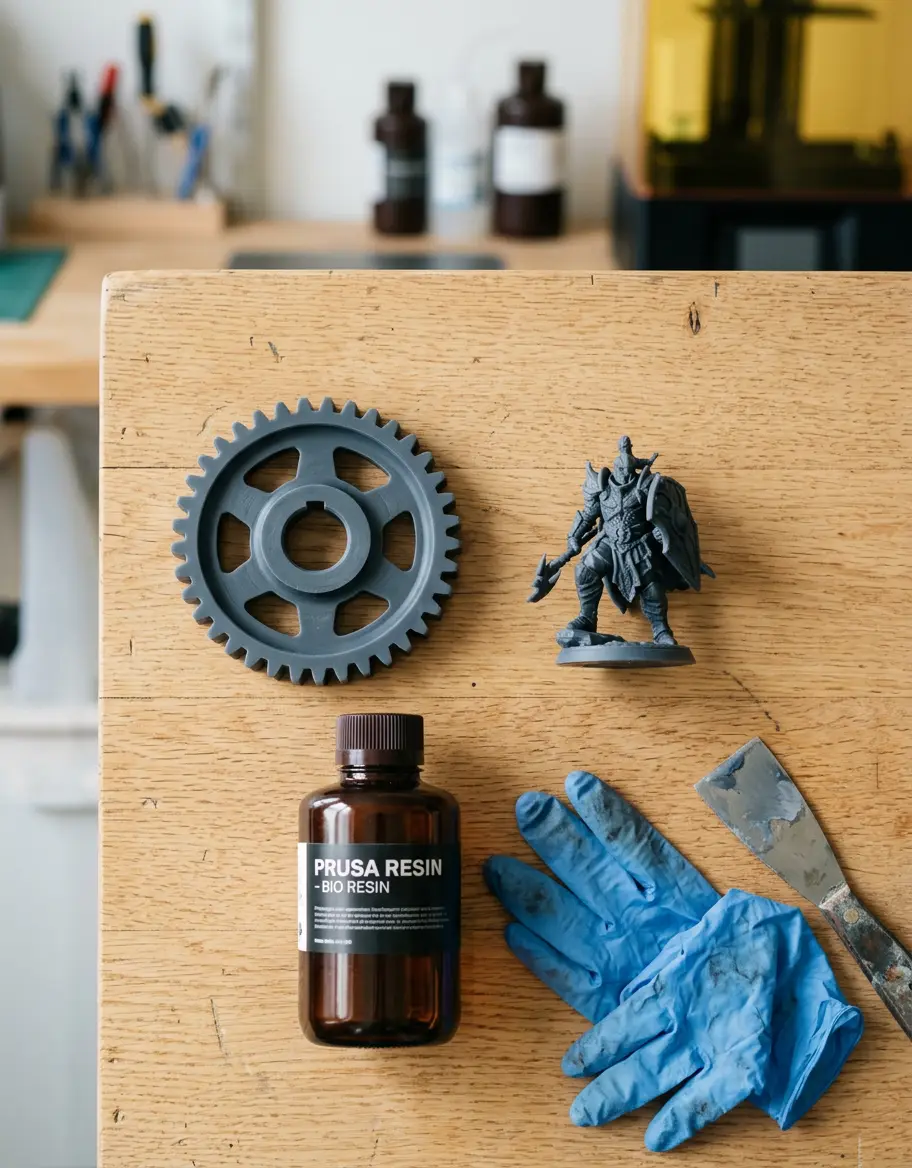
AI-generated editorial illustration; not a product or test photograph.
Short answer
The primary difference between ABS-like resin and standard resin is mechanical durability. Standard resin is rigid, sharp-detailed, and economical, but inherently brittle under stress. ABS-like resin incorporates flexible compounds to increase impact resistance and elongation at break, allowing finished parts to survive drops, mechanical friction, and light assembly stress without shattering.
4
Product listings discussed; not hands-on tests
4/4
Discussed listings with a recorded price
$16.99–$44.63
Recorded listing price range; not a complete setup cost
Key takeaways
Standard photopolymer resin offers exceptional surface detail and low cost but fractures easily upon physical impact.
ABS-like resin exhibits higher tensile elongation and impact resistance, making it suitable for functional prototypes and tabletop gaming miniatures.
Both formulations cure under 405nm UV light and share similar layer exposure settings on modern monochrome LCD 3D printers.
Standard resin typically costs less per kilogram, whereas ABS-like formulations carry a modest price premium for structural additives.
Neither formulation is actual thermoplastic ABS; both are reactive liquid photopolymers requiring dedicated chemical safety and workspace ventilation.
Products discussed in this article
Editorial scores and recorded prices are reference points, not measurements of suitability for every use. Read each review's specifications and limitations.
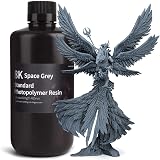
ELEGOO Upgraded 8K Standard 3D Printer Resin Space8.3
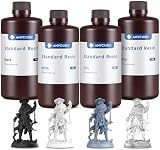
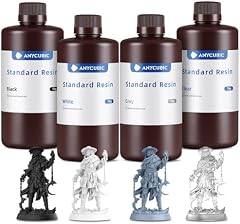
ANYCUBIC 3D Printer Resin Bundle, 405nm SLA UV-Curing8.4
Recorded price (USD)
Siraya Tech Fast ABS-Like 3D Printer Resin27.37 USD
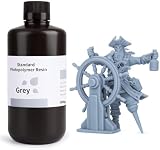
ELEGOO Standard 3D Printer Resin Grey 1000g16.99 USD
ELEGOO Upgraded 8K Standard 3D Printer Resin Space20.99 USD
ANYCUBIC 3D Printer Resin Bundle, 405nm SLA UV-Curing44.63 USD
Comparison of Standard vs. ABS-Like 3D Printer Resins
Product
Resin Type
Listed Price
Key Characteristic
User Rating
Siraya Tech Fast ABS-Like
ABS-Like Photopolymer
$27.37
Non-brittle, impact resistant, low viscosity
4.7 / 5
ELEGOO Standard Grey
Standard Photopolymer
$16.99
Rigid, economical baseline, 405nm compatibility
4.7 / 5
ELEGOO Upgraded 8K Standard
Standard Photopolymer
$20.99
Low light bleed, high-density screen detail
4.7 / 5
ANYCUBIC Resin Bundle (4KG)
Standard Photopolymer
$44.63
Bulk utility pack, fast layer replenishment
4.7 / 5
What is the mechanical difference between standard and ABS-like resin?
The fundamental difference between standard photopolymer resin and ABS-like resin lies in their cured mechanical behavior. Standard photopolymers, such as the ELEGOO Standard 3D Printer Resin, are formulated primarily from acrylate oligomers and photoinitiators engineered to achieve high surface hardness and rigid structural profiles. Once cured under an ultraviolet light source, standard resin forms an unyielding polymer matrix characterized by high Shore hardness but very low elongation at break. This means the material has virtually no ductility; when subjected to sudden mechanical shock, torsional bending, or tensile strain, standard resin does not flex or deform elastically. Instead, it fractures instantly, producing brittle, glass-like breaks.
In contrast, ABS-like formulations like Siraya Tech Fast ABS-Like Resin integrate toughening additives and flexible polyurethanes into the chemical blend. These molecular chains permit a degree of internal movement under mechanical loading. While ABS-like resin does not match the ductile flexibility of industrial nylon or TPU, it substantially increases tensile elongation and impact absorption compared to standard resins. Parts printed in ABS-like resin can withstand light handling, friction fits, and minor drops without snapping off delicate structural features.
When reviewing options in our maker tools guide, selecting between these formulations depends on whether your 3D printed model is purely decorative or will experience physical interaction. Visual display models, static busts, and architectural maquettes rarely encounter dynamic stress, making the rigidity of standard resin adequate. However, functional brackets, snap-fit enclosures, articulated assemblies, and tabletop miniatures handled during gaming benefit directly from the added resilience of an ABS-like chemistry.
How do impact resistance and drop durability compare?
In real-world workshop environments, the drop test remains the most evident indicator of the material divergence between standard and ABS-like formulas. Standard consumer photopolymers are notoriously fragile once fully washed and post-cured. If a finished miniature printed in standard grey resin falls from a typical workbench or tabletop onto a concrete floor, slender protrusions such as weapons, antenna shafts, and outstretched limbs almost always shear off cleanly. The cross-sectional density of the part cannot dissipate kinetic energy without catastrophic shear failure.
ABS-like resins specifically counteract this failure vector. Formulations such as Siraya Tech Fast are engineered to reduce baseline structural brittleness. When subjected to moderate impact, the internal polymer bonds flex microscopically rather than cleaving apart. As a result, components dropped from desk height onto hard surfaces regularly survive intact, or suffer minor localized scuffs rather than complete structural failure. This property makes ABS-like blends the preferred choice for tabletop war gaming hobbyists, who transport, pack, and manipulate intricate models on a routine basis.
It is important to understand that post-processing parameters heavily influence this durability. Over-curing any resin—even an ABS-like variant—under high-intensity ultraviolet lights for excessive durations causes progressive brittleness over time. Extended exposure causes excessive cross-linking across the polymer chains, gradually eroding the plasticizing effects engineered into ABS-like mixtures. Following structured 3D printer maintenance steps and calibrating UV post-cure durations precisely ensures that ABS-like components retain their targeted mechanical shock absorption without degrading prematurely.
Does ABS-like resin sacrifice fine surface detail and resolution?
A common concern among 3D printing hobbyists is whether switching to an impact-resistant photopolymer degrades visual crispness and microscopic edge retention. High-resolution miniature production requires acute edge definitions, smooth organic skin surfaces, and deep, clear negative crevices. Standard resins, especially specialized variants like ELEGOO Upgraded 8K Standard Resin, are optimized to minimize light divergence within the liquid vat, ensuring that ultraviolet photons do not scatter into unexposed areas of the layer mask.
Historically, early tough and flexible resins suffered from light bleed and higher fluid viscosity, which softened sharp corners and partially cured fine recessed details. However, contemporary ABS-like blends have largely closed this fidelity gap. Materials such as Siraya Tech Fast are explicitly formulated for high-resolution masked stereolithography (MSLA) and digital light processing (DLP) printers. They achieve sharp feature resolution and smooth layer transitions that closely rival standard blends when calibrated on modern monochrome screens, such as those evaluated in our ELEGOO Saturn 4 Ultra vs Mars 5 Ultra comparison.
Where standard resins still maintain a marginal advantage is in sheer dimensional rigidity across thin, unsupported structural elements during the printing process itself. Because ABS-like resin is slightly more ductile, extremely slender support tips or razor-thin wall sections may deflect slightly under physical vat peel forces if the support contact diameter is set too small. To maintain immaculate dimensional fidelity with ABS-like resins, operators often increase light support tip diameters by a fraction of a millimeter or adjust exposure lift speeds slightly to prevent micro-deflections before final curing.
How do fluid viscosity and printing parameters differ?
Fluid dynamics within the resin vat dictate how easily fresh liquid rushes under the build plate during each vertical peel and retraction cycle. Resins with thick, sluggish viscosity demand longer rest times before exposure, slowing down total print cycles and increasing hydrostatic pressure on delicate supports. Fortunately, leading standard and ABS-like options both emphasize low liquid viscosity to streamline operational printing speeds.
Standard formulations, including the ANYCUBIC 3D Printer Resin Bundle and ELEGOO Standard Grey, exhibit thin, rapid-flowing fluid profiles. This fluidity allows fast reflow across the release film, shortening wait-before-cure lift sequences and maintaining consistent layer bonding across large horizontal cross-sections. Siraya Tech Fast ABS-Like Grey is similarly designed with low fluid viscosity, ensuring that it displaces quickly during downward platform motion and settles cleanly before the light engine fires. This low fluid resistance helps mitigate suction stresses across the vat release sheet, preventing layer separation failures.
In terms of slicing parameters, exposure times for ABS-like resins are typically very close to those required for standard resins on standard 405nm monochrome LCD machines. Normal layer exposures for both chemistries generally land between 1.8 and 3.0 seconds depending on machine intensity, layer height, and pigment density. However, because ABS-like resins experience unique peeling forces due to their ductile nature, slicer settings often benefit from a slight increase in bottom layer exposure time (such as 25 to 35 seconds) to ensure rigid anchoring to the metal build plate during initial base formation.
What is the cost difference between ABS-like and standard resin?
Consumable pricing plays a decisive role when managing ongoing operational expenses in an additive manufacturing workflow. Standard photopolymers consistently represent the most economical category of 3D printing liquids. For example, ELEGOO Standard Grey lists at $16.99 per 1-kilogram bottle, while multi-bottle packages like the ANYCUBIC 4-kilogram bundle retail at $44.63, driving the effective price down to roughly $11.16 per kilogram. Even specialized high-resolution standard blends, such as ELEGOO Upgraded 8K Standard Resin at $20.99 per kilogram, remain highly accessible for hobbyists producing bulk tabletop terrain or static visual mockups.
By comparison, ABS-like photopolymers command a moderate price premium due to their specialized chemical formulation and proprietary flexibilizing agents. Siraya Tech Fast ABS-Like Grey lists at $27.37 for a 1-kilogram container. While this price is higher than baseline standard resin, it remains significantly more economical than specialized engineering-grade resins, such as elastomeric rubbers or high-temperature tooling resins, which frequently retail between $50 and $100 per liter.
When evaluating overall value across our maker tools catalog, the initial per-bottle cost must be balanced against print failure rates and component longevity. If a functional part printed in budget standard resin fractures during assembly or drops during finishing, the time and resin spent reprinting the model erode any initial savings. For prototypes requiring structural resilience or parts destined for active physical handling, the modest price premium of an ABS-like resin often yields superior long-term economy by reducing part attrition and replacement printing.
Why is workspace ventilation critical for both resin types?
A critical workshop rule governs all desktop vat photopolymer systems: whether you are printing with standard or ABS-like formulations, you must budget for dedicated active ventilation. A common misconception among hobbyists is that "low odor" or "ABS-like" designations imply safer ambient conditions. In reality, both materials are composed of reactive liquid chemical compounds that off-gas volatile organic compounds (VOCs) and airborne particulate precursors throughout the printing, washing, and curing workflows.
Standard resins like ELEGOO Standard Grey and high-density variants like ELEGOO Upgraded 8K generate noticeable chemical aromas during continuous operation. While manufacturers often formulate modern resins to reduce harsh chemical scents, the absence of an intense odor does not mean the air is free of volatile emissions. Operating unventilated resin equipment in living quarters or poorly ventilated basements can cause respiratory irritation and environmental discomfort over extended build cycles.
ABS-like resins require the exact same safety infrastructure. Operators must handle uncured liquid with disposable nitrile gloves, wear eye protection, and house printing and washing stations inside an actively ventilated enclosure or a dedicated room equipped with an exterior ducted exhaust fan or multi-stage carbon filtration system. As highlighted across our guide on common maker mistakes, assuming that safety requirements decrease when moving from industrial engineering polymers to desktop consumer resins is a hazardous oversight. Always incorporate the cost of ventilation, personal protective equipment, and post-processing chemicals into your overall workshop setup budget.
How does ABS-like resin differ from true ABS thermoplastic filament?
It is essential to clarify the technical naming convention that often confuses beginners entering the additive manufacturing space: ABS-like resin is not actual ABS plastic. True ABS (Acrylonitrile Butadiene Styrene) is a petroleum-based engineering thermoplastic used in Fused Deposition Modeling (FDM) extrusion, as well as industrial injection molding. Printing true ABS filament requires a heated nozzle reaching 240°C to 270°C and, most importantly, a fully enclosed print chamber to retain ambient heat and prevent severe layer delamination and warping caused by thermal shrinkage.
In contrast, ABS-like resin is an ultraviolet-curing liquid photopolymer designed exclusively for SLA, DLP, and LCD resin printers. The term "ABS-like" is purely an industry marketing designation used to signal that the cured photopolymer mimics the general rigidity, toughness, and light machinability of injection-molded ABS, rather than sharing its chemical composition. ABS-like resin cures via photon-induced polymerization at room temperature, completely bypassing the high thermal melting mechanics of FDM extrusion.
Furthermore, while true ABS thermoplastic offers outstanding thermal resistance with glass transition thresholds exceeding 100°C, photopolymer ABS-like resins generally soften or degrade at substantially lower temperatures. They are also inherently susceptible to prolonged environmental UV degradation and moisture absorption if left outdoors unsealed. Understanding these material boundaries prevents makers from deploying ABS-like resin in high-heat mechanical applications—such as automotive engine compartments or outdoor enclosures—where only true FDM engineering thermoplastics or specialized engineering resins belong. To explore the full spectrum of fabrication hardware and materials, consult our comprehensive 3D printer guide.
1Identify your application requirements: determine whether your printed part needs fine static aesthetics or drop-resistant durability.
2Prepare your safety gear: put on nitrile gloves and eye protection, and activate room or enclosure ventilation fans.
3Agitate the resin bottle thoroughly for 1 to 2 minutes before pouring into the vat to ensure uniform pigment and chemical distribution.
4Level and calibrate the build platform: establish an even baseline to prevent first-layer detachment on dense geometries.
5Slice your model with material-appropriate settings: apply standard exposure times, slightly increasing bottom layer exposure for ABS-like resins if necessary.
6Print the object and remove it carefully from the build plate using a metal or plastic scraper.
7Wash residual uncured resin in an isopropyl alcohol bath for 3 to 5 minutes, ensuring all crevices are cleared.
8Dry completely and post-cure under 405nm UV light, avoiding over-curing to preserve the impact-absorbing flexibility of ABS-like formulations.
Quick checklist
Verify the model's intended use: choose standard for static display models and ABS-like for handled miniatures or functional parts.
Budget for active workspace ventilation, ducted exhaust, or appropriate carbon air scrubbers.
Stock personal protective equipment, including disposable nitrile gloves, safety glasses, and chemical aprons.
Prepare secondary processing supplies: 99% isopropyl alcohol or dedicated wash solvents and a UV curing station.
Check printer compatibility: confirm your LCD or DLP light source outputs the industry-standard 405nm wavelength.
Run exposure calibration tests (such as calibration matrices) whenever switching between standard and ABS-like formulations.
Frequently asked questions
Can I mix ABS-like resin with standard resin in the same vat?
Yes, many makers mix ABS-like resin with standard resin (often in a 50/50 or 70/30 ratio) to balance cost, stiffness, and impact resistance. Ensure both resins are formulated for the same 405nm wavelength, shake them thoroughly to achieve a homogeneous blend, and run exposure calibration tests to identify the new optimal curing time.
Does ABS-like resin require different exposure settings than standard resin?
Exposure times are generally very similar on modern monochrome LCD 3D printers, often falling between 2.0 and 3.0 seconds per normal layer. However, because ABS-like resin is slightly more ductile and subject to peel forces, operators frequently add 5 to 10 seconds to base layer exposures to guarantee firm bed adhesion.
Why did my ABS-like resin prints turn brittle after curing?
Over-curing is the most frequent cause of post-cure brittleness. Leaving ABS-like parts under high-power UV lamps for excessive periods forces additional cross-linking across the polymer chains, eliminating the material's built-in flexibility. Most small ABS-like prints only require 2 to 5 minutes of total UV exposure after drying.
Can ABS-like resin withstand high outdoor temperatures?
No. While ABS-like resin mimics the impact strength of ABS plastic, it remains a photopolymer with a relatively low heat deflection threshold. Exposure to hot summer temperatures, direct vehicle interiors, or prolonged outdoor sunlight will cause the part to soften, warp, and progressively embrittle from ambient UV radiation.
Is ABS-like resin safe to handle without gloves once cured?
Once completely washed in solvent, thoroughly dried, and fully post-cured under ultraviolet light, ABS-like resin parts are safe to touch with bare hands. However, liquid uncured resin and solvent wash baths always mandate chemical-resistant nitrile gloves and eye protection to avoid skin contact and chemical sensitization.
Amazon links are affiliate links; we may earn a commission at no cost to you.
Sources and limits
This page summarizes our research reviews of Amazon listings, listed specifications and captured buyer ratings. It is not a hands-on test. Scores are editorial assessments, not measured performance; prices are recorded snapshots and may change. A category can include both main products and accessories, so its overall price range is not the cost of a complete setup.
Most recent product record update: September 29, 2026. Individual records may be older; this is not a verification date for every claim.
Choose the product type first. These groups require a match in the listing title; an import search term alone is not enough. Scores rank our recorded research assessments within each group, not independently measured performance.
Values are shown as recorded, without unit conversions or inferred compatibility. Not recorded means unknown, not absent. Prices are snapshots, not current offers. Editorial scores are research judgments, not lab results. Amazon links are affiliate links.
Before treating a comparison as complete
Which details are still unknown?
A specification appearing in a listing is not independent verification. These counts show which shortlisted records contain the same field; a blank record does not mean the product lacks the feature.
Item Weight
Recorded for 2 of 2 shortlisted models
Present in every shortlisted record. Check units, exact variants and the current manufacturer documentation before relying on it.
For ABS or ASA, confirm enclosure, temperatures and ventilation; an enclosure alone does not establish reliable printing or safe emissions.
Auto bed levelling removes the most common failure mode.
Budget for ventilation with any resin or laser machine.
If a specification, certification or compatibility detail is absent, mark it as unknown and ask the seller or manufacturer. Do not substitute a star rating, an editorial score or a different model's specification.