What Size Sleeves for Pokémon Cards? The Ultimate Guide
Learn which sleeve dimensions properly fit your Pokémon trading cards to ensure archival-safe protection and improved durability during every game session.
By the Niche Picks editorsUpdated November 9, 20269 min readDrawn from our 34 research-based board games & tabletop rpgs reviews
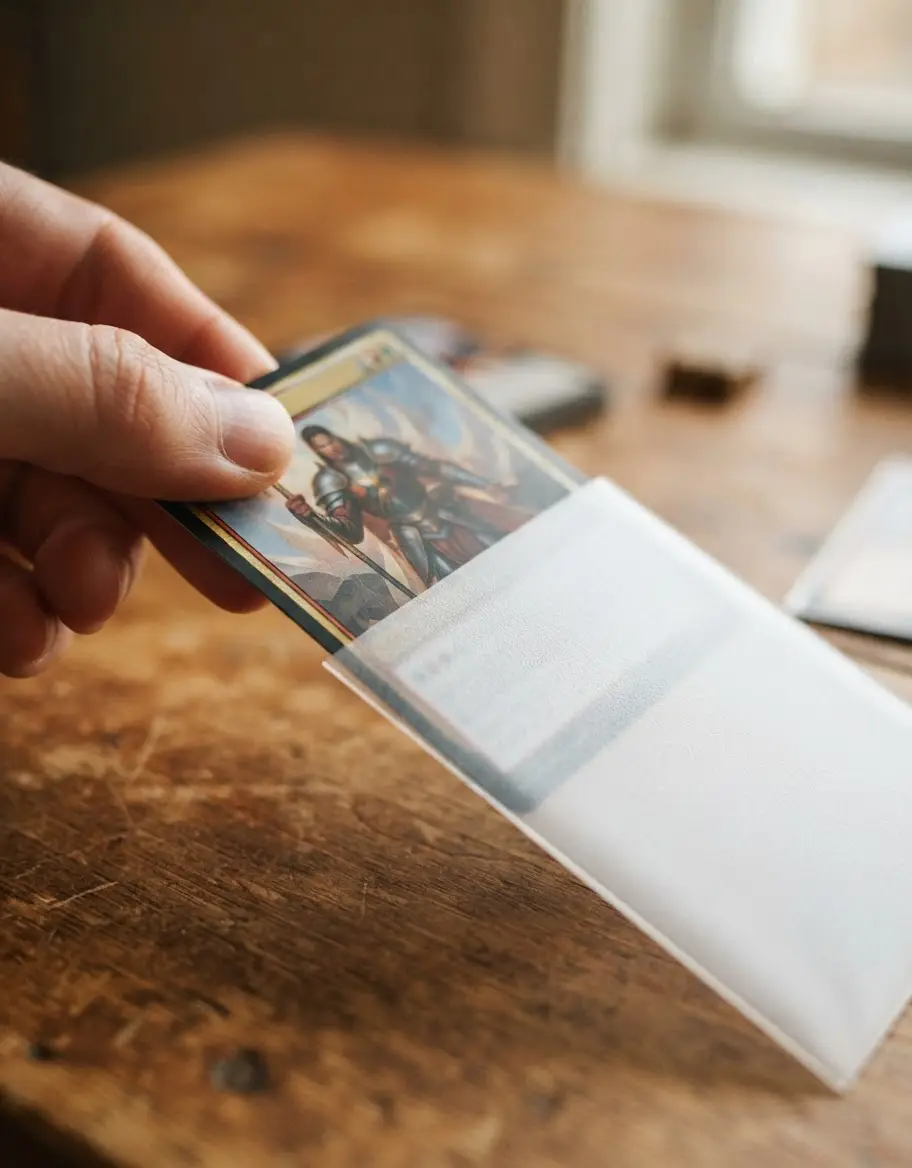
AI-generated editorial illustration; not a product or test photograph.
Short answer
Pokémon cards are standard-sized, measuring 2.5 by 3.5 inches (63.5 by 88.9 millimeters). To protect them effectively, you should use "standard size" sleeves specifically marketed as 63mm x 88mm or 2.5" x 3.5". Using these exact dimensions prevents cards from sliding inside the sleeve while ensuring they are not too tight to bend your collection.
4
Product listings discussed; not hands-on tests
4/4
Discussed listings with a recorded price
$5.99–$13.29
Recorded listing price range; not a complete setup cost
Key takeaways
Always purchase sleeves labeled as 'Standard Size' to match the 2.5 by 3.5-inch Pokémon card dimensions.
Matte-finish sleeves reduce table glare and provide a textured backing that makes shuffling much easier.
Archival-safe, PVC-free, and acid-free materials are non-negotiable for preventing long-term card damage or ink fading.
Premium 120-micron sleeves offer superior structural protection but add significantly more bulk to your deck profile.
Soft 'penny' sleeves are ideal for bulk storage in binders but are not recommended for active, competitive deck play.
Products discussed in this article
Editorial scores and recorded prices are reference points, not measurements of suitability for every use. Read each review's specifications and limitations.
Dragon Shield | Standard Size Matte Card Sleeves | 1008.3
Dragon Shield | Matte Dual Standard Size Card Sleeves8.7
Ultra PRO - Penny Sleeves® Clear Card Sleeves8.3
Ultra Pro Clear Standard Trading Card Sleeves, 100 Pack8.5
Recorded price (USD)
Dragon Shield | Standard Size Matte Card Sleeves | 100$11.28
Dragon Shield | Matte Dual Standard Size Card Sleeves$13.29
Ultra PRO - Penny Sleeves® Clear Card Sleeves$7.19
Ultra Pro Clear Standard Trading Card Sleeves, 100 Pack$5.99
Comparison of Recommended Sleeve Options
Product
Best For
Finish
Material
Micron Thickness
Dragon Shield Matte
Constructed Decks
Matte
Polypropylene
120
Dragon Shield Dual
Competitive Play
Matte
Polypropylene
120
Ultra PRO Penny
Bulk Storage
Clear
Polypropylene
Low
Ultra Pro Clear
General Use
Clear
Polypropylene
Low
Why Sleeve Size Matters for Pokémon Cards
When you invest in a trading card game like Pokémon, preserving the card surface is critical for both aesthetic enjoyment and potential trade value. Pokémon cards follow the industry standard of 2.5" x 3.5". If you choose sleeves that are too large, the cards will constantly shift, inviting dust and debris to scratch the card faces over time. Conversely, undersized sleeves can cause the cards to bow or the corners to fray.
Our reviews of Dragon Shield standard sleeves highlight how precise engineering at the 63x88mm mark creates an archival-safe barrier against moisture and environmental degradation. These sleeves are crafted from polypropylene, which is chemically inert, ensuring that your foil cards do not cloud or suffer from ink transfer during storage. Understanding your specific goals—whether you are archiving a complete set or building a competitive tournament deck—will determine which material gauge is best for you. For more insights on protecting your collection, consult our board games & tabletop RPGs buyer's guide.
If you are planning to handle your cards regularly for gameplay, standard sizing is just the first step. You must also account for the thickness of the sleeve. Premium options like the Dragon Shield Matte Dual series offer 120 microns of thickness, which provides a rigid shield against edge damage. While this adds bulk to your deck, it is the standard for serious play. For those looking to get the most out of their gaming sessions, check our best MTG card sleeves article for comparisons that apply directly to your Pokémon deck needs as well.
Not all sleeves are created for the same purpose. Collectors often prioritize 'penny sleeves' like the Ultra PRO 500-count pack for long-term storage in binders. These are designed to be thin, lightweight, and extremely cost-effective. However, their lack of structural rigidity means they provide virtually no protection against bending or impact during a heated match. If you try to mash shuffle a deck sleeved in these ultra-thin protectors, the sleeves are prone to folding or catching on each other.
For active players, we recommend moving toward matte-finish sleeves. The texture on the back of products like the standard Dragon Shield line addresses a major friction point: static adhesion. Matte backs allow cards to glide past one another smoothly, facilitating a clean mash shuffle without the cards locking up or flying across the table. This is essential for players who move their decks through rigorous rotations. If you are worried about making mistakes when switching between storage and play, visit our mistakes to avoid in board games to learn how to keep your components in pristine condition.
Budget-conscious users often look for the cheapest possible protection, such as the 100-pack of clear Ultra Pro sleeves. While these are superior to loose cards for basic scratch resistance, they lack the opaque backing that hides imperfections on the rear of older or well-played cards. If you intend to enter competitive environments, always verify that your sleeves meet the local judge's standards for opacity and wear. To learn more about how to maximize protection, read our guide on double sleeving to see how you can create an airtight seal around your most prized cards.
Avoid glossy or cheap 'penny' sleeves for decks you intend to shuffle frequently. The lack of texture makes them prone to sticking together, which can lead to accidental card damage during a mash shuffle.
How Sleeve Thickness Affects Deck Logistics
One of the most overlooked aspects of sleeving your cards is the physical change it makes to your deck. A deck of 60 cards, once protected by high-gauge 120-micron sleeves, takes up significantly more table space than a naked deck. This is not just a nuisance during shuffling; it affects how your cards fit into standard game boxes and board game inserts. Many hobby games are designed with tight tolerances; if you decide to sleeve every card in your collection, you may find that they no longer fit into the manufacturer's provided insert trays.
When choosing sleeves for a large deck, consider the footprint. Premium sleeves like those found in the Matte Dual line are excellent for their durability and opaque backs, but they will turn a 100-card deck into a very thick stack. This can lead to the 'slip' effect where the deck becomes unstable on the table. Always check the capacity of your deck box before purchasing a bulk set of sleeves. For collectors building heavy decks for specific card game formats, the sheer volume of 100 sleeved cards can exceed the limits of stock plastic wells, potentially leading to pinched card edges if you force the lid shut.
For those who participate in frequent events, the consistency of sleeve size is a major factor in value. Cheaper, mass-market sleeves may vary slightly in width, which can lead to 'mismatched' sleeves that feel different in your hand while shuffling. Premium manufacturers prioritize uniform sizing across their production lines. Investing in a reliable brand ensures that your deck feels identical from the top card to the bottom, which is vital for maintaining the competitive integrity of your playgroup. If you enjoy other aspects of strategy gaming, browse our best strategy board games to see how organized storage can improve your overall gaming experience.
When you are searching for the perfect sleeve, the term 'archival-safe' should be your primary benchmark. This label signifies that the plastic material is free of PVC and acid. Polyvinyl chloride (PVC) is a chemical that can break down over time, particularly when exposed to heat or light, releasing gases that can turn your card faces yellow or cause them to stick to the sleeve material permanently. Always look for polypropylene (PP) construction, which is the industry standard for safe, long-term preservation.
Acid-free materials are equally important. Acid migration can destroy card stock and fade ink, turning your valuable collection into a collection of faded memories. While our reviews focus heavily on gaming performance, these material specs apply to any storage solution you choose. Whether you are using the 100-pack of basic sleeves for shelf-bound collections or premium matte protectors for your favorite deck, the composition of the plastic dictates how your cards will look in a decade. Never assume that budget commodity sleeves are automatically archival-safe; always check the packaging for these certifications before you buy.
Finally, consider the maintenance of your sleeves. Even the best sleeves can accumulate dust and skin oils over time. A common practice among tabletop enthusiasts is to keep a clean gaming surface, such as a playmat, to minimize the amount of debris your cards pick up during a game. If your sleeves start to get cloudy or 'gunked up', it is usually more cost-effective to replace the set than to attempt a deep clean that might inadvertently introduce moisture to the cards. For more advice on keeping your gaming space pristine, read our buying tips to learn how to keep your accessories in top-tier condition.
If you upgrade to 120-micron thick sleeves, your current deck box might not fit your full card count. Verify your deck box capacity before committing to premium, heavy-gauge protective sleeves.
Budgeting for Your Collection Protection
Protecting a collection can be a significant capital expenditure, especially if you are sleeving games with hundreds of cards. For basic bulk storage, you can manage the costs by utilizing commodity-grade sleeves like Ultra PRO Penny Sleeves. These cost fractions of a cent per unit, allowing you to secure entire base sets without exceeding the cost of the cards themselves. However, if you are building an active deck, you will need to shift your budget toward higher-end, durable options.
When we analyze the 'cost-per-sleeve,' it is important to factor in the frequency of replacement. A cheap sleeve that splits after two weeks of shuffling is far more expensive in the long run than a premium sleeve that lasts for months or years. Our score for Dragon Shield standard matte sleeves reflects this value; while they carry a higher up-front cost, the structural integrity of the seams means you won't be constantly buying replacement packs to swap out broken protectors.
For groups that share cards or run frequent community games, consider the convenience of bulk bundles. Some kits offer multiple sets of sleeves alongside organizers, which can streamline your deck-building workflow. Remember, your sleeves are the primary armor for your cards. If you are struggling to plan your hobby budget, use our budget planner to see how investing in better protective gear now can prevent the need to replace expensive damaged cards in the future. Protecting your investment ensures that your favorite Pokémon will be ready for the table whenever you are.
Sleeving your cards correctly is a simple process, but it requires care to avoid damaging the corners during insertion. Always ensure your hands are clean and dry before handling your cards to avoid transferring natural skin oils to the card face. Take the sleeve and gently press the bottom of the card into the opening. If you feel resistance, stop immediately. Never force the card, as this can cause the corners to catch and bend, creating a permanent mark on the card edge.
If you are using tight-fitting 'inner sleeves' to double-sleeve your cards for maximum protection, insert the card into the inner sleeve upside down first. This creates a seal at the top of the card that prevents dust and moisture from entering. Then, place this combination into the standard-sized outer sleeve, this time with the open end of the outer sleeve facing up. This dual-layer approach is the gold standard for protecting cards that you carry to tournaments.
Once the card is in the sleeve, gently press the air out from the center of the sleeve toward the opening to ensure a snug fit. Avoid using sharp tools to push cards into position, as these can easily pierce the material. If a sleeve is slightly too tight for a particular card, it may be a sign of a manufacturing defect—discard the sleeve rather than risking the card. For those who frequently play in public spaces, knowing the correct way to handle and organize your decks is essential. If you ever have questions about the nuances of tabletop gaming, refer to our board games & tabletop RPGs FAQ to clear up any lingering doubts.
Step by step
1Wash and thoroughly dry your hands.
2Choose a clean, flat surface like a playmat for sleeving.
3Slide the card face-down (or face-up, depending on preference) into the sleeve until the bottom edge hits the seal.
4Gently guide the card with a flat thumb to prevent corner catching.
5Press the sleeve gently from the center to release trapped air.
6Verify the card is centered and fully protected.
Quick checklist
Verify your cards are standard size (2.5" x 3.5").
Select 'Standard Size' sleeves (63mm x 88mm).
Ensure materials are PVC-free and acid-free.
Choose matte-finish backs for easier shuffling.
Decide between high-gauge play sleeves or thin storage sleeves.
Check your deck box volume to ensure sleeved cards fit comfortably.
Practice clean, dry handling during the sleeving process.
Frequently asked questions
Can I use Magic: The Gathering sleeves for Pokémon?
Yes. Both Pokémon and Magic: The Gathering cards share the exact same 'Standard' dimensions of 2.5 by 3.5 inches. Any sleeve labeled as 'Standard Size' for MTG will fit your Pokémon collection perfectly.
What is the difference between inner and outer sleeves?
Inner sleeves are tight-fitting protectors meant to wrap directly around the card. Outer sleeves are standard-sized protectors that go over the inner sleeve, providing a second layer of protection against dust and moisture.
Are penny sleeves good enough for playing?
Penny sleeves are excellent for storage but poor for active gameplay. They are very thin, offer no structural support for your cards, and make shuffling difficult because they are prone to slipping and creasing.
Do I need to change my sleeves often?
It depends on how much you play. If you notice your sleeves becoming cloudy, sticky, or if the edges begin to fray and 'catch' during a shuffle, it is time to replace them to protect your cards from unnecessary wear.
What does 'archival-safe' actually mean?
Archival-safe means the materials used in the sleeve will not chemically degrade or damage your card over time. Specifically, it means the product is free of PVC and acidic components that cause ink fading and plastic yellowing.
Amazon links are affiliate links; we may earn a commission at no cost to you.
Shortlists in this category
Ranked lists from our board games & tabletop rpgs reviews, limited to listings whose titles confirm the product type, with budget cuts where enough recorded prices sit on both sides of the line.
This page summarizes our research reviews of Amazon listings, listed specifications and captured buyer ratings. It is not a hands-on test. Scores are editorial assessments, not measured performance; prices are recorded snapshots and may change. A category can include both main products and accessories, so its overall price range is not the cost of a complete setup.
Most recent product record update: November 8, 2026. Individual records may be older; this is not a verification date for every claim. Prices on this page were read from the listings Nov 8, 2026 – Nov 10, 2026.
Compare the same kind of board games & tabletop rpgs
Choose the product type first. These groups require a match in the listing title; an import search term alone is not enough. Scores rank our recorded research assessments within each group, not independently measured performance.
Values are shown as recorded, without unit conversions or inferred compatibility. Not recorded means unknown, not absent. Prices are snapshots, not current offers. Editorial scores are research judgments, not lab results. Amazon links are affiliate links.
Before treating a comparison as complete
Which details are still unknown?
A specification appearing in a listing is not independent verification. These counts show which shortlisted records contain the same field; a blank record does not mean the product lacks the feature.
Material Type
Recorded for 2 of 2 shortlisted models
Present in every shortlisted record. Check units, exact variants and the current manufacturer documentation before relying on it.
Maximum Sheet Capacity
Recorded for 2 of 2 shortlisted models
Present in every shortlisted record. Check units, exact variants and the current manufacturer documentation before relying on it.
Paper Size
Recorded for 2 of 2 shortlisted models
Present in every shortlisted record. Check units, exact variants and the current manufacturer documentation before relying on it.
Player count sweet spot is rarely the range on the box.
Insert quality decides whether a heavy game stays on the table.
Check whether expansions are required or optional.
If a specification, certification or compatibility detail is absent, mark it as unknown and ask the seller or manufacturer. Do not substitute a star rating, an editorial score or a different model's specification.