Design and Material Specifications
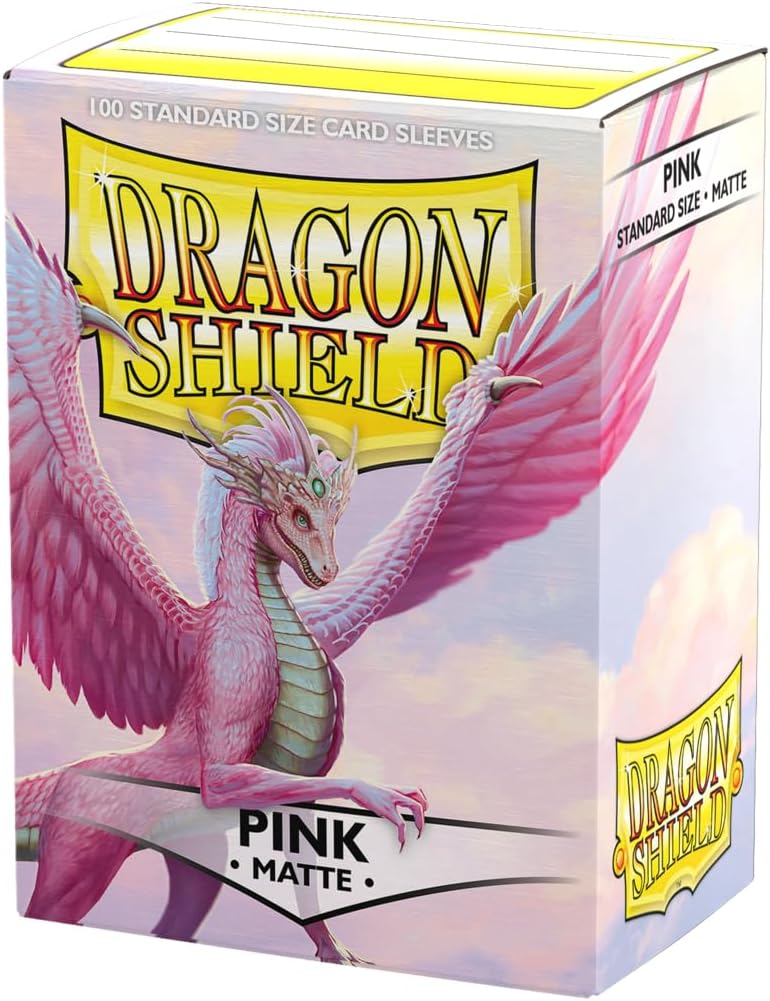
Manufactured by Arcane Tinmen, these standard-size matte sleeves are tailored for 63 by 88 millimeter cards, covering mainstream titles including Magic: The Gathering, Pokémon, and Flesh and Blood. The construction relies entirely on PVC-free polypropylene film measuring 120 microns in thickness, creating an archival-safe barrier against surface abrasion and ambient moisture. Weighing approximately 150 grams for the entire 100-count pack, the product uses a smooth transparent front paired with a textured pink rear face. The material is chemically inert and acid-free, preventing ink transfer or foil clouding over extended storage periods. Arcane Tinmen packages the sleeves in a reusable cardboard box engineered to store 75 single-sleeved cards or 65 double-sleeved cards, complete with a top labeling field for cataloging. Buyers should note the absence of a stated commercial warranty, meaning defect mitigation depends strictly on initial vendor return policies.
Real-World Table Performance and Sizing
In tabletop environments, the matte texture on the sleeve reverse addresses standard friction problems, facilitating clean mash shuffles without corner catches or static adhesion. However, the substantial 120-micron thickness has a tangible impact on deck dimensions. A standard 60-card or 100-card deck gains considerable vertical profile once sleeved, which directly affects tabletop stability and storage logistics. For board game integration, this bulk presents a critical consideration. Molded factory inserts found in hobby board games rarely accommodate cards sleeved in heavy-gauge polypropylene; card wells frequently overflow or pinch edges under the lid. Players must verify their organizer dimensions before committing an entire collection to sleeves of this thickness. While the sleeves shield cards effectively from beverage spills and finger oils, the sheer volume added requires either custom foam storage, deck boxes, or removing the stock insert entirely.
Value Assessment Across Card Counts
Priced at $11.97 for 100 sleeves, the unit cost sits at roughly twelve cents per card. Compared against budget bulk sleeves, Dragon Shield carries a price premium, yet its structural integrity reduces replacement frequency over long gameplay cycles. The 100-count package aligns neatly with singleton formats like Magic: The Gathering's Commander, allowing full protection with exact count allocation, though it leaves little room for manufacturing spares. For large-scale board games containing hundreds of components, fully sleeving with 120-micron Dragon Shields represents a major capital expenditure that may surpass the retail price of the core game itself. Instead, the cost profile justifies itself primarily for collectible decks, high-value tournament assets, or frequently shuffled card pools that experience heavy weekly table time, where tearing a sleeve mid-match compromises gameplay integrity and introduces marked-card penalties.
Who Should Skip This Product
Collectors protecting Japanese-sized card games, such as Yu-Gi-Oh or Cardfight Vanguard, must pass on this model, as the 63 by 88 millimeter internal profile allows smaller cards to slide freely, inviting edge wear. Furthermore, competitive players requiring total card-back opacity should exercise caution with light color formulations like pink; depending on tournament floor lighting conditions, double-faced cards or dark backing patterns may show faint silhouettes through the rear layer. Those seeking storage-efficient protection for large deck-building board games should also look toward lower-micron alternatives. Adding 120 microns per card will reliably invalidate original box inserts, forcing players to purchase aftermarket storage systems. Finally, buyers who prioritize thin, highly compressible deck stacks for ease of handling with smaller hands will find the resulting deck height cumbersome during extended competitive matches.