How to Keep a Mattress Topper From Sliding: Pro Tips
Discover reliable, research-backed methods to anchor a shifting mattress topper for a stable, comfortable, and movement-free sleep surface every night.
By the Niche Picks editorsUpdated November 9, 20269 min readDrawn from our 29 research-based bedding & sleep products reviews
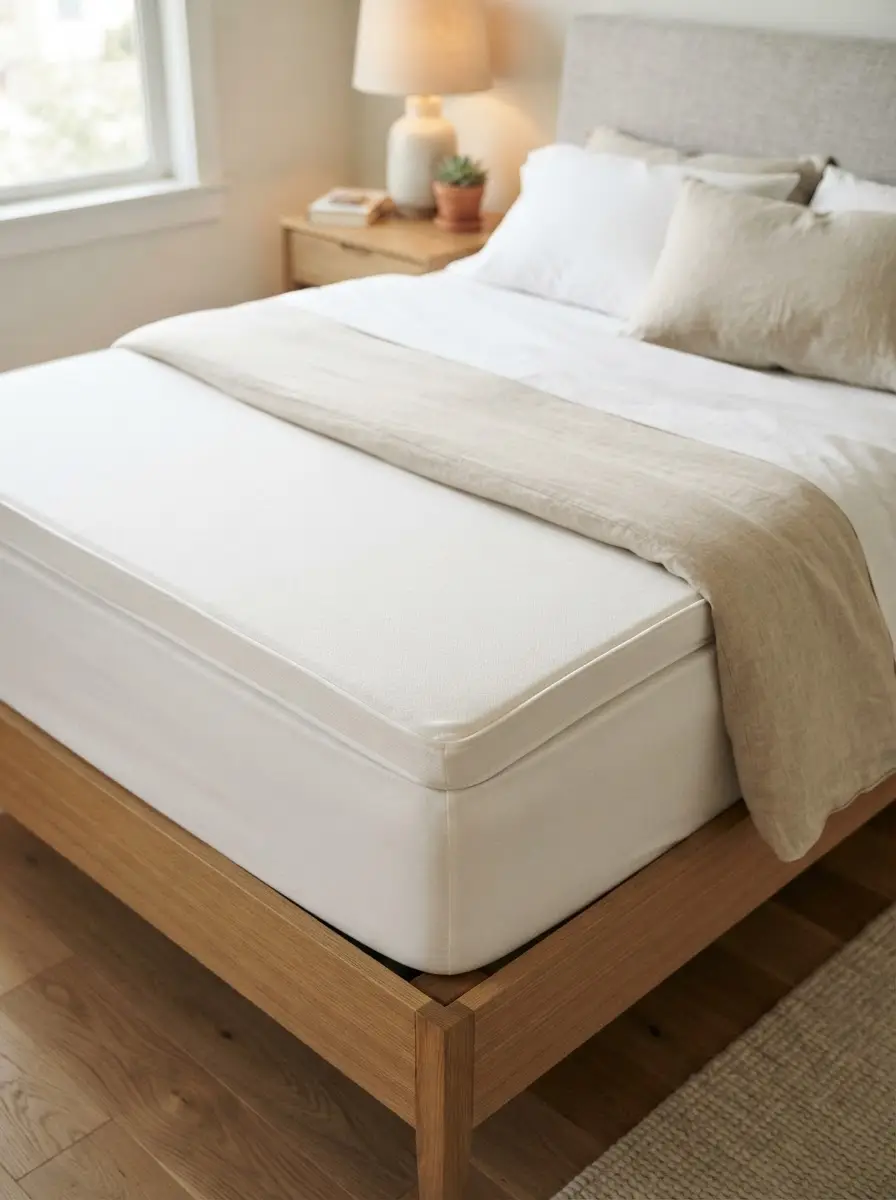
AI-generated editorial illustration; not a product or test photograph.
Short answer
To stop a mattress topper from sliding, prioritize using a fitted sheet with deep pockets to provide downward tension across the entire surface. Alternatively, place a breathable non-slip rug pad between the topper and mattress to increase friction, or use toppers with integrated skirts like the Niagara Sleep Solution for a secure, stay-put fit.
4
Product listings discussed; not hands-on tests
4/4
Discussed listings with a recorded price
$35.99–$79.65
Recorded listing price range; not a complete setup cost
Key takeaways
Fitted sheets with sufficient pocket depth serve as the primary mechanical anchor for most toppers.
Non-slip mesh pads effectively increase the coefficient of friction between synthetic layers.
Properly expanding vacuum-sealed toppers is essential for establishing a flat, stable contact patch.
Using a topper skirt or deep-pocket design minimizes the need for external adhesives or pins.
Rotating the topper periodically prevents uneven surface wear and reinforces center-bed alignment.
Products discussed in this article
Editorial scores and recorded prices are reference points, not measurements of suitability for every use. Read each review's specifications and limitations.
EASELAND Queen Size Mattress Pad Cotton Pillow Top$35.99
Linenspa 2 Inch Gel Memory Foam Mattress Topper$49.99
King Mattress Topper, Cotton Extra Thick Pillow Top$79.65
Comparison of Topper Anchoring Features
Product
Anchoring Style
Max Depth
Material Type
Niagara Solution
Pull-on Skirt
20 Inches
Rayon/Polyester
EASELAND Pad
Elastic Band
21 Inches
Cotton/Polyester
Linenspa Foam
Friction-Fit
N/A
Memory Foam
COONP Topper
Deep Pocket
21 Inches
Cotton
Why Mattress Toppers Shift and Slide
Understanding why your topper migrates is the essential first step toward finding a permanent, non-damaging solution. The most frequent cause of movement is a lack of sufficient friction between the mattress top surface and the underside of your topper. Most modern mattresses feature smooth, synthetic encasements designed for durability and ease of cleaning, which unfortunately provides very little grip for materials like memory foam or polyester-filled pads. When you move during sleep, these smooth surfaces lose traction, leading to the gradual, frustrating migration of the topper.
Low-density materials may not have the mass required to remain seated naturally during active sleep.
Synthetic surface materials, including standard polyester, create a naturally slippery interface between bedding components.
Inadequate mattress depth relative to the topper profile can cause the entire assembly to displace.
Weight remains a crucial variable in stability. Denser, higher-mass toppers like the Linenspa 2-inch Memory Foam Topper typically grip better due to their natural gravitational pull and high material density. However, even these stable options can drift if the underlying mattress cover is exceptionally slick. Our research indicates that the physical interaction between your specific mattress cover and the topper base is far more influential than the topper's weight alone. Addressing this mechanical instability early saves you from the persistent annoyance of waking up on an uneven, misaligned sleep surface. For further insights on how material composition affects your overall sleep quality and comfort levels, refer to our comprehensive bedding buyer's guide.
The single most effective, non-intrusive way to keep a topper in place is to utilize a high-quality fitted sheet with sufficient pocket depth to accommodate both the mattress and the topper as a single unit. Options like the EASELAND Queen Size Mattress Pad feature deep, stretchy elastic bands specifically engineered for this versatile purpose. When you pull a correctly sized fitted sheet over both items, the constant tension provided by the elastic forces the topper firmly against the mattress core, creating the necessary downward pressure to prevent sliding.
Ensure the pocket depth of your chosen sheet matches your total bed height, ideally leaving an extra inch for security.
Prioritize sheets with 360-degree elastic rather than simple corner bands for better uniform retention.
Adjust the corners firmly during each laundry cycle to create a drum-tight fit across the entire surface.
It is common for shoppers to neglect the cumulative height of their sleep system when selecting bedding accessories. If your mattress is 12 inches deep and your topper adds 4 inches, you must use a sheet with at least 16 inches of pocket depth to ensure a truly secure, slip-free fit. Products like the COONP Pillow Top Topper include built-in elastic skirts that function like a protective shell, which can be easily combined with a standard fitted sheet for significantly improved stability. By selecting components with verified deep-pocket specifications, you eliminate the gap that allows the topper to shift during nocturnal movement. For more detailed information on navigating these common sizing issues and finding compatible sets, check our bedding mistakes to avoid.
Always measure your total bed height (mattress plus topper) before purchasing new sheets. A sheet that is too small will pull the topper off-center, while one that is too large will fail to provide the tension needed to hold the layers together.
Implementing Non-Slip Anti-Migration Solutions
When fitted sheets provide insufficient stability, adding a specialized friction-increasing layer is a proven, safe DIY approach. Placing a dedicated non-slip rug pad—specifically the mesh variety—between the mattress surface and the topper is one of the most reliable ways to increase grip without causing permanent damage. These pads are constructed with a rubberized, open-cell mesh that prevents lateral movement quite effectively. Because air circulation is vital for temperature regulation, ensure the pad you choose is porous and breathable to prevent moisture buildup, as synthetic toppers can already retain more ambient heat than necessary.
Choose a non-slip mesh specifically rated for fabric-on-fabric applications rather than hard floor use.
Ensure the pad covers the majority of the sleep surface for uniform grip and balanced support.
Avoid heavy-duty adhesive tapes or sprays that could permanently stain or damage your mattress encasement.
While some innovative products like the Niagara Sleep Solution come with integrated non-slip backing, many standalone foam toppers lack this vital design feature. If you have an existing topper that frequently migrates, a non-slip pad is a low-cost, high-reward investment that stabilizes your system overnight. It is also important to consider the weight capacity of your frame, as detailed in our broader bedding and sleep products review set. If the base of your bed is a platform or rigid box spring, these pads will sit securely without interference. Always perform a test on a small corner area first to ensure the rug pad material does not react poorly with your specific mattress casing, particularly if you utilize proprietary protective covers or chemical treatments.
Your initial setup process often dictates the long-term stability of your mattress topper. Most high-performance toppers arrive vacuum-compressed for shipping, meaning they require a mandatory, undisturbed period to reach their full, stable dimensions. If you attempt to use a topper before it has reached full expansion, the uneven material thickness causes it to slide significantly more easily because it does not maintain a flat, consistent contact patch with the mattress below. Always follow the specific manufacturer guidance regarding unboxing, airing out, and expansion times—usually ranging from 24 to 48 hours—to ensure the foam is perfectly level.
Always allow the full manufacturer-recommended expansion time before fitting your sheets over the unit.
Rotate your topper head-to-toe every three to six months to ensure even wear and consistent surface tension.
Keep your mattress surface free of dust and body oils, which can create a slicker interface over time.
Periodic maintenance, such as confirming your sheets are pulled tight, is essential for continued performance. During the wash cycle, follow our expert guide on how to wash a mattress topper to avoid degrading the surface materials. If you utilize a topper with aged memory foam, it may eventually lose its inherent structural grip as the internal cell structure breaks down over time. If you find yourself constantly battling migration, it may be a sign that the material has reached the end of its useful lifespan. For tips on managing the longevity of your various sleep accessories, read our buying tips blog. Always prioritize a consistent, even surface setup to ensure the best mechanical performance from your entire bedding stack.
Avoid Adhesives
Never use spray adhesives or heavy-duty tapes to secure a topper. These products can permanently ruin your mattress fabric, void the manufacturer warranty, and make future cleaning and maintenance practically impossible.
Alternative Mechanical Anchoring Methods
If you are not interested in buying new sheets or rug pads, there are alternative mechanical methods to consider, though they often require more manual effort. One option is the use of mattress suspenders or corner clips. These are small elastic bands with clips that attach to the corners of the topper and hook onto the underside of the mattress, effectively pulling the topper down and inward. While effective, they can be fiddly to install each time you change your sheets. Another approach is to check if your current mattress foundation can be replaced with a version that offers more edge-holding support. If your mattress has severe edge wear, no amount of anchoring will fully prevent a topper from shifting, as the base itself is losing its structural integrity.
Mattress clips must be used carefully to avoid tearing the fabric of your mattress encasement.
Consider the overall weight of your topper before selecting clips; heavier memory foam may require sturdier, high-tension bands.
For those with mobility issues, consider whether adding clips will make the weekly chore of changing bedding significantly more difficult.
By carefully reviewing the specs of products in our bedding and sleep products category, you can see that toppers with integrated skirts provide the most stability for the least effort. When evaluating your options, always balance the cost of an anchor system against the replacement cost of a new, better-fitting topper. We strongly advise against using permanent solutions like heavy-duty double-sided tape, which can void your mattress warranty and leave behind residue that attracts dust, further degrading the friction interface you are trying to improve. Remember that the goal is to create a cohesive, stable sleep surface that supports your body without the distraction of a drifting comfort layer.
Testing Stability and Long-Term Wear
Once you have implemented an anchoring solution, it is important to verify its performance over time. A setup that works for one night might shift over a week due to your natural nocturnal movements. Conduct a simple 'stability test' by shifting your weight significantly on the mattress before retiring for the night. If you notice any lateral movement of the topper relative to the mattress, your current anchoring tension is likely insufficient. It is also wise to observe if the topper's position shifts differently when your partner (if applicable) is in the bed, as motion transfer can also contribute to unwanted topper migration.
Monitor for any bunching of the topper material, which indicates that the topper is not lying flat or is being compressed by the fitted sheet.
Re-evaluate your sheet choice if the elastic has lost its memory; older sheets with worn elastic will not provide the necessary tension to keep a topper in place.
Check for signs of foam degradation, such as permanent indentations, which can change the weight distribution of the topper and contribute to shifting.
Ultimately, the stability of your topper is a measure of how well your system components work in harmony. If you find yourself consistently frustrated despite using high-quality sheets and pads, it may be time to evaluate whether the topper itself is the correct size or material density for your specific mattress. For further research on how to compare different sleep products, look at our compare tool. Investing a small amount of effort in these mechanical fixes will reward you with a more restful, stable sleep experience that remains constant throughout the night, regardless of your movement patterns.
Step by step
1Remove all bedding to clear the mattress surface.
2Place a breathable, non-slip rug pad over the mattress top.
3Position the mattress topper, aligning it perfectly with all mattress edges.
4Allow the topper time to settle if it was recently unrolled.
5Fit your deep-pocketed sheet over both the mattress and the topper.
6Tuck the elastic edges firmly under the mattress perimeter.
7Smooth out wrinkles to ensure the surface is uniform.
8Test for movement by shifting your weight before completing the rest of the bedding.
Quick checklist
Verify the topper has fully expanded for 24-48 hours.
Measure the total height of your mattress plus topper.
Ensure your fitted sheet has enough depth to cover both.
Check for existing anchor straps on your topper model.
Consider adding a non-slip rug pad between layers.
Rotate the topper regularly to maintain surface evenness.
Check the mattress base for signs of sagging or structural wear.
Frequently asked questions
Can I use safety pins to hold my mattress topper in place?
Using safety pins is not recommended. They can easily puncture the topper material, damage your mattress fabric, and pose a potential safety risk to the sleeper if they happen to come undone during the night.
Do I need special straps for a memory foam topper?
Some memory foam toppers come with elastic corner straps. If yours does not, these can be purchased as aftermarket accessories, but they are generally less effective at preventing widespread sliding than using a properly fitted, high-quality deep-pocket sheet.
Does a weighted blanket help keep a topper from sliding?
No, a weighted blanket will not help secure a topper. If the blanket is particularly heavy, it may actually put additional stress on a sliding topper, potentially causing it to shift even more rapidly during the night.
How often should I rotate my topper to prevent shifting?
Rotating your topper every three to six months is standard practice. This not only prevents uneven wear on the foam surface but also allows you to re-center the topper, which helps maintain overall system stability.
Are non-slip pads safe for all mattress types?
Most non-slip rug pads are safe for standard mattresses. However, if you have a delicate surface, such as high-end silk or wool, always consult the manufacturer's care instructions before introducing new friction-based materials.
Amazon links are affiliate links; we may earn a commission at no cost to you.
Shortlists in this category
Ranked lists from our bedding & sleep products reviews, limited to listings whose titles confirm the product type, with budget cuts where enough recorded prices sit on both sides of the line.
This page summarizes our research reviews of Amazon listings, listed specifications and captured buyer ratings. It is not a hands-on test. Scores are editorial assessments, not measured performance; prices are recorded snapshots and may change. A category can include both main products and accessories, so its overall price range is not the cost of a complete setup.
Most recent product record update: November 8, 2026. Individual records may be older; this is not a verification date for every claim. Prices on this page were read from the listings Nov 8, 2026 – Nov 9, 2026.
Choose the product type first. These groups require a match in the listing title; an import search term alone is not enough. Scores rank our recorded research assessments within each group, not independently measured performance.
Values are shown as recorded, without unit conversions or inferred compatibility. Not recorded means unknown, not absent. Prices are snapshots, not current offers. Editorial scores are research judgments, not lab results. Amazon links are affiliate links.
Sleep trials and return logistics matter more than firmness labels.
Weighted blankets are not appropriate for everyone; follow manufacturer guidance and consult a clinician for children or breathing, mobility or other medical concerns.
If a specification, certification or compatibility detail is absent, mark it as unknown and ask the seller or manufacturer. Do not substitute a star rating, an editorial score or a different model's specification.