Can You Wash a Mattress Topper? A 2026 Maintenance Guide
Learn which mattress topper materials are machine washable and how to safely refresh your sleep surface without damaging your bedding investment.
By the Niche Picks editorsUpdated November 9, 20268 min readDrawn from our 29 research-based bedding & sleep products reviews
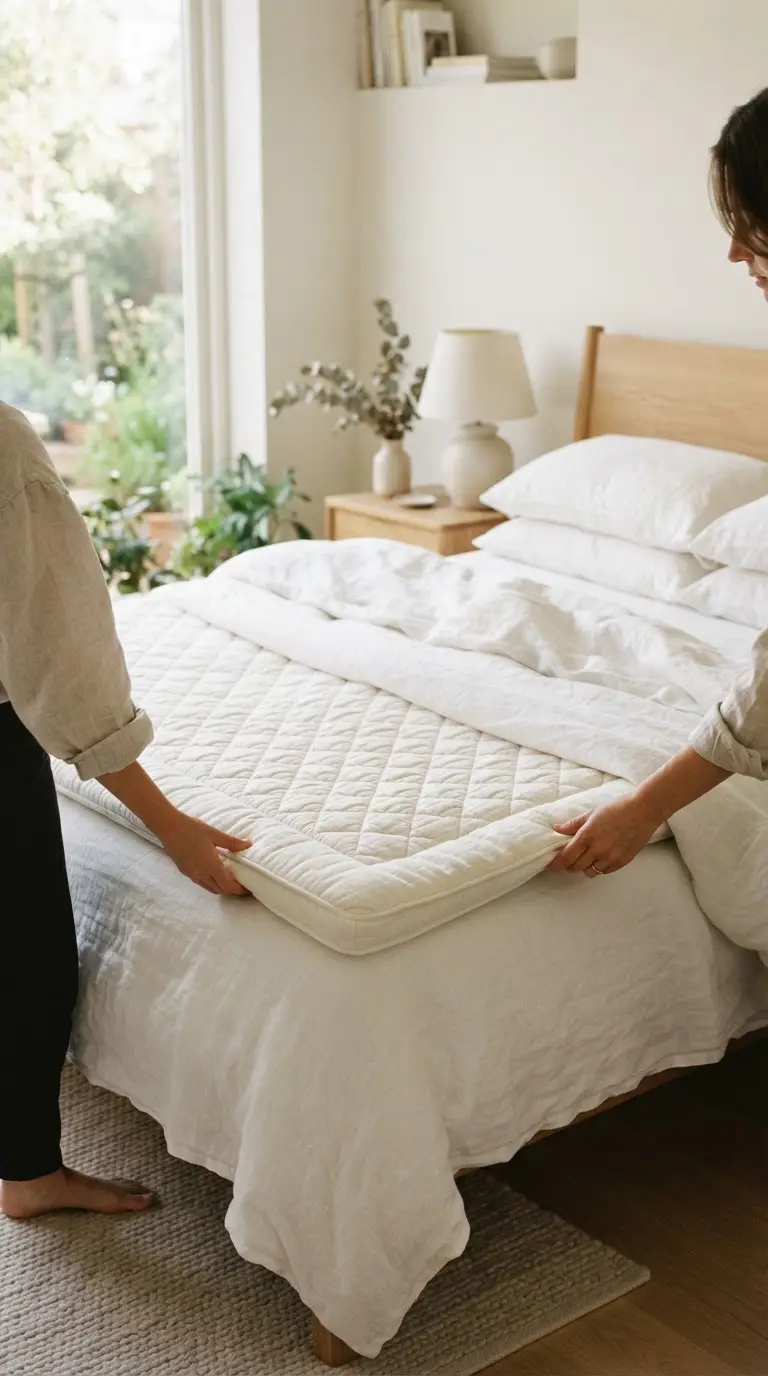
AI-generated editorial illustration; not a product or test photograph.
Short answer
Whether you can wash a mattress topper depends entirely on its material composition. Most synthetic fiber-filled or quilted mattress pads can be machine-washed on a gentle cycle. Conversely, foam-based toppers should never be submerged or placed in a dryer, as water causes structural degradation and moisture retention that invites mold.
5
Product listings discussed; not hands-on tests
5/5
Discussed listings with a recorded price
$21.99–$79.65
Recorded listing price range; not a complete setup cost
Key takeaways
Always verify the manufacturer's care label before attempting to wash any mattress topper.
Synthetic fiber-filled toppers are typically machine washable, but foam cores are not.
Never submerge memory foam in water, as it is porous and extremely difficult to dry.
Spot-cleaning is the safest maintenance method for foam or hybrid mattress toppers.
Use a mattress protector to extend the lifespan of your topper and reduce the need for frequent washing.
Products discussed in this article
Editorial scores and recorded prices are reference points, not measurements of suitability for every use. Read each review's specifications and limitations.
King Mattress Topper, Cotton Extra Thick Pillow Top$79.65
Comparison of Mattress Toppers and Care Requirements
Product
Type
Washable?
Primary Material
Utopia Bedding Pad
Mattress Pad
Yes
Polyester
EASELAND Topper
Pillow Top
Yes
Cotton/Polyester
Linenspa Topper
Memory Foam
No
Gel Memory Foam
Niagara Topper
Pillow Top
Yes
Polyester/Rayon
COONP Topper
Pillow Top
Yes
Cotton/Polyester
Is Your Mattress Topper Machine Washable?
The first step in caring for your bedding is identifying the core material. In our research, we found that products like the Utopia Bedding Mattress Pad and the EASELAND Cotton Pillow Top are engineered specifically for machine maintenance. These fiber-filled pads use synthetic batting that can withstand the agitation of a residential washing machine, provided you use a large-capacity drum. If your topper is a quilted pad or a fiber-fill "pillow top" style, washing is generally recommended every few months to remove allergens and sweat.
However, the rules change entirely for foam products. If you own a Linenspa 2 Inch Gel Memory Foam Topper, you must avoid the washing machine at all costs. Memory foam is a specialized polyurethane material with an open-cell structure. When it gets wet, it acts like a sponge, absorbing water deep into its core. This is not only structurally damaging but creates a prime environment for mildew and bacterial growth. For foam toppers, rely on spot cleaning or a removable, washable encasement if the manufacturer provides one. For more information on maintaining your sleep environment, see our complete bedding and sleep products guide.
Check the tag: If it says "spot clean only," do not ignore it.
Avoid bleach: Harsh chemicals can break down the synthetic fibers found in products like the Niagara Sleep Solution Topper.
Use gentle cycles: High spin speeds can cause the internal fill to shift or clump.
Balance the load: If washing a large topper, add towels to the load to keep the machine balanced.
Dry carefully: Low-heat settings are essential to prevent the polyester fill from melting or scorching.
How to Properly Clean a Fiber-Fill Mattress Topper
For toppers that are declared machine-washable, such as the King Mattress Topper by COONP, proper technique is vital to maintain the loft and shape of the synthetic fibers. Start by ensuring your washing machine is large enough to accommodate the item without forcing it; jamming a queen-sized pad into a small machine can damage both the topper and the machine's agitator.
Use a mild, liquid detergent and skip the fabric softeners, which can coat the fibers and reduce their breathability. Set the machine to a delicate or gentle cycle with cold or cool water. Heat is the enemy of synthetic fills, as it can cause the polyester batting to lose its resilience. Once the cycle finishes, proceed directly to the drying phase. Drying the item on a low-heat setting is standard, but you should frequently stop the machine to shake out the topper. This redistributes the fill, preventing the common issue of "bunching" where the batting migrates to the corners. For further tips on keeping your sleep products fresh, read our bedding and sleep products FAQ.
Always use a cold cycle to prevent damage to the synthetic fibers.
Avoid heavy-duty detergents that may leave residue behind.
Use a low-heat setting for drying to prevent scorching.
Consider air-drying in direct sunlight if the material allows for it.
Remove the topper immediately after the cycle to prevent wrinkles or moisture buildup.
Do Not Submerge Foam
Never attempt to wash memory foam or latex toppers in a washing machine or bathtub. Water gets trapped in the foam cells, creating a permanent home for mold and bacteria.
Maintenance for Foam and Non-Washable Toppers
If you are using a memory foam or latex topper, your maintenance routine should be focused on prevention rather than washing. Because you cannot wash these materials, the best strategy is to place a high-quality mattress protector over the topper. This creates a physical barrier against dead skin, dust mites, and liquid spills. If a spill does occur, act immediately. Use a clean, dry towel to blot—never rub—the surface to pull as much moisture out as possible. If you need to remove odors, a light dusting of baking soda left for an hour, then vacuumed off, is usually effective.
Many consumers make the mistake of attempting to wash foam in a bathtub or by hosing it down, thinking they can "rinse out" a stain. This is almost never successful, as the foam will take days or even weeks to dry fully, during which time it will likely develop mold. Instead, prioritize keeping the topper clean from the start. If you are shopping for new products, you can compare two products in our catalog to see which options offer removable covers that are easier to clean than bare foam cores. Remember that foam performance, such as the contouring feel provided by many models in our bedding & sleep reviews, depends on the material remaining dry and intact.
Common Mistakes to Avoid During Cleaning
One of the most common errors is using high heat during the drying process. Synthetic fibers, which make up the majority of budget-friendly toppers, are essentially plastic derivatives. They are heat-sensitive and can easily warp or melt if exposed to high temperatures. Additionally, using too much detergent can lead to a soapy buildup inside the quilted channels of your topper, which can cause skin irritation and attract more dirt over time. Always use about half the amount of detergent you would for a standard load of laundry.
Another frequent issue is the failure to dry the item completely. Even if a topper feels dry to the touch on the surface, the internal batting might still be damp. Putting a partially damp topper back onto your bed is a recipe for mold growth and a musty odor that is nearly impossible to eliminate. Always ensure the topper is 100% dry before replacing it. For more advice on navigating these types of decisions, refer to our buying tips blog. Lastly, remember to check your budget planner before deciding whether it is more economical to clean an aging topper or purchase a replacement, as low-cost synthetic pads often have a limited effective lifespan.
Use a Mattress Protector
The best way to 'clean' a topper is to prevent it from getting dirty. Use a high-quality, breathable mattress protector over your topper to block sweat and spills.
Understanding Material Durability and Care
The durability of your mattress topper often dictates how it should be cleaned. Natural-fiber toppers, if you are lucky enough to find one, are typically more sensitive to water than synthetic ones, which often shrink or lose their shape. Conversely, thick synthetic-fill toppers are designed for convenience but are prone to "bottoming out" if washed too frequently or with improper agitation. Understanding that your topper is a secondary layer—not a permanent fixture of your mattress—can help you manage your expectations for how often it needs deep cleaning.
Most high-quality mattress toppers will last between two and five years depending on the material and how well you protect them. If you notice that your topper is losing its loft despite regular fluffing, it is likely time for a replacement rather than a heavy cleaning. Always look for certifications like CertiPUR-US for foam products to ensure that the materials used in your bedding are safe. Since many of these products, including our top-rated options, arrive vacuum-sealed, they can be finicky during their first 48 hours of use. Take the time to read the essential care guide for similar sleep textiles to ensure you are treating your specific product with the care it requires to maintain its structural integrity over the long term.
Summary of Best Practices for Longevity
To maximize the lifespan of your topper, rotation is just as important as cleaning. Rotate your topper 180 degrees every time you change your sheets to prevent one area from becoming compressed due to your regular sleeping position. This is especially important for memory foam toppers, which can form permanent body impressions over time. If you use a weighted blanket, ensure you follow the manufacturer's guidance for that item as well, as those often require specific weighted blanket care instructions that differ from standard bedding.
Finally, if you find yourself needing to wash your topper frequently because of spills, it is a clear sign that your mattress protector is either insufficient or not properly fitted. A properly fitted, waterproof protector is the single best investment you can make to protect your mattress, your topper, and your sleep health. By layering your bed with a protector underneath your sheets, you ensure that any accidents are contained at the surface, which can then be stripped and tossed in the wash easily. This proactive approach keeps your primary sleep surfaces cleaner, longer, and more hygienic without the need for the risky deep-cleaning procedures that can destroy foam or high-loft synthetic toppers.
Step by step
1Remove the topper from the mattress and strip any fitted sheets.
2Inspect the topper for holes or severe fiber bunching.
3Check the care label to confirm if the topper is machine washable.
4Place the topper in a large-capacity washer on the delicate or gentle cycle.
5Use a mild liquid detergent and set the water temperature to cold.
6Transfer to a dryer on the lowest heat setting or air-dry.
7Periodically remove and shake the topper during the drying process to redistribute the internal fill.
8Ensure the item is 100% dry before returning it to the mattress to prevent mold growth.
Quick checklist
Read the manufacturer's care tag before washing.
Ensure your washing machine capacity is adequate for the item.
Use a gentle, cold-water cycle to preserve fiber integrity.
Avoid bleach and harsh fabric softeners.
Tumble dry on the lowest heat setting available.
Check for dampness throughout the fill before placing it back on the bed.
Spot-clean foam toppers using only a damp, mild soap cloth.
Frequently asked questions
Can I put a memory foam topper in the dryer?
No, you should never put memory foam in the dryer. Heat will melt or warp the foam cells, and the agitation can tear the material. Only ever use low-heat air fluff if the manufacturer specifically authorizes it, but in almost all cases, air drying or spot cleaning is the only safe method.
What happens if I get my memory foam topper wet?
If your foam topper gets wet, it acts like a large sponge. It will absorb the water deep into its structure, which is very difficult to evaporate. This trapped moisture will likely lead to persistent odors and the rapid growth of mold or mildew, potentially making the topper unusable.
How often should I wash my mattress topper?
For washable synthetic pads, every three to six months is a good rule of thumb, or whenever you notice stains or dust buildup. For foam toppers that are protected by a sheet or cover, you should focus on washing the topper cover and bedding regularly, rather than the foam itself.
Can I use bleach on my mattress topper?
No, bleach is too harsh for the synthetic fibers, rayon, or polyester blends typically used in mattress toppers. Bleach can break down these fibers, causing them to become brittle, lose their structural loft, and eventually disintegrate. Stick to mild, non-chlorine liquid detergents.
How do I get odors out of a non-washable topper?
Sprinkle a light layer of baking soda over the surface of the foam. Let it sit for at least one hour to absorb odors and moisture, then thoroughly vacuum the surface with a clean upholstery attachment. This is the safest way to refresh foam without using water.
Amazon links are affiliate links; we may earn a commission at no cost to you.
Shortlists in this category
Ranked lists from our bedding & sleep products reviews, limited to listings whose titles confirm the product type, with budget cuts where enough recorded prices sit on both sides of the line.
This page summarizes our research reviews of Amazon listings, listed specifications and captured buyer ratings. It is not a hands-on test. Scores are editorial assessments, not measured performance; prices are recorded snapshots and may change. A category can include both main products and accessories, so its overall price range is not the cost of a complete setup.
Most recent product record update: November 8, 2026. Individual records may be older; this is not a verification date for every claim. Prices on this page were read from the listings Nov 8, 2026 – Nov 10, 2026.
Choose the product type first. These groups require a match in the listing title; an import search term alone is not enough. Scores rank our recorded research assessments within each group, not independently measured performance.
Values are shown as recorded, without unit conversions or inferred compatibility. Not recorded means unknown, not absent. Prices are snapshots, not current offers. Editorial scores are research judgments, not lab results. Amazon links are affiliate links.
Sleep trials and return logistics matter more than firmness labels.
Weighted blankets are not appropriate for everyone; follow manufacturer guidance and consult a clinician for children or breathing, mobility or other medical concerns.
If a specification, certification or compatibility detail is absent, mark it as unknown and ask the seller or manufacturer. Do not substitute a star rating, an editorial score or a different model's specification.