How to Clean Hair Clippers: A Professional Maintenance Guide
Extend the lifespan of your grooming tools with these essential, expert-verified cleaning and lubrication procedures to ensure consistent cutting performance.
By the Niche Picks editorsUpdated November 9, 202610 min readDrawn from our 31 research-based men's grooming & shaving reviews
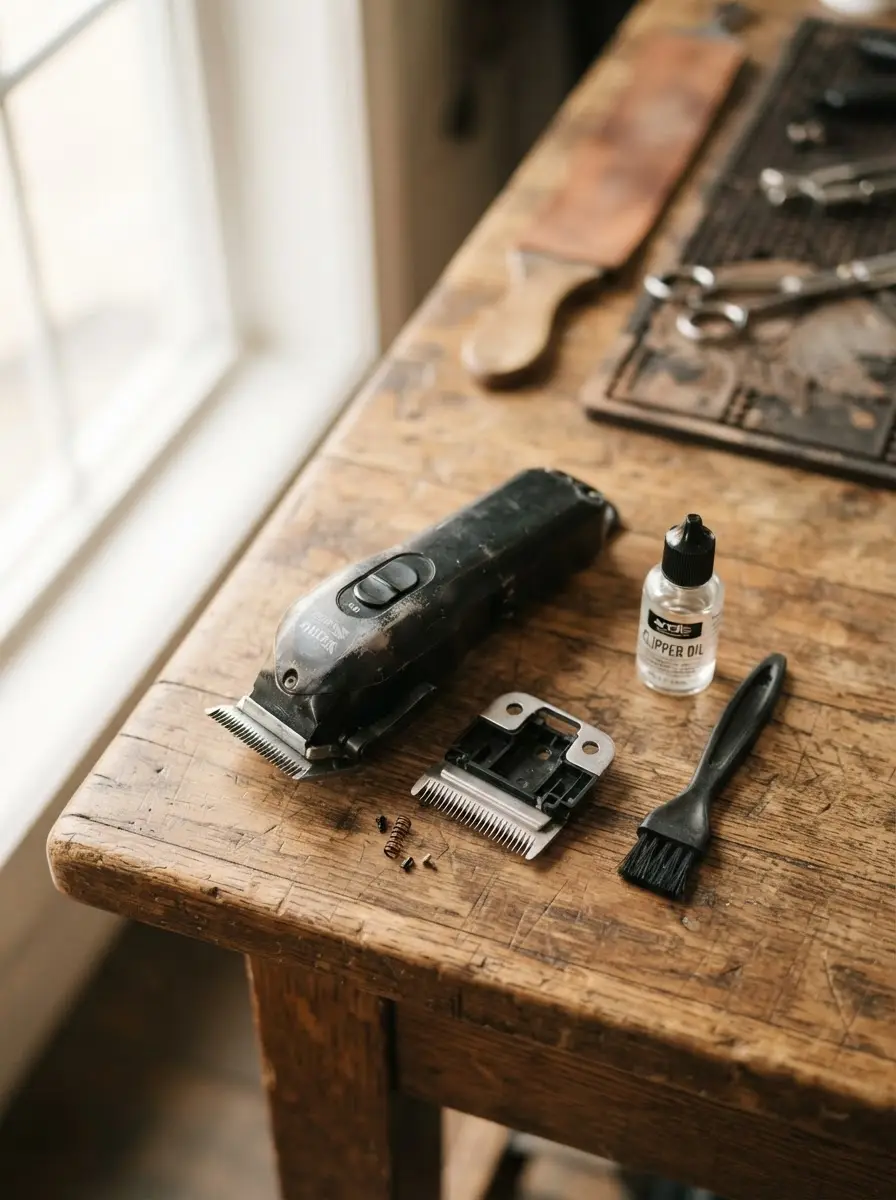
AI-generated editorial illustration; not a product or test photograph.
Short answer
To clean hair clippers, power off the device and use a stiff brush to sweep hair from the blade teeth and internal housing. If the blade assembly is rinsable, clean it under warm water, dry it thoroughly, and apply two drops of dedicated clipper oil to the moving teeth to reduce friction and prevent corrosion.
4
Product listings discussed; not hands-on tests
4/4
Discussed listings with a recorded price
$21.99–$44.99
Recorded listing price range; not a complete setup cost
Key takeaways
Regular cleaning prevents the accumulation of hair and skin oils that cause motor drag.
Always use specialized clipper oil; household oils can turn gummy and trap damaging debris.
Confirm your device's IP rating before risking water exposure to the chassis.
Proper storage in a protective case prevents blade misalignment from accidental drops.
Consistent maintenance preserves the factory blade grind and improves cutting efficiency.
Products discussed in this article
Editorial scores and recorded prices are reference points, not measurements of suitability for every use. Read each review's specifications and limitations.
Ufree Beard Trimmer for Men, Waterproof Electric$29.98
Maintenance and Utility Features of Top Clippers
Product
Rinsable
Power Source
Blade Type
Wahl Color Pro
Blade only
Battery
Carbon Steel
Solati Trimmer
Blade only
Battery
Titanium-Coated
Norelco 3000
Blade only
Battery
Self-Sharpening Steel
Ufree Trimmer
Yes
Battery
Stainless Steel
Why Routine Maintenance Dictates Performance
Clippers live or die on the precision of their blade sharpening and the consistency of their motor torque. When you operate a device like the Wahl Color Pro Cordless, you are relying on a complex metal-on-metal interaction that generates significant friction. Without routine cleaning, tiny hair clippings and dead skin cells aggregate between the teeth, creating a dense paste that physically hinders the oscillation of the cutting blade. This resistance forces the motor to draw more power, which accelerates battery degradation and causes the unit to heat up during use. Think of your clippers as a precision instrument rather than a disposable accessory. Proper maintenance helps you avoid common mistakes in men's grooming that lead to premature blade replacement. When a machine is clean, it shears hair effortlessly; when it is neglected, it pulls, tugs, and leaves uneven stubble. By making a habit of post-trim care, you protect the integrity of the factory grind and ensure that your beard trimmers continue to function as intended throughout their service life. Whether you utilize the Wahl Color Pro Cordless or a more specialized trimmer, the principles of mechanical upkeep remain universal. For more guidance on optimizing your routine, our men's grooming guide covers the foundational habits that distinguish amateur results from professional finishes.
Remove all guards to access the full length of the cutting surface.
Use the provided stiff brush to sweep debris away from the blade teeth.
Inspect the blade block for signs of oxidation if using carbon steel components.
Ensure the power is disconnected before performing any deep cleaning routines.
Cleaning Protocols for Rinsable vs. Dry-Only Models
Understanding the moisture limits of your grooming device is paramount. While many modern units like the Philips Norelco 3000 feature removable, rinsable heads, the main chassis often contains unsealed electronics that can short-circuit if submerged. Always verify your model's IP rating in the manual before introducing liquid. If the manufacturer lists the device as dry-use only, rely exclusively on a brush and a dry, lint-free microfiber cloth to wipe down the exterior housing. Avoid the temptation to use a damp rag on the main body, as moisture can seep into the internal motor assembly. For budget units like the Solati Hair Clippers or the Ufree Beard Trimmer, the ability to rinse the cutting assembly significantly aids in removing stubborn oils and hair remnants that dry brushing might miss. However, even if a head is waterproof, leaving it damp can accelerate corrosion of the blade pivot points. Proper drying is not just a suggestion; it is a critical step in protecting the metal alloys. If you are in the market for more robust devices, our best electric razor for men reviews highlight models with varying seal levels. Remember, the goal is to maintain a sterile, clog-free cutting plane while keeping the power core completely dry. This simple distinction between cleaning the head versus the body prevents the most common form of appliance failure, saving you money on replacement kits and ensuring long-term consistency.
Disconnect the power cord and remove any plastic attachments.
Use a fine-bristle brush to clear the gap between the upper and lower blades.
If the blades are marked as washable, run them briefly under warm water.
Use a clean towel to remove every trace of moisture before re-assembly.
Never use a hair dryer to accelerate the drying process after rinsing your blades. The intense heat can warp the plastic guard mounts and damage the internal grease, causing premature motor failure.
The Critical Role of Clipper Oil
Oiling is the absolute final and most essential step in the grooming process. Clipper blades are essentially tiny, aggressive shears that move at high velocity; without a lubricant, the friction creates heat that quickly compromises the cutting edge. Applying 1-2 drops of dedicated clipper oil to the teeth of your blades creates a microscopic hydrodynamic layer that allows the moving blade to glide without creating micro-scratches or generating excess thermal energy. This process is crucial for preventing hair pulling and ensuring the motor maintains steady RPMs throughout the entire trim session. Many users assume that oiling is only necessary when the machine begins to make a loud or strained sound. This is a mistake. By the time your clippers are audible, the blades have likely already suffered microscopic damage. Consistent, frequent oiling extends the functional lifespan of your blades significantly, delaying the need for replacements. If you are looking to understand how this fits into a broader regimen, our blog on men's grooming covers why specialized software and hardware choices often revolve around how easy they are to maintain. Never substitute clipper oil for common household alternatives like WD-40 or cooking oils. These substances either contain solvents that dry out components or become sticky and gummy over time, which eventually clogs the internal drive mechanism of your trimmer. Keeping a bottle of dedicated oil next to your best Wahl clippers is the easiest way to ensure you always receive a smooth, irritation-free experience.
Apply oil directly to the teeth after the unit is clean and dry.
Turn on the device for five seconds to distribute the lubricant.
Use a clean tissue to dab away excess oil, preventing it from dripping into the housing.
Beyond routine cleaning, where and how you store your grooming tools plays a significant role in their operational health. The blade assembly is vulnerable to impact, and even a minor drop or a collision with other items in a bathroom drawer can throw the blades out of alignment. If the teeth become bent or misaligned, the clipper will never cut correctly again, regardless of how much you oil it. Using the hard storage case typically bundled with the Wahl Color Pro Cordless or a dedicated charging stand is the best way to prevent these accidents. Moisture is the primary enemy of electrical longevity. Bathrooms are inherently humid environments, and constant exposure to steam can lead to internal oxidation of the battery contacts and the motor's copper windings. If you find yourself frequently dealing with clogged, rusted, or dull blades, your storage environment might be the hidden culprit. It is always helpful to reference our men's grooming FAQ to learn how environmental factors impact specific models. By providing your equipment with a stable home, you significantly reduce the risk of mechanical failure. Whether you are using a professional-grade unit or an entry-level kit, the care you show during the 'off-duty' hours is just as important as the technique you apply during the trim. Treating your clippers with respect keeps them performing with the same efficiency as they did on the day they were unboxed. For those managing multiple tools, consider a dedicated organizer that keeps the blades exposed to air but safe from physical impact or moisture accumulation, ensuring your routine stays as consistent as possible.
Store the unit in a dry, cool area away from high humidity.
Keep the protective blade guard on whenever the clipper is not in use.
Avoid storing clippers in the same bin as heavy metal tools that could cause dings.
Apply oil to the blades while the clipper is running on its lowest setting. This ensures the oil penetrates the full length of the teeth before you wipe off the excess.
Troubleshooting Common Blade Issues
Even with perfect maintenance, you may encounter performance hiccups. If your clippers start 'tugging' or pulling hair, it is almost never because the motor has simply 'worn out.' Usually, this behavior is a direct indicator of an accumulation of hair-and-oil paste that has dried inside the teeth, or the blades themselves have become slightly dull due to thousands of cycles. First, perform a deep cleaning: remove the blade head if possible and use a compressed air can or a stiff brush to remove every particle of debris. After deep cleaning, apply a fresh coat of oil and allow it to run for 10-15 seconds. If the pulling persists, the blades may need professional honing or replacement. Before you assume the hardware is dead, remember that hair type matters. Coarse, dry hair places a higher demand on motor torque than fine, soft hair. If your beard trimmers are constantly bogging down, you might need to slow your cutting speed, allowing the blades to do the work rather than forcing them through dense patches. Also, ensure your guards are securely locked in; a guard that bows or shifts under pressure will significantly alter the cutting length and make the trim feel uneven. For advanced users or those dealing with specific grooming challenges, our how to use a beard trimmer guide provides insights into technique-based troubleshooting. If you still see unevenness after cleaning and oiling, the issue is likely not the machine, but the comb attachment's interaction with your hair's growth pattern. Adjust your approach angle to ensure the guard teeth are lifting the hair correctly before the blades pass through.
Check the power connection: ensure a fully charged battery is delivering max torque.
Verify the blade screws: ensure they are snug but not overtightened.
Look for chip damage: hold the blades to a light source to detect any jagged teeth.
When calculating the value of your grooming equipment, maintenance costs should be factored into the total ownership. High-end professional clippers often have a higher upfront cost but allow for replaceable, sharpenable blades, whereas many consumer-grade units feature fixed, proprietary heads. Knowing your specific budget for grooming maintenance is key. If you own a lower-cost unit like the Ufree Beard Trimmer, the 'investment' is mostly in time—specifically the time spent cleaning and oiling to stretch the life of those non-replaceable blades. Conversely, owners of premium systems might spend a bit more on high-quality replacement cutter heads every two to three years. Ultimately, the true cost of grooming is dominated by how often you have to replace the entire device. Users who prioritize buying tips and invest in proper care effectively lower their annual expenditure on grooming gear. If you find yourself buying a new trimmer every six months, you are likely missing one of the core maintenance pillars: brushing, oiling, or dry storage. A ten-dollar bottle of clipper oil can last a decade; a five-dollar brush set can be cleaned and reused indefinitely. By focusing your budget on high-quality grooming tools that you genuinely care for, you can achieve superior results without constantly refreshing your hardware. Our compare tool can help you see how different models manage these long-term maintenance requirements, helping you choose a model that aligns with your desired level of effort. Remember that the best trimmer is the one that stays sharp, stays clean, and stays reliable for years of consistent service.
Calculate the cost of replacement parts versus buying a new unit.
Keep a simple maintenance kit: dedicated oil and a fine-bristle brush.
Periodically check your best Wahl clippers for available replacement blades.
1Switch the clipper to the off position and disconnect the charging cable.
2Remove the snap-on guard or length comb from the blade head.
3Use the included cleaning brush to sweep hair from the blade teeth.
4If the manual permits, rinse the removable blade assembly under warm water.
5Use a microfiber towel to dry the blade head completely.
6Place two drops of clipper oil onto the moving and stationary blade teeth.
7Switch the unit on for five seconds to distribute the oil across the surface.
8Wipe away excess lubricant and store the unit in a dry, protected area.
Quick checklist
Power off and unplug the device.
Detach and set aside all plastic guard combs.
Clear hair from blade teeth using a stiff brush.
Verify if your device manual permits water rinsing.
Rinse only the blade assembly; keep the chassis dry.
Dry components with a lint-free microfiber cloth.
Apply 1-2 drops of specialized clipper oil.
Run the clipper to distribute oil evenly.
Frequently asked questions
How often should I oil my hair clippers?
You should oil your clippers after every single use. Regular oiling creates a frictionless barrier between the cutting teeth, which minimizes heat, prevents rust, and ensures the motor maintains its optimal torque for clean, snag-free cuts.
Can I use standard household oil on my clippers?
No, avoid household oils like olive, vegetable, or WD-40. These can become gummy, trap debris, or degrade plastic components. Always use a dedicated clipper oil designed for grooming tools to ensure the lubricant remains thin, clean, and safe for your equipment.
What happens if I don't clean my clippers?
Hair clippings mixed with natural skin oils form a sticky paste that creates significant drag on the blade. This forces the motor to work harder, reduces battery efficiency, and eventually dulls the sharp edge, leading to painful hair pulling and poor cutting results.
How do I know if my clippers are waterproof?
Check your product manual or the packaging for an IP rating (e.g., IPX7). If a device is not explicitly labeled as waterproof or 'wet/dry,' you should always treat it as a dry-use tool and clean it only with a brush.
My blades feel hot; is this normal?
Hot blades are the primary indicator of friction. It usually means the blades need a deep cleaning to remove trapped debris or, more commonly, they require fresh oil to lubricate the high-speed metal-on-metal movement during operation.
Amazon links are affiliate links; we may earn a commission at no cost to you.
Shortlists in this category
Ranked lists from our men's grooming & shaving reviews, limited to listings whose titles confirm the product type, with budget cuts where enough recorded prices sit on both sides of the line.
This page summarizes our research reviews of Amazon listings, listed specifications and captured buyer ratings. It is not a hands-on test. Scores are editorial assessments, not measured performance; prices are recorded snapshots and may change. A category can include both main products and accessories, so its overall price range is not the cost of a complete setup.
Most recent product record update: September 29, 2026. Individual records may be older; this is not a verification date for every claim. Prices on this page were read from the listings Nov 8, 2026 – Nov 11, 2026.
Choose the product type first. These groups require a match in the listing title; an import search term alone is not enough. Scores rank our recorded research assessments within each group, not independently measured performance.
Values are shown as recorded, without unit conversions or inferred compatibility. Not recorded means unknown, not absent. Prices are snapshots, not current offers. Editorial scores are research judgments, not lab results. Amazon links are affiliate links.
Before treating a comparison as complete
Which details are still unknown?
A specification appearing in a listing is not independent verification. These counts show which shortlisted records contain the same field; a blank record does not mean the product lacks the feature.
Power Source
Recorded for 2 of 2 shortlisted models
Present in every shortlisted record. Check units, exact variants and the current manufacturer documentation before relying on it.
Hair Type
Recorded for 2 of 2 shortlisted models
Present in every shortlisted record. Check units, exact variants and the current manufacturer documentation before relying on it.
Is Waterproof
Recorded for 2 of 2 shortlisted models
Present in every shortlisted record. Check units, exact variants and the current manufacturer documentation before relying on it.
Other Special Features of the Product
Recorded for 2 of 2 shortlisted models
Present in every shortlisted record. Check units, exact variants and the current manufacturer documentation before relying on it.
Recommended Uses For Product
Recorded for 2 of 2 shortlisted models
Present in every shortlisted record. Check units, exact variants and the current manufacturer documentation before relying on it.
Specific Uses For Product
Recorded for 2 of 2 shortlisted models
Present in every shortlisted record. Check units, exact variants and the current manufacturer documentation before relying on it.
Blade gap and handle weight define aggression far more than brand.
Trimmers live or die on guard steps and blade sharpening.
Badger versus synthetic is preference; lather is technique.
If a specification, certification or compatibility detail is absent, mark it as unknown and ask the seller or manufacturer. Do not substitute a star rating, an editorial score or a different model's specification.