How to choose hiking boots
Choose hiking boots by fit first, then match their support, traction, and waterproofing to your usual terrain, weather, and pack weight.
Research-based article drawn from our 17 hiking footwear & backpacks reviews. Updated September 2026.
Short answer
Choose hiking boots that hold your heel securely, leave room for your toes on descents, and feel comfortable with your hiking socks. Match underfoot support to the terrain and load you carry. Use waterproof liners for cool, wet conditions, but skip them in dry climates because they trap sweat. Try both boots before buying.
Our picks for “how to choose hiking boots”



Start with fit, not your usual shoe size
Try hiking boots with the socks you intend to wear, preferably later in the day when your feet may be slightly swollen. Fit both feet rather than assuming your usual shoe size will work. If you use orthotics, bring them along. Your toes should have room to move without your foot sliding around inside the boot.
Walk on a store ramp if one is available. On the way down, your toes should not strike the front; on the way up, check for excessive heel lift. Reject persistent pinching, numbness, or pressure across the forefoot. Adjusting the laces can refine a good fit, but it should not rescue a fundamentally unsuitable shape.
The mens Relment-pelmo has a relaxed fit that accommodates wider feet, according to our review notes. Its weaker heel retention makes it less suitable for narrow feet. That trade-off illustrates why comfort and foot shape matter more than a broadly favorable customer rating.
Read the reviews: mens Relment
Choose waterproofing for your climate
Waterproofing is a trade-off, not an automatic upgrade. A liner helps keep external moisture out, but it also restricts breathability and traps sweat. For dry climates, skip waterproof liners and look for unlined footwear. Our supplied reviews do not identify a verified unlined option to recommend for that role.
For cool, damp trail walking, the Men's Newton Ridge Plus II Waterproof Hiking Boot is a relevant starting point. Our review notes describe moisture protection and a supportive ankle-height leather upper, while warning that the liner becomes excessively warm in dry summer conditions.
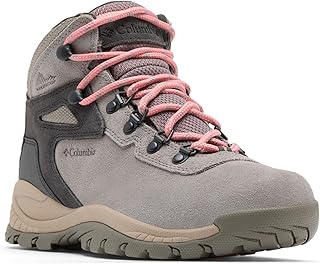
The womens Newton Ridge Plus Waterproof Amped likewise suits recreational day hikes in cooler regions. It retains heat on long summer treks, and its traction drops on polished wet rock. Choose either only if the fit works and your usual weather justifies the liner. For model-specific cleaning, drying, and waterproofing care, check the manufacturer's manual rather than assuming all uppers need the same treatment.
Read the reviews: Men's Newton Ridge Plus II Waterproof Hiking Boot, womens Newton Ridge Plus Waterproof Amped
Match support and traction to the route
Think about the trails you actually walk: maintained paths, uneven rocky ground, or rugged routes with a loaded pack. Try enough different boots to compare how their soles bend and how securely they hold your feet. More stiffness is not automatically better; aim for comfortable movement with enough support for your terrain and load.
The Men's Mt. Maddsen Hiking Waterproof Boots offer a more structured leather build and solid torsional support under moderate loads. Our notes position them for rugged, wet trails in moderate temperatures, not hot, dry ascents where their membrane retains heat and sweat.
For modest day hikes without heavy loads, the Men's Waterproof Lightweight Hiking Boots offer lighter synthetic construction. The compromise is a thinner underfoot structure that transmits sharp rocks. Inspect tread condition and suitability for your local surfaces, but do not treat an aggressive-looking sole as proof of wet-rock grip. An ankle-height collar also should not substitute for secure fit or careful footing.
Read the reviews: Men's White Ledge Mid Waterproof Hiking Boots, Men's Waterproof Lightweight Hiking Boots
Make the final choice with a realistic trial
Before committing, check the return policy and wear the boots indoors where permitted. Use your hiking socks and walk up and down stairs carefully. Notice heel movement, toe contact, pressure points, and whether the boot flexes comfortably as you step. Compare candidates under the same conditions instead of choosing on initial cushioning alone.
Allow for gradual break-in, but do not expect it to fix the wrong size or shape. Our review notes specifically flag break-in time for the womens Newton Ridge Plus Waterproof Amped relative to trail runners. Start with short outings before taking new boots on a long or remote hike. Check the manual for model-specific care and drying instructions.
Keep the shortlist focused on your intended season. The Men's Waterproof Hiking Winter Snow Boots combine insulation with water resistance for winter walking and snowy commutes; they are not a general three-season choice. A boot suited to your ordinary hikes is more useful than one selected for conditions you rarely encounter.
Read the reviews: womens Newton Ridge Plus Waterproof Amped, Men's Waterproof Hiking Winter Snow Boots
Frequently asked
- Should hiking boots be a size bigger than regular shoes?
- Do not automatically go up a full size. Try both boots with your hiking socks and any orthotics, then check toe clearance on a downward slope and heel security uphill. Choose the size and shape that prevent toe impact without letting your feet slide; sizing varies between models.
- Do I need waterproof hiking boots?
- Waterproof boots make sense for cool, wet trails when excluding external moisture matters. They are not the default for every hike: liners restrict breathability and trap sweat. In dry climates, choose unlined footwear instead. Base the decision on your usual conditions rather than an occasional rainy forecast.
- How should hiking boots feel when they are new?
- New hiking boots should feel secure and comfortable, with room to move your toes and no persistent pinching or numbness. Some materials need gradual break-in, but pain is not a fit requirement. Begin with short walks, and do not rely on break-in to correct the wrong size or shape.
- Are heavier, stiffer hiking boots always better?
- No. Match support to your terrain, pack load, and comfort rather than choosing maximum stiffness. Our review notes identify the Men's Mt. Maddsen Hiking Waterproof Boots as a structured option for moderate loads. Lighter footwear may suit modest day hikes, but underfoot protection and secure fit still matter.