How to break in hiking boots
Break in hiking boots with short indoor sessions followed by progressively longer walks and easy hikes, stopping to address rubbing rather than pushing through pain.
Research-based article drawn from our 17 hiking footwear & backpacks reviews. Updated September 2026.
Short answer
To break in hiking boots, wear them indoors with your hiking socks, then progress to short outdoor walks and easy trails. Increase distance and pack weight only while your feet remain comfortable. Adjust lacing when rubbing starts, and stop if pain persists. Break-in can soften stiffness, but it cannot correct boots that are too short or the wrong shape.
Our picks for “how to break in hiking boots”


Start by checking fit, not testing your pain tolerance
Before taking new boots outside, try them indoors with the socks and any insoles you intend to hike in. Check the retailer’s return conditions first so your fit assessment does not rule out an exchange. Lace the boots securely without squeezing your forefoot, then walk around and use stairs carefully.
Your toes should have room to move without striking the front on descents. Your heel should stay reasonably secure rather than repeatedly lifting and rubbing. Watch for concentrated pressure across your toes, along the sides of your feet, or over your instep. Numbness, sharp pain, and cramped toes are reasons to reassess fit, not signs that you need a tougher break-in session.
Some initial stiffness can ease with wear, but do not count on break-in to create extra length or substantially change the boot’s shape. If pressure persists after a sensible lacing adjustment, consult a footwear fitter or exchange the boots before committing to trail miles.
Build from indoor wear to short, low-risk hikes
Begin with brief indoor sessions. Wear your usual hiking socks and walk normally rather than forcing the boots to bend. If your feet remain comfortable, move to a short outdoor walk close to home. Choose a route with an easy turnaround so you are not committed to finishing a long loop in uncomfortable footwear.
Repeat comfortable outings before adding distance. Next, try an easy trail with modest uphill and downhill sections: those movements can reveal heel rubbing or toe pressure that flat walking misses. Add your intended pack gradually rather than combining unfamiliar boots, a heavy load, and a demanding route on the first outing.
After each walk, check your feet for tender areas and inspect your socks for dampness. Let the boots dry between sessions according to the manufacturer’s care instructions. Progress according to comfort, not a fixed calendar. Before a longer trip, complete a shorter outing in the socks and pack setup you plan to use, without recurring rubbing or pain.
Treat hot spots early and avoid break-in shortcuts
A hot spot is an area that starts feeling warm, tender, or irritated before a blister develops. Stop when you notice one. Remove the boot, check for grit or a wrinkled sock, and adjust the lacing if the foot is sliding or a particular area feels compressed. Change damp socks and protect intact skin with suitable blister tape or a dressing, following its directions.
If the same spot keeps rubbing, shorten the walk and reassess fit. Adding thicker socks is not always a solution: they can crowd an already snug boot. Persistent pain or numbness means stop, rather than tightening the laces and continuing.
Avoid soaking boots, heating them with a hair dryer, or aggressively bending them to speed things up. Use normal walking and follow the manufacturer’s manual for drying, conditioning, and any approved treatments; materials and care requirements differ. Do not assume leather conditioner is suitable for every upper. Dry boots away from direct heat unless their care instructions explicitly say otherwise.
Choose boots for your conditions, not a promised break-in time
Our reviewed options illustrate different construction and fit priorities, but none comes with a verified break-in timetable. Buying another boot only helps if it better matches your feet and intended conditions.
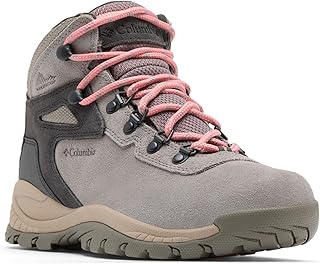
The Men's Newton Ridge Plus II Waterproof Hiking Boot suits wet, cool-weather trail walking. It has an ankle-height leather upper and a waterproof liner, but that liner restricts breathability and traps sweat. The womens Newton Ridge Plus Waterproof Amped is intended for recreational day hikes in cooler regions. Its leather-and-suede upper requires break-in time relative to trail runners; its traction also drops on polished wet rock.
For rugged, wet trails in moderate temperatures, the Men's Mt. Maddsen Hiking Waterproof Boots offers a more structured leather build and torsional support under moderate loads. Its waterproof membrane also retains heat and sweat in dry climates.
All three are conditional options, not universal recommendations. For dry-climate hiking, skip waterproof liners rather than expecting break-in to solve sweaty feet. Whichever boot you choose, check its manual for model-specific care and let fit determine whether you keep it.
Read the reviews: Men's Newton Ridge Plus II Waterproof Hiking Boot, womens Newton Ridge Plus Waterproof Amped, Men's Mt. Maddsen Hiking Waterproof Boots
Frequently asked
- How long does it take to break in hiking boots?
- There is no reliable universal number of days or miles. Fit, construction, and how often you wear the boots all matter. Use comfortable walks as your benchmark, then increase distance and terrain difficulty gradually. If the same pressure or rubbing persists, reassess fit instead of simply adding more miles.
- Can I break in hiking boots in one day?
- Do not rely on one day to prepare unfamiliar boots for a demanding hike. A short indoor session and nearby walk can reveal fit problems, but they do not establish long-distance comfort. If your trip is imminent, use already comfortable, terrain-appropriate footwear rather than forcing a rushed break-in.
- Should hiking boots hurt while breaking them in?
- No. Initial stiffness is different from pain, numbness, or repeated skin irritation. Stop to check socks, lacing, and fit when discomfort appears. Boots that squeeze your toes or cause persistent pressure may need exchanging. Continuing through pain is not a necessary or useful part of breaking them in.
- Should I soak hiking boots to break them in faster?
- Do not soak boots as a general break-in method. Follow the manufacturer’s manual because care requirements differ across materials and constructions. Gradual walking is the safer approach. If boots become wet during normal use, dry them according to their care instructions rather than using direct heat to hurry the process.