Fitbit Versa 4 Alternatives: Best Fitness Trackers for 2026
Explore the best-performing alternatives to the Fitbit Versa 4 that offer superior sensor fidelity, battery life, and subscription-free data access.
By the Niche Picks editorsUpdated November 8, 202610 min readDrawn from our 31 research-based fitness trackers & smartwatches reviews
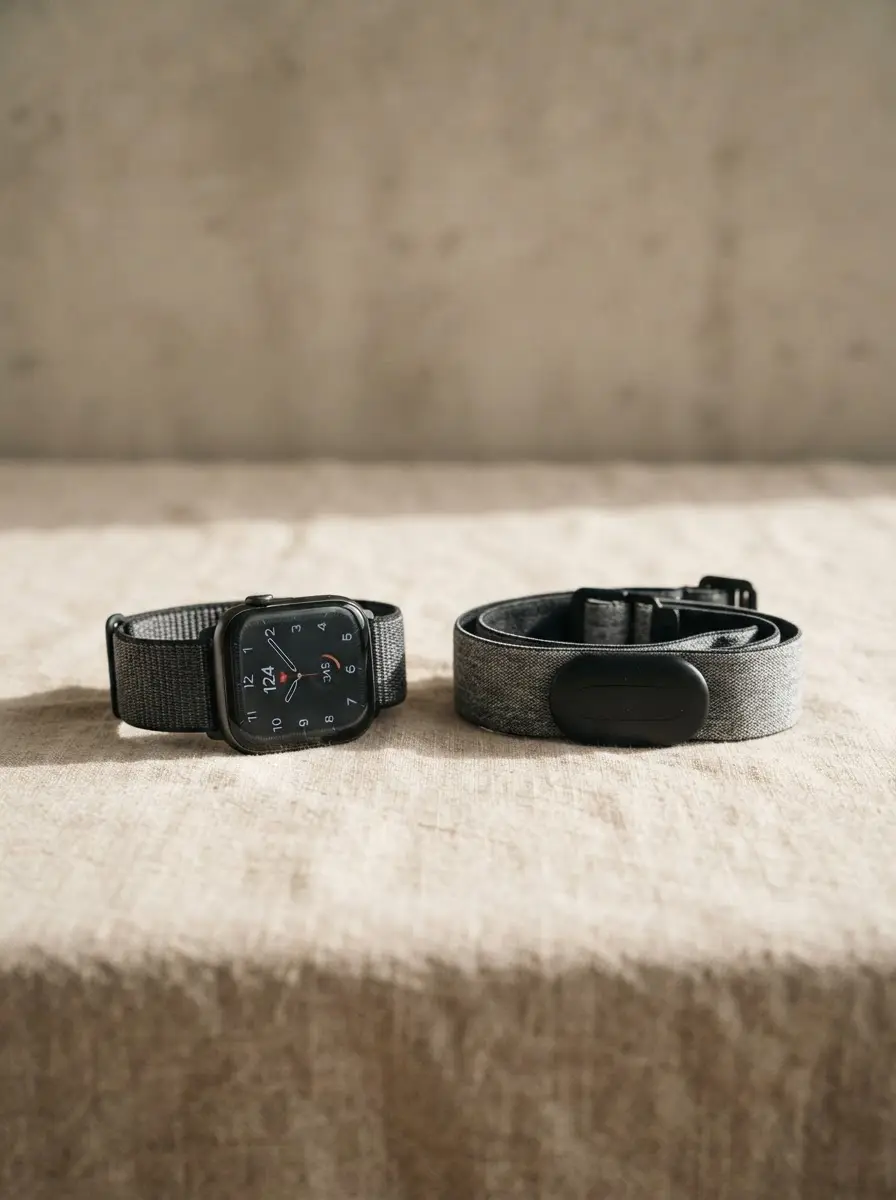
AI-generated editorial illustration; not a product or test photograph.
Short answer
The Fitbit Versa 4 market has shifted toward specialized devices. For high-intensity training, we recommend pairing an accurate Garmin vívoactive 5 with a dedicated ECG chest strap like the Polar H10. This combination bypasses wrist-based optical latency, ensuring precise heart rate data for all your interval sessions without hidden subscription costs.
5
Product listings discussed; not hands-on tests
5/5
Discussed listings with a recorded price
$39.99–$279.00
Recorded listing price range; not a complete setup cost
Key takeaways
Wrist-based optical sensors consistently suffer from latency during high-intensity interval training.
Pairing an electrical chest strap is the most effective method to capture real-time heart rate spikes.
Many wearable ecosystems gate analytical metrics and recovery insights behind recurring subscription fees.
Manufacturer battery life estimates usually exclude high-drain features like continuous GPS satellite tracking.
Always confirm device compatibility with Bluetooth or ANT+ protocols before purchasing external sensors.
Products discussed in this article
Editorial scores and recorded prices are reference points, not measurements of suitability for every use. Read each review's specifications and limitations.
Google Fitbit Inspire 3 - Midnight Zen/Black - Small$69.95
Powr Labs Bluetooth ANT+ Heart Rate Monitor Chest$39.99
OURA Ring 4 Smart Ring - Stealth - Size 11$279.00
Fitness Hardware Comparison
Product
Primary Use
Sensor Type
Subscription
Price
Garmin vívoactive 5
Multi-sport
Optical
None
$188.90
Polar H10 Strap
Training
ECG
None
$104.90
Fitbit Inspire 3
Baseline
Optical
Optional
N/A
Oura Ring 4
Recovery
Optical
Required
$349.00
Powr Labs Strap
Training
ECG
None
$39.99
Why wrist-based heart rate sensors struggle with intensity
While modern fitness trackers and smartwatches offer incredible convenience, they are limited by the physics of optical heart rate sensing, also known as photoplethysmography. These sensors track blood volume changes at the skin's surface, which introduces a significant processing lag when your heart rate shifts suddenly. During high-intensity interval training—where your heart rate can spike from a resting state to a threshold effort in seconds—the wrist sensor often fails to catch up, resulting in inaccurate data for your peak efforts.
For athletes who prioritize precision, the most reliable approach is to pair a dedicated chest strap with a smartwatch. By capturing electrical impulses directly from the myocardium, ECG-based straps provide near-instantaneous heart rate transmission that remains unaffected by wrist motion, sweat, or skin perfusion rates. When you review devices such as the Garmin vívoactive 5, you will notice they excel at aggregate health monitoring and daily activity logging. However, for structured conditioning, they are best used as a dashboard for a more precise external sensor. This separation of data collection and display is the gold standard in modern athletics.
If you are currently building a training regimen, our guide on how to track your fitness progress explains how different sensor types inform your recovery metrics. Many users assume that because a device records steps and heart rate, it is capable of tracking professional-level intensity; however, recognizing the limitations of the optical sensor is a crucial step in preventing overtraining or misinformed zone training. By investing in a dedicated strap, you ensure that your intensity levels are measured by electrical consistency rather than algorithmic estimation, making your training data significantly more actionable over the long term.
A persistent trend in the fitness wearable market is the transition toward a subscription-based ownership model. While the initial hardware cost might seem reasonable, many manufacturers now lock critical analytical layers—such as historical recovery trends, specialized sleep architecture, and adaptive coaching insights—behind a monthly or annual premium fee. For instance, while the Fitbit Inspire 3 provides essential biometric baseline data, deeper interpretative insights often mandate a recurring membership. Before committing to any platform, it is essential to use a budget planner to calculate the total cost of ownership over a three-year period.
The industry has seen this model move into even the most minimalist hardware. The Oura Ring 4 offers an elegant, screen-free form factor that is excellent for unobtrusive sleep and baseline health monitoring. Yet, without a continuous subscription, the utility of the hardware is severely restricted. We encourage readers to study our analysis on if Fitbit Premium is worth it to understand exactly what value these services provide versus the raw data you already generate. When data is trapped behind a paywall, you lose the ability to easily export your own health history for personal analysis, which is a major point of contention for many active users.
When assessing value, always look for devices that provide unencumbered access to your metrics. If you are starting your journey, browsing through the best fitness trackers is a helpful way to see which companies emphasize data ownership. Avoiding platforms that gate-keep your recovery scores or heart rate variability data is one of the most important mistakes to avoid. By prioritizing hardware that works with open-protocol software, you maintain full control over your health information while avoiding the 'membership creep' that has become a defining aspect of modern fitness technology ownership in 2026.
Before purchasing a chest strap, confirm your primary device supports ANT+ or Bluetooth. Most modern Garmin and Polar products include dual-protocol support for maximum compatibility.
Understanding battery life in real-world conditions
Manufacturer battery claims are notoriously optimistic, frequently derived from 'baseline' or 'standby' conditions where advanced features are either disabled or running at low-power intervals. For users who plan to track their fitness, it is critical to ignore headline figures and focus specifically on 'sport mode' or 'GPS' runtime specifications. For example, many smartwatches might claim a multi-week battery life, but once you engage constant satellite tracking and continuous heart rate broadcast, that endurance often drops by 50-70%. This is particularly relevant if you are training for endurance events where you need the device to last for the entire duration of your workout.
For devices that lack onboard satellite hardware, such as several fitness trackers in our catalog, you are forced to use 'connected GPS.' This method tethers your wearable to your phone, which consumes both your phone’s battery and your tracker’s connection protocols. This extra load can cause unexpected drops in performance during long sessions. For athletes looking to optimize their tracking, identifying which devices provide the best energy efficiency during active usage is as important as the initial hardware cost. We cover these nuances in our fitness tracker buyer's guide, which explains why you should always double-check the 'active tracking' endurance statistics.
Finally, think about the maintenance of your device's battery technology. While most trackers use sealed lithium-ion batteries that will eventually degrade, dedicated sensors like the Powr Labs heart rate monitor utilize user-replaceable coin cells. This design allows the hardware to function for years without the planned obsolescence associated with rechargeable modules. As you research your options, prioritize devices that fit your lifestyle habits—if you are forgetful about charging, a screenless tracker or a device with extended low-power modes may save you from the frustration of a dead battery at the start of a planned run.
The importance of open protocols for data integration
The true versatility of your fitness wearable is determined by how well it communicates with other hardware. The most reliable devices utilize open protocols, specifically Bluetooth and ANT+, to share data across diverse ecosystems. This ensures that if you decide to switch your primary training app, upgrade your bike computer, or join a gym with connected cardio machines, your heart rate monitor remains compatible. If you want to compare two different monitors, look for the ability to broadcast to multiple devices simultaneously—a feature found in many modern, budget-friendly chest straps that lack the restrictive ecosystem ties of premium brands.
When reviewing fitness trackers, many users overlook the need for ANT+ connectivity. While Bluetooth is universal for smartphone pairing, ANT+ is the gold standard for robust, interference-free communication with dedicated cycling computers and stationary gym equipment. By selecting devices that support both, you guarantee that your data will reach your dashboard of choice without dropouts. This becomes especially useful during how to track your fitness progress, where data consistency is key to identifying long-term performance trends. If you find yourself frequently dealing with broken syncs, checking the compatibility of your hardware against the standards used by third-party fitness software is essential.
Finally, be wary of proprietary locking. Some brands intentionally block their sensors from broadcasting to external devices to force you to use their specific smartphone app. We highlight these differences in our fitness trackers FAQ, which warns against the friction caused by closed-loop systems. Whether you are a casual jogger or a high-performance athlete, your heart rate data should belong to you, not the manufacturer's subscription service. By choosing devices that utilize standard, open-protocol broadcasting, you ensure that your athletic data remains portable, reliable, and integrated into whatever platform helps you best reach your training goals over the coming years.
Always subtract 50% from manufacturer battery claims if you plan to use continuous heart rate or satellite GPS tracking daily. Always refer to active 'sport mode' endurance estimates.
Lifestyle versus performance: balancing form and function
The fitness market is split between 'lifestyle wearables' and 'performance trackers.' Lifestyle devices—often characterized by large touchscreens, voice calling, and aesthetic customization—prioritize notifications and casual health snapshots. While these are excellent for daily reminders, they frequently sacrifice sensor accuracy and robust data export for the sake of presentation. Performance trackers, conversely, prioritize data fidelity and analytical depth, often featuring more utilitarian chassis and longer battery lives. Identifying which category you need is the most important step in our fitness tracker buyer's guide.
If your priority is tracking fitness progress, look at the underlying sensor hardware rather than the screen resolution or styling. Some watches boast "100+ sport modes," but if the internal hardware lacks an onboard satellite chip or the ability to pair with an electrical chest strap, those modes are effectively just variations of step counting and timers. Understanding this allows you to avoid the common mistakes to avoid where users pay a premium for features they will never use or that lack the precision required for real improvement. For example, our selection of the best smartwatches for women showcases that you do not have to sacrifice style to get high-end tracking capabilities.
Ultimately, your choice should reflect your daily routine. If you work in an environment that requires professional attire, a slim profile device might be more appropriate than a bulky, high-end watch. However, if you are an endurance athlete, prioritize the hardware that will provide the most accurate cardiac data during your hardest efforts. Don't let marketing hype about "smart" features distract you from the essentials: sensor accuracy, data ownership, and the ability of the device to integrate seamlessly with the apps you use to measure your life. By grounding your search in these concrete metrics, you ensure a hardware investment that lasts well beyond the initial purchase period.
Establishing a robust fitness data setup involves matching your goals to your gear. Start by selecting a consistent, low-profile device for 24/7 wear to ensure you capture baseline resting heart rate and sleep patterns, which are the foundational pillars of recovery tracking. Devices like the Fitbit Inspire 3 or the Oura Ring 4 are excellent candidates for this role due to their unobtrusive form factors. Once you have your baseline established, determine if your exercise routine requires more precision than the built-in optical sensor can provide. If you are regularly pushing your heart rate into anaerobic zones, the addition of a dedicated strap is not just a luxury; it is a necessity for meaningful data.
To bridge these worlds, choose a tracking application that supports multiple hardware sources. Most modern platforms allow you to link a smartwatch for your daily step counts and an electrical chest strap for your workouts simultaneously, using the most accurate data source for each metric. This hybrid approach avoids the pitfalls of poor wrist sensor performance without sacrificing the convenience of daily health monitoring. Our fitness trackers FAQ discusses how to troubleshoot these links if you experience connection dropouts, reinforcing the importance of maintaining clean contacts and fresh batteries.
Finally, stay engaged with your data. The most expensive tracker in the world is useless if you do not review your trends. Set a monthly schedule to check your recovery status and sleep efficiency, using this information to adjust your intensity for the coming weeks. If you notice a consistent rise in resting heart rate, it may be time to take a scheduled rest day or adjust your sleep routine. By taking an active, informed role in how you interpret the numbers your device collects, you transform a simple electronic accessory into a powerful tool for self-improvement and longevity. Remember to keep your software updated, as manufacturers often release significant performance enhancements for sensor algorithms long after the initial release date.
1Identify your primary training goal: baseline wellness or high-intensity athletic performance.
2Select a 24/7 wearable for baseline sleep and resting heart rate tracking.
3Purchase an ECG-based chest strap to supplement your device for interval workouts.
4Verify protocol compatibility (Bluetooth/ANT+) between your watch and your secondary monitor.
5Download the manufacturer's companion app and check the privacy policy.
6Pair your devices following the specific protocol instructions for your platform.
7Set a monthly review schedule to analyze your biometric trends and recovery score.
Quick checklist
Assess if your training intensity requires immediate ECG-based HR accuracy.
Identify whether you need dedicated onboard GPS or if connected GPS is sufficient.
Check if your chosen device locks long-term data history behind a subscription.
Verify that replacement parts like straps and batteries are easily accessible.
Check the IP ingress protection rating for water resistance if swimming.
Confirm compatibility with your current smartphone operating system.
Calculate the total cost of ownership over three years, including software fees.
Frequently asked questions
Do I need a chest strap if I have a smartwatch?
Yes, if you prioritize data accuracy for high-intensity interval training. Smartwatch optical sensors often lag during rapid heart rate changes, whereas chest-mounted ECG sensors provide real-time electrical monitoring that avoids typical wrist-based signal delays.
Are monthly fitness subscriptions necessary?
While free tiers cover basic tracking, advanced recovery analytics, personalized coaching, and deep sleep data are often gated. Always check which proprietary metrics require a monthly fee before purchasing your hardware.
How does GPS affect my battery life?
Satellite GPS is a high-power process. Manufacturer battery claims typically reflect standby performance; when GPS is active, expect a significantly lower runtime, sometimes reducing a week of endurance to just a few hours.
What is the main difference between Bluetooth and ANT+?
Bluetooth provides a direct, high-speed connection to your smartphone, while ANT+ allows a single sensor to broadcast data to multiple receivers—like a bike computer and a watch—simultaneously without complex pairing procedures.
Is a watch with a 5ATM rating truly waterproof?
A 5ATM or 50-meter rating is typically suitable for surface swimming and showering. However, it is not designed for high-pressure activities like scuba diving, so always check manufacturer guidance regarding specific water-related limitations.
Amazon links are affiliate links; we may earn a commission at no cost to you.
Shortlists in this category
Ranked lists from our fitness trackers & smartwatches reviews, limited to listings whose titles confirm the product type, with budget cuts where enough recorded prices sit on both sides of the line.
This page summarizes our research reviews of Amazon listings, listed specifications and captured buyer ratings. It is not a hands-on test. Scores are editorial assessments, not measured performance; prices are recorded snapshots and may change. A category can include both main products and accessories, so its overall price range is not the cost of a complete setup.
Most recent product record update: September 17, 2026. Individual records may be older; this is not a verification date for every claim. Prices on this page were read from the listings Nov 8, 2026 – Nov 12, 2026.
Compare the same kind of fitness trackers & smartwatches
Choose the product type first. These groups require a match in the listing title; an import search term alone is not enough. Scores rank our recorded research assessments within each group, not independently measured performance.
Values are shown as recorded, without unit conversions or inferred compatibility. Not recorded means unknown, not absent. Prices are snapshots, not current offers. Editorial scores are research judgments, not lab results. Amazon links are affiliate links.
Wrist heart rate lags on intervals — pair a chest strap.
Check which metrics sit behind a subscription.
Battery claims assume GPS off; read the sport-mode number.
If a specification, certification or compatibility detail is absent, mark it as unknown and ask the seller or manufacturer. Do not substitute a star rating, an editorial score or a different model's specification.